• Following Us

  • Categories

  • Check out the Archives


  • Awards & Nominations

Millennium – Season 3 (Review)

This July, we’re taking a trip back in time to review the sixth season of The X-Files and the third (and final) season of Millennium.

Three seasons is a good run.

It’s not a great run, but it is worth noting that Millennium ran longer than any of Chris Carter’s creations other than The X-Files. Given you grim and esoteric Millennium turned out to be, that is quite impressive. Notably, even the third season of Millennium performed better in the ratings than the first season of Harsh Realm. In many respects, Millennium is a very odd television show; it seems surprising that it lasted for three seasons. While fans (and many who worked on it) might have wanted more, Millennium is not a failure.

millennium-thesoundofsnow28

That said, the third season of Millennium is a disaster. There are a lot of reasons for this. The show was renewed by Fox quite late in the process, meaning the production team had little time to prepare. Glen Morgan and James Wong had no interest in returning to run the show, even if the rest of the staff would have them. Either due to time constraints or frustration, nobody asked Morgan and Wong about resolving the ending of The Time is Now. Michael Duggan was hired as showrunner, only to depart eight episodes into the season.

With all of this going on, the problems with the third season are entirely understandable. The season feels like a disjointed mess because there was chaos behind the scenes. The season was confused about its own continuity because the production team had no idea what to make of the second season. With ratings plunging, the show sought comfort in the familiar; there is an extended stretch near the start of the third season where it feels like the production team were trying to turn the show into a copy of The X-Files.
millennium-teotwawki22

The third season of Millennium has fairly terrible reputation among fans. This is not entirely undeserved; the early stretch of the third season contains a string of the worst episodes that Millennium ever produced. As sympathetic as the surrounding circumstances might make an audience to the show, that goodwill evaporates when confronted with episodes like The Innocents, Exegesis, TEOTWAWKI, Skull and Bones, Through a Glass Darkly, Human Essence and Omertà. The series improves dramatically in its middle section; but it is never consistent.

The third season contains a number of underrated episodes that do count among the best that the show ever produced, and a whole host of more interesting failures around those episodes. Perhaps the best thing that might be said about the third season is that it is interesting at least as often as it is bad. That might not sound like a ringing endorsement. It isn’t. The third season of Millennium doesn’t work. The reasons for this are entirely understandable, but that does not make it any easier to watch.
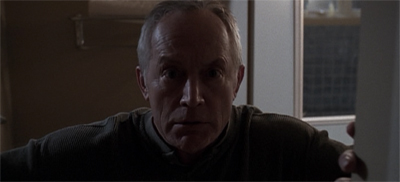
millennium-sevenandone24

Continue reading

The X-Files – Season 6 (Review)

This July, we’re taking a trip back in time to review the sixth season of The X-Files and the third (and final) season of Millennium.

The sixth season of The X-Files is notable for many different reasons. It was the first season after the release of The X-Files: Fight the Future. It was the first season following the move to Los Angeles. It saw the “end” (at least nominally) of the show’s conspiracy mythology in the massive Two Fathers and One Son two-parter. It was the first season to begin closer to the end of the show’s nine-year run than to the beginning. It was also the first season to open past the hundred-episode mark.

That last landmark is important, because it marks the point at which The X-Files could effectively be sold into syndication. One hundred episodes meant that a network could air the show five nights a week for twenty weeks, filling up almost half a year’s worth of broadcasting slots. Reaching the one hundred episode mark meant that a show was a bona fides success, and that anything else was really just gravy on top. The bulk of the work had been done. The X-Files would be a rare prime-time drama to pass two hundred episodes.

xfiles-howtheghostsstolechristmas2a

Of course, times have changed. By 2011, the number of episodes required for a syndication deal had slipped from one hundred to a mere eighty-eight, with the goal being four seasons of twenty-two episodes. (This trend happened while The X-Files was on the air, with the show dropping from twenty-four or twenty-five episodes in a season at the start of its run to twenty-two or twenty towards the end.) Even then, streaming has changed the media landscape, making it more possible than ever to syndicate show with shorter runs, like Community.

So syndication beckoned for The X-Files. In fact, syndication would pose no shortage of trouble for the show in the years ahead. During the seventh season, David Duchovny would file a lawsuit against Fox alleging that the company’s syndication policy had cost him financially. After the show went off the air, Carter would find himself embroiled in a similar lawsuit over syndication rights, delaying production of The X-Files: I Want to Believe. There are worse ways to argue that The X-Files was a victim of its own success than to look at the syndication of the show.

xfiles-arcadia7

Nevertheless, it was clear that The X-Files had accomplished everything that it could ever want by the start of the sixth season. Chris Carter had his five seasons and a movie. Fox had a show they could syndicate. David Duchovny had forced the production to move to Los Angeles so that he could spend time with his family. Although nobody knew it at the time, the fifth season secured the highest rankings that a season of The X-Files would enjoy in the Nielsen Ratings. So going into the sixth season of The X-Files, there was only one question hanging in the air.

What now?

xfiles-therainking25

Continue reading

The X-Files – Biogenesis (Review)

This July, we’re taking a trip back in time to review the sixth season of The X-Files and the third (and final) season of Millennium.

‘When Alexan­der saw the breadth of his domain, he wept for there were no more worlds to con­quer.’ Ben­e­fits of a clas­si­cal education.

– Hans Gruber, Die Hard

In hindsight, “ending” the mythology with a two-parter in the middle of the season was always a risky proposition.

Airing Two Fathers and One Son during February Sweeps was a logical decision. Ending the mythology that had been running through the show for five-and-a-half seasons was certain to grab the attention of casual viewers, reeling them in to boast up ratings. The X-Files had always aired mythology two-parters during Sweeps, putting them forward as examples of the best that the series could do and cementing the show’s claim to be “blockbuster television.” Choosing to wrap up the mythology during February Sweeps was just an extension of that approach.

Look what just washed up...

Look what just washed up…

And it worked. Two Fathers earned the second highest Nielsen score of the sixth season, landing just behind The Rain King. Two Fathers was the last time that The X-Files would rate so highly. As such, the decision to “close off” the mythology in the middle of the season was a very shrewd decision. However, it did raise questions about what the show would do at the very end of season. After all, The X-Files liked to bookend its seasons with mythology episodes, counting on a mythology cliffhanger to carry viewers across the long gap between seasons.

How do you tell a mythology story when you’ve just worked so hard to tidy it all away?

Behind the curtain...

Behind the curtain…

Continue reading

Millennium – Via Dolorosa (Review)

This July, we’re taking a trip back in time to review the sixth season of The X-Files and the third (and final) season of Millennium.

And so, Millennium ends.

That is not entirely accurate. Via Dolorosa and Goodbye to All That are really the third ending to Millennium. Chris Carter’s oft-overlooked series famously reinvented itself in each of its three seasons. Every season finalé was a series finalé, bidding farewell to one version of the show before another arrives. In the first season, it was a serial killer procedural with ominous spiritual undertones. In its second season, it was the story of a family breakup that drew in all manner of religious conspiracy theories and eschatology. In its third season, it was…

"Did I tell you that I REALLY like The Silence of the Lambs?"

“Did I tell you that I REALLY like The Silence of the Lambs?”

Well, it is hard to tell what the third season was – or even what it wanted to be.

Nevertheless, Via Dolorosa and Goodbye to All That feel like an attempt to grant the series some sense of closure. In a way, these episodes typify the third season. They are messy and confused, awkwardly paced and drawn in broad strokes. At the same time, there are enough interesting ideas and clever concepts that one can see how they might have come together with a bit more craft. There is an outline of a great episode here, with Via Dolorosa and Goodbye to All That making a valiant effort to pull together messy strands of continuity from across the show’s run.

"Yep, it feels a little bit like that."

“Yep, it feels a little bit like that.”

The third season of Millennium was hampered by terrible decisions made out of the gate, but the final stretch of the season has no shortage of ambition and drive. It is no secret that the third season suffered from a number of serious problems at the start of the year. Maybe if those had been avoided, Via Dolorosa and Goodbye to All That would have an easier time drawing down the blinds. Still, it is impossible to know what might have been, and the truth is that Via Dolorosa and Goodbye to All That are a flawed conclusion to a flawed year.

Perhaps appropriately, Via Dolorosa and Goodbye to All That offer a rather disjointed conclusion to a rather disjointed year. Via Dolorosa and Goodbye to All That are written by two different teams of writers and directed by two different directors. Although the plot carries across both episodes, there are points where the transition seems rather inelegant or incongruous. Then again, this is about wrapping up the show’s troubled third season, so it is certainly representative.

"Take a picture. It'll last longer."

“Take a picture. It’ll last longer.”

Continue reading

Millennium – Seven and One (Review)

This July, we’re taking a trip back in time to review the sixth season of The X-Files and the third (and final) season of Millennium.

Seven and One is the last episode of Millennium to be written by Chris Carter and Frank Spotnitz.

That is a pretty big deal. Frank Spotnitz had been a vital part of Ten Thirteen since the second season of The X-Files. He had also been the only X-Files writer apart from Chris Carter, Glen Morgan and James Wong to cross over to work on Millennium. He would become one of Carter’s most trusted associates, also contributing scripts to Harsh Realm and The Lone Gunmen. When The X-Files: Fight the Future took Carter’s attention away from Millennium in its second season, he proposed Spotnitz to run the show in his stead.

Here's Frankie!

Here’s Frankie!

Chris Carter had created Millennium, and it was clearly a show that meant a lot to him. While The X-Files was populist and accessible, Millennium always felt like more of an auteur project. It was solemn, abstract, contemplative. There is a sense that he was quite disappointed when his attention was diverted away from the show in its second year. Carter has talked time and time again about how he created Millennium as an examination of evil in the world. Appropriately enough, Seven and One finds him circling back around to that idea right before the show concludes.

Seven and One might be the most overtly religious script that Carter and Spotnitz have ever written. It seems to foreshadow the closing themes of Carter’s script for The Truth, the final episode of The X-Files. It emphasises just how essential religious themes are to Carter’s work.

Eye spy...

Eye spy…

Continue reading

The X-Files – Milagro (Review)

This July, we’re taking a trip back in time to review the sixth season of The X-Files and the third (and final) season of Millennium.

The teaser establishes the mood quite quickly. It is a rather striking opening sequence for an episode of The X-Files, focusing on a writer staring at a blank page. The sequence cuts through time as the writer searches for inspiration, trying to take his cue from the index cards helpfully arranged on the wall. Eventually, the writer makes a grand gesture. He reaches into his chest, and pulls out his heart. It is a very effective opening sequence, one that makes it clear that Milagro will not be a normal episode of The X-Files.

The sequence also makes it clear that Milagro will not will it be a subtle piece of television. The teaser is not a particularly elegant metaphor, but it is an effective one. What is writing but tearing out a piece of yourself? Sometimes you have to wear your heart on your sleeve; sometimes you have to put it on the page. The teaser to Milagro is a very earnest piece of work from Chris Carter, a clear acknowledgement that what follows is a deeply personal piece of work.

Burning heart...

Burning heart…

Continue reading

Millennium – Antipas (Review)

This July, we’re taking a trip back in time to review the sixth season of The X-Files and the third (and final) season of Millennium.

Antipas is the second of three scripts written by Chris Carter and Frank Spotnitz over the third season of Millennium. It is also the first of Lucy Butler’s two appearances during the third season, although she has little more than a cameo in Saturn Dreaming of Mercury. This is actually the second time that Chris Carter has written for the character of Lucy Butler, having scripted her début back in Lamentation towards the end of the first season. Antipas feels like a conscious effort to connect back to that first appearance.

To be fair, Lucy Butler has been radically different in each appearance. It is difficult to get a read on the character or to suggest a “definitive” take. Finding the “real” Lucy Butler is as difficult as identifying the “real” Millennium Group or as arbitrary as naming the “real” version of Millennium. That said, there are thematic throughlines. Four of her five appearances are tied into children, for example; the show fairly consistently portrays Lucy as a demonic mother figure in contrast to Frank as a loving father.

Here's Lucy!

Here’s Lucy!

While the idea of Lucy as a creepy mother ties Antipas into A Room With No View just as much as Lamentation, the script seems to hark more firmly back to Lucy’s character motivation in Lamentation than to her scheming in A Room With No View. In Antipas, Lucy is once again obsessed with biological motherhood, trying desperately to conceive – and even to claim another child as her own. In Lamentation, she sought to mother a child with Doctor Ephraim Fabricant; in Antipas, she seems to aspire towards Frank Black.

Along the way, Antipas is packed with fevered dream imagery and uncanny visuals. As with a lot of the episodes around it, Antipas feels like a very odd piece of television. When Carter wrote Lamentation, this oddness was enough of a break from the norm to power an entire episode. Antipas lacks the sort of strong centre that a piece of television like this needs to ground it. The result is an intriguing and unsettling, if not quite compelling and engrossing, episode of television.

A-mazing nanny...

A-mazing nanny…

Continue reading

The X-Files – Two Fathers (Review)

This July, we’re taking a trip back in time to review the sixth season of The X-Files and the third (and final) season of Millennium.

This is the end. I never thought I’d hear myself say those words after all these years. You put your life into something… build it, protect it… The end is as unimaginable as your own death or the death of your children. I could never have scripted the events that led us to this. None of us could. All the brilliant men… the secret that we kept so well. It happened simply, like this.

– the Cigarette-Smoking Man channels his inner Chris Carter

In case you were wondering about the title...

In case you were wondering about the title…

Continue reading

The X-Files – The Rain King (Review)

This July, we’re taking a trip back in time to review the sixth season of The X-Files and the third (and final) season of Millennium.

I do not “gaze” at Scully.

Somewhere over the rainbow...

Somewhere over the rainbow…

Continue reading

The X-Files – How the Ghosts Stole Christmas (Review)

This July, we’re taking a trip back in time to review the sixth season of The X-Files and the third (and final) season of Millennium.

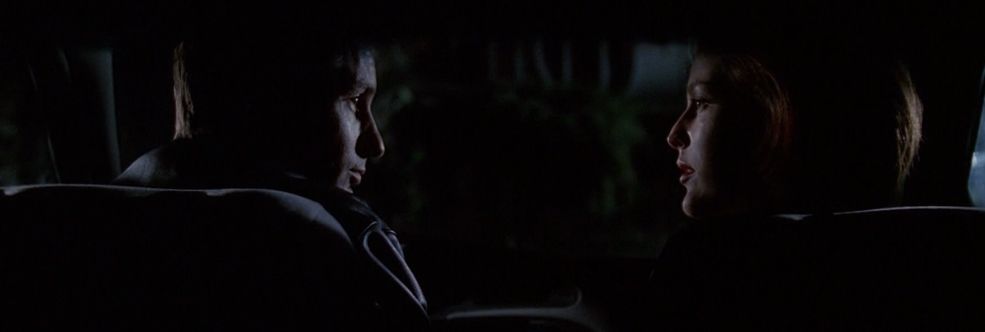
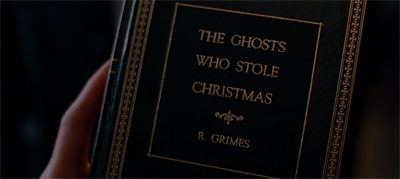
Building off episodes like Triangle and Dreamland, How the Ghosts Stole Christmas continues to develop and expand upon the sixth season’s fascination with issues of time and love.

With the closing of the X-files in The End, it seems like The X-Files has abandoned any real focus on the procedural element of the series. Instead of being a show about two people employed to investigate weird phenomenon together, it seems that The X-Files has evolved into a series about two people who investigate weird phenomena in their spare time. It seems likely that Mulder would have invited Scully on his Christmas Eve stake out even if they were working on the X-files together, but the fact that this is a recreational activity certainly recontextualises it.

Semi-title drop!

Semi-title drop!

The first half of the sixth season of The X-Files is perhaps the most invested that the show has ever been in the nature of the relationship between Mulder and Scully. After all, the seventh season shies away from questions concerning a Mulder and Scully romance; the eighth season keeps William’s parentage a mystery until the last possible moment. The opening stretch of the sixth season is really the only point in the show’s run where the series has an extended conversation about what the two mean to one another and how they express that.

How the Ghosts Stole Christmas is essentially an episode about Mulder and Scully receiving paranormal couples’ counseling that goes horribly wrong.

"Merry Christmas, everybody!"

“Merry Christmas, everybody!”

Continue reading