• Following Us

  • Categories

  • Check out the Archives


  • Awards & Nominations

Doctor Who: Lux (Review)

“And tell me, how did you enter this world?”

“I’m a two-dimensional character, you can’t expect backstory.”

There has been a lot of discussion about the reduction in the number of episodes of Doctor Who produced within a year. These discussions are often alarmist in nature, and framed in some sort of despairing lament about how the show is not what it once was. However, there is less discussion about how this compression of the show affects its format.

While Davies can be a chaotic writer within individual episodes, particular rushing towards a climactic resolution to a story or a season, he has always had a very vision of the structure of a given season of Doctor Who. Both of Davies’ successors, Steven Moffat and Chris Chibnall, experimented with different season structures.

Ring-a-Ding-Ding…

Moffat’s fifth season was structured identical to the previous four, and then his sixth season was structured as an inversion of that – opening with an epic two-parter, closing with a single run-around episode. His seventh season was all stand-alone episodes, while his ninth season was comprised primarily of two-parters, most of which adopted an interesting approach to the basic structure of a two-parter.

Chibnall’s first season was comprised entirely of standalone and disconnected episodes, with the Stenza serving as recurring antagonists. Chibnall’s second season was much more arc-focused, opening and closing with two big two-part adventures, with The Timeless Children rewriting the show’s lore. Chibnall’s third season was a single narrative spread across six episodes, Doctor Who: Flux.
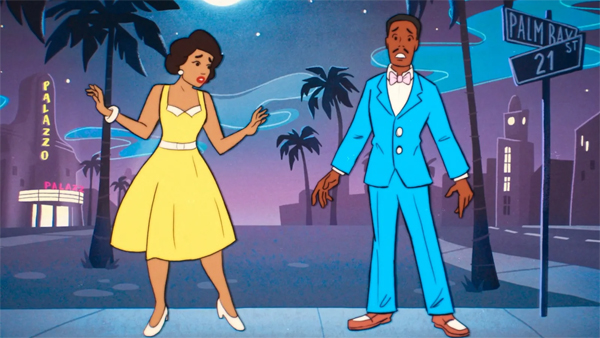
An animated discussion.

However, Davies had a structural formula and he largely stuck to it. Davies’ seasons often opened with triptych of present-past-future stories to orient new viewers in the world of Doctor Who, before leading into a toyetic monster two-parter. This would be followed later in the season by a more high-brow two-parter, and then a two-part season finale that had been seeded through the season to that point. Davies adhered rigidly to that structure.

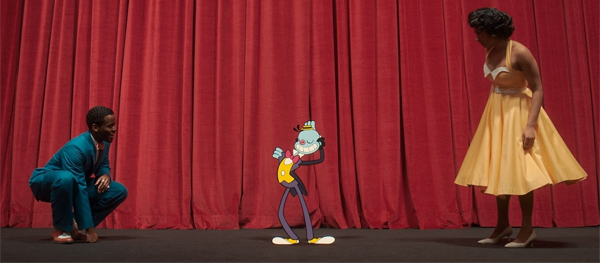
That structure worked within the confines of thirteen-episode seasons, but obviously cannot be applied to an eight-episode season. After all, just counting through the “obligatory” episodes within that structure eats up nine of the season’s episodes. So Davies has had to come up with a new structure for the show’s seasons. Space Babies and The Robot Revolution effectively compress those opening three episodes into a single story, while The Devil’s Chord and Lux suggest an entirely new narrative archetype.
The next stage of the show…

There is some online debate about whether Davies is repeating himself, whether his approach to Doctor Who is meaningfully different now than it was twenty years ago. While it’s easy to focus on the places where Davies’ writing is similar – notably the premieres and the finales – it is also worth acknowledging where it is different. The Devil’s Chord and Lux are two episodes that are of a piece with one another, two episodes as similar to one another as Rise of the Cybermen and The Age of Steel are to The Sontaran Stratagem and The Poison Sky, fitting within Davies’ season structure.

However, they are also new and exciting. They are a type of episode that is fundamentally different from anything that Davies even attempted during his first tenure as showrunner. Indeed, they are fundamentally different from anything that Moffat and Chibnall attempted as well. They are big, bold and self-aware. They represent a clear evolution of what is possible on Doctor Who. If nothing else, they prove the show is still alive – that it is still animated.
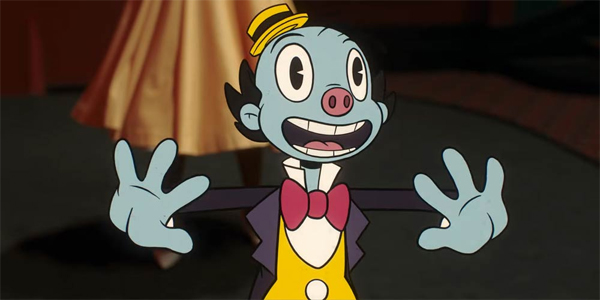
Rave about this episode until you are blue in the face…

Continue reading

321. The Flintstones in Viva Rock Vegas (-#92)

Hosted by Andrew Quinn and Darren Mooney, and this week with special guest David Monaghan, The 250 is a weekly trip through some of the best (and worst) movies ever made, as voted for by Internet Movie Database Users. New episodes are released Saturdays at 6pm GMT.

So this week, Brian Levant’s The Flintstones in Viva Rock Vegas.

Years before they become the family that audiences know and love, Fred and Wilma are living very different lives. Fred is a quarry working, looking for connection. Wilma is the daughter of a wealthy family, looking to experience something real. Fate (and a meddling alien named Gazoo) conspires to throw the two into one another’s lives. However, Fred soon discovers that he has a potential romantic rival in the spiteful Chip Rockefeller, who invites the couple on a trip that they’ll never forget to Rock Vegas.

At time of recording, it was ranked 92nd on the list of the worst movies of all time on the Internet Movie Database.

Continue reading

Doctor Who: The Witchfinders (Review)

The Witchfinders is perhaps the closest that the eleventh season of Doctor Who was come to delivering a conventional celebrity historical.

It is an episode that is much closer to the traditional mode of science-fiction adventure than Rosa or Demons of the Punjab, and not just because it is the first historical episode to be set in British history. As with Arachnids in the U.K., the format of The Witchfinders harks back to the structure and rhythms of the Davies era, feeling like a companion piece to episodes like The Unquiet Dead, The Shakespeare Code or The Unicorn and the Wasp. (There are a handful of examples from the Moffat era, notably Victory of the Daleks and Vincent and the Doctor, but they are appreciably fewer.)

The King’s Demons.

This is a broad episode set in the distant path in a manner that evokes the popular folk history of the United Kingdom. It evokes a particular period of history that tends to be well known in a general sense, but less familiar in any specific detail. The Witchfinders focuses on the Doctor and the TARDIS wading into the witch trials that took place during the seventeenth century, overseen by King James I. There is even a nice tie-in to The Shakespeare Code, with the historical connection between those witch trials and William Shakespeare’s Macbeth.

The Witchfinders often finds itself trapped between two extremes. The idea of sending the first female Doctor back into these witch hunts is ripe for social commentary, arguably even more directly than that with which the historical episodes like Rosa and Demons of the Punjab have engaged. Indeed, there is something slyly subversive in the episode’s portrayal of its celebrity figure – in this case King James I – as a deeply flawed figure rather than somebody to be venerated.

Screwed.

On the other hand, The Witchfinders is very much a typical modern-era historical adventure. The Doctor inevitably discovers that there are sinister aliens at work in a historical setting, plotting an invasion and threatening to derail the entire course of history. These aliens serve to provide an explanation for a historical event, and even allow the Doctor to have a more direct impact on the life of an important historical figure, before disappearing into the TARDIS. This is very much of a textbook example of the kind of story codified by The Visitation or The Mark of the Rani.

These two extremes pull within the episode, holding The Witchfinders back from greatness. It is too serious to be enjoyed purely as a fun runaround, but too winkingly mischievous to work as an insightful piece of social commentary. The result is mostly satisfying, even if it is hardly filling.

Apple of her eye.

Continue reading

Non-Review Review: The Tempest

This film was seen as part of the Jameson Dublin International Film Festival.

I have to admit that I have a soft spot for Julie Taymor’s Titus. It was a punk rock adaptation of perhaps Shakespeare’s trashiest play, and it was a fusion which just worked. The Tempest, on the other hand, is a very different beast. Far from being one of the Bard’s more easily forgotten plays, it has been one of his most highly regarded since its revival in the nineteenth century. It is, despite some outward cynicism, a far more optimistic and (dare I say it?) lighter piece than the orgy of death and destruction in Titus Andronicus. So Taymor’s skills aren’t quite as perfectly in step as they might be. That said, she’s still a remarkable director with a keen visual sense, and the movie manages to be engaging and entertaining, despite a few missteps.

It's a kinda magic...

Continue reading

Non-Review Review: GoldenEye

This post is part of James Bond January, being organised by the wonderful Paragraph Films. I will have reviews of all twenty-two official Bond films going on-line over the next month, and a treat or two every once in a while.

GoldenEye saved James Bond. Bond had wallowed in obscurity for six years by the time that Pierce Brosnan’s first appearance in the role was released. As a kid, James Bond was something that was dead to me. Sure, it came on television from time to time (mostly on holidays) and they filled up a shelf at the videostore, but I always felt like they were something that had happened in the past – like the original Star Wars movies, or any Star Trek films featuring Captain Kirk. Even though I lacked the sophistication to articulate it at the time, I think I felt that the entire James Bond franchise would be reruns for me. There was nothing new happening.

And then GoldenEye was released.

Brosnan is Bond...

And it meant business.

Continue reading