• Following Us

  • Categories

  • Check out the Archives


  • Awards & Nominations

The X-Files: Season One (Topps) #6 – Space (Review)

This May and June, we’re taking a trip back in time to review the fifth season of The X-Files and the second season of Millennium.

If the jump to Ice suggested that the Season One line would only be covering the “highlights” of the first season of The X-Files, then the decision to immediately follow with an adaptation of Space puts paid to that theory.

Ice is generally regarded as one of the strongest stories of the first season. It is moody and atmospheric, tense and claustrophobic. It shines a light on the characterisation of Mulder and Scully, while also offering a particularly memorable (and unsettling) monster of the week. In contrast, Space is generally regarded as one of the weakest stories of the first season. It is clumsy and muddled, slow and dreary. The episode’s direction is bland and the special effects are woeful. On paper, it is probably the least likely choice for a Season One adaptation.

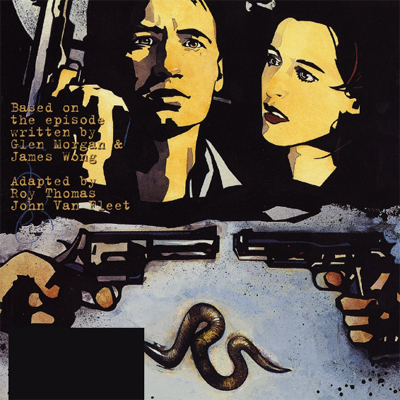
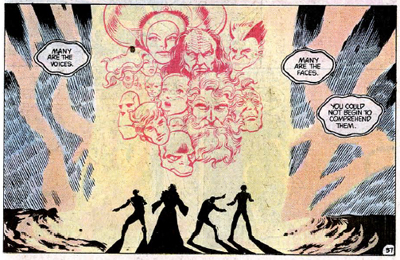
Face the future...

Face the future…

However, Space ultimately lends itself to a comic book adaptation. The story finds itself well-suited by the transition from live action footage to comic book page. there are a number of different reasons for this, but the truth is that the story is simply better suited to this format. That applies to the technical limitations imposed on film, but also to the storytelling conventions associated with comic books as opposed to live action television. It is a startling result, and arguably the biggest success of the entire Season One line.

Although it is a qualified accomplishment at best, Space is the first Season One comic that manages to surpass its source material.

Is there life on Mars?

Is there life on Mars?

Continue reading

The X-Files (Topps) – Ground Zero #1-4 (Review)

This May and June, we’re taking a trip back in time to review the fifth season of The X-Files and the second season of Millennium.

Ground Zero offers an indication of just how much success Topps was enjoying with their line of licensed X-Files comic books.

The monthly series was still being published, and Season One was on a bimonthly schedule. Both books had stable creative teams, and there was no indication that they were likely to wrap up any time soon. Of course, Topps would pull of the comic book market in late 1998, but there was no indication that they considered their X-Files line to be anything other than a complete success. As such, it made sense to expand the line. After all, the company had already used the brand to sell annuals and digests.

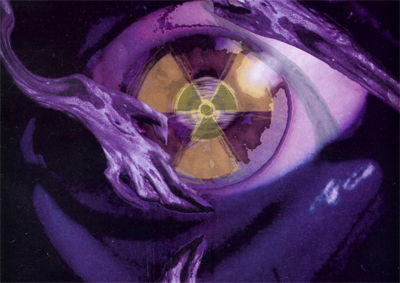
Eye see all...

Eye see all…

However, there was reportedly a considerable amount of friction between Topps and Ten Thirteen over the comic book line. Ten Thirteen was reportedly quite firm in what they would and would not allow to be published. Writers John Rozum and Stefan Petrucha have talked about how difficult it was to get their scripts published for the monthly series. It seems that Topps was eager to work around these restrictions. It is telling that neither Season One nor Ground Zero were original concepts; they were adaptations of ideas and stories Ten Thirteen had already approved.

Ground Zero is written by veteran tie-in author Kevin J. Anderson. Anderson had already written a number of popular X-Files tie-in books and had provided a fill-in arc on the monthly comic book with Family Portrait. The artwork for Ground Zero is provided by Gordon Purcell, one of the best likeness artists in the business. Publishing a four-issue adaptation of a tie-in novel is the very definition of a “safe” choice to expand the line, and only illustrates some of the wasted opportunities towards the end of Topps’ stewardship of the license.

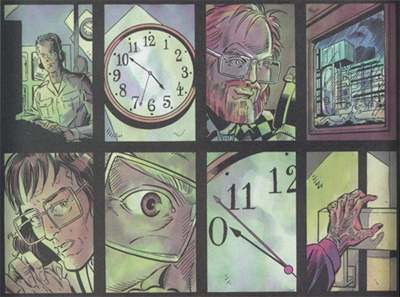
Doomsday clock...

Doomsday clock…

Continue reading

The X-Files: Season One (Topps) #5 – Ice (Review)

This May and June, we’re taking a trip back in time to review the fifth season of The X-Files and the second season of Millennium.

With Ice, Season One jumps ahead a bit.

It is hard to blame them. The first four episodes of the first season are relatively solid, outlining the heart of The X-Files and conveying everything the audience really needed to know at this point. However, the first season gets a little bit rocky after Conduit. Episodes like The Jersey Devil and Shadows are unlikely to top anybody’s list of favourite X-Files episodes. Ghost in the Machine is somewhat underrated, but it is hardly a world-beater either. So it makes sense to skip ahead to probably the most highly-regarded episode in the first half of the first season.

Worming its way into your heart...

Worming its way into your heart…

Ice is a classic installment of The X-Files. Like Squeeze, it is an episode that tends to lodge itself in the popular memory. It is hard to verify such things in any objective fashion, but it is an episode that many casual fans reference or point to whenever the show is mentioned. It has just the right balance of memorable imagery and distinctive hooks, brought to life in a haunting and atmospheric fashion. It would have been crazy for Roy Thomas’ adaptations of the Season One episodes to skip over this particular episode, and it makes sense to jump right to it.

Then again, there is also a pretty clear precedent for this.

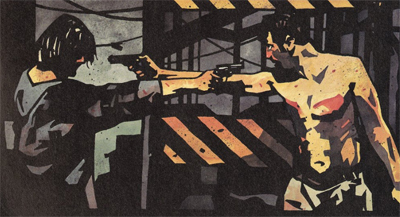
This is not who we are...

This is not who we are…

Continue reading

Daredevil – The Ones We Leave Behind (Review)

To celebrate the launch of Marvel’s Daredevil and the release of Avengers: Age of Ultron, we are reviewing all thirteen episodes of the first season of Marvel and Netflix’s Daredevil. Check back daily for the latest review.

The Ones We Leave Behind builds off The Path of the Righteous, continuing to declutter the board a Daredevil moves closer and closer to the finalé.

The Ones We Leave Behind features the final appearances from a number of supporting players, clearing the way for Daredevil to focus on the final conflict between Matt Murdock and Wilson Fisk. In particular, The Ones We Leave Behind sees Madame Gao excusing herself from the narrative, leaving Leland Owlsley as the last standing member of Fisk’s little cabal following the deaths of Vladimir and Nobu. Gao talks to Owlsley about the necessity of removing distractions from the life of Wilson Fisk; it seems like The Ones We Leave Behind is removing its own distractions.

daredevil-theonesweleavebehind19

Of course, Madame Gao is not the only major departure to feature in The Ones We Leave Behind. The closing scene of The Ones We Leave Behind features Wilson Fisk murdering Ben Urich with his own hands. It is a rather shocking twist, particularly given how steady a fixture Ben Urich has been in the comic books since his first appearance in June 1978. Urich has played major roles in the iconic runs of writers like Frank Miller, Brian Michael Bendis and Ed Brubaker. He is a pretty core part of Daredevil‘s ensemble cast.

It is a very effective and very shocking death sequence, and one that really helps to raise the stakes for the season finalé.

daredevil-theonesweleavebehind26

Continue reading

Non-Review Review: Cinderella (2015)

This film was seen as part of the Jameson Dublin International Film Festival 2015.

Kenneth Branagh’s Cinderella is probably the safest and most down-the-middle live action remake of a classic Disney cartoon. It is not as heavily stylised or esoteric as Tim Burton’s Alice in Wonderland, but it is also not as deeply flawed as Maleficent. If anything, Cinderella suffers from a lack of its own identity or energy. It is a well-made and functional film that avoids any truly significant problems, but it also lacks any real edge that might help it stand out.

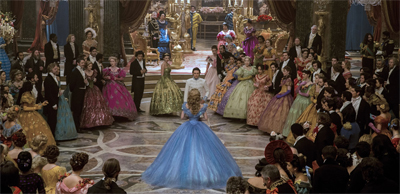
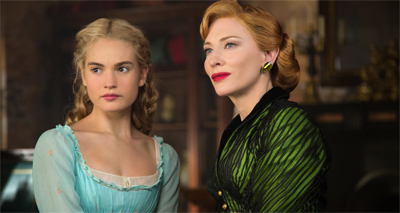
Cinderella looks lovely. Dante Ferretti’s production design and Sandy Powell’s costume designs are breathtakingly beautiful. Branagh’s direction is clean and crispy, avoiding excessive clutter and trusting the story to tell itself. The cast are great – with Cate Blanchett and Helena Bonham Carter doing wonderful work. Even the script does exactly what it needs to do, walking the line between traditional and self-aware with considerable grace. Cinderella does pretty much everything that you would expect a live action adaptation to do.

cinderella2

At the same time, it lacks any real sense of cinematic ambition. It is nowhere near as iconoclastic as Alice in Wonderland or as ambitious as Maleficent. This isn’t necessarily a bad thing – Alice in Wonderland attracted a lot of criticism for playing more as a Tim Burton movie than an Alice in Wonderland film, while Maleficent tripped over itself in its attempts to re-write the classing story of Sleeping Beauty as a feminist parable. Cinderella‘s problems are much less severe, but its accomplishments are also less noteworthy.

The result is probably the most solid and reliable live adaptation of a classic Disney cartoon, albeit one that never seems to have any real ambition or verve.

cinderella

Continue reading

Star Trek V: The Final Frontier (DC Comics, 1989) (Review)

This June, we’re taking a look at some classic Star Trek movie tie-ins and other interesting objects. Check back daily for the latest reviews and retrospectives.

In many respects, the late eighties represented a changing of the guard when it came to Star Trek. The feature films had been relatively serialised. The events of Star Trek II: The Wrath of Khan led into the events of Star Trek III: The Search for Spock, which itself led directly into the events of Star Trek IV: The Voyage Home. At the same time, the expanded universe was generally left free to its own devices. Novelists and writers were given the freedom to do whatever they wanted.

In the late eighties, things changed. Directed by William Shatner, Star Trek V: The Final Frontier stood quite clearly apart from the events of the last three Star Trek films. At the same time, the franchise had found its way back to weekly television in the form of Star Trek: The Next Generation. Whereas comic books and novels had served to fill a gap when there was a scarcity of “official” Star Trek material, they were now very clearly of secondary importance to the “real” (or simply “live action”) versions of Star Trek.

Oh your God...

Oh your God…

There was a rather seismic shift in the nature and tone of tie-ins and adaptations. Rather notably, the creators who had adapted the last couple of films into prose and comic book form did not return to translate The Final Frontier across different media. Vonda McIntyre had written the novelisations of the last three Star Trek films, but was replaced by J.M. Dillard. Mike W. Barr and Tom Sutton had produced the comic book adaptations of the last two Star Trek films, but were replaced by Peter David and James W. Fry. Both Dillard and David would find themselves tasked with adaptation of Star Trek VI: The Undiscovered Country.

Peter David and James W. Fry’s adaptation of The Final Frontier is clearly intended as a launchpad for their new on-going Star Trek series that would debut only a few months later. Indeed, the final page of The Final Frontier includes an advertisement for that new series. In many respects, this adaptation of The Final Frontier seems to serve as a pilot for a new comic book series, a starting point for a bold new beginning to DC’s Star Trek line. Opening with the The Final Frontier, you might be forgiven for assuming it was doomed from the outset.

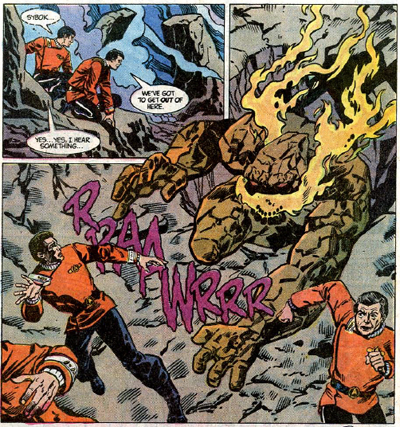
Here there be rock monsters...

Here there be rock monsters…

Continue reading

Star Trek V: The Final Frontier by J.M. Dillard (Review)

This June, we’re taking a look at some classic Star Trek movie tie-ins. Check back daily for the latest reviews and retrospectives.

In many respects, J.M. Dillard is a safe pair of hands.

Star Trek V: The Final Frontier was released at a point where Star Trek was shifting. Star Trek: The Next Generation had returned the franchise to prime time television after an absence of almost two decades and Star Trek IV: The Voyage Home had been an unqualified box office success. Gene Roddenberry was welcome back at Paramount after parting ways following the release of Star Trek: The Motion Picture, even if the production of Star Trek: The Next Generation was already slipping through his fingers.

There was a much tighter editorial approach to tie-ins and to spin-offs. Whereas the writers of the early Pocket Books novels and DC comics had been given considerable freedom, that freedom was being reigned in around the release of Star Trek V: The Final Frontier. The monthly comics series was launched with any elements not matching the “on message” approach to the franchise scrubbed out. All the original characters were gone. All the references to Star Trek: The Animated Series were gone.

The shift at Pocket Books was also palpable. Authors were suddenly getting asked to do ridiculous re-writes, or simply having their own material re-written at will. Margaret Wander Bonanno’s much-mangled Music of the Spheres is perhaps the most infamous example, going through several different ghost writers before finally being released as Probe, a book that Bonanno has relentlessly disavowed. Publishing Star Trek tie-ins was more like making sausages than it ever had been before.

So, in this context, it makes sense that author Vonda N. McIntyre would not return to do the novelisation of The Final Frontier. Her adaptations of Star Trek II: The Wrath of Khan, Star Trek III: The Search for Spock and Star Trek IV: The Voyage Home were clever and thoughtful stories that built freely off the source material, finding room for asides and tangents that were not possible on film. Her novelisation of The Search for Spock hits the movie’s opening scene almost a third of the way into the book.

As such, McIntyre’s unique style was unlikely to be a comfortable fit for this new tie-in environment. J.M. Dillard, on the other hand, would be.

st-finalfrontier Continue reading

Non-Review Review: Harry Potter and the Deathly Hallows, Part II

Harry Potter and the Deathly Hallows, Part II is probably the strongest entry in the film series, and offers a fitting code to the saga of the famous boy wizard. Sleaker, leaner and meaner than most of its predecessors, I can actually understand – artistically – why Warners opted to split the final book into two distinct chapters. In many ways, the previous instalment (Harry Potter and the Deathly Hallows, Part I) felt like another year with the Hogwarts crowd, while the finale here represents an epilogue to the entire series. Threads hinted at and developed since the first film are all tied up here, and – isolated from a lot of the soap opera of early episodes – the last in the series provides some stunning closure.

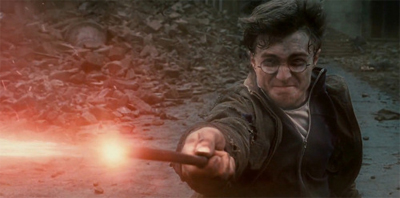
The wiz kid returns...

Continue reading

Right Here, Right Now: Thoughts on Kathryn Bigalow’s Osama Bin Ladin Project…

It’s interesting that the piece of news which grabbed me most coming out of the whole news cycle around the assassination of Osama Bin Ladin by US troops in Pakistan wasn’t any of the discussion over the legality of the act, nor the debate over whether assassination is now an acceptable tool of foreign policy. It was the near-instantaneous announcement that Kathryn Bigalow would be working on a feature film adaptation of the killing, an adaptation that reportedly has a mostly finished script and a lead actor already. Perhaps it’s a stunning illustration of just how quick the news and media cycle is, but I wonder how quick we feel the need to turn history into cinema.

Continue reading

Non-Review Review: The Tempest

This film was seen as part of the Jameson Dublin International Film Festival.

I have to admit that I have a soft spot for Julie Taymor’s Titus. It was a punk rock adaptation of perhaps Shakespeare’s trashiest play, and it was a fusion which just worked. The Tempest, on the other hand, is a very different beast. Far from being one of the Bard’s more easily forgotten plays, it has been one of his most highly regarded since its revival in the nineteenth century. It is, despite some outward cynicism, a far more optimistic and (dare I say it?) lighter piece than the orgy of death and destruction in Titus Andronicus. So Taymor’s skills aren’t quite as perfectly in step as they might be. That said, she’s still a remarkable director with a keen visual sense, and the movie manages to be engaging and entertaining, despite a few missteps.

It's a kinda magic...

Continue reading