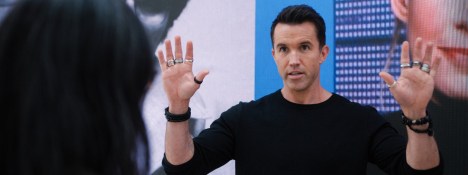
I published a new In the Frame piece at The Escapist this evening. With the third season of Mythic Quest launching last week, it seemed like a good opportunity to take a look at what is quietly one of the best sitcoms on television.
Mythic Quest is a comedy about the idea of creation as a collaborative process, the sense that very few things originate from one mind in particular. As such, the show’s sitcom structure bends around that idea in interesting ways. In particular, the show approaches relationships through the prism of professionalism. Most sitcoms lean into romantic tension between their leads, but Mythic Quest applies that relationship template to a more professional and creative environment, exploring how fulfilling professional relationships can be profoundly fulfilling.
You can read the piece here, or click the picture below.
I published a new piece at The Escapist earlier this week. With the release of Black Panther: Wakanda Forever, and the end of Phase 4, it seemed like a good opportunity to take a look at one of the more interesting trends within the modern Marvel Cinematic Universe: the way that it has grown up with its audience.
The audience that went to see Iron Man fourteen years ago are no longer teenagers, or even young adults. They are now adults, many of whom will have settled down and started families. It is entirely possible that a couple who went to see The Incredible Hulk on their first date ended up taking their child to Thor: Love and Thunder. One of the more interesting aspects of the modern MCU has been the way that its plotting and themes have evolved to reflect that, with many of its once roguish heroes becoming biological or surrogate parents.
You can read the piece here, or click the picture below.
I am doing weekly reviews of Andor at The Escapist. They’ll be dropping every Wednesday evening while the show is on, looking at the Rogue One prequel as it progresses from one episode to the next.
With Daughter of Ferrix, Andor gears up for its season finale. So it seems as good an opportunity to talk about one of the more underrated aspects of the show. Andor has garnered a lot of attention for its writing and plotting, but the show is also one of the best directed shows on television, with its visual language as important to communicating its themes as the dialogue and exposition.
You can read the piece here, or click the picture below.
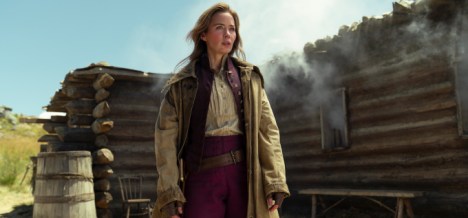
I published a new In the Frame piece at The Escapist yesterday evening. With the release of The English on Amazon Prime in the United States and on BBC in the United Kingdom, it seemed like a good opportunity to talk about the peculiar phenomenon of the British western.
The western is a quintessentially American genre. It is a foundation myth for the nation. As such, it is an awkward fit for British pop culture, given Britain’s historical relationship to the United States and the fact that Britain’s frontiers have never looked like that. However, given the intricacies of Britain’s relationship to its former colony, it is no surprise that the western has long been the subject of fascination for the British, and that the nation has put its own slant on the genre.
You can read the piece here, or click the picture below.
We’re thrilled to be launching a fortnightly video companion piece to In the Frame at The Escapist. The video will typically launch every second Monday, and be released on the magazine’s YouTube channel. And the video will typically be separate from the written content. This is kinda cool, because we’re helping relaunch the magazine’s film content – so if you can throw a subscription our way, it would mean a lot.
This week, we took a look at the debate over superheroes killing, which is a major thematic point in the recent blockbuster Black Adam. It’s an interesting point of discussion, but one that often overlooks and misses the larger trend within the superhero genre. That sort of debate doesn’t happen over other pulp heroes, like cowboys or gangsters or pirates, so what is it that makes superheroes a special case?
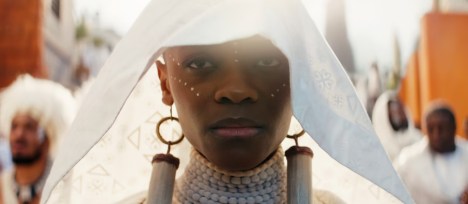
I published a new piece at The Escapist this evening. This week marks the release of Black Panther: Wakanda Forever, and so it seemed like a good opportunity to take a look at the movie’s complicated postcolonial politics.
Wakanda Forever is a movie fascinated by the consequences of colonialism. Wakanda is defined by the fact that it has never experienced colonialism or imperialism, and Wakanda Forever throws the nation state into conflict with Talokan, a nation with an entire history shaped and defined by colonial violence. This gets at one of the central tensions of Wakanda Forever, in that it is a movie fascinated by the violence commited by victims of colonialism, rather than the violence inflicted by colonial powers.
You can read the piece here, or click the picture below.
Hosted by Andrew Quinn and Darren Mooney, and this week with special guests Deirdre Molumby and Graham Day, The 250 is a weekly trip through some of the best (and worst) movies ever made, as voted for by Internet Movie Database Users. New episodes are released Saturdays at 6pm GMT.
This week, we’re continuing a season focusing on the work of one particular director: Brad Bird’s The Incredibles.
Bob Parr was living an exciting life as the superhero Mr. Incredible, until a change in public opinion forced him to hang up his tights for good. Settling down to start a family with Helen, Bob still yearns for the adventure and excitement of his youth. Out of nowhere, a mysterious woman appears with an offer that seems too good to be true, drawing Bob back into a life that he never fully abandoned.
At time of recording, it was ranked 230th on the list of the best movies of all time on the Internet Movie Database.
I published a new In the Frame piece at The Escapist this evening. With the release of Black Panther: Wakanda Forever this weekend, it seemed as good an opportunity as any to look at what sets the film apart from so many modern superhero movies.
Wakanda Forever is a superhero movie with an absent centre, built around the loss of actor Chadwick Boseman. Writer and director Ryan Coogler leans into this, building a superhero movie that is essentially about the limits of exceptionalism and the understanding that sometimes excellence alone is not enough to prevail. In a genre that is shaped and defined by power fantasies, Wakanda Forever embraces and explores a form of powerlessness that is radical within the confines of the superhero narrative, and one that grants the movie a thoughtful resonance in light of the years since the original’s release.
You can read the piece here, or click the picture below.
I’m thrilled to be launching movie and television reviews on The Escapist. Over the coming weeks and months, I will be joining a set of contributors in adding these reviews to the channel. For the moment, I’m honoured to contribute a five-minute film review Black Panther: Wakanda Forever, which is releasing in cinemas this weekend.
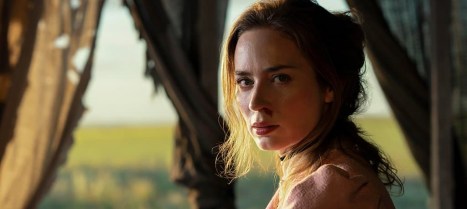
I published a new piece at The Escapist yesterday. This week marks the premiere of The English, a co-production between the BBC and Amazon.
The English is effectively a spaghetti western with a very British sensibility. It is written and directed by Hugo Blick. It stars Emily Blunt, and its supporting cast is populated with British and Irish character actors like Ciarán Hinds, Toby Jones, Rafe Spall and Stephen Rea. However, it is a thoughtful exploration of the genre, and an obvious love letter to the exploitation movies of the sixties and seventies. The show is occasionally a little to reverent to its inspirations, but it is beautifully shot and deeply moving, anchored in two great central performances from Chaske Spencer and Emily Blunt.
You can read the piece here, or click the picture below.