• Following Us

  • Categories

  • Check out the Archives


  • Awards & Nominations

Star Trek: Deep Space Nine – The Dogs of War (Review)

The Dogs of War is the penultimate episode of Star Trek: Deep Space Nine.

As such, it has lots of important things to be doing. The episode’s primary function is to streamline the ongoing narratives so that they might all neatly feed into What You Leave Behind. The goal of any penultimate episode is to set up the shot so that the finale might punt the ball into the goal, in a manner that leads to a satisfying conclusion. Given that The Dogs of War is arriving towards the end of a seven-season series, a two-year war story, and a ten-episode closing arc, that is a lot of setting up to be done.

The best is Yates to come.

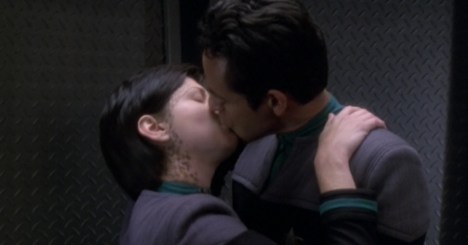
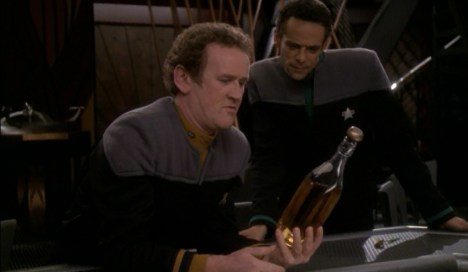
There is a lot of work to be done on paper. The plot thread focusing on the Pah-Wraiths has been dangling since When It Rains…, the Federation has not reengaged with the Breen since the disastrous encounter at the end of The Changeling Face of Evil, and Bajor hasn’t even mentioned the possibility of joining the Federation since Rapture or In the Cards. With that in mind, it makes perfect sense of The Dogs of War to focus on getting Bashir and Dax together while Quark thinks he is about to be Nagus as Damar is forced to hide in a cellar.

However, there is something inherently charming about how The Dogs of War chooses to prioritise threads over story beats that might seem more relevant or important, to dedicate a sizable chunk of the penultimate episode of Deep Space Nine to tying up a clumsy “will they?”/“won’t they?” romance and telling one last Ferengi story. The Dogs of War is an episode that speaks to what Deep Space Nine was, both in terms is esoteric plotting and its skewed-but-optimistic outlook. There might be better ways to wind down a series, but this is very Deep Space Nine.

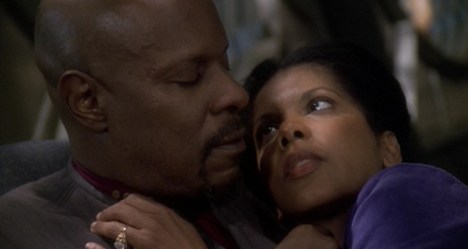
Love in a turbolift.

Continue reading

New Podcast! The X-Cast X-Files Podwatch – Episode #19 (Aubrey/Irresistible)

I’m thrilled to be a part of The X-Cast X-Files Podwatch, a daily snippet podcast rewatching the entirety of The X-Files between now and the launch of the new season. It is something of a spin-off of The X-Cast, a great X-Files podcast run by the charming Tony Black. Tony has assembled a fantastic array of guests and hosts to go through The X-Files episode-by-episode. I’m honoured to be a part of it.

My second appearance of the second season is covering the episodes Aubrey and Irresistible with the wonderful Zach Moore. I should be doing roughly one episode per season with Zach, who is a bit of a deft hand when it comes to podcast hosting and a shrewd eye when it comes to X-Files criticism. This episode is particularly worthy of note because I’m a big fan of Aubrey and find it somewhat overlooked and underrated.

Continue reading

North by Northwest to Psycho: The Breakdown of Moral Order on the Edge of the Sixties…

In the space of three years, Hitchcock produced Vertigo, North by Northwest and Psycho.

Each of those three films is (rightly) regarded as a classic, and it is astounding that a single director could produce three such films back-to-back with only a year between each. Each of those films is massively influential, each of those films is loved by critics and audiences alike, and each of those films is radically different than the other two. Hitchcock remains one of the most influential and respected film directors of all time, and these three consecutive classics demonstrate his remarkable control of the form.

The road to nowhere.

It is important to separate the modern perception of these films from the reaction to them upon release. Very few classics are accurately identified as such by contemporary critics, often settling into that role over time. Vertigo was originally met with a somewhat muted critical response by critics and struggled to break even on release. Pyscho was largely dismissed by critics as the time as something crass and inelegant. In contrast, the contemporary critical reception of North by Northwest was a lot warmer.

However, time has arguably been kinder to Vertigo and Psycho than to North by Northwest. Vertigo is frequently identified as one of (if not the) best films ever made. Psycho is frequently cited as one of the most formative (and perhaps the best) horror films ever made. In contrast, North by Northwest can feel overshadowed by the films that flank it, even if it is hard to feel too sorry for a film that have been described by both Martin Scorsese and Peter Bogdanovich as “perfect.”

A shady deal…

Still, there is a sense that the lightness of North by Northwest has been held against it. Ben Oliver has stated that North by Northwest is “not typical film-school fodder.” Nathan Rabin explains that North by Northwest is a “glorious trifle of an adventure film” placed “between two of Hitchcock’s heaviest and most tormented films.” David Shariatmadari has speculated that “perhaps the lack of Freudian handwaving leads people to rate it poorly in comparison.” There is a sense that North by Northwest is somehow lesser than the heavier films around it.

Of course, this speaks to broader trends in how critics talk about art. There is a tendency to prioritise drama over comedy, to dismiss superficially lighter material in favour of weightier content. (Genre fare faces a similar bias, although it seems that science-fiction and horror are more likely receive a revaluation in the medium- to long-term.) North by Northwest is a lighter and fluffier film than either Vertigo or Psycho, but does that make it inherently lesser than either of them. More to the point, there is a surprising amount of Psycho to be found in North by Northwest.

The final curtain.

Continue reading

New Podcast! The X-Cast X-Files Podwatch – Episode #18 (Red Museum/Excelsis Dei)

I’m thrilled to be a part of The X-Cast X-Files Podwatch, a daily snippet podcast rewatching the entirety of The X-Files between now and the launch of the new season. It is something of a spin-off of The X-Cast, a great X-Files podcast run by the charming Tony Black. Tony has assembled a fantastic array of guests and hosts to go through The X-Files episode-by-episode. I’m honoured to be a part of it.

My first appearance of the second season is covering the episodes Red Museum and Excelsis Dei with the always insightful Christopher Knowles. I do a couple of episodes with Chris over the course of the podwatch, and very few people understand the workings of the show, its symbolism and its fascinations, as thoroughly as Chris. It was a joy recording these episodes, and I hope it’s as much fun listening to them.

Continue reading

Non-Review Review: The Killing of a Sacred Deer

The Killing of a Sacred Deer is cold, clinical and Kubrick. Perhaps too much so in places. It is also mesmerising and haunting.

“Do you understand?” Martin asks a confused Steven towards the climax. “It’s a metaphor. My example. It’s metaphorical.” As one might expect from director Yorgos Lanthimos, The Killing of a Sacred Deer is very much couched in symbolism and metaphor. As the title implies, a reference casually suggested by a minor character quite late in the film, The Killing of a Sacred Deer might be best understood as a modern update of Iphigenia in Aulis, the tragedy of the Greek general Agamemnon who was forced to sacrifice his daughter to a vengeful god.

The man upstairs.

However, that is an incomplete prism through which The Killing of a Sacred Deer might be understood. The tale of a patriarch faced with an impossible choice to protect his family from a sinister outside force, The Killing of a Sacred Deer is a study of masculinity and responsibility. The film is an interrogation of sex and power through a surreal lens, skewed through psychological horror and pitch black comedy. The Killing of a Sacred Deer is never entirely abstract, but it is very rarely literal. It exists in a surreal and uncomfortable space that enhances the audience’s unease.

The Killing of a Sacred Deer is an uncanny piece of cinema, an ethereal moral fable that lingers long after its resolution.

Putting the matter to bed.

Continue reading

Star Trek: Voyager – Equinox, Part I (Review)

Equinox, Part I works better than it should.

Equinox, Part I is sustained by three important factors. The most obvious is the premise itself. Equinox, Part I and Equinox, Part II tell a story that is baked into the DNA of Star Trek: Voyager, and it is surprising that it took the production team five years to tell it. Secondly, Equinox, Part I and Equinox, Part II have the luxury of a fantastic supporting cast with John Savage and Titus Welliver playing the two most senior officers on the eponymous ship. The third factor is a sense of momentum, with Equinox, Part I and Equinox, Part II moving at a tremendous pace.

A Captain’s Ransom.

These three factors compensate for a lot of potential flaws. Equinox, Part I is an episode of television that spends forty-five minutes consciously building towards its cliffhanger. There is nothing wrong with this approach. Many of the best Star Trek cliffhangers, especially season finales, are structured as relentless build-up. The Best of Both Worlds, Part I builds to Picard’s assimilation and Riker’s command. Call to Arms builds to the Dominion retaking the station and war being declared. Equinox, Part I builds to the reveal of what Rudolph Ransom did.

Equinox, Part I is an episode that works as sheer and unrelenting build-up.

Too many captains.

Continue reading

New Podcast! Discussing Opening The X-Files with The X-Cast!

Hello!

As readers may be aware, I published a book of X-Files criticism this year. The book is called Opening the X-Files, it is published by McFarlands Press, and it comes with a foreword from the great Kumail Nanjiani.

Tony Black very generously invited my on The X-Cast to talk a little bit about the book, and maybe answer some questions about where it came from and what it’s about. It was, as ever, a pleasure and I was very glad of the opportunity. You can hear the podcast below.

In the meantime, if you do want to order yourself a copy of Opening the X-Cast, it is available at the following links.

The eBook is available for purchase at:

The physical book should now be in stock at:

50. The Thing – Halloween 2017 (#165)

Hosted by Andrew Quinn and Darren Mooney, The 250 is a (mostly) weekly trip through some of the best (and worst) movies ever made, as voted for by Internet Movie Database Users.

This time, a Halloween treat. John Carpenter’s The Thing.

Continue reading

I Came, I Thor, I Conquered: The Strange Postcolonial Politics of the Thor Trilogy…

The Thor franchise has never been particularly consistent.

Compared to the Iron Man or Captain America films, the three Thor films have lacked a clear sense of unity or direction. Part of this is down to the lack of a singular creative vision across multiple films in the trilogy. Jon Favreau provided a very clear statement of purpose when he worked on the first two Iron Man films, a loose improvisational style tailored around the personality of Robert Downey Jnr. The Russo brothers ensured that Captain America: The Winter Soldier and Captain America: Civil War were of a piece with one another, pseudo-political action movies.
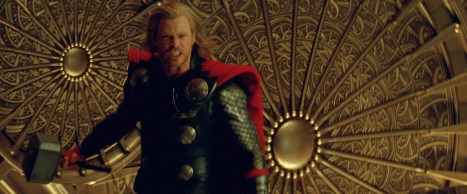
In contrast, the Thor franchise has always felt like the runt of the litter. The first film in the series was directed by Kenneth Branagh, and bristles with the excitement of getting to play in the comic book world of grand language and bright colours. Branagh pitches Thor as the most classic superhero movie; he borrows the Dutch angles from Batman! and the bright aesthetic from Superman. In many ways, Thor is the most undervalued film in the Marvel Cinematic Universe, perhaps the best distillation of the company’s formula applied to the character best suited to it.

Branagh did not return for the sequel, Thor: The Dark World. Marvel initially hired Patty Jenkins, but that fell through due to creative differences. Jenkins would demonstrate her ability to direct mythology-themed superhero action with Wonder Woman, but Marvel replaced her with Alan Taylor. Taylor was a television director, and by all accounts was treated as such by the studio. The film ended up an overstuffed tonal mess, often feeling like a half-hearted (and confused) imitation of the wave of “prestige-tinted blockbusters” that were popular at the time.
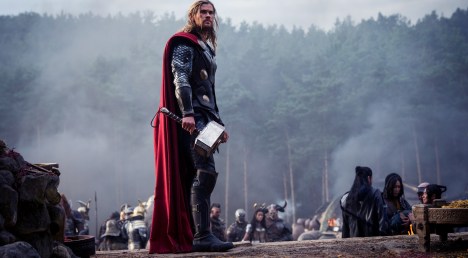
The failure of the sequel would lead to a significant delay between the second and third films in the series, not to mention a complete change of direction. The third film in the trilogy, Thor: Ragnarok, would be directed by New Zealander Taika Waititi. Waititi was a comedy director best known for his work on What We Do in the Shadows and The Hunt for the Wilderpeople, who pitched the film as a superhero version of Withnail & I. The result was a film that felt utterly unlike either of the two earlier entries, even sending its title character out into deep space.

As such, the Thor films all exist at odds with one another. There is no consistent throughline to the series. The setting, the tone, the quality, the narrative focus; all of these elements change from one film to the next. The title character is introduced in Thor when he gets hit by a van, can become an inter-dimensional peacekeeper in The Dark World, and wield ray guns and steal space ships in Ragnarok. Attempting to impose structure or consistency upon the Thor films is an act of madness, one compounded when trying to integrate them into The Avengers or Avengers: Age of Ultron.
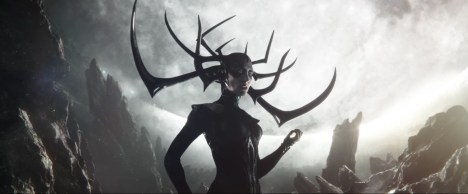
And yet, in spite of all of this, there are small themes and ideas that simmer through the three films in the franchise, recurring fascinations. In particular, the Thor trilogy is particularly fascinated with the idea of empire. In shifting away from the idea of Asgardians as literal gods or living stories, the franchise instead settled on the notion of Asgard as an imperial power tasked with bringing order to “the nine worlds.” With its magnificent spires, idyllic surroundings, exaggerated British accents, the Thor movies return time and time again to the idea of Asgard’s golden throne as the seat of empire.

Each of the Thor movies approach this idea in different ways, but they all play with the question of imperial legacy in a manner that is arguably more political than anything in The Winter Soldier or Civil War.

Note: This post contains spoilers for Thor: Ragnarok. Continue at your own risk.

Continue reading

Star Trek: Deep Space Nine – Extreme Measures (Review)

Extreme Measures is the closest thing to a standalone story within this epic ten-part conclusion to Star Trek: Deep Space Nine.

All of the other episodes carry over plot threads and subplots that either develop existing narratives or set-up future twists. This is true even of the more self-contained chapters: When It Rains… and Tacking Into the Wind are something of a two-parter in the middle of the arc, but they pick up in the wake of The Changing Face of Evil; although The Dogs of War has a self-contained subplot focusing on the Ferengi, it deals with baggage from Extreme Measures while setting up What You Leave Behind.

“Well, Miles. If you think it’ll make the episode go easier.”

In contrast, Extreme Measures is practically a bottle show. With the exception of a short one-scene appearance from Garak, Extreme Measures is devoid of the recurring guest stars that populate this final run of episodes. Although Damar and Martok are mentioned, neither Casey Biggs nor J.G. Hertzler appear. Perhaps glad of a week off before his double duty on The Dogs of War, Jeffrey Combs is entirely absent. There is no guest appearance from Louise Fletcher, Marc Alaimo, James Darren, Barry Jenner or Salome Jens.

Indeed, Extreme Measures is very precisely focused on the single story that it wants to tell. Most episodes in this final stretch of the final season have at least two or three plots running through them: Penumbra focuses on the loss of Worf, on Sisko’s retirement plans, on Damar’s growing unease; When It Rains… features the plotting of Dukat and Winn, the development of Damar’s rebellion, and the threat to the Alliance posed by Gowron; The Dogs of War witnesses Ferengi succession, the plan for the invasion of Cardassia, the implosion of Damar’s rebellion.

Journey to the Centre of Sloan’s Mind.

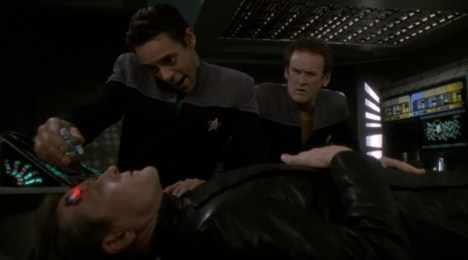
There is so much happening across these ten episodes that it feels strange that Extreme Measures can effectively call a timeout on these recurring plot threads. There are references to the Breen weapon and the Cardassian rebellion, to the ascension of Chancellor Martok and to Bashir’s lingering attraction to Ezri. However, Extreme Measures is an episode without a b-plot or a c-plot. The episode is driven entirely by its primary narrative, the story of how Julian Bashir and Miles O’Brien embark on one last adventure together.

There is something surreal, and almost endearing, about the fact that Deep Space Nine feels comfortable taking time out from its most ambitious experiment with serialisation to make the journey to the centre of Sloan’s mind.

“Julian, are you sure you haven’t been watching too much Star Trek: Voyager?”

Continue reading