• Following Us

  • Categories

  • Check out the Archives


  • Awards & Nominations

Non-Review Review: The Favourite

If the stock comparison to The Killing of a Sacred Deer is The Shining, then the obvious comparison to The Favourite is Barry Lyndon.

It is a stock comparison, bordering on facile. After all, there is a world of difference between Yorgos Lanthimos’ story of two women competing for the attention of Queen Anne and Stanley Kubrick’s story of the rise and fall of a roguish Irish gentleman. However, the similarities are striking. Both are eighteenth century period pieces that boldly eschew the conventions of period dramas. Both The Favourite and Barry Lyndon rely heavily on natural light and repeatedly draw the audience’s attention to the nature of the narrative of constructed.
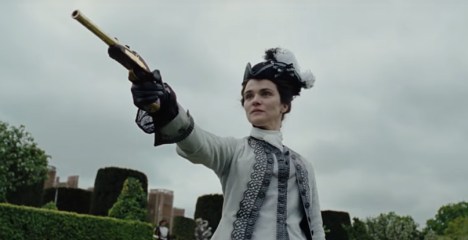
You Only Live Weisz.

However, the most striking point of comparison might be thematic and philosophical rather than simply literal or textual. Just as The Killing of a Sacred Deer explored the collapse of a family unit through the prism of decaying masculinity in a manner that recalled The Shining, the world of The Favourite is defined by its study of power, pettiness and pomposity. As in Barry Lyndon, the fickleness of comfort and the arbitrary nature of security are a recurring fascination for The Favourite, which meditates repeatedly on how precarious such positions can be.

The Favourite is a story of cruelty, both human and natural.
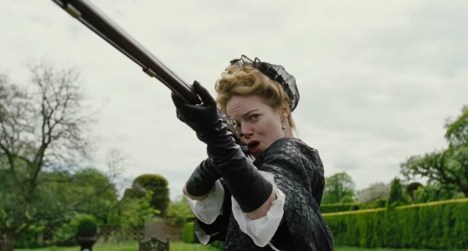
A Stone-Cold Schemer.

Continue reading

Non-Review Review: White Boy Rick

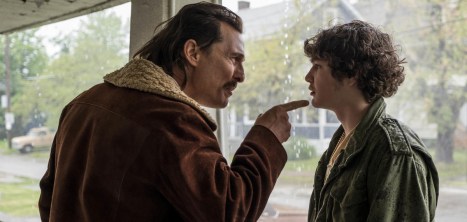
White Boy Rick struggles to articulate what it is actually saying.

The basic premise of White Boy Rick is quite clear from the outset. The film is set in Detroit. Barring a coda, the bulk of the action unfolds in the four years following on from 1984, during Ronald Reagan’s second term. Although the President himself is not directly discussed in the context of the narrative, there is an early conversation in which two agents of the Federal Bureau of Investigation and one member of the Detroit Police Department ruminate upon Nancy Reagan’s famous “just say no” appeal.

Ricked off.

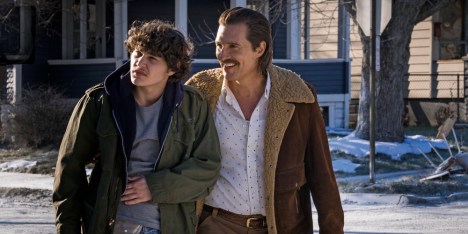
White Boy Rick is an earnest and well-intentioned movie exploring the consequences of the so-called “War on Drugs” in eighties America, and the manner in which that campaign was both fruitless in terms of its nominal objectives and actively harmful to the communities in which it unfolded. White Boy Rick attempts to position itself as a tragedy about a young man – the eponymous character’s age is something of a recurring battle cry – who happens to get wrapped up in something much bigger than his own circumstances.

Unfortunately, White Boy Rick struggles to construct a strong and engaging narrative around this central thesis statement, repeatedly stumbling in trying to graft the character’s arc and decisions to the broader social commentary that it wants to make. The result is a deeply frustrating film that squanders potentially interesting subject matter.

Daddy’s home.

Continue reading

Doctor Who: It Takes You Away (Review)

It Takes You Away is a strong contender, along with Demons of the Punjab, for the strongest story of the eleventh season of Doctor Who.

It Takes You Away plays as an allegory. It is something of a fairy tale. It is perhaps the closest that the eleventh season of Doctor Who has come to feeling like a fairy tale, particularly given the conscious choice to root The Woman Who Fell to Earth in a more gritty and grounded universe. It Takes You Away seems like it could have been commissioned during the Moffat era, a lyrical meditation on the idea of loss and mourning. It Takes You Away is a story about needing to let go of trauma, rather than holding on it or carrying it inside.

Reflections and symbols.

To be fair, It Takes You Away is not perfect. There are still some minor pacing issues, particularly with how long the episode takes to get to the meat of the story; there is a sense in which It Takes You Away is three stories stitched together, with the middle segment particularly inessential. There is also the same over-reliance on weirdly specific and overly detailed nonsense techno-babble and mythology that stood out in episodes like The Ghost Monument or The Tsuranga Conundrum.

Still, It Takes You Away has some big ideas, a clever execution, and a strong central theme upon which both might be placed.

Mind the gap.

Continue reading

Non-Review Review: Spider-Man – Into the Spider-Verse

Spider-Man: Into the Spider-Verse is an amazing Spider-man movie.

There is no other way to describe it. Into the Spider-Verse is a clean lock for the best superhero film of the year, neatly leapfrogging the superlative Black Panther. Into the Spider-Verse is also the best animated film of the year, placing comfortably ahead of The Breadwinner or Incredibles 2. In fact, it seems fairly safe to describe Into the Spider-Verse as the best feature film starring Spider-Man since Spider-Man II. Even that feels like hedging, and would be a very closely run race.

Just dive on in.

Into the Spider-Verse is a creative triumph. It is a fantastically constructed movie, in virtually every way. The film’s unique approach to animation will inevitably dominate discussions, and understandably so. Into the Spider-Verse is a visually sumptuous piece of cinema that looks unlike anything ever committed to film. However, the film’s storytelling is just as impressive if decidedly (and consciously) less showy in its construction. Adding a phenomenal cast, Into the Spider-Verse is just a film that works in an incredibly infectious and engaging way.

Into the Spider-Verse does whatever a Spider-Man movie can. And then some.

Suits him.

Continue reading

107. Cidade de Deus (City of God) (#20)

Hosted by Andrew Quinn and Darren Mooney and this week with special guest Aine O’Connor, The 250 is a (mostly) weekly trip through some of the best (and worst) movies ever made, as voted for by Internet Movie Database Users. New episodes are released Saturday at 6pm GMT.

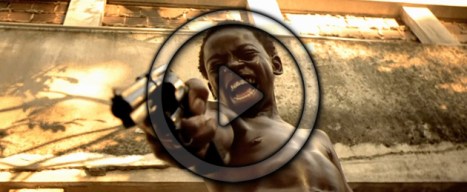
This time, Fernando Meirelles and Kátia Lund’s Cidade de Deus.

Over three decades in the eponymous Brazilian slum, lives intersect and collide amid poverty and criminality. A young by named “Rocket” tries to navigate – and account for – the fickle winds of chance in a turbulent urban environment.

At time of recording, it was ranked the 20th best movie of all time on the Internet Movie Database.

Continue reading

Non-Review Review: Creed II

Creed II is a much better sequel than Rocky IV deserves.

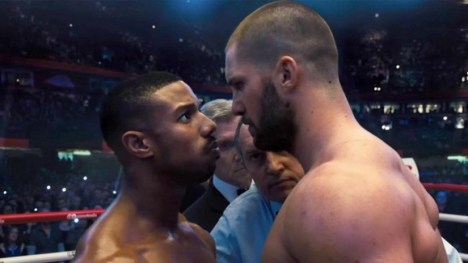
At the heart of Creed II is the grudge match that fans of the franchise had been anticipating since the core concept of this “legacy-quel” series was first suggested. Adonis Creed in the ring against Viktor Drago. The son of Apollo Creed squaring off against the son of Ivan Drago, a generational rematch of the bout that cost Apollo Creed his life in Rocky IV. Adonis Creed is haunted by the name that he inherited from a father that he never met, and so it seems only reasonable that his film series would circle back around to allowing him closure on this.

A Rocky Road Less Travelled.

There is an irony in all of this. One of the central themes of Creed was the challenge of this spin-off movie franchise existing in the shadow of the original beloved Rocky series. Co-writer and director Ryan Coogler rose to that challenge, and created one of the great franchise success stories of the twenty-first century. As a result, it occasionally feels like Creed II is not so much fighting to escape the shadow of Rocky IV as much as it is wrestling with the weight of Creed.

Creed II is a solid and sturdy sequel to Creed, although not a superior one. It isn’t necessarily the sequel that Creed deserves.

To the Viktor, the spoils…

Continue reading

Star Trek: Voyager – Body and Soul (Review)

Body and Soul is the old science-fiction staple, the body swap episode.

There are any number of iconic examples of the genre, even within the larger Star Trek franchise. Although the original series was populated with duplicates and doppelgängers and surrogates and clones in episodes like The Enemy Within, Mirror, Mirror, Whom Gods Destroy and even What Are Little Girls Made Of?Turnabout Intruder might be the most straightforward example. Star Trek III: The Search for Spock featured sequences in which McCoy was channelling Spock. Star Trek: Deep Space Nine had all the cast take on the personalities of Dax’s past hosts in Facets.

Insert your cheesecake jokes here.

Often, these sorts of stories exist to showcase the dramatic range of key performers and to offer a little variety to the weekly routine of playing the same character for years and years on end. On Star Trek: The Next Generation, Brent Spiner would occasionally find himself tasked with playing Data’s “brother” Lore or his “father” Noonien Soong in episodes like Datalore, Family, Descent, Part I, Descent, Part II and Inheritance. The cast on Deep Space Nine would play their mirror counterparts in stories like Crossover, Through the Looking Glass and Shattered Mirror.

Even Star Trek: Voyager has done its own body swap and possession narratives before, like with Tuvok in Cathexis or with Paris in Vis à Vis. However, the success of these sorts of episodes largely rests in the execution, in the question of whether it is worth watching a familiar actor playing an unfamiliar role for forty-five minutes. This is a tough challenge, and many episodes falter trying to hit that mark. Body and Soul has a lot of very fundamental issues with it, but it at least has the common sense to ask one of the cast’s best actors to impersonate another of the cast’s best actors.

“Next week is a Kim episode?”

Continue reading

Non-Review Review: Mowgli

Watching Mowgli, it very quickly becomes clear why Warner Brothers sold the film to Netflix, rather than pressing forward with a theatrical release.

Mowgli was always going to suffer in comparison to The Jungle Book, Jon Favreau’s live-action reimagining of the animated Disney classic. When the two projects were in development, they seemed like obvious dueling movies; like The Prestige and The Illusionist, or Deep Impact and Armageddon, or Volcano and Dante’s Peak. It seemed like a game of chicken between two major studios; two rakes on the same beloved property arriving in cinemas at close proximity to one another. When it became clear that The Jungle Book would hit cinemas first, the fear was that Mowgli would look like an inferior imitation.

Bagheering belief.

Those fears were misplaced. Indeed, the most striking thing about Mowgli is how different and distinct it is from The Jungle Book. Despite the similar premise and being based on the same material, there is little chance of any casual audience member confusing them. Ironically, this ends up being an issue of itself. Mowgli is distinct from the iconic Disney film, but for good reason. Andy Serkis’ film is drawing more directly from the work of Rudyard Kipling. This explains the significant differences in terms of tone and narrative. These differences are intriguing and engaging, revealing in their own ways.

However, these differences are also informative. Mowgli‘s relative fidelity to its source material ultimately serves to underscore just how effectively Disney changed the underlying story in The Jungle Book, and just how carefully crafted that other film is to a larger audience. Mowgli is not a bad film, although it does have some serious flaws. However, it is a much less appealing and much weirder film than The Jungle Book. As a result, it makes sense that the film would end up at home on Netflix, where it can afford to be a little stranger and a little more eccentric than the perfectly calibrated Jungle Book.

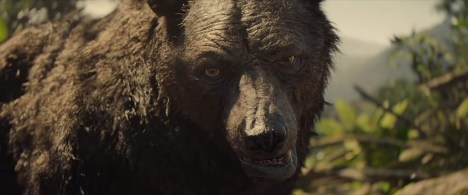
Bear with me.

Continue reading

Non-Review Review: Green Book

Green Book feels like a movie lost in time.

If Green Book feels displaced, it is not from the early sixties backdrop against which the story unfolds. Instead, Green Book feels like an awards season movie that was produced in the early nineties, and which slipped gently under the radar until it was unearthed at some recent point. Green Book very much belongs to those early nineties awards fare meditations upon race and class in America – especially Driving Miss Daisy, the film it most strongly evoked.

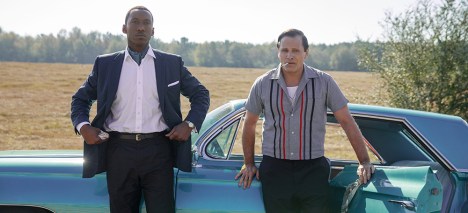
Going by the Book.

As a piece of nineties awards fare, Green Book would be judged rather kindly. It is crowd pleasing. It is broad. It is earnest, without being unnecessarily confrontational. It is also appreciably smarter than many of those nineties commentaries on race in America, consciously subverting and even inverting a lot of the expectations of the form. it is designed in such a way as to leave the audience with a big grin on their face, playing with familiar sets of narrative logic that nests a classic “odd couple” movie inside an exploration of the prejudices of the Deep South in the sixties.

However, Green Book is not a lost piece of nineties awards fare. It is a product of the current era. While it might track ahead of similarly ill-judged (and sadly contemporaneous) awards season movies about race like The Blind Side or The Help, it is still far more clumsy than a movie tackling these ideas should be in a twenty-first century context. Green Book feels positively outmoded when compared to fellow high-profile films about race like BlacKkKlansman or Sorry to Bother You or If Beale Street Could Talk. Green Book feels like a relic.

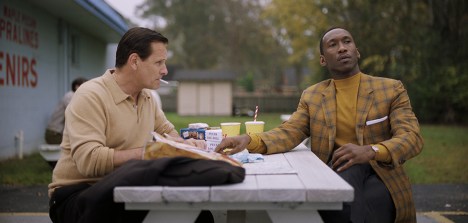
Food for thought.

This is a paradox. Green Book is significantly better in terms of production than many of the films to which it consciously invites comparison, films by white directors inspired by true events and coloured by nostalgia. However, it is significantly weaker than many of the more vital and dynamic films grappling with the same subject matter. Green Book often feels caught between these two extremes, and this presents a challenge in properly assessing it.

Green Book is a very good example of the kind of movie that it wants to be. However, it leaves unanswered the question of whether movies like this still have a place in the modern cinematic landscape.

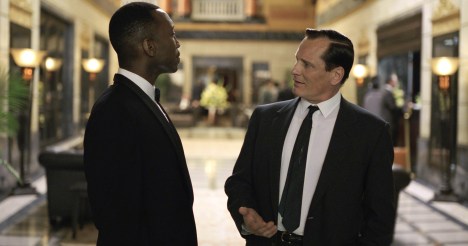
“Doctor Shirley, you can’t be serious?”

Continue reading

Non-Review Review: If Beale Street Could Talk

If Beale Street Could Talk is a beautiful and poetic piece of work.

From a certain perspective, the film is poetic in too literal a sense. If Beale Street Could Talk is adapted from the work of James Baldwin, and conscious venerates its inspiration. The opening title card quotes from Baldwin’s introduction to the book, and makes a point to allow his name to linger on screen after the quote itself has faded from view. There are extended sequences of If Beale Street Could Talk that are lifted directly from the book, occasionally even laid over black-and-white photos from the era to underscore the broader social commentary.

Fonny how things end up…

This would normally be an issue in an adaptation of a beloved literary work, in the same way that certain adaptations of theatrical works can seem “stagey” like Fences or even Doubt. If Beale Street Could Talk is very lucky in its choice of director. Barry Jenkins is a fantastic visual storytelling, with a wonderful eye for composition and a breathtaking way of seeing the world that seems to bleed through the screen itself. For the most part, If Beale Street Could Talk benefits from Jenkins’ strong visual style working in tandem with Baldwin’s searing prose.

There are moments when one threatens to overwhelm the other, when Jenkins’ task of adapting Baldwin’s story for the screen brushes against the limitation of the form; a monologue just a little too arch, a tangent just a little bit too removed, a transition just a little too forced. However, these moments are few and far between, and If Beale Street Could Talk is a stunning piece of cinema.

A lover’s Tish.

Continue reading