• Following Us

  • Categories

  • Check out the Archives


  • Awards & Nominations

Black Mirror – Bandersnatch (Review)

What exactly is Bandersnatch?

In narrative terms, it is very difficult to describe Bandersnatch, given the structure and format of the latest installment of Black Mirror. After all, two people consuming Bandersnatch might have very different experiences of it. It is possible for certain audience members to experience the narrative fundamentally different ways. Conversing about Bandersnatch largely involves defining what each participant experienced of the narrative, establishing a frame of reference for discussion. It is fascinating in this regard.
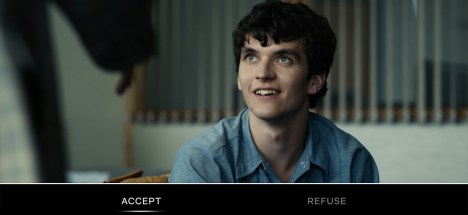
However, that is arguably an even bigger question. Is Bandersnatch an episode of television, given that it is being released under the Black Mirror brand by Netflix, even though it is being released on its own terms? Is Bandersnatch a film, given that it is a self-contained narrative? Is Bandersnatch just a video game, given how much it relies on audience participation? These are three very different classifications, and Bandersnatch blurs the line between each of the three.

Marshall McLuhan famously argued that “the medium is the message”, but Bandersnatch takes that a little further. What if we’re not sure what the medium is at all?

Continue reading

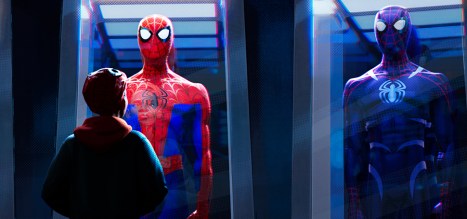
My 12 for ’18: “Spider-Man: Into the Spider-Verse” & Doing This One Last Time

It’s that time of year. I’ll counting down my top twelve films of the year daily on the blog between now and New Year. I’ll also be discussing my top ten on the Scannain podcast. This is number four.

“Alright, let’s do this. One. Last. Time.”

There were few cinematic experiences this year as joyous as Spider-Man: Into the Spider-Verse. I first saw it at a preview screening, surrounded by children of all ages. This was entirely appropriate. After all, Into the Spider-Verse is a movie that connects immediately and emotionally to any audience member’s inner child. Like many of the best modern family films, it understand the wonder and awe with which children see the world. It also understands the intelligence with which children process information, something adults often overlook.

A lot has been written about the fantastic animation employed in making Into the Spider-Verse. The technique is revolutionary and jaw-dropping; everything from the use of Ben Day dots to the shading using red and green to create an uncanny depth perception to the blurring of various styles for characters like “Spider-Man Noir” or “Peter Porker, the Spectacular Spider-Ham.” It is no surprise that Sony are attempting to copyright the animation process, to render it proprietary. The film would make a good case for its place on the list based on animation alone.

However, what has been less discussed in terms of Into the Spider-Verse is the actual storytelling. Part of this is obviously visual, and reflected in all of the praise that the animation is receiving. However, a lot of this is in the scripting and the structuring of the film. Into the Spider-Verse is a revolutionary film in a technical sense, a breathtaking cinematic accomplishment bursting at the seams with a remarkable visual imagination. It is also a story that understands how such stories are told. It also understands that the audience understands how such stories are told.

Into the Spider-Verse is a thoroughly modern superhero film, a narrative that is consciously designed for a contemporary audience that have been trained to process information in a more dynamic and exciting way. Even beyond its long overdue acknowledgement that “anybody can wear the mask”, Into the Spider-Verse is very much a film for 2018.

Continue reading

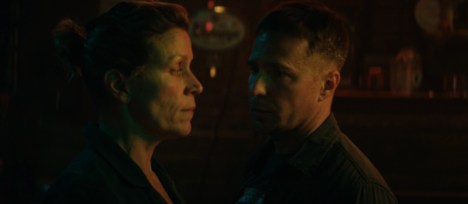
My 12 for ’18: “Three Billboards Outside Ebbing, Missouri” & All This Anger, Man

It’s that time of year. I’ll counting down my top twelve films of the year daily on the blog between now and New Year. I’ll also be discussing my top ten on the Scannain podcast. This is number five.

All this anger, man. Penelope said to me the other day: it just begets greater anger, you know? And it’s true.

Everybody is angry.

The modern era has been defined as an “age of anger.” Anger has been demonstrated to travel faster through social networks than other emotions like love or joy. Studies suggest that Americans are particularly angry, with almost seventy percent of the country angry over the direction of the nation. Anger and resentment are calculated to be among the largest factors in the election of Donald Trump, and the passing of the Brexit referendum.

Of course, not all anger is created equal. Some anger is justified, perhaps even by centuries of oppression and systemic violence. Some anger is useful, in that it motivates grassroots activism that works towards a constructive good. Indeed, there is an argument that short control releases of anger might actually be healthy in the long term, something of a venting mechanism to prevent things from escalating to the point of an explosion.

If anything is clear, Three Billboards Outside Ebbing, Missouri is not about that kind of anger. It is about the combustible, explosive kind.

Continue reading

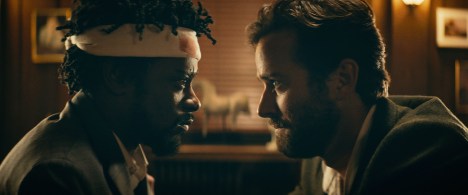
My 12 for ’18: “Sorry to Bother You” & Getting Used to the Problem

It’s that time of year. I’ll counting down my top twelve films of the year daily on the blog between now and New Year. I’ll also be discussing my top ten on the Scannain podcast. This is number six.

“If you get shown a problem, but don’t see a way you can have control over it, you just decide to get used to the problem.”

2018 and 2017 were chaotic years.

It is almost impossible to fully process everything that has happened. Even just the headlines seem insane. The President of the United States is under investigation. There may be a tape that exists of that man being urinated upon by Russian prostitutes. Children are being locked in cages. Meanwhile, Britain is leaving the United Kingdom. Part of that is down to a campaign organised in consultation with a celebrity hypnotist. Prominent British politicians have threatened to recreate the Great Famine in order to create negotiating leverage.

All of this is just the headlines. It is possible to miss the smaller-scale insanity that is taking place around the fringes of the news. A Republican congressional candidate who is a “devotee” of “Bigfoot erotica.” The Secretary of Housing and Urban Development suggesting that slaves were really “immigrants.” The high volume of democratically elected doctors with frankly insane ideas about medicine. Elon Musk labelled a heroic cave-diver a “paedophile” for rejected his crazy plan involving a submarine. The world is a topsy-turvy place, and nothing makes any real sense.

With that in mind, Sorry to Bother You is one of the movies that perfectly encapsulates the texture and feel of the current moment.

Continue reading

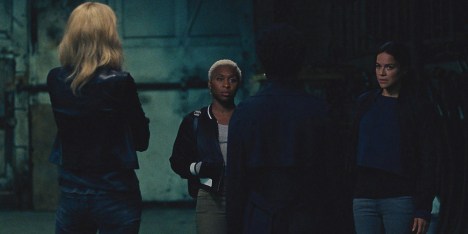
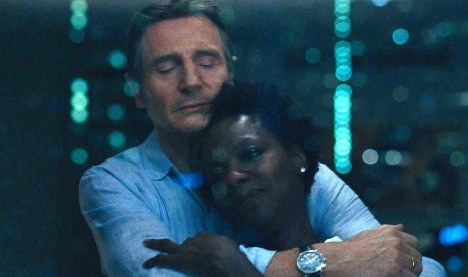
My 12 for ’18: “Widows” & Pulp Artistry

It’s that time of year. I’ll counting down my top twelve films of the year daily on the blog between now and New Year. I’ll also be discussing my top ten on the Scannain podcast. This is number seven.

Widows is unashamedly pulp fiction.

There is no way around it. It is a heist thriller in which a bunch of women who have never even held guns before use a notebook provided by one of their dead husbands in order to conduct a daring robbery. There are secrets, there are betrayals, there are reversals. There is violence, there is brutality. It is a very effective example of form, an illustration of the kind of pulpy “movie for adults” that simply does not exist any more.

Widows of opportunity.

However, there is something interesting bubbling beneath the surface of Widows. Written by Gillian Flynn and directed by Steve McQueen, Widows is a film that has a lot on its mind. It finds room to meditate on modern Chicago, on white anxiety about shifting demographics, about power and influence. More than that, it also explores questions of complicity and consent, the manner in which people choose to blind themselves to what they simply do not wish to see.

Widows does all of this without sacrificing any of the beats and rhythms of a pulpy crime thriller. It is a deft balancing act, and one that Flynn and McQueen pull off perfectly.

Continue reading

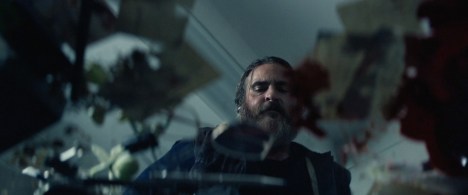
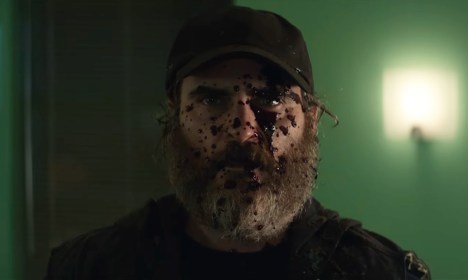
My 12 for ’18: “You Were Never Really Here” & What You Never Really Saw

It’s that time of year. I’ll counting down my top twelve films of the year daily on the blog between now and New Year. I’ll also be discussing my top ten on the Scannain podcast. This is number eight.

The premise of You Were Never Really Here suggests a certain type of film.

Joaquin Phoenix stars as Joe. The audience learns very little about Joe explicitly through exposition of dialogue, his back story and motivations suggested by quick cut flashbacks. As with a lot of You Were Never Really Here, director Lynne Ramsay understands something that may seem counter-intuitive to cinema, the notion that what is unseen might be as important as what is explicitly shown. Joe hunts down paedophiles and rescues children from their clutches.

That description suggests a thriller or an action movie, rooted in visceral and tangible violence. It might work as a direct-to-video exploitation film starring some actor with which mainstream audiences have no familiarity. It might also play well as a Liam Neeson release in early January, something akin to an even grittier Taken. At the more extreme end of the scale, it could play like a cousin to Joel Schumacher’s weird and overlooked 8mm.

What is so refreshing about You Were Never Really Here is that it doesn’t play like any of those, and is instead very much its own thing.

Continue reading

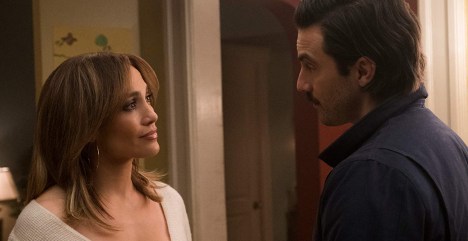
Non-Review Review: Second Act

In structural terms, Second Act is effectively a romantic comedy. It just hits upon the novelty of stripping out a secondary lead.

Second Act is the story of Maya Vargas, as played by Jennifer Lopez. Maya works as a manager at a local supermarket, where she has found a way to turn the business into a local institution due to her quick-thinking and her understanding of what customers actually want. Maya is grounded, smart and reasonably successful in her chosen field. However, she is also fundamentally unsatisfied. She aspires to something greater than the life that she currently lives, and fate conspires to elevate her through a case of mistaken (or at least obscured) identity.

Streets ahead.

Second Act is a familiar aspiration fantasy, anchored in the idea that personal reinvention is possible through a combination of imagination and insight, that people are capable of transcending their circumstances or their bad luck through a combination of intelligence and commitment. Although Maya only has a single love interest over the course of the film, the boyfriend with which she starts the adventure and who is promptly sidelined, the beats and rhythms of Second Act are taken wholesale from the romantic comedy template.

Perhaps the love affair at the heart of Second Act is Maya learning to properly love herself.

Milo’s to go.

Continue reading

My 12 for ’18: The (Black) Power of Stories in “BlacKkKlansman”

It’s that time of year. I’ll counting down my top twelve films of the year daily on the blog between now and New Year. I’ll also be discussing my top ten on the Scannain podcast. This is number nine.

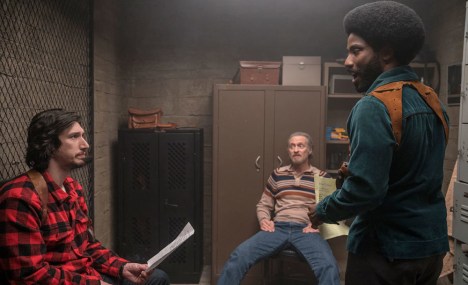
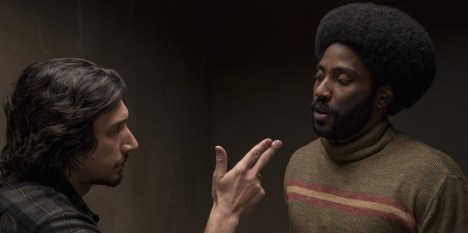
At its core, BlacKkKlansman is a story about the power of stories. In particular, the power of cinema.

This is no real surprise. Spike Lee is an avowed cinephile with an incredible hunger and passion for the medium. Lee knows the history of cinema, and understands the historical context of cinema. BlacKkKlansman is alternately a loving homage to blaxploitation and a discussion of blaxploitation. It is a film that is fundamentally about the way in which the stories that people tell influence and shape the world in which they live.

At the heart of BlacKkKlansman is a sequence in which real-life Civil Rights icon Harry Belafonte plays a fictionalised activist. He recounts, in gory detail, the story of a horrific lynching that he witnessed as a child. He contextualises this attack by reference to the success of Birth of a Nation, which he describes using the (anachronistic) term “blockbuster.” This sequence is intercut with the induction of new members into the local branch of the Ku Klux Klan, while gleefully rewatching (and cheering) Birth of a Nation.

The most interesting idea within BlacKkKlansman is the implication that it might be possible to counter-programme this. If narratives of hatred and violence can be perpetuated through cinema, then perhaps stories about collaboration and empathy can also be spread in that manner. Clever and self-aware, BlacKkKlansman feels like an attempt to construct one such narrative.

Continue reading

110. L.A. Confidential – Christmas 2018 (#107)

Hosted by Andrew Quinn and Darren Mooney, and this week with special guest Phil Bagnall, The 250 is a fortnightly trip through some of the best (and worst) movies ever made, as voted for by Internet Movie Database Users.

This time, a Christmas treat. Curtis Hanson’s L.A. Confidential.

In fifties Los Angeles, three very different police officers discover their lines of inquiry converging as they uncover a deep and sprawling web of corruption and inequity.

At time of recording, it was ranked the 107th best movie of all time on the Internet Movie Database.

Continue reading

My 12 for ’18: Holding Out for a Hero in “Mission: Impossible – Fallout”

It’s that time of year. I’ll counting down my top twelve films of the year daily on the blog between now and New Year. I’ll also be discussing my top ten on the Scannain podcast. This is number ten.

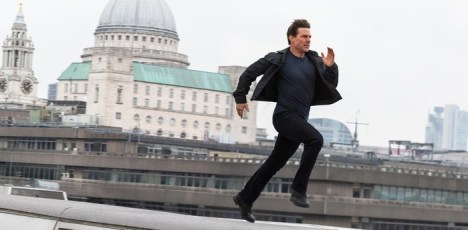
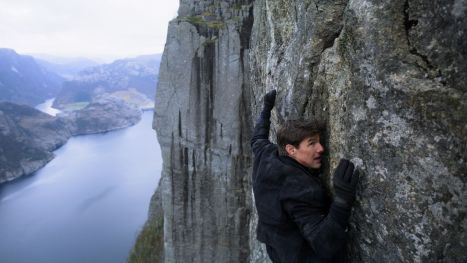
Mission: Impossible – Fallout was released around the tenth anniversary of The Dark Knight.

In fact, the week after I caught the preview of Fallout, I attended a tenth anniversary screening of The Dark Knight. This is important, because Christopher McQuarrie’s second Mission: Impossible film undeniably exists in conversation with Christopher Nolan’s epoch-defining blockbuster. It is impossible to watch Fallout without thinking of The Dark Knight, from Lorne Balfe’s propulsive score to the sight of an armoured truck sinking slowly into a river.

However, McQuarrie does something interesting with Fallout, in relation to The Dark Knight. Too many of the films influenced by that iconic piece of cinema opted for shallow and superficial homage. Thor: The Dark World and Teenage Mutant Ninja Turtles: Out of the Shadows and Transformers: Dark of the Moon and Transformers: The Last Knight settled for borrowing influence from the title. Law Abiding Citizen tried to embrace moral ambiguity. Man of Steel attempted to emulate that serious grounded approach to other properties.

In contrast, Fallout understands that the best thing that most films could learn from The Dark Knight is simple craft and professionalism. Fallout understands that top-notch production, an emphasis on in-camera effects and a propulsive sense of momentum are the most applicable lessons that most films could take from The Dark Knight. As such, Fallout takes those lessons and applies to them to Mission: Impossible, leading to the year’s most impressive embrace of the concept of heroism.

Continue reading