• Following Us

  • Categories

  • Check out the Archives


  • Awards & Nominations

Non-Review Review: Toy Story 4

Toy Story 4 is a lovely grace note.

Understandably, the largest tension that exists within Toy Story 4 is the question of whether the movie is “necessary”, as much as crowd-pleasing feel-good film must be “necessary.” Rather, it’s the question of whether its presence enhances or diminishes the immediately previous film in the franchise. Toy Story 3 was in many ways a pitch-perfect franchise closer, the perfect place in which to leave these characters and this world. It was bittersweet and deeply moving, striking a perfect balance between providing closure and suggesting that the adventure continues.
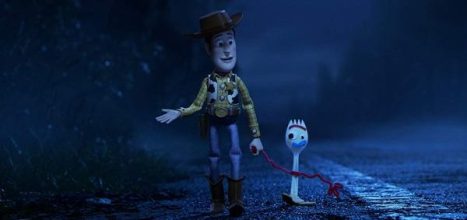
The real Toy Story is the toys we made along the way.

This creates an interesting challenge for Toy Story 4. Because Toy Story 3 provided such a fitting ending, it is not enough for Toy Story 4 to simple be amusing or engaging. To quote another popular Tom Hanks vehicle from the nineties, it has to “earn this.” To a certain extent, Toy Story 4 exists in conversation with Toy Story 3, and with the notable handicap of being unable to play many of the same emotional beats as strongly. “This is the epic last go-round” is a card that is difficult to play in two consecutive movies. So, quite apart from how funny and how thrilling and how clever Toy Story 4 is, it faces an uphill struggle.

It is to the credit of Toy Story 4 that it justifies itself so effectively. A lot of this is down to canny structuring; Toy Story 4 is much less of an ensemble piece than any of the two previous films in the series, focused very tightly on Woody as its focal character. This provides a nice change of pace, even compared to the fun “toys mount a rescue” template of Toy Story 2. To a certain extent, Toy Story 4 feels – in terms of tone, plot and character – much closer to the original Toy Story than any of the intermediate films in the franchise. This allows it a certain freshness and lightness on its feet.
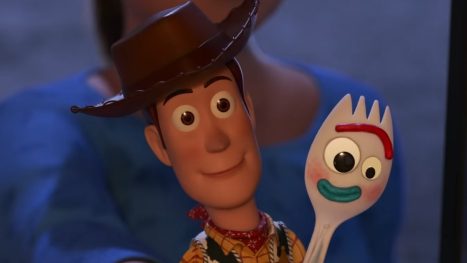
A forkin’ delight.

However, the smartest thing about Toy Story 4 is that it understands its position. Toy Story 4 is shrewd enough to understand that it can neither ignore nor repeat Toy Story 3. Indeed, Toy Story 4 is cognisant of the fact that it must be an ending of a sort, but also a different kind of ending than Toy Story 3. The film has to both justify and distinguish itself, fitting with what came before while finding something unique to say. This is a delicate balance to strike, and it is to the credit of Toy Story 4 that it succeeds as thoroughly as it does.

Toy Story 4 exists in the shadow of Toy Story 2 and Toy Story 3, but most animated films do; they are both among the very best films that Pixar has produced, making them among the very best animated films ever produced. Toy Story 4 works well as an epilogue or a coda. It’s charming, smart, funny and very moving in the places where it needs to be. Toy Story 3 existed at the full stop at the end of the story, but Toy Story 4 draws a line under it.
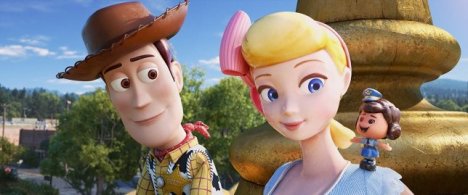
Home on the range.

Continue reading →

Star Trek: Voyager – Q2 (Review)

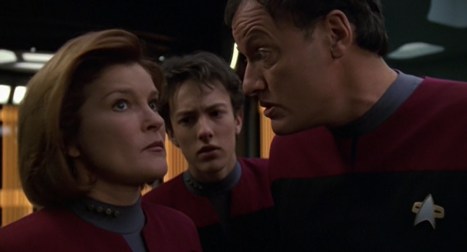
Q2 is an episode very much in keeping with the ethos of Star Trek: Voyager, particularly at this point in its run.

It isn’t just the strange nostalgia that permeates the episode, opening with an extended oral presentation from Icheb on the heroic exploits of James Tiberius Kirk from the original Star Trek and extending through to the unnecessary return of a beloved recurring guest character from Star Trek: The Next Generation. Nor is it the awkwardness with which Q2 affects a half-hearted compromise in its final act, with the series paying lip service to the fact that its omnipotent (and mostly friendly) guest star could get the crew home with a click of his fingers, while refusing to do that because it would break the series.

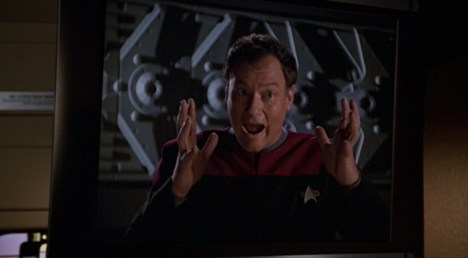
“Q2 ratings are way up!”

The essential Voyager-ness at the heart of Q2 is much more profound than all of that. It has to do with how the series treats is returning guest star. Q has been a part of the Star Trek universe dating back to Encounter at Farpoint. John de Lancie has been a recurring guest star on the franchise for thirteen-and-a-half years. Although de Lancie has aged relatively well, and although suspension of belief easily allows for it, even Q himself seems much older between his first and last appearances in the television franchise.

However, Q2 takes a character who was introduced as an immortal and all-powerful trickster god in The Next Generation, and transform him into a stressed middle-aged parent by the end of Voyager. This is a very Voyager approach to characterisation and development. It is how the series has approach many of its characters. In Caretaker, Chakotay was a rebel, Paris as a rogue, and Neelix was a free-wheeling trader; within the show’s first season, all of those rough edges have been filed off. The decision to do that with a character who is effectively a trickster god speaks a lot to the central philosophy of Voyager.

Not kidding around.

Continue reading →

133. Saving Private Ryan (#28)

Hosted by Andrew Quinn and Darren Mooney, The 250 is a (mostly) weekly trip through some of the best (and worst) movies ever made, as voted for by Internet Movie Database Users. New episodes are released every Saturday at 6pm GMT.

This time, Steven Spielberg’s Saving Private Ryan.

It is D-Day. Allied troops are launching the liberation of France from Nazi occupation. Having led his men on the beaches of Normandy, Captain John Miller receives a unique set of orders. He is to track down lost paratrooper Private James Ryan and return him home, no matter what the cost.

At time of recording, it was ranked 28th on the Internet Movie Database‘s list of the best movies of all-time.

Continue reading →

New Podcast! Scannain Podcast (2019) #22!

It’s time for the Scannain podcast!

This week, I join Jay Coyle, Grace Duffy and Luke Dunne from Film in Dublin to discuss what we watched, the week in film news, the top ten and the new releases.

What We Watched

The Week in Film News

The top ten:

  1. Paw Patrol Mighty Pups
  2. The Hustle
  3. Avengers: Endgame
  4. John Wick: Chapter III – Parabellum
  5. Ma
  6. Detective Pikachu
  7. Godzilla: King of the Monsters
  8. Rocketman
  9. The Secret Lives of Pets II
  10. Aladdin

New releases:

You can listen to the podcast directly here.

Note: Due to unforeseen technical issues, the audio quality is a little rougher this week than usual, and there was some audio lost towards the end of the conversation – including the discussion of Late Night.

Star Trek: Voyager – Human Error (Review)

Human Error is a staggering act of creative cowardice.

Star Trek: Voyager is in the literal home stretch of its final season; only seven more episodes remain. By this point in its final season, Star Trek: Deep Space Nine was mapping out an impressive and ambitious epic tying together seven years of threads into something loosely resembling a single tapestry; the “final chapter” was kicking into high gear with Strange Bedfellows. While Star Trek: The Next Generation was less assuredly wrapping things up, as Star Trek: Generations loomed, there was an air of finality and closure to stories like Journey’s End or Firstborn.

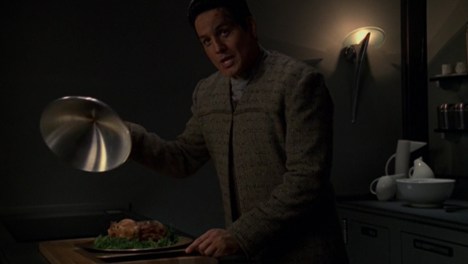
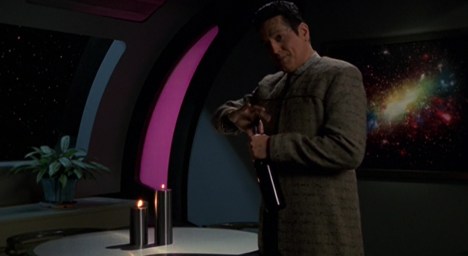
What a dish.

Voyager shows little real sign of progress in the final stretch. There is the occasional piece of housekeeping, such as the awkward decision to get Neelix off the ship in Homestead. There are occasional flashes of thematic reflection on the end of the journey, as in Workforce, Part I and Workforce, Part II. There are also episodes asserting the show’s place within the larger franchise, espousing hollow takes on familiar franchise storytelling in episodes like Critical Care or Repentance. Voyager even shows flashes of anxiety about the franchise iteration that will replace it, in episodes like Friendship One.

Watching the seventh season of Voyager, there is never any doubt that this will be the final season. There is a funereal atmosphere running through the season, that awkward sense of an exhausted athlete grasping desperately for the respite of the finish line. Watching the seventh season of Voyager, fatigue hangs in the air; it is abundantly clear that nobody involved expects an eighth season. However, it is equally obvious that nobody involved with the show has any idea what to do with the seventh season itself.

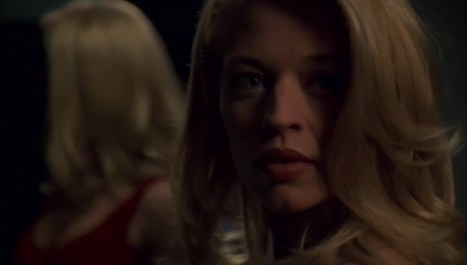
Not feeling herself.

On its own terms, Human Error is a disappointment in a manner similar to a lot of late Voyager episodes. The premise is highly derivative of a number of relatively recent episodes. As with Imperfection, Seven of Nine experiences a technological malfunction that may kill her due to her Borg implants. As with Someone to Watch Over Me, Seven of Nine experiments with her humanity. As with Pathfinder (and much earlier Hollow Pursuits), a character finds themselves escaping from reality into holographic fantasy. As with Fair Haven, a lead character falls in love with a holographic partner.

Human Error is dull and drab in terms of plotting. Its structure is fairly conventional. It’s secondary plot is underdeveloped, unnecessary and distracting. Its resolution is trite, with Seven of Nine naturally redeeming her earlier failures by saving the crew at the last possible minute using techno-babble and hazily-defined stakes. All of this is pretty standard Voyager plotting. It is not an aberration. There is very little to be said about these elements of the episode. These have been problems with the show for years, and Human Error is not even the most egregious example of any of them.

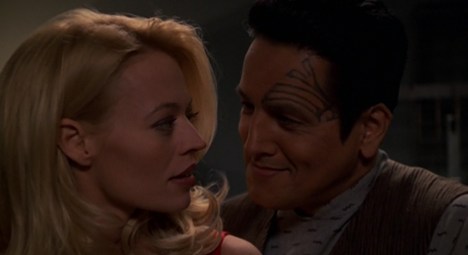
More like Chako-bae.

The big problem with Human Error is lack of conviction. Human Error is an episode with a premise that requires and demands proper development and exploration. It is an episode that lays down a marker, one that exists primarily so that it can be honoured over the final stretch of the season. Despite the problems within the episode itself, Human Error gambles in a big way on how the rest of the season builds off it. Naturally, Human Error loses this bet, its set-ups never honoured by the episodes that follow. This deals the episode a fatal blow, undercutting it brutally. Human Error is dull and drab, but also pointless.

To be clear, Human Error is not making an unreasonable request of the seven episodes that follow. The premise flowing from Human Error isn’t especially ambitious in the context of early twenty-first century television. Both The Next Generation and Deep Space Nine have built skilfully off individual episodes like Human Error, using these set-ups as stepping stones to build something more impressive. Even Voyager has employed that sort of storytelling before, albeit to mixed effect. There is no reason for Human Error to crash so spectacularly, beyond a complete disinterest from Voyager itself.

Don’t bottle it.

Continue reading →

Non-Review Review: X-Men – Dark Phoenix

It reflects the strange state of the modern multimedia landscape that X-Men: Dark Phoenix feels almost like a plucky underdog.

This is a major studio summer blockbuster with a budget of well over one hundred million dollars. More than that, it is the twelfth film in a series that has historically been both critically and commercially successful; the films have earned over $5.7bn dollars worldwide, eight of the twelve films have positive scores on Rotten Tomatoes, seven of those twelve have been popular enough to end on the Internet Movie Database‘s top 250 films of all-time. The current franchise stars a two-time Oscar winner. The last film in the series earned an Oscar nomination for its screenplay.

A hot property.

Dark Phoenix should be an event. Instead, it arrives with a relative whimper. The release date was pushed back repeatedly, first from November 2018 to February 2019, and then to June 2019. It has been hounded by largely unfounded industry gossip about terrible test screenings. It is tracking for the lowest opening weekend in the franchise. In the time between the film entering production and its eventual release, it has been somewhat overshadowed by news that Disney are to buy 20th Century Fox, and that this franchise will be rebooted.

“I am inevitable,” Thanos famously boasted in Avengers: Endgame, the literal manifestation of death and time who existed to be vanquished by the assembled heroes. He might have been speaking of the influence of Disney. Dark Phoenix crashes against that inevitability, shattering and snapping against those immovable objects. Dark Phoenix is a mess, a disorganised husk of a movie carved out in an editing booth and built from last-minute reshoots. However, it is not quite the disaster that it should be. Instead, it seems almost endearingly defiant, a blockbuster flavoured with passive aggression.

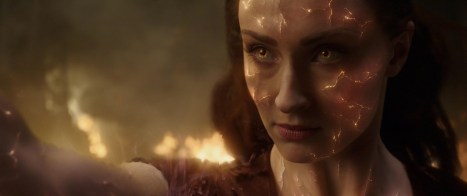
Raining on their parade.

Continue reading →

New Podcast! The X-Cast – Season 4, Episode 7 (“Musings of a Cigarette-Smoking Man”)

This was a surprise and a delight. Reteaming with Carl Sweeney, with whom I last discussed Unruhe, I’m back on The X-Cast this week covering Musings of a Cigarette-Smoking Man.

To tip my hand quite early, Musings of a Cigarette-Smoking Man is one of my favourite episodes of The X-Files. More than that, it’s one of my favourite pieces of nineties pop culture in general, the twisted evil twin of Forrest Gump and an exploration of the first half of the American Century through the lens of conspiracy theory. It’s a prime example of the sort of experimentation that made The X-Files such a great piece of nineties television, anchored in a playful and self-aware script from Glen Morgan and some great direction from James Wong.

So it was fantastic to get the chance to talk about it at length with Carl – even “Bad Carl” – on The X-Cast. You can listen to the episode here, or click the link below.

Continue reading →

132. Glitter (-#18)

Hosted by Andrew Quinn and Darren Mooney, and this week with special guest Stacy Grouden, The 250 is a (mostly) weekly trip through some of the best (and worst) movies ever made, as voted for by Internet Movie Database Users. New episodes are released every Saturday at 6pm GMT.

This time, Vondie Curtis-Hall’s Glitter.

Spotted as a back-up vocalist by fly D.J. Julian “Dice” Black, singer Billie Frank finds herself whisked away into a world of stardom and celebrity. However, Billie quickly discovers that fame and fortune do not offer the comfort and security that she has always craved.

At time of recording, it was ranked 18th on the Internet Movie Database‘s list of the worst movies of all-time.

Continue reading →

New Podcast! Scannain Podcast (2019) #21!

It’s time for the Scannain podcast!

This week, I’m back hosting and I’m joined by Jay Coyle and Ronan Doyle to discuss the week in film. Ronan is fresh back from the Trish McAdams and “Memory on Screen” seasons at the Irish Film Institute, and so has a lot to cover from Spider to Memento to the work of Terrence Davies. Jay has had a busy week as well, watching The Virgin Suicides, The Childhood of a Leader and Valley of the Dolls. I’ve had a more eclectic week, watching animated versions of lost Doctor Who episodes, Holmes and Watson, and the surreality that is The Lonely Island Presents: The Unauthorised Bash Brothers Experience.

A lot of news this week, including Roman Polanski’s (failed) efforts to sell his latest movie at Cannes, Woody Allen releasing a trailer for A Rainy Day in New York on his personal Facebook, the major studios dealing with the Georgia Abortion ban, Dublin Oldschool arriving on Netflix, and a €3,000 prize on offer at the Galway Film Market in July.

The top ten:

  1. A Dog’s Journey
  2. Dumbo
  3. Paw Patrol Mighty Pups
  4. The Hustle
  5. Avengers: Endgame
  6. John Wick: Chapter III – Parabellum
  7. Detective Pikachu
  8. Rocketman
  9. The Secret Lives of Pets II
  10. Aladdin

New releases:

You can listen to the podcast directly here.

Non-Review Review: Always Be My Maybe

Perhaps Always Be My Maybe is a more accurate reminder of the romantic comedy.

Much digital ink has been spilled on the state of the romantic comedy as a genre, particularly in the context of the streaming wars. Many critics and observers have lamented the death of the mid-budget movie at the American box office, citing the romantic comedy as one of the genres most obviously affected. However, there were a number of hopeful signs of life in the genre in recent years. Netflix has been consciously investing in these sorts of films, with internet favourites like Set It Up or To All the Boys I’ve Loved Before. (Tellingly, Netflix became the international home for Isn’t It Romantic?)

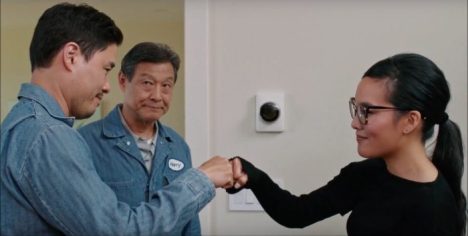
The script could use a punch-up.

However, the genre also performed robustly in cinemas with Crazy Rich Asians becoming a breakout success story for Warner Brothers and sparking a lot of excitement and interest around the genre. In fact, even Late Night looks like it might do something similar for the related “woman at work” subgenre; although its box office success seems much less assured, critical response is very positive. As a result, it seems like reports of the death of the romantic comedy and similar works have been greatly exaggerated. There is life in that old genre yet, whether theatrically or streaming.

The arrival of Always Be My Maybe underscores at least one factor in the success of breakout hits like Crazy Rich Asians, Set It Up or Late Night. A lot of the modern attention on the romantic comedy genre is focused on exceptional examples of the genre; films within the genre that are very, very good. In contrast, Always Be My Maybe feels like something of a grim corrective. It is perhaps more representative of the romantic comedy genre as it tended to be, rather than evoking the popular memory of it. This is to say that Always Be My Maybe is occasionally charming, largely derivative, and generally quite bland.

I left my heart in San Francisco.

Continue reading →