• Following Us

  • Categories

  • Check out the Archives


  • Awards & Nominations

179. Le salaire de la peur (The Wages of Fear) – World Tour 2020 (#202)

Hosted by Andrew Quinn and Darren Mooney, and this week with special guest Tony Black, The 250 is a (mostly) weekly trip through some of the best (and worst) movies ever made, as voted for by Internet Movie Database Users.

This time, Henri-Georges Clouzot’s Le salaire de la peur.

Four men drift idly around a deadend town in the heart of South America, when an unlikely opportunity strikes. A freak accident has caused a fire at an American oil well, and the company is offering a lavish payday to anybody who can help. The only catch is that to earn that money, these four men will have to drive extremely volatile nitroglycerine across some of the most treacherous terrain imaginable. Those who survive will have enough to escape the purgatory in which they’ve found themselves, and those who don’t won’t care.

At time of recording, it was ranked 202nd on the list of the best movies of all time on the Internet Movie Database.

Continue reading

New Escapist Column! On “Better Call Saul” as Fitting Eulogy to the Television Antihero…

I published a new In the Frame piece at Escapist Magazine this evening. Better Call Saul wrapped up its fifth season this week, and so it was worth taking a look at the Breaking Bad prequel.

To a certain extent, Better Call Saul seems like a show out of step with the times. It is set in the early days of the twenty-first century. It has never become the ratings or awards juggernaut that Breaking Bad became. It has a strong critical following, but never truly broke out into the wider culture in the way that Breaking Bad did. None of this is a judgment on the show itself. After all, Better Call Saul premiered at a time that television was already pushing away from those antihero dramas.

However, that status as show that exists at the tail end of a broader cultural trend allows Better Call Saul a greater degree of creative freedom. It offers a reflective meditation on the kind of antiheroes that populated so much of the so-called “Golden Age of Television.” These masculine archetypes are easy to galmourise, even when shows are unambiguous about their flaws. The beauty of Better Call Saul lies in creating an antihero who is harder to fetishise. Saul is not Walter White or Tony Soprano or Al Swearengen. He is a lot more tragic, a lot more pathetic.

This is the beauty of Better Call Saul, the angle that allows the show to feel like a true coda to the kind of stories that dominated prestige television for well over a decade. You can read the piece here, or click the picture below.
 

New Podcast! The Time is Now – Season 2, Episode 13 (“The Mikado”)

I was delighted to get invited back on The Time is Now to discuss The Mikado with the inimitable Tony Black.

The Mikado is an interesting episode of the second season of Millennium. In some ways, it represents a conscious throwback to the “serial killer of the week” format that defined so much of the first season. In some ways, it’s the ultimate example of the “serial killer of the week” format, pitting Frank Black against a stand-in for the Zodiac. However, in other ways it feels very much in step with the second season as a whole. It’s a story about information and rebirth, two core themes of the season as a whole. Either way, it’s a highlight in a season full of highlights.

As ever, you can listen directly to the episode here, subscribe to the podcast here, or click the link below.

Continue reading

New Escapist Column! On What Modern Superhero Films Could Learn From Sam Raimi’s “Spider-Man”…

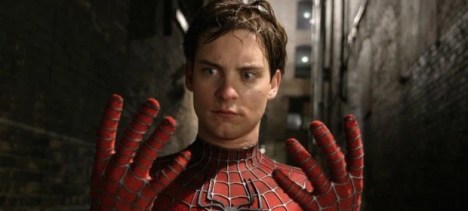
I published a new In the Frame piece at Escapist Magazine this evening. With the news that Sam Raimi is going to be directing Doctor Strange and the Multiverse of Madness, I thought it was worth taking a look back at his Spider-Man movies.

Sam Raimi’s Spider-Man movies helped to pave the way for the modern superhero blockbuster, arriving at a pivotal moment for mainstream blockbuster cinema. Along with Blade and X-Men, Spider-Man demonstrated that it was possible to accurately translate these heroes to screen. In the years since, the superhero genre has become the dominant form of contemporary blockbuster cinema. However, rewatching Raimi’s Spider-Man movies, it is immediately clear that the genre hasn’t always developed in the healthiest or most satisfactory directions.

What could the MCU learn from Sam Raimi’s Spider-Man movies? You can read the piece here, or click the picture below.

New Podcast! The Time is Now – Season 2, Episode 12 (“Luminary”)

The Time is Now is officially back from its Christmas hiatus, and I was thrilled to join writer Joe Maddrey for a discussion of a highlight from the second season of Millennium, Luminary.

Of course, Luminary was loosely inspired by the real-life story of Christopher McCandless. The teenager famously journeyed into the Alaskan frontier in the hopes of finding a spiritual truth, only to die alone in the remains of an old bus. McCandless was something of a folk icon of the late nineties, most notably inspiring projects like Into the Wild. On the surface, this might appear like a strange fit for Millennium, but that story resonates with the themes of millennial malaise that run through the series. The result is one of the best episodes within a phenomenal season of television.

As ever, you can listen directly to the episode here, subscribe to the podcast here, or click the link below.

Continue reading

New Escapist Column! On the Unique Appeal of David Lynch’s “Dune”…

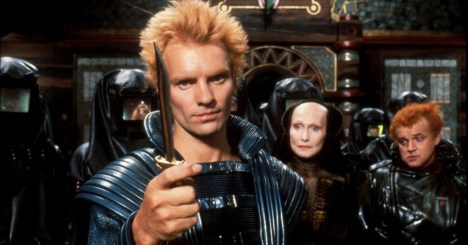
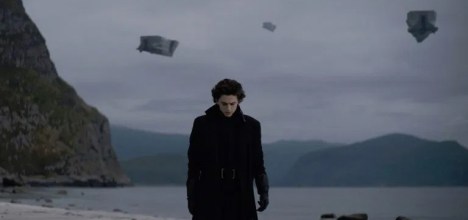
I published a new piece at Escapist Magazine this evening. This week saw the release of the first production photos from Denis Villeneuve, so it felt like the perfect opportunity to take a look back at the last attempted adaptation of Frank Herbert’s iconic science-fiction classic.

David Lynch’s Dune is not necessarily a coherent film. It’s not a good film by any traditional metric of quality. However, it is a unique film. There has, quite simply, never been another blockbuster like it. It’s a film at war with itself, caught between extremes. The producers clearly want the film to look like a Star Wars rip-off, while Lynch is pulling from his own esoteric influences. The results are dazzling and chaotic. It’s hard to believe that a film like this could ever exist.

You can read the piece here, or click the picture below.

178. Snatch – World Tour 2020, w/ When Irish Eyes Are Watching (#100)

Hosted by Andrew Quinn and Darren Mooney, and this week with special guests Alex Towers and Sean Driver from When Irish Eyes Are Watching, The 250 is a (mostly) weekly trip through some of the best (and worst) movies ever made, as voted for by Internet Movie Database Users.

This time, Guy Ritchie’s Snatch.

Two low-level grifters looking to buy a caravan from some Irish travellers. One international thief lying low in London after an Antwerp job. A former Soviet secret agent. A reliable Jewish fence and his American counterpart. A tough old gangland geezer who isn’t used to not having things go his way. A diamond. A dog. And the chaos that ensues when all of these elements collide in the most unexpected of ways.

At time of recording, it was ranked 100th on the list of the best movies of all time on the Internet Movie Database.

Continue reading

New Escapist Column! On “Dune” as a Deconstruction of the “Chosen One” Fantasy…

I published a new In the Frame piece at Escapist Magazine this evening. This week saw the release of the first production photos from Denis Villeneuve, so it felt like the perfect opportunity to dig into Frank Herbert’s science-fiction classic.

A lot of the press around Dune is making a big deal about the novel as an epic on the scale of something like Star Wars or The Lord of the Rings. However, this seems to sell the novel short. Dune is not a simple “chosen one” fantasy narrative, although it has many of the familiar trappings of the genre. It is the story of a teenage boy who comes to inspire religious devotion in his followers, after all. However, the novel problematicises that sort of story, by complicating the messiah at its core. Dune is warped and grotesque reflection of those power fantasies.

You can read the piece here, or click the picture below.

Non-Review Review: Underwater

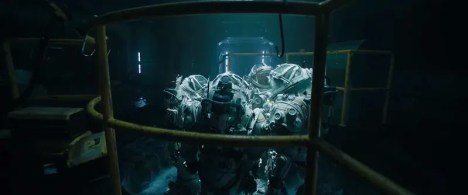
There’s a surprising charm to Underwater, which largely extends from its sense of propulsive forward momentum.

Underwater is not necessarily a good movie. It often feels like two radically different and highly derivative science-fiction movies stitched together, transposed from deep space to the deep sea. Underwater is never entirely sure whether it wants to be Gravity… but in the ocean” or Alien… but in the ocean”, and so repeatedly finds itself caught between the two extremes. It is a film populated by archetypes rather than characters, and which is pushed from one set piece to the next by percussive force rather than any coherent throughline.

A deep dive.

And yet, in spite of all that, there’s something strangely appealing about the mismatch of elements at play in Underwater. It isn’t just the way in which the film bounces haphazardly between a disaster film and a monster movie, it is also reflected in the casting. Underwater is a B-movie that brings together quite an eclectic set of leads. Kristen Stewart continues the gentle transition back towards the mainstream that began with Charlie’s Angels, but finds herself working opposite a cast including arthouse favourite Vincent Cassel and broader performers like T.J. Miller.

These seemingly contradictory elements create a strange frisson within the film, one that is just as volatile as the energy reactor that (inevitably) threatens to got critical to add an extra layer of pressure to the already beleaguered characters. However, director William Eubank seems to understand that these components are highly unstable, and so Underwater moves a dizzying pace that helps to prevent any of internal imbalances from reaching critical mass. It’s hardly the stuff of create cinema, but it’s a surprisingly sturdy and energised B-movie.

Suited to the task.

Continue reading

Non-Review Review: Fantasy Island

What, exactly, is the point of the Blumhouse reboot of Fantasy Island?

To be fair, Blumhouse are a studio with a varied track record. They have produced some of the most interesting and compelling mainstream horror movies of the past few decades, including films like Get Out and The Invisible Man. They have also produced a fair amount of cynical schlock, such as Truth or Dare. There are also a number of films that seem to exist in the middle ground between those two extremes, like The Hunt or Black Christmas. It’s certainly a more varied approach than the standard horror films that heralded the studio’s arrival, like Insidious or Sinister.

Palming it off.

Jason Blum is a shrewd producer, and there’s a sense in looking at the studio’s output of trying to balance competing artistic and commercial demands. Blum tends to keep budgets under control, but he also seems to offset the riskier and more ambitious projects with generic crowd-pleasing fare. Fantasy Island would seem to belong in that category, but exactly what crowd is it intended to please? Watching Fantasy Island is a strange experience, and not just because of the multitude of structural and storytelling problems.

On a more basic level: who exactly is this movie for?

Can’t stick the island-ing.

Continue reading