• Following Us

  • Categories

  • Check out the Archives


  • Awards & Nominations

New Escapist Column! On Tom Cruise as a Movie Star Defying Gravity…

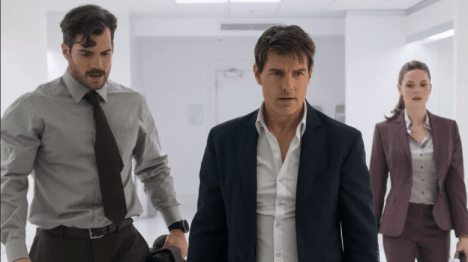
I published a new In the Frame piece at Escapist Magazine this evening. Given that he just announced plans to shoot a movie in outer space, it seemed like a good time to discuss Tom Cruise.

Cruise is a fascinating movie star. He’s one of the rare movie stars who has managed to remain a movie star for over three decades, at a time when movie stardom increasingly seems like an outdated concept. It’s interesting to look at how Cruise has navigated this shift, by essentially exerting enough gravity to bend established intellectual property towards him. There is no boundary between Ethan Hunt and Tom Cruise, whether Hunt is dangling out of an airplane in Mission: Impossible – Rogue Nation or atoning for a failed marriage in Mission: Impossible – Fallout.

You can read the piece here, or click the picture below.

New Podcast! The Time is Now – Season 2, Episode 15 (“Owls”)

I have had the immense good fortune to appear on The Time is Now quite a lot lately, but was particularly flattered to be invited on to talk about Owls and Roosters, the big “mythology” two-parter in the late second season of Millennium. It’s an honour to join Kurt North for the conversation.

Owls and Roosters rank among my favourite mythology episodes in the Ten Thirteen canon, largely because they serve as a conscious unravelling of conspiracy theory. It is very common to compare Millennium to The X-Files, and with good reason. There’s considerable thematic overlap between the two shows; in fact, Patient X and The Red and the Black work as interesting companion pieces to Owls and Roosters. Both are stories about the limits of conspiracy, and the idea that entropy must eventually kick in and erode these empires of sand.

However, while The X-Files maintained a consistent belief in a singular unifying mythology, a belief in a single account of history, however convoluted that arc might be, Millennium opted for a more adventurous and postmodern approach. Millennium suggested a world in which all conspiracies were true, in which there were multiple competing narratives of history struggling against one another, with no clear or correct answer. Owls and Roosters offer the culmination of this approach, a car crash of competing narratives trying to account for a period of great instability.

As ever, you can listen directly to the episode here, subscribe to the podcast here, or click the link below.

Continue reading

New Escapist Column! On “Avengers: Endgame” as a Shared Cultural Experience…

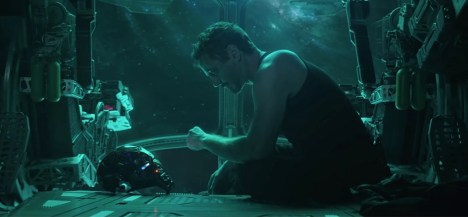
I published a new In the Frame piece at Escapist Magazine this evening. Given that Avengers: Endgame is one year old, it seemed only fair to mark that anniversary with a reflective piece.

I’m not a huge fan of Endgame. I think it’s a modest movie that works very hard to avoid doing or saying anything substantive, wrapped up in the power fantasies that drive so much of the modern Marvel Cinematic Universe. And yet, in spite of that, I admire Endgame as something that has become increasingly rare in the twenty-first century: a piece of shared cultural experience that ties us all together.

You can read the piece here, or click the picture below.

New Escapist Column! On How “Trolls World Tour” Might Be the Most Important Movie of 2020…

I published a new piece at Escapist Magazine yesterday evening. It’s 2020, so of course Trolls World Tour might end up being a film that redefines the cinematic experience.

Trolls World Tour was released directly on to digital platforms following the coronavirus pandemic. The movie apparently managed to earn more in three weeks as a digital rental than the original Trolls earned in its entire five-month theatrical run. Naturally, this has made Universal bullish, suggesting that they might look at day-and-date digital releases for films like Jurassic World: Dominion and F9, which would radically change the cinematic landscape. Understandably, cinemas are less than thrilled with this.

You can read the piece here, or click the picture below.


180. Sorcerer – World Tour 2020, w/ The New Wave (#—)

Hosted by Andrew Quinn and Darren Mooney, and this week with special guest Tony Black, The 250 is a (mostly) weekly trip through some of the best (and worst) movies ever made, as voted for by Internet Movie Database Users.

This time, a special treat. William Friedkin’s Sorcerer. And we’re crossing over with The New Wave, as a bit of a teaser for their launch.

Four men drift idly around a deadend town in the heart of South America, when an unlikely opportunity strikes. A terrorist has caused a fire at an American oil well, and the company is offering a lavish payday to anybody who can help. The only catch is that to earn that money, these four men will have to drive extremely volatile nitroglycerine across some of the most treacherous terrain imaginable. Those who survive will have enough to escape the hell in which they’ve found themselves, and those who don’t won’t care.

At time of recording, it was not ranked on the list of the best movies of all time on the Internet Movie Database.

Continue reading

New Escapist Column! On Black Widow’s Death Sequence in “Avengers: Endgame”…

I published a new In the Frame piece at Escapist Magazine this evening. Given that Avengers: Endgame is one year old and that Black Widow was supposed to open today, it seemed appropriate to discuss Black Widow’s death sequence from Endgame.

It has become a cliché in recent years to talk about “subverting expectations”, a term normally employed by fans frustrated with the direction of franchises like Game of Thrones or Star Wars. In short hand, it seems to imply a bad twist, one that undermines the franchise. However, films like Star Wars: Episode VIII – The Last Jedi and shows like Steven Moffat’s Doctor Who employ subversion for very particular purposes, to catch the audience off-guard and to ask interesting questions about the stories that are being told.

In contrast, the death of Black Widow is the worst sort of subversion or twist. It is a cheap “gotcha!”, designed to catch the audience off-guard by taking a sharp swerve away from the story that has been set up and offering a development simply because it’s unexpected and because surprise has inherent value. The result is something very shallow and superficial, a decision that sacrifices an admittedly predictable and cliché story for something that isn’t even a story at all.

You can read the piece here, or click the picture below.

Non-Review Review: The Assistant

The Assistant is a quiet and simmering examination of complicity.

The story unfolds over the course of a single day in the life (mostly the office) of Jane. Jane is the eponymous assistant, working at an independent film company in New York as the right-hand woman to a(n in)famous producer with an explosive temper and monstrous appetites. Kitty Green’s film follows Jane from her early morning Uber ride into work to the single muffin that she allows herself at the deli on the way home, keeping an intense and claustrophobic close-up on lead actor Julia Garner.

Garnering praise.

The Assistant arrives with enough weight that the audience knows what it is about even before the film clearly articulates it. The Assistant is transparently a #metoo movie and the unnamed and largely unseen (but very clearly heard and very strongly felt) producer is very plainly a stand-in for convicted sexual offender Harvey Weinstein. This allows The Assistant a great deal of freedom. Because the audience comes to the film with that assumed knowledge, Green’s script and direction are able to peddle in ambiguity and tease the veil of plausible deniability.

The beauty of The Assistant lies in the way that both the audience and Jane (and seemingly everybody else) knows what is happening, but keep their head down and their focus elsewhere. It’s a story about looking away so that one might see no evil and the noise that people make so that they might hear no evil. It’s an anxious, ominous, suffocating study of the constant smoothing done at the margins of these sorts of horror stories.

Dial it back.

Continue reading

“Whose Gesture Would Remove Me?” Fate and Chance in Sorcerer and The Wages of Fear

“You going to tell me where I’m going?”

“I swear to Christ, I don’t know.”
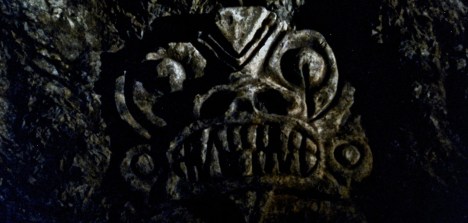
The fates seemed aligned against William Friedkin’s Sorcerer.

The very idea of the film was an act of hubris, with Friedkin daring to remake one of the classics of world cinema. The Wages of Fear is justifiably regarded as one of the best movies ever made, and so for an American director to assume that he could remake it in his own image felt like an act of arrogance. Sorcerer often felt like a doomed project, suffering from wound both rooted in Friedkin’s self-regard and resulting from broader cultural trends.
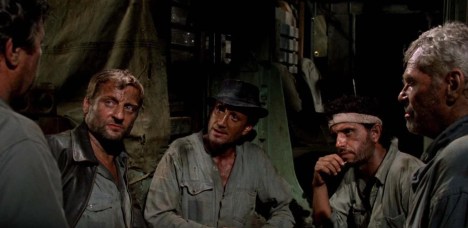
Friedkin’s refusal to compromise cost the movie a bankable leading man in Steve McQueen, something that Friedkin regrets to this day. The decision to shoot on location South America led to a ballooning budget, conflicts with cast and crew and a variety of logistical difficulties. Friedkin refused to compromise with the studio during production, being openly antagonistic when they offered notes. The decision to open the movie with seventeen minutes of subtitled prologue may have alienated audiences, along with the use of title that conjured images of an Exorcist  sequel.

Perhaps all of this was meaningless. Maybe there was nothing that Friedkin could have done during the production of Sorcerer would have made a difference. After all, Sorcerer had the misfortune of opening a week after Star Wars. George Lucas’ science-fantasy epic obliterated the more restrained and more cynical film. It’s debatable to what extent Steve McQueen’s face on a poster or more favourable reviews in the papers might have helped. Friedkin’s career might have fared better after the failure if he’d been easier to work with, but it seems the film itself was always doomed.
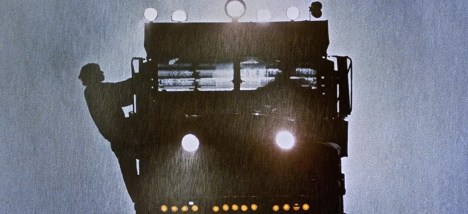
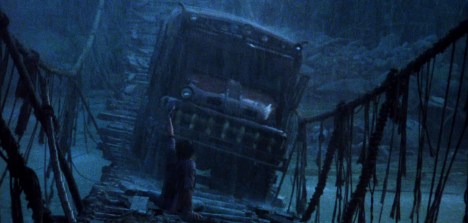
In its own way, this feels entirely appropriate. Sorcerer is a story about a vindictive and mean-spirited universe, one that seems actively antagonistic towards the characters who inhabit it. Sorcerer is a story about the whims of fate, and the inescapability of destiny, populated by characters who are doomed long before they sign on to a suicide mission to transport highly volatile dynamite across the Amazon. It seems entirely reasonable that Sorcerer itself would be just as ill-fated as any of its central characters, just as subject to the sinister machinations of a cruel world.

However, all of this gets at the most interesting aspect of Sorcerer, the part of the film that is most distinct from The Wages of Fear. The film is definitely a remake of Henri-Georges Clouzot’s classic, but it does what most truly great remakes do: it finds a fresh angle on the same basic source material. In many ways, The Wages of Fear is a uniquely European blockbuster that exists in the context of the aftermath of the Second World War. Sorcerer is undeniably an American movie, one that insists on finding order in the chaos of the turbulent seventies.
Continue reading

“I Simply Am Not There”: The Existential Horror of Eighties Excess in “American Psycho”…

My name is Patrick Bateman. I’m 27 years old. I believe in taking care of myself, and a balanced diet and a rigorous exercise routine. In the morning, if my face is a little puffy, I’ll put on an ice pack while doing my stomach crunches. I can do a thousand now. After I remove the ice pack I use a deep pore cleanser lotion. In the shower I use a water activated gel cleanser, then a honey almond body scrub, and on the face an exfoliating gel scrub. Then I apply an herb-mint facial masque which I leave on for 10 minutes while I prepare the rest of my routine. I always use an after shave lotion with little or no alcohol, because alcohol dries your face out and makes you look older. Then moisturizer, then an anti-aging eye balm followed by a final moisturizing protective lotion. There is an idea of a Patrick Bateman. Some kind of abstraction. But there is no real me. Only an entity. Something illusory. And though I can hide my cold gaze, and you can shake my hand and feel flesh gripping yours, and maybe you can even sense our lifestyles are probably comparable, I simply am not there.

American Psycho is twenty years old, and somehow more relevant than ever.

To be fair, the film signposts this strange relevance. Towards the end of Bret Easton Ellis’ novel, Bateman takes a moment to muse on Trump Tower, admiring it as it stands “tall, proudly gleaming in the late afternoon sunlight.” Throughout the film, Bateman and colleagues are obsessed with Trump. “Is that Donald Trump’s car?” asks Bateman while riding with his fiancée in a taxi. Later on, out at dinner in a low-rent restaurant, he tries to catch a colleague’s interest (and maybe his own) by asking, “Is that Ivana Trump?”

Without ever being directly present in the film or the novel, Donald Trump haunts American Psycho. Ironically, that weird relationship has only deepened in the years since the novel was published and the film was released. During his presidential campaign, Trump famously boasted, “I could stand in the middle of Fifth Avenue and shoot somebody and I wouldn’t lose any voters.” It’s an argument that has become worryingly central to Trump’s campaign, with even his lawyers advancing the argument that he couldn’t be prosecuted for it as part of an argument over his tax returns.

American Psycho makes a similar argument about its protagonist. Bateman spends the entirety of the book and movie openly boasting and threatening characters with death and dismemberment, only for everybody involved to remain either willfully or accidentally ignorant of what Bateman claims to be. Bateman confesses his crimes repeatedly and openly, only for colleagues to laugh it off as a joke or shift the conversation or reveal that they weren’t really listening. American Psycho unfolds in a world where nothing is real and nothing matters. It is closer to our world than it seems.

Continue reading

New Escapist Column! On “Devs”, “Westworld” and Determinism…

I published a new In the Frame piece at Escapist Magazine this evening. Devs recently wrapped up, and Westworld is hurdling towards its season finale, so it seemed an appropriate time to reflect on both of those.

There’s an interesting synchronicity between the third season of Westworld and Devs. Both are stories about tech companies trying to build deterministic models of the world. Although both series approach this basic framework in very different ways, they seem to tap into the same core anxieties. Westworld and Devs are stories about free will and choice in the face of inhuman systems that argues the world could only ever be as it is. There’s something fascinating in seeing these themes boiling to the surface so close together.

You can read the piece here, or click the picture below.