• Following Us

  • Categories

  • Check out the Archives


  • Awards & Nominations

New Podcast! The Escapist Movie Podcast – “The Devil All the Time, Antebellum, Mandalorian, and Pushbacks”

The Escapist have launched a movie podcast, and I was thrilled to join Jack Packard and Bob Chipman for the fourth episode, primarily discussing The Devil All the Time, Antebellum, the trailer for the second season of The Mandalorian, and the changes to the release schedule after the releases of TENET and Mulan.

You can listen to the episode here, back episodes of the podcast here, click the link below or even listen directly.

New Escapist Column! On the Charming Crassness of “The Boys”…

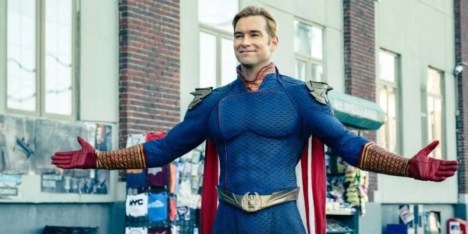
I published a new In the Frame piece at The Escapist this evening. With the second season of The Boys releasing on Amazon Prime, it seemed worth a look.

The Boys is not a subtle television show. There is little ambiguity or nuance in its cartoonish portrayal of a world dominated by superheroes defined by their selfishness, vindictiveness and childishness. However, this lack of subtlety is not necessarily a weakness. The Boys is outlandish to the point of being crass, but that’s part of the appeal. These are crass and vulgar times, and so it seems reasonable to filter the superhero genre through that sensibility. The age of prestige television is over, but then there is nothing especially prestigious about this moment.

You can read the piece here, or click the picture below.

“It Had Nothing to Do With Me”: The Moral Sloth of Henry Hill in “Goodfellas”…

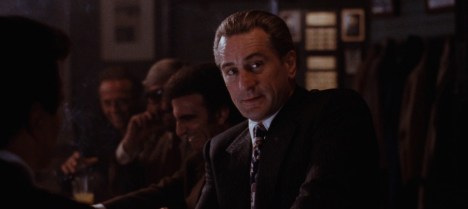
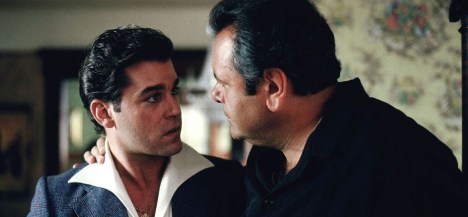
The podcast that I co-host, The 250, continued our belated Summer of Scorsese last week with a look at Raging Bull. This week, we’re looking at Goodfellas. It is a fun and broad discussion that is well worth your time, but it spurred some of my own thoughts about Martin Scorsese’s 1990 gangster classic.

There is a long-running debate concerning the films of Martin Scorsese, one that arose most recently around The Wolf of Wall Street.

To his critics, Scorsese is seen as a director who glorifies and venerates a certain form of toxic masculinity. There’s a certain logic to this argument. After all, whatever Scorsese’s intentions may be, there is no denying that his films attract a certain unironic fandom that gets swept up in these stories of tough men who do terrible things. This is reflected in everything from the ubiquity of Goodfellas as a “dorm room poster” to celebrations of its depiction of masculinity to the fact that real-life gangsters reportedly love it.

This criticism largely derives from the fact that Scorsese effectively surrenders control of the film’s narrative to his central characters. His movies are often literally narrated by their central characters: Henry and Karen Hill in Goodfellas, Ace Rothstein and Nicky Santoro in Casino and Jordan Belfort in The Wolf of Wall Street. These characters are given ample room to espouse their worldview and their philosophy, to craft the story that they want to tell.

Scorsese undoubtedly pushes back against his characters in interesting ways – often ironically juxtaposing their conceited monologues with brutal imagery to underscore the dissonance between their narrative of events with the reality of the situation. However, Scorsese largely avoids overtly moralising. He avoids the easy route of having external characters comment too obliquely or too loudly on the moral decadence at play. Indeed, the most interesting thing about Karen Hill is her own complicity in Henry’s immorality rather than any condemnation of it.
To be fair, there’s a lot to recommend this approach. American cinema has come a long way since the days of the Hays Code and the Breen Office, and there is a lot to be said for the importance of treating an audience as mature enough to grapple with complicated ideas or giving them room to reach conclusions on their own terms. Psycho is a classic piece of American cinema, but it suffers greatly from a closing scene where a new character shows up to lecture the cast (and implicitly the audience) on the film that they just watched.

Indeed, this is ultimately the beauty of Scorsese’s approach to these characters. Scorsese gives them all the room that they need, and they still manage to incriminate themselves. Their robust attempts to glorify and mythologise themselves inevitably backfire. Like a good detective or lawyer, Scorsese shrewdly just allows characters like Henry Hill to talk and talk and talk, knowing that they have been given enough rope with which they might hang themselves.
Continue reading

Non-Review Review: The Devil All the Time

The Devil All the Time demonstrates that the adjective “novelistic” isn’t always a compliment.

Writer and director Antonio Campos is clearly aiming for an epic sweep to The Devil All the Time. The film unfolds over the course of several decades, following several intersecting lives in rural Ohio in the space between the end of the Second World War and the height of the Vietnam War. This is a tale that spans generations, with an impressive density. Small characters get huge arcs, dramatic twists hinge on chance encounters, and a large amount of the film’s plot is delivered by way of folksy omniscient narration.

Holland of the Free?

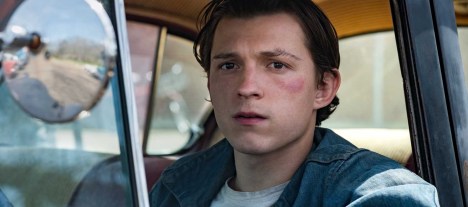
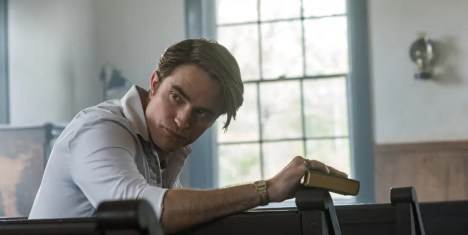
It is easier to admire The Devil All the Time than it is to appreciate it. Campos has drawn together a formidable cast to tell a story that explores a host of big ideas about small town life. The Devil All the Time clearly aspires to be a piercing study of religion, sex and violence in the American northeast. The film maintains an impressive atmosphere, in large part due to Campos’ moody direction and the work of Lol Crawley and the rumbling soundtrack from Danny Bensi and Saunder Jurriaans.

However, nothing in The Devil All the Time has room to breath. There are so many elements competing for narrative space that even films two-hours-and-twenty-minute runtime feels overstuffed. Characters are never allowed to stew or develop in a way that a story like this demands, instead reducing the movie to a series of plot points and thematic observations delivered in a rich and moody manner, but without any real substance to bind them all together.

Book ‘im.

Continue reading

New Escapist Column! On Kat as the Emotional Heart of “TENET”…

I published a new piece at The Escapist on Sunday. With the release of TENET, Christopher Nolan has been subject to the familiar criticisms of his work: that he is humourless, cold, emotionless. However, these criticisms miss the fact that Nolan’s films are often underpinned by deep reservoirs of emotion.

Elizabeth Debicki’s Katherine Barton is the beating heart of TENET. She also represents a clear evolution of how Nolan writes female characters. If TENET is a James Bond pastiche, than Kat is introduced as a disposable love interest – the character that the hero seduces to get closer to the villain, and is ultimately killed for her betrayal. She is also positioned in Nolan’s filmography so as to suggest one of Nolan’s “dead wives.”

However, as the film progresses, Kat becomes the emotional protagonist of TENET. It is her story that drives TENET. More than that, she assumes the narrative space that is usually reserved for Nolan’s male protagonists like Cooper in Interstellar and Cobb in Inception: that of a parent fighting desperately to be reunited with their lost children. As such, Kat is a fascinating character in Nolan’s filmography, both a deconstruction of the way that Nolan writes his women characters and a clear step forward.

You can read the piece here, or click the picture below.

New Escapist Video! On Disney’s Chinese Gambit with “Mulan”…

So, as I have mentioned before, I am launching a new video series as a companion piece to In the Frame at The Escapist. The video will typically launch with the Monday article, and be released on the magazine’s YouTube channel the following week.

With that in mind, here is last week’s episode, covering Disney’s ambitions to bring Mulan to China and the story of how Hollywood became so fascinated with that market. You can watch the pilot video here, and read the companion article here.

New Escapist Column! On “Black Panther” and Childlike Wonder…

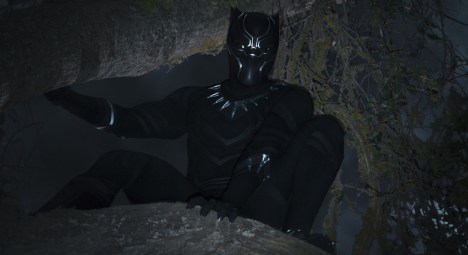
I published a new In the Frame piece at The Escapist this evening. With the tragic passing of Chadwick Boseman over a week ago, I have been thinking a lot about Black Panther. In particular, what makes it special.

It isn’t simply that Black Panther was the first superhero movie on this scale to feature a predominantly black cast from a black director. It was also the extent to which director Ryan Coogler understood the power of superheroes. Very few superhero movies are written with an understanding of what superheroes represent and why they are important, instead often falling into the trap of power fantasies rather than empowerment fantasies. Black Panther is the rare superhero movie that dares to see its world through the eyes of a child, and is more powerful for that.

You can read the piece here, or click the picture below.

Non-Review Review: Enola Holmes

Enola Holmes is a movie with a lot of charm, anchored in a sense of playful enthusiasm and a winning central performance.

Adapted from Nancy Springer’s The Enola Holmes Mysteries series of novels, the basic premise of Enola Holmes is straightforward enough. The classic Victorian detective Sherlock Holmes is given a younger sister, who inevitably finds herself forced to navigate the wider world while solving mysteries and avoiding the best efforts of her older brothers to ship her off to a suffocating and restrictive boarding school where she might be taught to be a lady.

Make yourself at Holmes…

Enola Holmes moves quickly and cheerfully through its starting premise and central mystery, bouncing from one sequence to another with considerable grace. However, it’s lead actor Millie Bobby Brown who carries the film. Brown is probably best known for her work on Stranger Things and a prominent role in Godzilla: King of the Monsters, but Enola Holmes suggests a long and promising career ahead of the young actor. It is impossible to imagine the movie seeming as effortless without her at its centre.

In fact, Enola Holmes suffers most when it moves away from its protagonist and makes room in her story for less compelling (but more nominally “important”) characters that wind up sapping the film’s energy. Enola Holmes has a surprisingly slow start for a film that breezes along once it finds its footing, and that is largely because it is initially reluctant to give its central character the breathing room that she needs. Still, once the film gets past that, it is a highly enjoyable adventure.

Enola that look…

Continue reading

New Escapist Column! On Ridley Scott’s Science-Fiction Sensibility in “Raised by Wolves”…

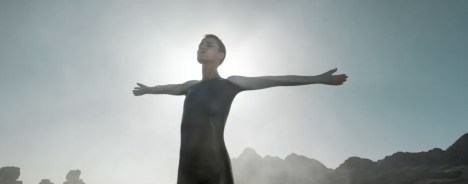
I published a new In the Frame piece at The Escapist on Friday. With the launch of Raised by Wolves on HBO Max, I thought it was worth taking a look at the streaming science-fiction series.

The most striking thing about Raised by Wolves is the extent to which it feels like a Ridley Scott production. Scott did not write or create the show, the was Aaron Guzikowski. However, Scott directed the first two episodes, and they often feel like an extension of Scott’s work. There are obvious echoes of Scott’s iconic science-fiction work in classics like Alien and Blade Runner, but also shots and sequences that seem to have been lifted from Prometheus and Alien: Covenant.

This works rather well, as Raised by Wolves delves into some of Scott’s core thematic preoccupations. Like Prometheus, Exodus: Gods and Kings and Covenant, this is a story about religion. Like Prometheus, Gods and Kings, Covenant and All the Money in the World, it is also a story about parenthood and the responsibility of caring for a younger life. However, because Raised by Wolves is not tied to any existing intellectual property, it gives Scott a lot of space to work. More than that, it suggests that Scott is a brand unto himself.

You can read the piece here, or click the picture below.

New Podcast! The Escapist Movie Podcast – ” Mulan, Dune and The Academy”

The Escapist have launched a movie podcast, and I was thrilled to join Jack Packard and Bob Chipman for the third episode, primarily discussing Disney’s release of Mulan, the first trailer for Dune and the new changes to eligibility for the Best Picture award at the Academy Awards.

You can listen to the episode here, back episodes of the podcast here, click the link below or even listen directly.