• Following Us

  • Categories

  • Check out the Archives


  • Awards & Nominations

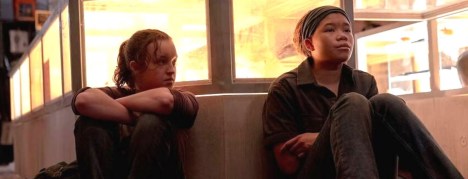
New Escapist Column! On How “The Last of Us” Shifts from Joel to Ellie…

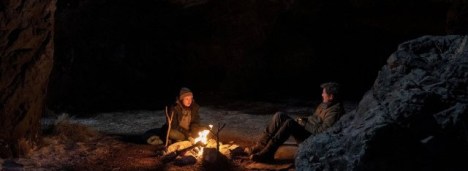
I am doing weekly reviews of The Last of Us at The Escapist. They’ll be dropping every Sunday evening while the show is on, looking at the video game adaptation as the show progresses. This week, the show’s seventh episode.

It’s an interesting proposition, adapting a serialised narrative after it has already been completed. In some ways, any serialised narrative is a first draft, a creative team making it up – to one degree or another – as they go along. As such, there is something very interesting in any subsequent adaptation of the work, as the adaptation has the luxury of a vantage point that can take in the completed work as a holistic entity. Left Behind was an add-on to the original video game version of The Last of Us, but the television series has the luxury of folding it into its ongoing narrative in real-time, as it were.

You can read the piece here, or click the picture below.
New Escapist Video! On Why Faithfulness is Not a Measure of Quality in Adaptation…

We’re thrilled to be launching a fortnightly video companion piece to In the Frame at The Escapist. The video will typically launch every second Monday, and be released on the magazine’s YouTube channel. And the video will typically be separate from the written content. This is kinda cool, because we’re helping relaunch the magazine’s film content – so if you can throw a subscription our way, it would mean a lot.

This week, with ongoing debates about the fidelity of shows like The Rings of Power, The Witcher: Blood Origin and The Last of Us, it seemed like a good opportunity to discuss the art of adaption. In particular, the question of whether faithfulness and quality are in any way related to one another.

New Podcast! The X-Cast – Season 9, Episode 2 (“Nothing Important Happened Today II”)

The X-Cast is covering the ninth season of The X-Files, which is – to put it generously – an interesting and uneven season of television in which the show seems uncertain of its own identity and purpose. The second half of the season premiere, Nothing Important Happened Today II, is an exemplar of that, and I was delighted to joing Carl Sweeney to talk about it on the podcast.

By all accounts, The X-Files probably should have ended with Existence, if not Requiem. However, the logic of television production made it very difficult for a network show at that time to gracefully bow out. The eight season had been a success, even though it felt like an ending. So a ninth season was commissioned, arriving into a world that had radically changed before the premiere was broadcast and without any clear sense of purpose or meaning. The results are uninspiring, but often fun to unpack.

You can listen to the episode here, or click the link below.

Continue reading

New Escapist Column! On Hitting “Peak Marvel”…

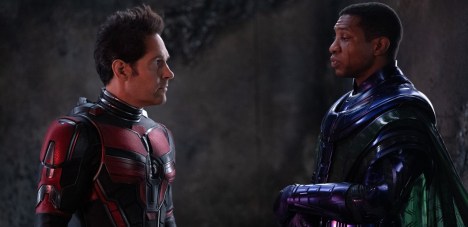
I published a new In the Frame piece at The Escapist this evening. With the reports that Disney+ will only be streaming two Marvel shows this year and the decision to move The Marvels out of summer and into November, it’s interesting to contemplate whether we’re already past “Peak Marvel.”

“Peak Marvel” is a reference to “peak oil”, referring to the point at which production reaches its apotheosis, where there is so much content being produced that it is unsustainable for any number of reasons. The Marvel Cinematic Universe remains one of the most successful multimedia franchises ever, but it has been flooding the market for the better part of two years. There are signs, both in the wider industry and within the brand itself, that this model is not sustainable. The question is what comes next.

You can read the piece here, or click the picture below.

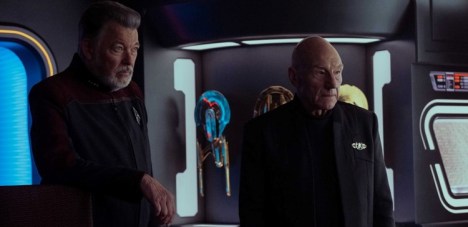
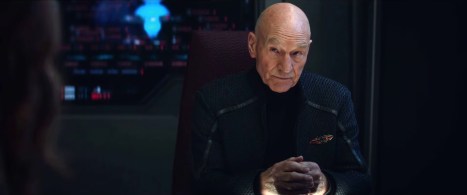
New Escapist Column! On The Third Season of “Star Trek: Picard” as a Choice Between Tired Clichés and Poor Writing…

I am doing weekly reviews of Star Trek: Picard at The Escapist. They’ll be dropping every Thursday morning while the show is on, looking at the third season as the show progresses. This week, the season’s second episode.

Writing about the third season of Picard is difficult, largely because it’s a show that doesn’t really offer anything new on a week-to-week basis. Indeed, the season’s interesting episode is an interesting study on its limitations. The primary plot thread is just a collection of reheated familiar elements, references to pre-existing Star Trek stories thrown into a blender and served a room temperature. The subplot involving the show’s last surviving original character, Raffi, is a bit more interesting, but is ultimately undone by the show’s lack of interest in it.

You can read the piece here, or click the picture below.

New Escapist Column! On “The Last of Us” As A Study of Evolving Masculinity…

I am doing weekly reviews of The Last of Us at The Escapist. They’ll be dropping every Sunday evening while the show is on, looking at the video game adaptation as the show progresses. This week, the show’s sixth episode.

The sixth episode of The Last of Us, Kin, is steeped in the iconography of the western: there’s a frontier town, two indigenous characters, and even a horse on the railroad tracks. However, there’s also a sense that Joel and Ellie have reached the end of their push westward, their journey from Boston to Jackson. In that sense then, the show explores the legacy of the western in American consciousness, particularly the genre’s archetypal portrayal of masculinity. What does it mean or Joel to be a man or a father? How does that reconcile with the image he has cast for himself as a cynical and weary outlaw? Can he move past that?

You can read the piece here, or click the picture below.

New Escapist Column! On “The Bad Batch” as a Show About Veterans of a Forever War…

I published a new piece at The Escapist last week. With the release of the second season of The Bad Batch, it seemed like a good opportunity to talk about one of the more interesting facets of the series.

The Star Wars franchise has always been intensely political. George Lucas tied the original films to the Vietnam War, and the prequels to the Iraq and Afghanistan Wars. The Bad Batch feels like a culmination of this trend, a follow-up to the prequel trilogy, released in the wake of the American withdrawal from Iraq and Afghanistan, that is very much engaged with the question of what happens to an army of soldiers at the end of an ostensible “forever war.” It’s a meaty theme for an animated series, and The Bad Batch is at its most interesting tapping into it.

You can read the piece here, or click the picture below.

New Escapist Column! On The Third Season of “Star Trek: Picard” as an Exercise in Justifying Nostalgia…

I am doing weekly reviews of Star Trek: Picard at The Escapist. They’ll be dropping every Thursday morning while the show is on, looking at the third season as the show progresses. This week, the premiere.

The third season of Picard is a staggering work of fan service nostalgia, a collection of imagery and iconography that the audience recognises, with little to tie it together beyond assumed familiarity. Part of what is so interesting about the series is that it seems to understand this. Picard is largely built around justifying that nostalgia, to itself and its audience, as if trying to desperately reassure viewers that it’s fine to give up the future and retreat into the comforts of an illusory past.

You can read the piece here, or click the picture below.

New Escapist Column! On How “The Last of Us” Uses an Underground Metaphor…

I am doing weekly reviews of The Last of Us at The Escapist. They’ll be dropping every Sunday evening while the show is on, looking at the video game adaptation as the show progresses. This week, the show’s fifth episode.

The fifth episode of The Last of Us, Endure and Survive, is a wonderful illustration of what the show does so well. Structurally, this is the kind of episode that every post-apocalyptic show inevitably does; it’s the story of a colony of survivors overwhelmed by a hostile horde. What is so effective about Endure and Survive is that it tells this conventional story in a way that plays into the larger themes of the show around it. The Last of Us has a very literary quality to it, and the episode is built around a clever central metaphor: it’s a story about rising up from underneath.

You can read the piece here, or click the picture below.

New Escapist Column! On The Third Season of “Star Trek: Picard” as Fan Service Methadone…

I am doing weekly reviews of Star Trek: Picard at The Escapist. They’ll be dropping every Thursday morning while the show is on, looking at the third season as the show progresses. To start with, though, a look at the season as a whole.

The end of the second season of Picard effectively wrote out the bulk of the show’s new cast members, explicitly to make room for a nostalgic revival of Star Trek: The Next Generation, featuring cast members thirty years removed from that series. The result is as pandering and condescending as one might expect, suffering from many of the same fundamental issues of the first two seasons, stripping out anything distinctive or unique and replacing it with a shallow petina of nostalgia. It’s cynical, it’s hollow and it speaks to a fundamental emptiness with so much modern pop culture.

You can read the piece here, or click the picture below.