• Following Us

  • Categories

  • Check out the Archives


  • Awards & Nominations

New Escapist Column! On the Dearth of the Monoculture…

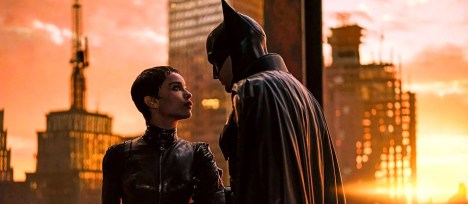
I published a new column at The Escapist earlier this week. It’s been an interesting few weeks and months in terms of pop culture. There’s been a lot of debate about critics and the role of critics, there’s been a lot of news about pop culture that the internet doesn’t seem too excited about, and there’s been a lot of coverage about mundane aspects of The Batman.

All of these things speak to an interesting and ongoing anxiety about the “monoculture”, the idea of pieces of pop culture that are seismic enough to become part of the shared vernacular. The pandemic has had a number of major impacts on the production and the consumption of popular culture, and part of that has been an increasing sense of disconnect from a shared sense of the monoculture. However, is the monoculture truly dead? Or is it simply resting?

You can read the piece here, or click the picture below.
New Escapist Column! On What Makes “Yellowjackets” the Buzziest Show of the Moment…

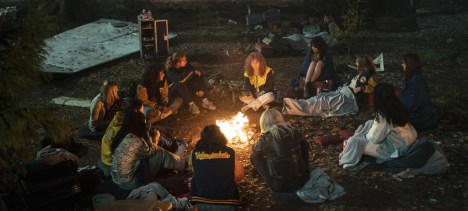
I published a new In the Frame piece at The Escapist this evening. The first season of Yellowjackets wrapped up this week, so it seemed like the perfect opportunity to take a look at what has become the buzziest show on television.

Yellowjackets has a premise very similar to Lost, featuring a time-shifted narrative following a bunch of plane-crash survivors trapped in the wilderness as potentially supernatural events unfold around them. However, Yellowjackets follows the survivors after their return to civilisation rather than before the crash. Yellowjackets is essentially a paranoid survival horror, and one that resonates with these divided and chaotic times. It’s a show about the horrors of what happens when civilisation collapses and when people turn to monstrous belief in sheer desperation, but also about what it’s like to live with that.

You can read the piece here, or click the picture below.

New Escapist Column! On How “Peacemaker” Explores Children Trying to Escape the Shadows of Their Parents…

I published a new piece at The Escapist this evening. We’re hopefully doing a series of recaps and reviews of James Gunn’s Peacemaker, which is streaming weekly on HBO Max. The fourth episode of the show released today, and it seemed like a good opportunity to take a look at the series.

Gunn’s projects return time and again to the relationship between parents and children. In particular, Gunn’s films and television shows are often about childrens trying to escape from the shadow of their abusive parents. This was true of Guardians of the Galaxy, Guardians of the Galaxy, Vol. 2 and The Suicide Squad. It is also true of Peacemaker, with the show placing a lot of emphasis on the relationship between its central character and his racist father, Auggie.

You can read the piece here, or click the picture below.

New Escapist Review! “The Book of Boba Fett – The Gathering Storm”…

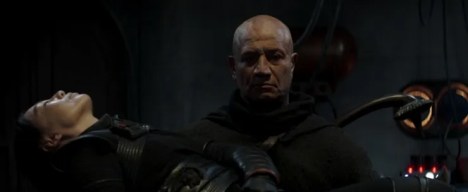
I published a new review at The Escapist today. I’m reviewing new episodes of The Book of Boba Fett weekly, so this week I’m covering The Gathering Storm.

The Gathering Storm marks the midpoint of this season of The Book of Boba Fett. It also seems to mark the end of the extended flashbacks that have taken up so much of this first season. However, it does this with perhaps the most unnecessary flashback to date, one that eesentially fills in details that absolutely did not need to be filled in about what exactly Boba Fett got up to between Star Wars: Episode VI – Return of the Jedi and his reappearance in The Mandalorian, including – strangely enough – searching for armour that the audience has already seen him recover.

You can read the piece here, or click the picture below.

New Podcast! The X-Cast – Topps Comics #1 (“Not to Be Opened Until X-Mas” / “A Dismemberance of Things Past”)

I’ve been thrilled to guest on The X-Cast over the past few years, and have really enjoyed digging into The X-Files with the guests and hosts. However, this is particularly thrilling, because it’s particularly geeky. The wonderful Tony Black asked me join him for a discussion of the first two stories published by Topps comics, Not to Be Opened Until X-Mas and A Dismemberance of Things Past, written by Stefan Petrucha and illustrated by Charlie Adlard.

I have made no secret of my long-standing affection for these comics. I think that they are probably among the very best licensed comic books ever published. So it was a delight to be asked to talk about them, and to get to geek out with Tony about these stories. There’s a lot of fun stuff here, including context about the comics industry in the nineties and the question of what was possible in a monthly tie-in to a weekly television series.

You can listen to the episode here, or click the link below.

Continue reading

New Escapist Column! On How “Peacemaker” Juxtaposes Eighties Nostalgia and Modern Masculinity…

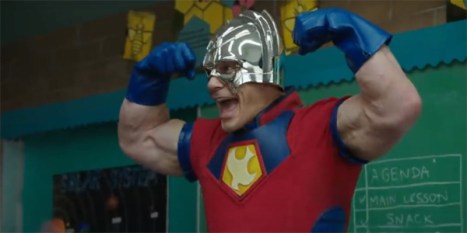
I published a new piece at The Escapist this evening. We’re hopefully doing a series of recaps and reviews of James Gunn’s Peacemaker, which is streaming weekly on HBO Max. The first three episodes of the show released today, and it seemed like a good opportunity to take a look at the series.

Gunn’s filmography is saturated with an affectionate nostalgia for the eighties. It comes to the fore in Peacemaker, down to the casting of John Cena. Cena is a lead actor in the style of classic eighties “hard body” action heroes like Sylvester Stallone and Arnold Schwarzenegger. However, that nostalgia does not exist purely for its own sake. Peacemaker is a show engaged with modern masculinity, in particular deconstructing the sort of eighties masculinity embodied by its central character. Peacemaker is a story about whether its lead character can change and evolve, emerging from a cocoon as he investigates “Project: Butterfly.”

You can read the piece here, or click the picture below.

New Escapist Column! On How “Star Trek: Deep Space Nine” Challenged “The Next Generation”…

I published a new In the Frame piece at The Escapist on Friday. This week marked the 29th anniversary of Star Trek: Deep Space Nine, so it seemed like a good opportunity to take a look back at the show. In particular, the show’s relationship to its elder sibling, Star Trek: The Next Generation.

Deep Space Nine had a surprisingly contentious relationship with The Next Generation, often positioning itself as directly adversarial to the more popular and more beloved Star Trek spin-off. There were points at which Deep Space Nine seemed positively iconoclastic, particularly in its establishing of a fraught relationship between Sisko and Picard. This approach would be controversial today, if it were even allowed within the framework of a modern franchise, but it allowed Deep Space Nine to boldly push itself in striking new directions.

You can read the piece here, or click the picture below.

Doctor Who: Eve of the Daleks (Review)

“Here we are again.”

“Yeah, here we are again.”

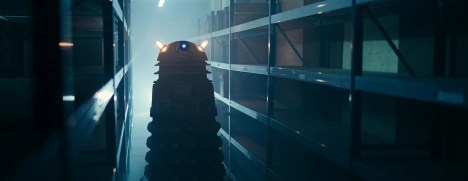
In hindsight, it’s surprising that it has taken Doctor Who this long to do a proper time-loop episode. After all, this is a show about a literal time machine.

Time-loop stories are inherently fun. As Dan points out, Groundhog Day codified a narrative template that is easy to replicate while also being fun to play with. As recently as last year in the United Kingdom and the previous year in the United States, Palm Springs demonstrated how such a story could resonate in this era of a global pandemic, when the feeling of being stuck in an unending loop living the same day over and over again tapped into a fairly widespread feeling.

Shelf storage, am I right?

On a more basic level, these sorts of stories are fun for writers, directors and audiences. It has become increasingly common for television shows to have timeloop episodes. Star Trek: The Next Generation had Cause and Effect, which perhaps remains the gold standard. Stargate: SG-1 had the charming Window of Opportunity. The X-Files had Monday. Even Star Trek: Discovery had Magic to Make the Sanest Man Go Mad. These sorts of stories are that rare blend of a simple high concept with an incredible range of narrative opportunities; they can be funny or tragic, straightforward or complicated, character- or plot-driven.

So it is strange that it has taken Doctor Who so long to attempt something like this, even if the results are depressingly familiar within the larger context of the Chris Chibnall era. It feels very much like a repetition of the era’s most glaring flaws, squandering a fun supporting cast and playful concept on a script that seems completely disinterested in capitalising on either. Instead, it just plays the clichés of these sorts of stories over and over again.

Lifting the holiday spirits.

Continue reading

New Podcast! Scheduled Programming – “Succession (Season 3)”

Scheduled Programming is a podcast looking at modern television. I was thrilled to be invited to join host Baz Greenland for a discussion of the third season of Succession.

Succession is one of the best shows on television at the moment, and it was fun to get to discuss what makes this show about horrible people doing terrible things so compelling, how wonderfully constructed it is, and how it manages to make wealth and excess seem strangely isolating and lonely.

You can listen to the episode here, or click the link below.

New Escapist Column! On Marvel’s All-New, All-Different Streaming Villain Problem…

I published a new column at The Escapist yesterday. The penultimate episode of Hawkeye featured a major reveal of a significant villain for the show. This is very typical of how the Disney+ streaming shows have operated, so it seemed like a good opportunity to talk about Marvel’s streaming villain problem.

Marvel Studios have long been criticised for their fairly generic villains. However, in the transition from blockbuster releases to streaming series, the company has created a new sort of problem. Instead of generic and forgettable antagonists, these shows tend to feature puzzle boxes and references, clues and riddles. The identity of villains are often hidden and concealed, treated as late-in-the-story revelations that reward long-term fans at the expense of pacing and characterisation.

You can read the piece here, or click the picture below.