• Following Us

  • Categories

  • Check out the Archives


  • Awards & Nominations

Non-Review Review: Aquaman

Aquaman is not a disaster on the scale of Justice League. It is perhaps closer to Green Lantern.

This comparison makes a certain amount of sense. Both Aquaman and Green Lantern are defined by the influence of writer Geoff Johns. Johns is an interesting figure, having broken into the entertainment world through film. He famously worked as a personal assistant to Richard Donner. However, Johns is best known for his work in comic books, particularly at DC when he enjoyed long character-defining runs on properties like Justice Society of America, The Flash and Green Lantern. A controversial figure, Johns is a strong writer with a great sense of a property’s core appeal.
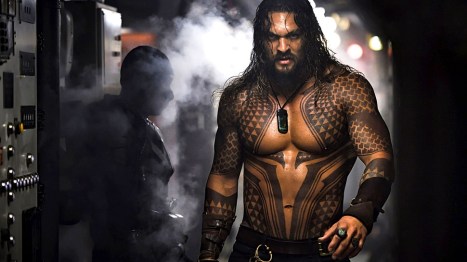
Sink or swim time.

However, Johns’ skill with comic books does not translate to cinema. Green Lantern was largely influenced by Johns’ own work on the title, which remains a highlight of DC’s twenty-first century output. The feature film employed Johns’ characterisation of Hal Jordan, ported over a lot of his revamped mythology for the character, and even employed one of his own creations as the primary villain. However, a good comic book run did not translate to a good film. Green Lantern was more focused on being a faithful adaptation of the comic than a satisfying film in its own right.

Aquaman suffers from the same fundamental issue. The movie is packed to the gill with continuity references, particularly to Johns’ reworking and reimagining of the character, which has been repackaged as an omnibus collection to mark the release of the film. Aquaman features an incredibly dense mythology that is often delivered via awkward exposition dump, with characters bouncing between long tiring world-building dialogue scenes and epic computer-generated spectacle. Ironically, there is no room for any of this to breathe.

A Mera mistep-a.

Continue reading

Non-Review Review: The Hate U Give

The Hate U Give is an earnest and sincere attempt to grapple with a very important issue.

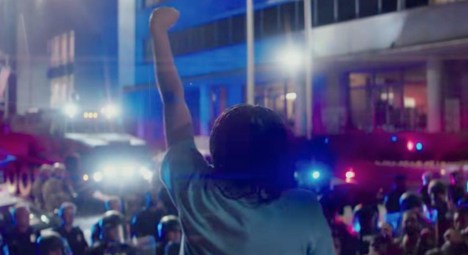
The Hate U Give is essentially structured around the aftermath of a police shooting in the United States, following a young woman named Starr who witnesses one of her oldest friends gunned down by a police officer during what should have been a routine traffic stop. What follows forces Starr to reassess everything that she thought she knew about the life that she was living. The Hate U Give puts the audience squarely in Starr’s position as the community around her begins to fracture and fray.

Taking a hands-off approach.

This is a very timely and very relevant movie, particularly in the context of current tensions within the United States. It frequently seems like a lot of the core issues in the United States come down to a complete lack of empathy or understanding, an inability or unwillingness of certain Americans to examine life as lived by people outside their frame of reference; individuals who respond instinctively with fear to social and political movements like “Black Lives Matter”, who refuse to properly consider the context of events like the protests in Ferguson.

The Hate U Give is occasionally a little clumsy in its storytelling, in how it approaches the arguments that it is making. It is a little broad in places, certain elements exaggerated for effect. Nevertheless, The Hate U Give offers an engaging and insightful exploration of a turbulent moment in contemporary American culture.

“All power to all the people.”

Continue reading

Non-Review Review: Beautiful Boy

Beautiful Boy is a cocktail essentially comprised of three contrasting main ingredients, none of which particularly gel.

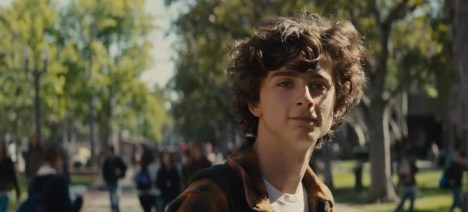
Most obviously, it is a traditional performance-driven piece of awards fare designed to showcase the talents of Timothée Chalamet and Steve Carrell; there is a lot of shouting, a lot of confrontation, a lot of listless staring. On top of that, it is also a more modern piece of awards fare, one younger and hipper than stodgy old dramas about addiction; Beautiful Boy might be a good seventy-percent intercut montage set to music of beloved artists like David Bowie and John Lennon. The remaining third is a fifties moral panic anti-drugs film for the twenty-first century.

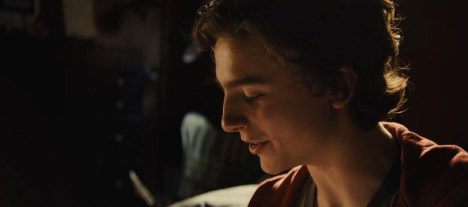
This movie is Timothée Chala-meh.

These three styles of film are constantly battling within Beautiful Boy. There must be a way to synthesise these three competing approaches into a holistic and satisfying piece of work, but instead Beautiful Boy bounces frantically from one mode to another, never settling on a single cohesive tone or approach. This is disappointing, as Beautiful Boy is a very earnest and sincere piece of work. There’s a strong sense that the film is trying to articulate something that is both important and profound. However, it just cannot clearly translate that sentiment into speech.

Beautiful Boy is a mess of a film, but a fascinating mess in a number of places.

Yes. Most of the screenshots of this film will be of Timothée Chalamet. Why?

Continue reading

Non-Review Review: Bumblebee

In some respects, Bumblebee feels like the Transformers movie that the franchise has been trying and failing to produce for over a decade.

Bumblebee has its share of problems. Some of those are inherited from a franchise working from a template established by Michael Bay, which means that the style of action direction carries over in certain cases. Some of those are inherited from the fact that the film is “based upon the toys produced by Hasbro Entertainment”, which means that the film occasionally feels obliged to cram in various characters and elements for reasons more toyetic than narrative.

“You really don’t get this ‘robots in disguise’ thing, do you?”

That said, Bumblebee largely works due to a combination of factors. Hailee Steinfeld is the most likable protagonist in the series to date, if not the most likable character in general. The direction from Travis Knight largely steers clear of the cluttered excesses that define the other films in the franchise. The script from Christina Hodson cleverly pushes the film down both in scale and spectacle, meaning that Bumblebee is the first Transformers film not to loose sight of its humanity (let alone its human characters) in its storytelling.

Bumblebee is perhaps not the best film that it could be, but is very easily the best Transformers film to date.

A girl and her robot.

Continue reading

New Podcast! Scannain Podcast (2018) #46!

It’s time for the latest Scannain podcast!

This week, I join Alex Towers from When Irish Eyes Are Watching, Grace Duffy and Jay Coyle to discuss the week in film news. It is a fun film discussion; Alex, Jay and I have all seen The Favourite, while Grace, Jay and I have seen A Christmas Prince. Along the way, Alex discusses a seasonal viewing of Batman Returns, Grace contemplates Free Solo, and Jay discusses Vertical Limit and Love, Simon.

In film news, the podcast was recorded hot on the heels of the announcement of the nominees at Golden Globes, also discussing the international distribution of The Hole in the Ground and the success of The Favourite at the British Independent Film Awards.

The top ten:

  1. Nativity Rocks!
  2. 2.0
  3. Widows
  4. Robin Hood
  5. A Star is Born
  6. Bohemian Rhapsody
  7. Fantastic Beasts: The Crimes of Grindelwald
  8. The Grinch
  9. Wreck-It Ralph 2: Ralph Breaks the Internet
  10. Creed II

New releases:

You can download the episode here, or listen to it below.

Non-Review Review: Bird Box

Bird Box is a fascinating contemporary horror movie.

The stock comparison will be to something like A Quiet Place, another contemporary horror movie that plays a fairly standard set-up with a high-concept twist. In A Quiet Place, the characters were stalked by monsters that could not hear them, and so they had to move without generating any sound. In Bird Box, the characters find themselves confronted by supernatural monsters that drive any person who looks at them completely insane, often to the point of self-destructive suicide.

Carry on regardless.

However, Bird Box feels decidedly more abstract than A Quiet Place, more lyrical and more metaphorical in its construction. It was often difficult to read a strong central allegory into A Quiet Place, to see it as anything more than a very effective old-fashioned horror film that very effectively literalised one of the central tensions for horror movie audiences; the desire to scream with the need to keep quiet. Bird Box does something similar, effectively creating a horror movie where even the characters themselves must close their eyes when the scary parts happen.

However, there is much more going on in Bird Box, perhaps even too much. The central premise of the horror movie lends itself to any number of varied (and possibly contradictory) readings about the insanity of the modern world and the need to protect the family from chaos that might at any moment encompass them. Bird Box is an ambitious and effective horror, one that applies a variety of tried-and-tested horror formulas to bracing social commentary.

Life is anything but a dream.

Continue reading

New Podcast! Scannain Podcast (2018) #45!

It’s time for the latest Scannain podcast! Apologies this time, as I have a bit of a throaty cough on it. I try to keep it under control.

This week, I join Jay Coyle, Luke Dunne from Film in Dublin, Grace Duffy and Scannain editor-in-chief Niall Murphy to discuss the week in film news. As usual, we talk about the top ten, the new releases, and what we watched this week. Jay made one last effort to get his mileage out of Filmstruck, and proved himself “down with the kids” by watching Cam and Searching. Luke delved into gay and exploitation cinema, with a healthy helping of Suspiria. Grace watched a pair of surfing documentaries on Netflix. Niall reopens old wounds with Batman vs. Superman and introduced his son to the original Wreck-It Ralph.

In film news, this week marked the passing of a number of industry legends, including Nicholas Roeg and Bernardo Bertolucci. We also discuss the five Irish films premiering at the Sundance Film Festival, along with the new Arc Cinema opening in Navan. Because Niall is here, we also have some interesting facts about the composition of the top ten.

The top ten:

  1. Planeta Singli 2
  2. The Nutcracker and the Four Realms
  3. The Girl in the Spider’s Web
  4. Nativity Rocks!
  5. Widows
  6. Robin Hood
  7. A Star is Born
  8. Bohemian Rhapsody
  9. Fantastic Beasts: The Crimes of Grindelwald
  10. The Grinch

New releases:

  • Three Identical Strangers
  • The Possession of Hannah Grace
  • Disobedience
  • Anna And The Apocalypse
  • Wreck-It Ralph Breaks the Internet
  • Creed II

You can download the episode here, or listen to it below.

Non-Review Review: The Favourite

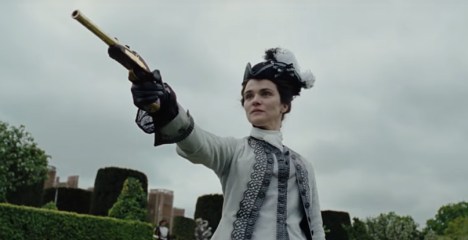
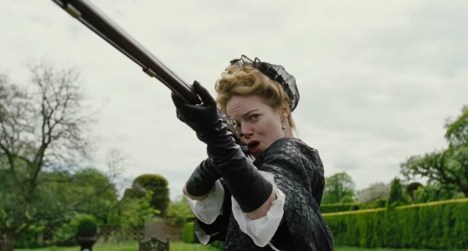
If the stock comparison to The Killing of a Sacred Deer is The Shining, then the obvious comparison to The Favourite is Barry Lyndon.

It is a stock comparison, bordering on facile. After all, there is a world of difference between Yorgos Lanthimos’ story of two women competing for the attention of Queen Anne and Stanley Kubrick’s story of the rise and fall of a roguish Irish gentleman. However, the similarities are striking. Both are eighteenth century period pieces that boldly eschew the conventions of period dramas. Both The Favourite and Barry Lyndon rely heavily on natural light and repeatedly draw the audience’s attention to the nature of the narrative of constructed.

You Only Live Weisz.

However, the most striking point of comparison might be thematic and philosophical rather than simply literal or textual. Just as The Killing of a Sacred Deer explored the collapse of a family unit through the prism of decaying masculinity in a manner that recalled The Shining, the world of The Favourite is defined by its study of power, pettiness and pomposity. As in Barry Lyndon, the fickleness of comfort and the arbitrary nature of security are a recurring fascination for The Favourite, which meditates repeatedly on how precarious such positions can be.

The Favourite is a story of cruelty, both human and natural.

A Stone-Cold Schemer.

Continue reading

Non-Review Review: White Boy Rick

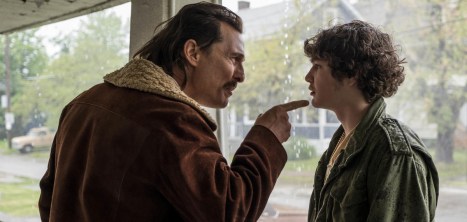
White Boy Rick struggles to articulate what it is actually saying.

The basic premise of White Boy Rick is quite clear from the outset. The film is set in Detroit. Barring a coda, the bulk of the action unfolds in the four years following on from 1984, during Ronald Reagan’s second term. Although the President himself is not directly discussed in the context of the narrative, there is an early conversation in which two agents of the Federal Bureau of Investigation and one member of the Detroit Police Department ruminate upon Nancy Reagan’s famous “just say no” appeal.

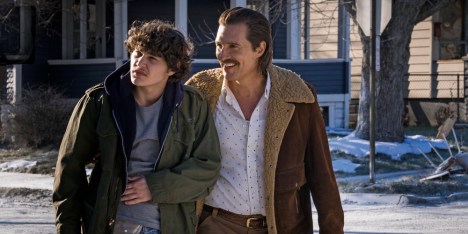
Ricked off.

White Boy Rick is an earnest and well-intentioned movie exploring the consequences of the so-called “War on Drugs” in eighties America, and the manner in which that campaign was both fruitless in terms of its nominal objectives and actively harmful to the communities in which it unfolded. White Boy Rick attempts to position itself as a tragedy about a young man – the eponymous character’s age is something of a recurring battle cry – who happens to get wrapped up in something much bigger than his own circumstances.

Unfortunately, White Boy Rick struggles to construct a strong and engaging narrative around this central thesis statement, repeatedly stumbling in trying to graft the character’s arc and decisions to the broader social commentary that it wants to make. The result is a deeply frustrating film that squanders potentially interesting subject matter.

Daddy’s home.

Continue reading

Non-Review Review: Spider-Man – Into the Spider-Verse

Spider-Man: Into the Spider-Verse is an amazing Spider-man movie.

There is no other way to describe it. Into the Spider-Verse is a clean lock for the best superhero film of the year, neatly leapfrogging the superlative Black Panther. Into the Spider-Verse is also the best animated film of the year, placing comfortably ahead of The Breadwinner or Incredibles 2. In fact, it seems fairly safe to describe Into the Spider-Verse as the best feature film starring Spider-Man since Spider-Man II. Even that feels like hedging, and would be a very closely run race.

Just dive on in.

Into the Spider-Verse is a creative triumph. It is a fantastically constructed movie, in virtually every way. The film’s unique approach to animation will inevitably dominate discussions, and understandably so. Into the Spider-Verse is a visually sumptuous piece of cinema that looks unlike anything ever committed to film. However, the film’s storytelling is just as impressive if decidedly (and consciously) less showy in its construction. Adding a phenomenal cast, Into the Spider-Verse is just a film that works in an incredibly infectious and engaging way.

Into the Spider-Verse does whatever a Spider-Man movie can. And then some.

Suits him.

Continue reading