• Following Us

  • Categories

  • Check out the Archives


  • Awards & Nominations

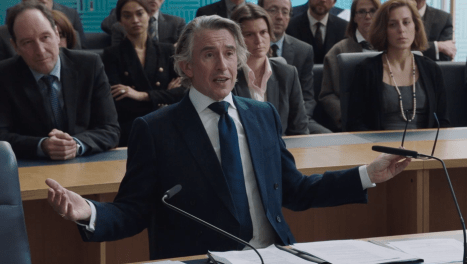
Non-Review Review: Greed

Greed, for lack of a better word, is not good.

Greed belongs to a relatively recent subgenre, the sort of ironic and winking social commentary of films like The Big Short, Vice and Bombshell. There is a sense with these sorts of films that earnestness is overdone, that aching sincerity will only get a strong moral message so far, and that the proper way to engage with audiences is through a wry self-awareness that acknowledges the cynicism of the world in which people live. Theoretically, this approach allows the film to communicate strong central themes without potentially alienating audiences through self-righteousness or self-satisfaction.

Like all subgenres, the quality of the end result varies on a case-by-case basis. However, Greed seems like a project perfectly suited to director Michael Winterbottom. Winterbottom is a director who frequently blends fact and fiction in his work – to point where, due to his work on projects like The Trip and Tristram Shandy, a lot of his collaborations with Steve Coogan involve the actor playing a fictionalised version of himself. So there’s something interesting in the way that Greed takes a template often applied to true stories and instead builds a story around a fictional avatar of capitalism, Sir Richard MacReady.

However, Greed just doesn’t work. It’s not consistently funny enough to pull off the knowing approach to its tale of global inequality. It packs fewer genuine laughs into its runtime than more direct critiques of capitalist excess like The Wolf of Wall Street. It also lacks the comfort of projects like The Big Short and Vice in blending exposition into narrative, often clumsily halting its story to deliver earnest lectures almost directly into the camera through painful framing devices. “Think of me as an idiot,” insists one character, before setting in motion the obligatory “how capitalism works” montage.

More to the point, the narrative elements themselves also struggle, with the film awkwardly trying to casually set up dominoes to build to a seemingly chaotic outcome that looks a little too arch and too planned to come across as spontaneous. This is the problem with Greed. The film, ironically enough, seems greedy. It wants to do too much, it wants to be too many things. As a result, it winds up under-cooking the constituent elements and struggling to find a way to integrate them into a cohesive whole.

Greed is an interesting work in that – like Bombshell – it serves as a reminder that films like The Big Short and Vice are managing a much more complicated balancing act than might originally appear.
Continue reading

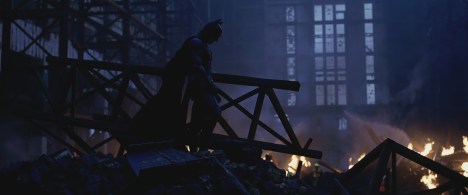
New Escapist Column! On How “The Dark Knight” Changed the Oscars…

I published an In the Frame piece at Escapist Magazine on Friday, to mark the occasion of the Oscars.

The Dark Knight was famously locked out of the Best Picture race. However, it still had a tremendous impact on the field. Eleven years later, the snub of The Dark Knight has profoundly reshaped what the Oscars actually looks like, causing the Academy to dramatically alter a couple of its core underlying assumptions. Most of these changes are for the better, sparking an expansion of the Best Picture field that looks to have broken its long-standing anchor to the Best Director category, encouraging the recruitment of a younger voting base, and even paving the way for populist films like Black Panther and Joker at the awards.

You can read the piece here, or click the picture below.

New Escapist Column! On the “Just Create New Female Characters” Argument…

I published an In the Frame piece at Escapist Magazine last week, on an interesting and age-old debate.

The question of how best to foster diversity in cinema and wider pop culture is a challenging one. Whenever the suggestion of race- or gender-shifting an existing character like the Doctor or James Bond comes up, the responses are always the same: “just create new characters!” It’s a strong argument conceptually, because it’s rooted in the (entirely correct) moral presumption that women shouldn’t need to repurpose old characters, but instead should have new characters. However, it also glosses over the economic and cultural realities of the current cinematic climate. The debate is more complicated than it might appear.

You can read the piece here, or click the picture below.

Non-Review Review: Birds of Prey (And the Fantabulous Emancipation of One Harley Quinn)

Birds of Prey (And the Fantabulous Emancipation of One Harley Quinn) is an immensely charming and high-energy romp, that is as unfocused as its central character and suffers more than a little bit from a non-linear narrative style that it never really justifies or employs effectively.

There is a lot to love in Birds of Prey, but perhaps the most charming aspect of it is the intimacy. Birds of Prey is bereft of the sort of city-, planet- or galactic-sized stakes that have come to define so much of modern superhero cinema, from Thor: The Dark World to Man of Steel to Avengers: Endgame. The bulk of Birds of Prey consists of a wrestling match over a diamond that happens to contain bank account details that point to an even larger payday. Its climax is on the scale of an eighties or nineties action movie, which means it involves anonymous henchmen rather than a literal army.

A cutting retort?

This consciously low-stakes approach allows Birds of Prey to simply enjoy itself, to revel in the charm of the cast and the relatively straightforward journeys of the central characters. Warner Brothers have been pushing their DC properties away from the MCU-emulating shared universe model that led to the spectacular disaster of Justice League, instead focusing on affording creators the freedom to do what they want to do. Joker rejected the modern superhero template to offer a throwback to films like Taxi Driver and King of Comedy. In contrast, Birds of Prey seems to hark back to The Long Kiss Goodnight.

Birds of Prey is perhaps a little too messy and unfocused in terms of narrative, which affects the movie’s pacing and rhythm. However, it also trusts its cast and its energy to carry it a long way, working best when it feels confident enough to play as a live action Looney Tunes cartoon.

Girl gang.

Continue reading

Hindsight is 2020: In Defense of the Best Picture Nominations…

It’s a strange position to be in, to mount a radical argument that the Best Picture race is actually fairly solid this year.

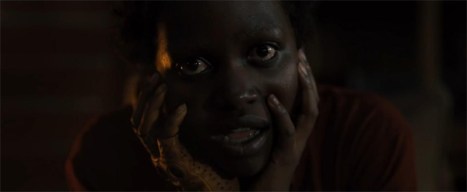
To be fair, there are legitimate grievances to be had. The Academy went with old favourites in several of the acting categories, overlooking amazing work. The Best Actress category would be stronger if the voters opted for Lupita Nyong’o for Us over than Charlize Theron for Bombshell. The Best Supporting Actress race would have been more interesting had Kathy Bates for Richard Jewell been replaced by Jennifer Lopez in Hustlers. The all-male Best Director category is also frustrating, considering the fine work done by directors like Olivia Wilde, Lulu Wang, Céline Sciamma, Lorene Scafaria, and more over the past year.

However, there is also something inevitable about the tone of the debate over the Best Picture race. The Academy Awards is never going to actually please everybody. There are several hundred films released every year that meet the criteria for eligibility. Taste is inherently subjective. Everybody likes different things. More than that, the Academy is a large body comprised of a variety of different voices, especially after recent diversity pushes to modernise the membership. Even if there was a list of (up to) ten films that would satisfy everybody, the Academy would never be the body to produce it. And that is okay.

Instead, the Best Picture nominees this year offer a snapshot of cinema as it was in 2019. They offer a glimpse of the breadth and the depth of mainstream movie-watching, a list of nine very distinct films that offer nine very distinct perspectives on where the medium is and where it might be going. The beauty of the Best Picture nominees this year is that there’s something for everyone, but nobody gets everything. This seems fair, even if the impulse is to want an entire slate that reflects personal taste.

Continue reading

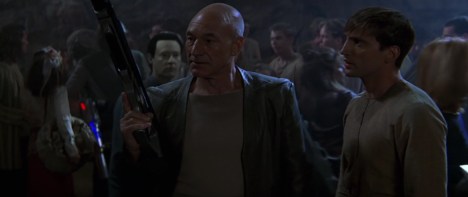
New Escapist Column! On how “Star Trek” has Always Been more about Our Present than Our Future

I published an In the Frame piece at Escapist Magazine this evening, looking at the launch of Star Trek: Picard last week.

One of the minor controversies around Picard has concerned the series’ more cynical and world-weary tone, particularly in contrast to the optimism and enthusiasm of Star Trek: The Next Generation. However, the mythology around Star Trek tends to over-emphasise the franchise’s optimistic outlook, ignoring the extent to which the shows are better reflections of the present than reflections of the future. They offer snapshots of moments in time, rather than a roadmap to a better future. In that regard, Picard is very much a snapshot of this moment in time, grappling with the legacy of The Next Generation.

You can read the piece here, or click the picture below.

Non-Review Review: The Rhythm Section

Perhaps the most revealing distinction between The Rhythm Section and the James Bond franchise is that the characters in The Rhythm Section appear to have done their beer sponsorship deal with Stella Artois rather than Heineken.

That’s a little facetious. After all, it seems highly likely that Heineken paid a great deal more to sponsor No Time to Die than Stella Artois paid for a few minutes of screentime in a late January release from producers Barbara Broccoli and Michael G. Wilson. Nevertheless, there is something to it. Although the marketting copy is keen to sell The Rhythm Section as something of a gender-swapped teaser for No Time to Die“from the producers of James Bond,” boasts the trailer and the advertising – it’s to the credit of director Reed Morano that she is interested in something a little bit more complex and sophisticated.

Taking a shot at it.

Of course, The Rhythm Section doesn’t entirely work. It is a messy and clumsy film. At points, this seems to be a deliberate stylistic choice and a clear point of contrast, an attempt to imbue the classic spy movie format with a sense of the chaos that informs and shapes the real world. At other moments, it feels like a miscalculation and an error in judgment. The Rhythm Section is an earnest attempt to crash the trappings of an espionage revenge thriller into a more intimate personal drama about grief and trauma, but sometimes the mix goes wrong and the film veers into the realm of indulgent self-parody.

Still, there’s a lot to like about The Rhythm Section in spite of its imbalances. The film is genuinely trying something something ambitious, even if it occasionally buckles under the weight of those attempts. At its best, The Rhythm Section suggests a new spin on an old formula. At its worst, it is at least anchored in a compelling central performance amid overwrought clichés. The Rhythm Section might not hit every note perfectly, but it manages to keep time.

Spy, craft.

Continue reading

Non-Review Review: Horse Girl

Horse Girl is certainly an ambitious work, if not an entirely successful one.

Directed by Jeff Baena and co-written with star Alison Brie, Horse Girl is essentially a study of a socially awkward young woman who gradually loosens her grip on reality. Sarah is a charming and isolated young woman. She works a steady job at an arts and crafts shop, to which she seems quite suited – she’s immediately able to identify the best paint for a classroom setting. She lives with a roommate who clearly harbours some affection for her. She assists at the local stables. She even attends weekly dance fitness classes.

Horsing around.

However, beneath the surface, Sarah is increasingly isolated. She lives in a world of her own, absorbed in her supernatural procedurals, lying about the extent of her social circle, and haunted by dreams that don’t seem quite right. Sarah increasingly begins to feel that there is something very wrong with the world, as she experiences lost time and lucid dreams. Naturally, things only escalate from there.

Horse Girl plays with some interesting ideas, and approaches its subject matter in interesting ways, but it suffers a little bit too much from a suffocating sense of forced whimsy. Horse Girl premiered at Sundance, and for all its ambition, it is very much a “Sundance indie.” There is constantly a sense of a more interesting film bubbling beneath the surface, waiting to get out, but never quite able to materalise beneath the trappings of its own particular brand of independent cinema.

Getting it all back to front.

Continue reading

New Escapist Column! On the Franchise Revanchism in “Star Wars”, “Doctor Who” and “Star Trek”…

I published an In the Frame piece at Escapist Magazine on Friday, looking at one of the more interesting (and frustrating) trends in modern franchise storytelling.

New ideas in existing franchises have always been controversial. After all, fans were taken aback by the changes made to existing properties in films like Star Trek II: The Wrath of Khan and Star Wars: Episode V – The Empire Strikes Back. So the controversy around things like the first season of Star Trek: Discovery or Star Wars: Episode VIII – The Last Jedi are nothing new. What is new, however, is the way in which these properties now seem to be swayed by fan anxieties, retreating from bold ideas into the safety of familiarity. This leads an emptiness, and runs the risk of letting these properties stagnate.

You can read the piece here, or click the picture below.

Non-Review Review: Uncut Gems

Uncut Gems is a two-hour panic attack. And it’s brilliant.

Uncut Gems is a propulsive tension engine. The film follows the wheeling and dealing of Howard Ratner. Ratner operates a jewellery story in Manhattan’s Diamond District, but his real passion is gambling. Have accrued considerable debts, Howard concocts a simple plan to clear the slate. Smuggling in a rare black opal from East Africa, Howard plans to auction it and use the proceeds to settle up with his creditors. Naturally, things quickly spiral out of control as Howard’s impulsiveness and competitiveness get the better of him, pushing him to greater and greater lengths.

Off the chain.

Anxiety permeates Uncut Gems. Howard is a free-wheeling opportunist defined largely by his recklessness and his resilience, but his self-assuredness stands in contrast to the experience of watching Uncut Gems. As the film unfolds, the audience (and Howard) understands how fragile Howard’s elaborate improvisations truly are. Almost every scene in Uncut Gems threatens to bring Howard’s house of cards around his ears. Even the film’s triumphant and celebratory moments feel uncomfortable, as the audience and the protagonist wrestle with how precarious it all is.

Uncut Gems is a triumph, a shining diamond.

This diamond is about to get roughed up.

Continue reading