• Following Us

  • Categories

  • Check out the Archives


  • Awards & Nominations

Non-Review Review: The Mauritanian

The Mauritanian is an odd film in a number of ways.

In some ways, The Mauritanian feels like it has arrived late to the party. Obviously, the War on Terror is still a major defining event of the twenty-first century. Guantánamo Bay is still open and housing forty inmates. It’s possible to trace the xenophobia that defines so much of contemporary American politics back to the War on Terror, most obviously by looking at the countries affected by President Donald Trump’s infamous “travel ban.” So the War on Terror is very much an ongoing concern that merits discussion and exploration.

Maur, Maur, Maur…

However, it is also a period of American history that has been very thoroughly explored in film and television, particularly in the context of prestige awards-season releases. The Hurt Locker won Best Picture a decade ago. Zero Dark Thirty was a major awards contender a few years after that. The War on Terror has been dissected through the lens of forensic introspection in movies like The Report and through broad satire in movies like Vice. As such, any movie hoping to explore the War on Terror exists in the shadow of larger culture.

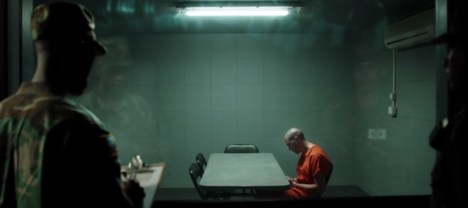
This is perhaps the biggest issue with The Mauritanian. Director Kevin Macdonald’s earnest exploration of the incarceration and torture of Mohamedou Ould Salahi feels like a movie that should have been released during the early wave of this cinematic excavation. Even allowing for the fact that Salahi was only released five years ago, those five years feel like a very long time. The result of all this is that The Mauritanian feels like a movie displaced in time, feeling like a retread of the earliest films grappling with the topic, like Lions for Lambs.
Interrogating the War on Terror.

Continue reading

New Escapist Video! On “Star Trek VI: The Undiscovered Country” and Passing the Torch to the Next Generation…

So, as I have mentioned before, I am launching a new video series as a companion piece to In the Frame at The Escapist. The video will typically launch with the Monday article, and be released on the magazine’s YouTube channel the following week. This is kinda cool, because we’re helping relaunch the magazine’s film channel – so if you can throw a subscription our way, it would mean a lot.

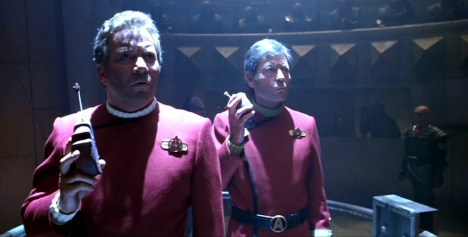
This week, we took a look at the strange wonder that was Star Trek VI: The Undiscovered Country, and the fact that it would be impossible to imagine a franchise drawing the shutters down in the same way these days. The Undiscovered Country is not only an explicit rejection of nostalgia, it is also an interrogation of the past, refusing to pull any punches in its look at the original Star Trek. It’s an approach that could never happen today, and popular culture is all the weaker for that.

New Podcast! The Escapist Movie Podcast – “Tom and Jerry Could Do With Some Fine-Toonin'”

The Escapist have launched a movie podcast, and I was thrilled to join Jack Packard and Maggie Iken for the eighth episode of the year. We talk about the release of the trailer for Army of the Dead and the release of Tom and Jerry on HBO Max.

You can listen to back episodes of the podcast here, click the link below or even listen directly.

Non-Review Review: Raya and the Last Dragon

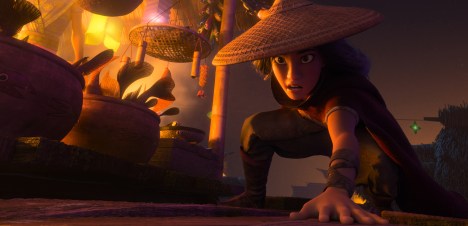
Raya and the Last Dragon offers a reminder of just how quietly and efficiently Disney have managed their animated properties.

For a while at the turn of the millennium, the company seemed to struggle to defines its place among younger and hungrier animation studios like Pixar or Dreamworks. The company responded with a push away from the princess-centric movies like The Little Mermaid, Beauty and the Beast, Pocahontas and Mulan that had anchored their renaissance-era output, pivoting sharply: first to animated movies aimed at boys like Atlantis and Treasure Planet, and then to computer-animated adventures like Chicken Little, Meet the Robinsons and Bolt.

Raya hope?

However, towards the end of the decade, the company arguably found its feet again, with a wave of somewhat traditionalist stories. The Princess and the Frog is often treated as the end of an era of hand-drawn animation, but it also marked a rejuvenation of the classic “princess” movie. It was followed by Tangled, Frozen, Moana and Frozen II, all of which were computer-animated takes on a familiar Disney archetype.

Raya and the Last Dragon is a reminder of just how sturdy that old “princess” movie template is, demonstrating the hard work that the company has put in to keep its oldest archetype both resonant and recognisable.

Continue reading

New Escapist Column! On “Mad Max: Fury Road”, and the Elastic Boundaries Between “High” and “Low” Culture…

I published a new In the Frame piece at The Escapist this evening. There’s been a lot of debate recently about the boundaries between “art” and “content”, which can frequently sound like a debate about “high” and “low” culture, so I thought it was worth taking a look at how porous those boundaries can be.

On paper, Mad Max: Fury Road should be a standard franchise film. It’s the fourth film in the Mad Max franchise, serving as a vague sequel or even reboot to one of Australia’s most successful movie franchises. It cost a lot of money. It features a lot of special effects. It has very little dialogue. However, in spire of that, it is arguably as pure an expression of cinema as an artform as has every existed, and demonstrates how elastic and how illusory arguments about “high” and “low” culture truly are.

You can read the piece here, or click the picture below.

New Escapist Video! On the Multiverse is the Way of the Future…

So, as I have mentioned before, I am launching a new video series as a companion piece to In the Frame at The Escapist. The video will typically launch with the Monday article, and be released on the magazine’s YouTube channel the following week. This is kinda cool, because we’re helping relaunch the magazine’s film channel – so if you can throw a subscription our way, it would mean a lot.

This week, we took a look at the emergence of the multiverse, which appears to be the future of various shared cinematic and television universe. Why is this idea suddenly so popular? What does it mean? What does it hold for the future?

New Escapist Column! On “Star Trek VI: The Undiscovered Country”, and Saying Goodbye to Old Friends…

I published a new In the Frame piece at The Escapist this evening. With the passing of Christopher Plummer recently, and with the film celebrating its thirtieth anniversary this year, I thought it might be worth taking a look at Star Trek VI: The Undiscovered Country.

The Undiscovered Country was the last Star Trek film to focus on the entire cast of the original show. However, it is not an entirely celebratory farewell. Instead, it’s a movie that makes a valid and convincing argument for the need to move on, for characters like Kirk and Spock to get out of history’s way and to surrender the stage to Star Trek: The Next Generation. It’s an introspective (and occasionally even acerbic) rejection of nostalgia that is particularly hard to imagine today, particularly in the era of films like Star Wars: Episode IX – The Rise of Skywalker.

You can read the piece here, or click the picture below.

New Escapist Column! On the Appeal of Paul W.S. Anderson’s “Mortal Kombat”…

I published a new column at The Escapist yesterday. With the new trailer for the rebooted Mortal Kombat, it felt like the perfect opportunity to take a look back at Paul W.S. Anderson’s 1995 original.

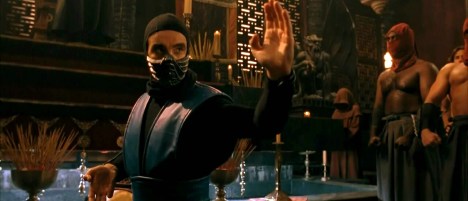
Recent years have seen a reassessment of Anderson as a director, frequently celebrating his understanding of the field in which he operates. Anderson’s Mortal Kombat is unapologetic pulp, and pitches itself perfectly at that level. Anderson understands that the key to faithfully adapting Mortal Kombat is not fidelity to continuity, but instead an appreciation of what audience and players actually love about the series. It exists in marked contrast to the version that Mortal Kombat suggested by the new trailer.

You can read the piece here, or click the picture below.

New Escapist Column! On Critics as Curators in the Era of Peak Content…

I published a new In the Frame piece at The Escapist this evening. Given Martin Scorsese’s recent comments about the reduction of film and television to “content”, it seemed like an opportunity to reflect on the challenges of navigating this new era – and the increased relevance of critics in this context.

There is a lot of entertainment out there. Despite the explosion in streaming services, a lot of it is harder to access – or at least harder to stumble across unless an audience member is actively looking for it. Film criticism seems to be stuck in a constant crisis of purpose and identity, but the truth is that critics are arguably more important now than ever. In an era with so much media out there, it is useful to have critics who understand the medium, its history and the breadth of possibilities that it offers.

You can read the piece here, or click the picture below.


New Escapist Column! On Why Tom Holland Not Knowing What’s Happening in “Spider-Man 3” Would Be a Bad Thing…

I published a new column at The Escapist this evening. With all the debate about what Tom Holland does or doesn’t know about Spider-Man 3, I thought it was worth unpacking what that says about modern movie production.

It seems likely that Holland is just playing with the press, riffing on his familiar goofy persona. However, it’s also entirely possible that Holland doesn’t actually know what the movie he’s been shooting for eight weeks is about. Given the way in which actors have talked about working with Marvel, a lot of that material is handled in post-production, so it’s possible for an actor to have no idea of the context of the scene they’re shooting, who they’ll be appearing with, and what will actually be happening on screen. That is a problem.

You can read the piece here, or click the picture below.