I’m thrilled to be launching movie reviews on The Escapist. Over the coming weeks and months, I will be joining a set of contributors in adding these reviews to the channel. For the moment, I’m honoured to contribute a three-minute film review of Dune, which is released theatrically in Europe and the United States next weekend.
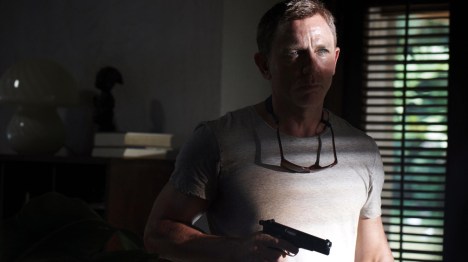
I published a new In the Frame piece at The Escapist this evening. With the American release of No Time to Die, it seemed like a good opportunity to take a look at the movie’s ending, now that everybody has had a chance to see it.
One of the big questions hanging over Daniel Craig’s tenure as James Bond is the extent to which the character can evolve or change, whether he can grow with the times or must remain fixed in stone. In contrast to Pierce Brosnan’s portrayal of James Bond as a professional who seemed to enjoy his work, Daniel Craig offered a more introspective version of the superspy, one who seemed to wonder about what he did and why he did it. As Craig’s final film in the role, No Time to Die has the opportunity to truly grapple with the question of whether Bond wants to change and whether he can change.
You can read the piece here, or click the picture below. Note that the piece contains major spoilers.
So, as I have mentioned before, I am launching a new video series as a companion piece to In the Frame at The Escapist. The video will typically launch with every second Monday’s article, and be released on the magazine’s YouTube channel the following week. This is kinda cool, because we’re helping relaunch the magazine’s film content – so if you can throw a subscription our way, it would mean a lot.
With the release of Venom: Let There Be Carnage, it seemed like a good opportunity to take a look back at Venom. It’s a bad movie, but an endlessly fascinating one. More than that, it feels like a conscious throwback to an older style of superhero movie, one that predates the modern blockbuster template.
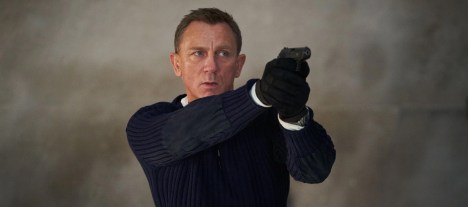
I published a new In the Frame piece at The Escapist this evening. With the international release of No Time to Die, it seemed like a good opportunity to reflect on the larger Daniel Craig era of James Bond.
One of the more consistent recurring themes of these five movies has been the question of Bond’s enduring relevance in a rapidly changing world. Each of the five films tackles – whether directly or indirectly – the idea that James Bond is a character and an idea past his relevence. This is a very strange obsession for the franchise, particularly given the critical and (especially) commercial success of the recent films. Daniel Craig’s iteration of James Bond has outlasted most of his cinematic competitors, so why is the franchise so insecure?
You can read the piece here, or click the picture below.
I published a new In the Frame piece at The Escapist this evening. With the looming release of No Time to Die, it seemed like a good opportunity to reflect on the larger Daniel Craig era of James Bond.
One of the more striking aspects of Craig’s enure as the suave secret agent has been an understanding that James Bond is a performance as much as an actual human being. Bond is set of mannerisms and conventions, coming with a set of expectations and weight. Throughout Craig’s time playing the secret agent, there has been a fascination with that level of performance, and the question of what it entails to be trapped within that framework. It’s a very clever and very self-aware approach to a franchise that is almost sixty years old at this point.
You can read the piece here, or click the picture below.
I’m thrilled to be launching movie reviews on The Escapist. Over the coming weeks and months, I will be joining a set of contributors in adding these reviews to the channel. For the moment, I’m honoured to contribute a three-minute review of No Time to Die, which is in British and Irish theatres now, but will be released in America next week.
I published a new In the Frame piece at The Escapist this evening. With the pending release of Venom: Let There Be Carnage, it seemed like a good opportunity to take a look back at Venom.
Venom is not a good movie. It is a mess of a movie. It is chaotic, random, unstructured, nonsensical. However, it is interesting. What is particularly interesting about Venom is the way in which it feels like something of a throwback to an era of a different kind of superhero movie. Venom recalls the superhero movies from the turn-of-the-millennium, films that played faster and looser with their established characters without worrying about fidelity or faithfulness. There’s something interesting in looking at Venom as a superhero movie out of time.
You can read the piece here, or click the picture below.
I published a new column at The Escapist today. With the news that Christopher Nolan will be making his next movie at Universal, there was some extreme internet reaction to the deal that Nolan signed.
The overblown and performative online outrage is interesting, and says a lot about the internet’s strange obsession with Christopher Nolan as the only director who really gets to make personal projects at this level. Indeed, the most interesting thing about the internet outrage was how ill-informed it was. Nolan’s terms aren’t especially unusual in the world of directors working at that level. Nolan’s deal is similar to those struck with directors like Steven Spielberg, Quentin Tarantino or even Tyler Perry. It is business as usual.
You can read the piece here, or click the picture below.
So, as I have mentioned before, I am launching a new video series as a companion piece to In the Frame at The Escapist. The video will typically launch with every second Monday’s article, and be released on the magazine’s YouTube channel the following week. This is kinda cool, because we’re helping relaunch the magazine’s film content – so if you can throw a subscription our way, it would mean a lot.
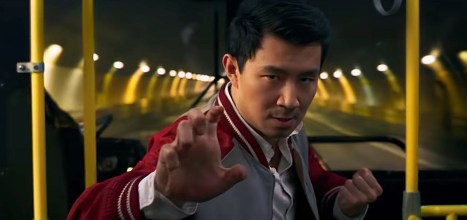
With the release of Shang-Chi and the Legend of Ten Rings, it seemed like a good opportunity to take a look at the latest Marvel Studios film. Shang-Chi and the Legend of the Ten Rings is loosely adapted from the seventies title Master of Kung Fu, and so it seems interesting to discuss the film in the context of another adaptation of a cult non-superhero seventies comic book: Blade.
In particular, Shang-Chi and the Legend of the Ten Rings has been packaged and sold as a love letter and tribute to classic Hong Kong action cinema. However, that seems somewhat unconvincing. As with virtually every film the Marvel Cinematic Universe, the house style exerts an inescapable gravity that warps the movie back around it and forces it to adhere to a familiar template. There’s a sad but revealing irony in the fact that Blade, the movie that quietly launched the modern superhero movie boom, feels like a more sincere and loving tribute to Hong Kong cinema than Shang-Chi and the Legend of the Ten Rings.
You can read the piece here, or click the picture below.



















 the m0vie blog