• Following Us

  • Categories

  • Check out the Archives


  • Awards & Nominations

“There’s Nobody Left But You”: The Existential Horror at the Heart of White Heat…

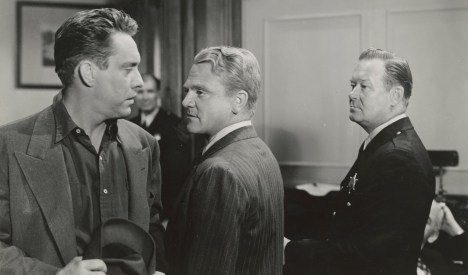
Last weekend, on the podcast I co-host called The 250, we discussed James Cagney’s 1949 gangster classic White Heat, with the wonderful Carl Sweeney from The Movie Palace Podcast. I’ve been thinking a lot about the film since, and so had some thoughts I just wanted to jot down.

White Heat is a gangster film, starring James Cagney.

It’s frequently discussed in relation to The Public Enemy, which makes sense. Both White Heat and The Public Enemy are mid-century gangster films starring James Cagney. It also merits comparison to The Roaring Twenties, another gangster film starring James Cagney and directed by Raoul Walsh. There’s a tendency to lump these sorts of films together, to examine them as part of a greater whole. It certainly makes sense in this context. After all, a huge part of the appeal of White Heat at time of release derived from seeing James Cagney playing a gangster once again.

However, there’s something altogether stranger about White Heat. It isn’t a film that fits particularly comfortably into the gangster genre, despite the obvious trappings. James Cagney plays the role of Cody Jarrett, the leader of a vicious gang introduced conducting a train robbery and who go on to plot a chemical plant raid at the climax. There is all manner of betrayal and violence, backstabbing and revenging. There are cops in dogged pursuit of the criminals, while Cody demonstrates that nobody should underestimate him.

Still, there’s something simmering beneath the surface of White Heat. As much as the film follows the structures and conventions of a crime film, it plays more like a melancholy monster movie. It is a funereal salute to a mythic figure retreating into history, a horror story about an outdated evil lurking in the shadows, trying to navigate a world that no longer has a place for it.
Continue reading

New Escapist Column! On “Predators” as a Film That Understands Its Own Limitations…

I published a new In the Frame piece at Escapist Magazine this evening. Predators is ten years old, so it seemed like an appropriate time to take a look back that second (and best) Predator sequel.

In hindsight, Predators is the rare movie that understands the limitations of its core premise. Fox spent decades trying to turn Predator into a franchise, but the sequels largely disappointed. A large part of this is down to the fact that Predator is a concept anchored in a particular time and place, without the timeless quality of a movie like Alien. In contrast to the other Predator sequels, Predators is a lean and modest machine. It never pushes its central concept too far, instead offering a pulpy and enjoyable b-movie. In doing so, it mostly works as a worthy successor.

You can read the piece here, or click the picture below.

New Escapist Column! On the Cynical Honesty of “Terminator: Genisys”…

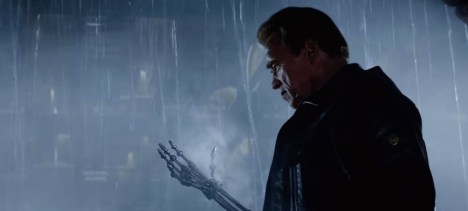
I published a new In the Frame piece at Escapist Magazine this evening. Terminator: Genisys turned five years old this month, so it seemed like the right time to take a look back at the third (of four) attempts to make a sequel to Terminator 2: Judgment Day.

Genisys has been largely forgotten, even overridden by the next film in the saga – Terminator: Dark Fate. This makes sense. Genisys itself overrode the previous two films on its own terms. Still, Genisys is an instructive and informative piece of blockbuster cinema. It’s a messy film, but in that messiness there’s an honesty. Genisys is a film that is naked in its ambition and its intent, in its efforts to reiterate and regurgitate the past while erasing any potential evolution. It’s a film that captures the emptiness of modern franchise filmmaking at its most cynical, and its most honest.

You can read the piece here, or click the picture below.


“The Truman Show” Didn’t Just Predict Our Future, But Also the Future of How Movies Would Be Sold…

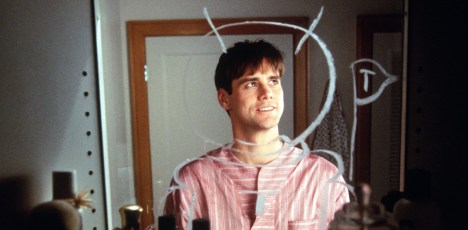
More than twenty years after its release, it feels like everything that might be said about The Truman Show has already been said.

The Truman Show is that rare Hollywood blockbuster that feels somehow simultaneously timeless, timely and prescient. It speaks to anxieties that resonate throughout history, fears that were very particular to the cusp of the millennium, and to nightmares that were yet to come. It belongs at once to that age-old anxiety that the world is an illusion and human comprehension is insufficient, to the difficult-to-articulate existential uncertainty of the so-called “end of history”, to a future in which everybody would willingly become the star of their own Truman Show.

Indeed, The Truman Show seems to say so much about the world outside itself and the human condition that it’s possible to miss the film itself. Peter Weir’s late nineties blockbuster is a surreal slice of history itself, a relatively big budget mainstream release starring one of the most famous people on the planet, built around a rather abstract high concept. Not only was the film a massive critical success, it also managed to survive and prosper against a heated summer season.

While its actual themes and contents might be dystopian, The Truman Show itself offers an optimistic glimpse of a kind of blockbuster that seems increasingly unlikely.

Continue reading

New Escapist Column! On How Pixar Reinvented American Theatrical Animation…

I published a new In the Frame piece at Escapist Magazine this evening. This weekend marked the tenth anniversary of the release of Toy Story 3 and the planned release date of Soul, so I thought it was a good time to take a look back at what made Pixar special.

Everybody talks about how emotive Pixar films are, how much they resonate with audiences on that level. However, what’s most striking and impressive – and perhaps most influential – about Pixar’s output is the way in which the studio draws consciously from a wide variety of influences to tell a wide variety of stories. There’s a lot of variety in the Pixar canon, they films playing with a large number of genres in interesting ways, repurposing classic formulae for a much younger audience than would have been the intended audience for the original films in question.

You can read the piece here, or click the picture below.

New Escapist Column! On “Batman Begins” as the Perfect Superhero Origin Story…

I published a new In the Frame piece at Escapist Magazine this evening. It’s the fifteenth anniversary of the release of Batman Begins, so it felt appropriate to look back on the film as the perfect superhero origin story.

Christopher Nolan dedicates Batman Begins to getting inside the head of Bruce Wayne, to the point that the villainous Ra’s Al Ghul and Scarecrow are defined almost entirely as counterpoints to the Caped Crusader. Nolan builds the character from the ground up, explaining everything about the character’s perspective and psychology – why he says what he says, why he acts like he does, why he thinks what he thinks. Most impressively, Nolan provides a meaningful answer to a question the character’s mythology long glossed over. “Why bats, Master Wayne?”

You can read the piece here, or click the picture below.

New Escapist Column! On Jennifer Kent’s “The Nightingale” and the Frontier as a Prison…

I published a new In the Frame piece at Escapist Magazine this evening. This week, we’re trying something a little outside the usual remit of the column, with a huge thanks to editor Nick Calandra for encouraging it.

Jennifer Kent’s The Nightingale remains one of the most harrowing and uncomfortable films that I ever seen. It’s brutal and horrifying, but in a way that is very deliberate and very pointed. Kent is effectively playing off the tropes and conventions of the western, but playing with the way in which these stories are told. Kent imagines the frontier not as the embodiment of freedom or potential, but instead as a prison in which all of its characters are trapped.

You can read the piece here, or click the picture below.

New Escapist Column! On Spike Lee’s Cinema of Empathy and Allyship in “BlacKkKlansman” and “Da 5 Bloods”…

I published a new In the Frame piece at Escapist Magazine this evening. There’s actually a glut of new releases this week, but the one that felt most deserving of attention was Spike Lee’s Da 5 Bloods, which is premiering on Netflix.

Early in his career, Lee developed a reputation as a filmmaker defined by his frustration with the way that things were, his films tapping into a real sense of righteous anger about the status quo. However, Lee’s films have always been defined by a strong sense of  understanding and compassion. This is true of both BlacKkKlansman and Da 5 Bloods, which are films that are largely about the need to come together and build coalitions in order to move forward. At their core, they are films about empathy and allyship. More than that, they are films about the power of cinema.

You can read the piece here, or click the picture below.

New Escapist Column! On “Wonder Woman” and What It Means to Be a Hero In a World Where Men Are Not Always Good…

I published a new In the Frame piece at Escapist Magazine this evening. Wonder Woman celebrated its third anniversary this weekend, and Wonder Woman 1984 was originally scheduled for release this weekend.

Wonder Woman is a fascinating film, in large part because it manages to feel like a decidedly old-fashioned story of heroism that reflects the anxieties of a modern world. Too many modern superhero films divorce themselves from even the idea of heroism, embracing the power fantasy of superheroism as an end of itself. In contrast, Wonder Woman asks what it means to try to be a good person in a world that is not.

You can read the piece here, or click the picture below.

New Escapist Column! On David as the Monster in “Prometheus” and “Alien: Covenant”…

I published a new piece at Escapist Magazine this evening. This week, Ridley Scott explained that he wanted to “re-evolve” the central monster from the Alien franchise.

This is an interesting argument, particularly given Scott’s long-standing criticism about the xenomorph, and his argument that the creature has perhaps outlived its relevance. Indeed, one of the most interesting facets of Prometheus and Alien: Covenant is the way in which David essentially updates many of the core thematic elements of the xenomorph. David takes the creature’s threat of sexual violence, and updates it for the twenty-first century.

You can read the piece here, or click the picture below.