• Following Us

  • Categories

  • Check out the Archives


  • Awards & Nominations

Non-Review Review: Love and Mercy

The music biography is a surprisingly familiar genre.

For all that there are thousands upon thousands of musicians with their own life stories and histories, the plotting of these sorts of stories always seems to hit on the same beats. The rhythm and tempo might change, but the notes feel the same. This was rather strongly pronounced a decade ago, when Walk the Line and Ray were released in quick succession and Walk Hard: The Dewey Cox story provided a delightfully surreal skewering of the conventions associated with these sorts of films.

Where there's a Wilson, there's a way, son...

Where there’s a Wilson, there’s a way, son…

There is always a childhood trauma at the root of the story; whether it is a dead relative or parental abuse, there is always a suitable motivator for artistic expression. Similarly, fame is always something of a mixed blessing, with material success only serving to exaggerate a larger spiritual emptiness. Dependencies come rather naturally, whether on drugs or on other people. Eventually, it seems like true love allows our protagonist to find themselves before they find their happy ending. Having a ready-made (and thematically appropriate) soundtrack probably helps.

In most cases, the material is elevated by the skill with which the story is put together. If the film must hit all those familiar notes, then the moving parts make all the difference. Walk the Line and Ray were buoyed by mesmerising central performances from actors at the peak of their game. Love and Mercy hits a lot of these common plot beats as it maps out the troubled life of Brian Wilson. Even a viewer unfamiliar with the arc of Wilson’s life will have a pretty good idea of what to expect from the film.

That sinking feeling...

That sinking feeling…

At the same time, Love and Mercy benefits from a collection of strong performances. Paul Dano and John Cusack play the musician at various stages of his life, jumping back and forth between his controversy-creating career highs and subsequent lows. The bulk of the supporting cast is teamed up with Cusack, creating an interesting circle of characters around Wilson in the late eighties and into the nineties. Elizabeth Banks is Melinda Ledbetter, a Cadillac saleswoman who gets caught up with Wilson. Paul Giammatti is controversial psychotherapist Dr. Eugene Landy.

Love & Mercy is at its best when it feels playful and accessible, and is at its worst when it feels familiar and well-trodden. It is a fascinating sketch at the life and times of Brian Wilson, with a recognisable structure elevated by a great ensemble.
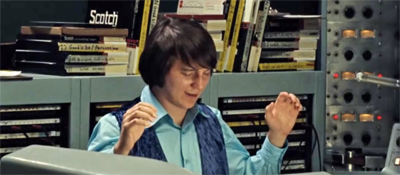
Pet sounds...

Pet sounds…

Continue reading

Non-Review Review: Terminator Genisys

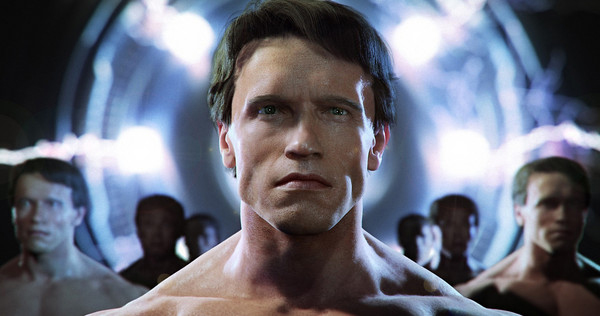
“I am inevitable,” the villain boasts towards the climax of Terminator Genisys, just as things look their darkest for our heroes. He is a fully 3D digital image sourced from wall-mounted projectors, reflecting the way that the film itself has been marketed.

He might as well be talking on behalf of the film itself. The Terminator franchise has evolved into an unlikely juggernaut, spanning over three decades and evolving from a low-budget science-fiction film into a blockbuster series. Critical (and popular) reception to Terminator III: Rise of the Machines and Terminator: Salvation has been somewhat muted, but the film franchise just keeps coming. In a way, it feels like Skynet making itself manifest. Or, more appropriately, the eponymous robot killing machine.

Fresh off the factory line...

Fresh off the factory line…

There are points where Terminator Genisys seems incredibly self-aware, posing the sort of existential and philosophical questions that are confronting the audience. In The Terminator and Terminator II: Judgement Day, James Cameron positioned time travel as a metaphor for the strings of fate and destiny that seemed to bind free will. In Terminator Genisys, time travel becomes a powerful metaphor for the process of film- (or franchise-) making itself.

Both a sequel and a prequel, a reboot and a remake, the time travel plot element of Terminator Genisys turns the franchise into a gigantic mix tape. Screenwriters Laeta Kalogridis and Patrick Lussier collaborate to turn Terminator Genisys into a live-action version of a Jive Bunny and the Mix Masters track, a sample filled with familiar beats played at the wrong tempo. There are moments when the wrongness seems the point, when Terminator Genisys wanders into the uncanny valley. There are points where it almost achieves consciousness.

Prick me, do I not leak?

Prick me, do I not leak?

Continue reading

Non-Review Review: Aonrú

Aonrú offers a fascinating insight into life on Cape Clear Island off the west coast of Cork. The small community had subsisted for years on farming and fishing – as the documentary notes, “the farmers were fishermen and the fishermen were farmers.” Now, due to a number of intersecting and overlapping hurdles – both natural and man-made – the community finds itself struggling to provide a future for itself. The thirty minute documentary examines what it must be like to live on Cape Clear.

Skilfully constructed from a myriad of first-person accounts, archive footage and beautiful images of the region, Aonrú explores the pace of life in one of the most remote parts of the country.

aonru1

Continue reading

Non-Review Review: Slow West

There is a reason that the western has fallen from popularity after its cinematic heyday.

For decades, it seemed like Hollywood punctuated its release of western films with sampling for other genre, returning time and again to the story of the men who shaped America from the ground up. Over the years, the familiar tropes have been deconstructed and reconstructed and deconstructed again. They have been mashed up and knocked down and spun around. They have been torn apart and thrown back together with reckless abandon. With all of that going on, it often seems like anything that the genre has to say has been said and repeated time and again.

Life is peaceful there...

Life is peaceful there…

There are probably still things to be said about the myth of the Old West, even if the genre seems as explored and catalogued as the American continent itself. There are little hidden pockets and eccentric spaces that might hold a surprise or several. Slow West doesn’t necessarily have anything new or revelatory to say about the western. It seems unlikely to shatter any illusions or break any preconceptions. A lot of the ground covered by Jay Cavendish and Silas Selleck on their trek westward will be familiar to anybody with a passing knowledge of the genre.

At the same time, there is a lyrical beauty to Slow West. The film is a haunting and evocative trip through a landscape that most viewers know better than their own locality. Slow West might not say anything particularly earth-shattering, but it does articulate itself clearly and elegantly. It is a meticulously crafted film, finely constructed and sumptuously filmed. It might be a tourist trip over well-travelled group, but it takes the most scenic route imaginable.

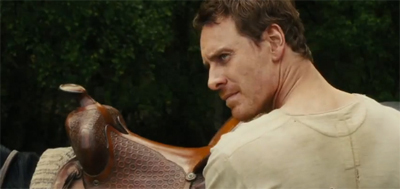
Saddle up!

Saddle up!

Continue reading

Non-Review Review: Entourage

Entourage is surprisingly inoffensive.

It has been four years since HBO’s showbiz comedy went off the air. In many respects, Entourage feels like a class reunion – even to somebody unfamiliar with the source material. There is a lot of affection here, no real sense of tension or stress. Everybody is perfectly comfortable, and the entire film has the feeling of something that everybody involved has been doing for quite some time. Anything that looks like a rough edge has been smoothed off, so the film glides along without any meaningful obstruction.

All at sea...

All at sea…

Entourage is not a great film on its own terms. However, it is not trying to be. Instead, it feels like an affectionate slice of nostalgia. It is telling that most of the cameos in the film tend to nod towards older actors and audiences. At one point, Johnny “Drama” Chase reflects that he was cast in the table read of The West Wing and he finds himself competing for roles against David Faustino of Married With Children. Faustino is just one cast member of Married With Children to cameo. Entourage feels familiar and safe, and entirely comfortable with those attributes.

The result is a functional cinematic adaptation for a show that probably did not need one. The stakes in Entourage never feel particularly high, the characters never seem particularly worried. It seems like Entourage was produced in the same way that it was intended to be enjoyed – in a rather relaxed and cordial fashion, without any real verve or energy.

Going for Gold...

Going for Gold…

Continue reading

Non-Review Review: Jurassic World

Jurassic World is very self-aware.

Introducing visitors to the eponymous theme park, an audio recording assures them that the elevated train is passing through the original gates of the park. One of the techies working in the operations centre wears a “vintage” t-shirt from the original park – conceding that it might be “in poor taste.” Nostalgia is the name of the game, and the theme park basks in it. There are landmarks built to the amber that held the mosquito from the original film, and a giant bronze statue of Richard Hammond.

"Mommy's being blatantly emulated..."

“Mommy’s being blatantly emulated…”

So does the film. No opportunity for shout-out or homage is missed. When John Williams returned to work on Jurassic Park: The Lost World, he only broken out the powerful theme for very special moments – crafting a largely original score for the sequel. Not Jurassic World. It seems like every time a character does something, the theme blares. Open the gates? Theme blares! Drive through herd of dinosaurs? Theme blares! Open doors to balcony in resort room? Theme blares!

There is something relentlessly cynical about Jurassic World. The film is based around attempts at Ingen to build a designer dinosaur, one assembled from random bits of other dinosaurs. Nobody except the geneticists seem to know exactly what’s in it, but it doesn’t matter. It’s bits and pieces of what everybody’s seen before, and they’ll love it, right? The fact that Jurassic World basks in this meta-commentary hints at a sly subversive streak, but they film seems more smug than sophisticated.

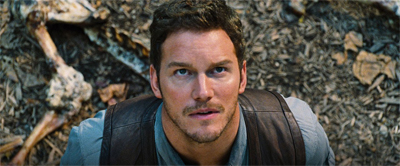
Feeding time...

Feeding time…

Continue reading

Non-Review Review: Mr. Holmes

Memory is a tricky thing, particularly as distinct from history. History often occurs as a sequence of events, a laundry list and cause and effect and happenstance. Memory is the chord that we use to tie that all together, the narrative that we weave through these isolated events. Mr. Holmes is an exploration of the gulf as it exists between the two concepts, following an ageing Sherlock Holmes as he attempts to piece together his own faded memory from facts and evidence scattered around.

Adapted from Mitch Cullin’s A Slight Trick of the Mind, writer Jeffrey Hatcher and director Bill Condon position Holmes’ famous deductive prowess as a clever metaphor. Holmes’ ability to effortless build random strands of information into cohesive theories and explanations is set against two rather unconventional targets. As his faculties begin to fail him, Holmes tries to reconstruct memory from the few details available to him. At the same time, Holmes struggles with his own difficulties understanding human nature as it exists beneath these subtle hints and clues.

Holmes for Summer...

Private investigations.

Although the publication of A Slight Trick of the Mind predates the development of Steven Moffat and Mark Gatiss’ cult adaptation Sherlock, there is considerable thematic overlap between both stories. As with the BBC series, it seems like the Sherlock Holmes of Mr. Holmes is more concerned with the mystery that is other people than with any individual case. The result is a surprisingly (and effectively) low key film that plays more as a meditation on the human condition than as a convention Sherlock Holmes mystery.

There are points where Mr. Holmes does feel a little too heavy-handed or a little too manipulative in its exploration of the eponymous character. However, Condon very clever grounds the film in a beautifully vulnerable central performance from Ian McKellen.

The long walk Holmes...

The long walk Holmes…

Continue reading

Non-Review Review: Spy

Spy is broad, but it is funny. It might just be the best collaboration between director Paul Feig and actress Melissa McCarthy.

Feig reteams with McCarthy following on from the critical and commercial successes of Bridesmaids and The Heat. Both films were frequently cited as leading a new wave in female-led comedy, proving that audiences and critics would respond to classic comedy movie tropes executed with a largely female cast. Although Spy features an ensemble that is more gender-balanced, it remains a feminist comedy. Feig’s screenplay is never heavy-handed in its gender politics, but it wryly aware of how its female characters are wading into a traditionally masculine space.

I spy a winner...

I spy a winner…

Continue reading

Non-Review Review: San Andreas

San Andreas is a b-movie that desperately wants to be taken seriously.

The film is at its best when it engages with its corniness. The characters make terrible baseball-related puns as the world falls to pieces. Our protagonist has a clever idea inspired by a passer-by’s choice of headware. Paul Giamatti sells his seismological terror. A desperate mother decides to plough a boat through a window into the room where her daughter is already close to death. The disaster relief efforts are interrupted so that the news reporters can thank the team of hard-working seismologists who predicted the disaster whole minutes before it happened.

Pilot error?

Pilot error?

However, the film has no real sense of tone or mood. The script longs for a deeper resonance, and so aims a lot higher than it can actually hit. The main characters spend most of the disaster working through the death of a child several years earlier, with cliché flashbacks striving for heart-breaking but landing on groan-inducing. Plot points are dutifully and awkwardly set up, with characters spending most of the first act spewing obvious foreshadowing more than meaningful dialogue.

The result is a mismatched and uneven piece of work, a disaster movie in more than the way that the production team intended.

"Um, I found a plot hole..."

“Um, I found a plot hole…”

Continue reading

Non-Review Review: Tomorrowland

Tomorrowland encapsulates a number of recurring themes in American mainstream science-fiction,

In many respects, it harks to sixties utopianism. Tomorrowland positions itself as a spiritual companion piece to films like Star Trek or X-Men: First Class or Interstellar. Although most of the film is set in the present day, its retro futurism is firmly anchored fifty years in the past. An early flashback takes place in the 1964 World’s Fair. Space flight is explicitly described as the “new frontier”, recalling Kennedy’s famous speech. Tomorrowland is absolutely fascinated with the idea of organised space flight as a beacon calling mankind forward.

Field of dreams...

Field of dreams…

It almost seems like, to paraphrase George W. Bush, “The future was better yesterday.” There is a paradoxical nostalgia to Tomorrowland, which feels like a desperate plea for the modern generation to abandon their own visions of the future and embrace those of their predecessors. It is a fascinating conflict at the heart of the film, and not necessarily one that writer Brad Bird and Damon Lindelof comfortably resolve. There are aspects of Tomorrowland that do feel distinctly uncomfortable and contradictory.

At the same time, it feels like a genuine and heartfelt criticism of the tendency towards the apocalyptic in mainstream fiction – an impassioned and aggressive urge to embrace a more hopeful and optimistic future. Tomorrowland has its heart in the right place, but it occasionally gets a little lost.

Going against the grain...

Going against the grain…

Continue reading