• Following Us

  • Categories

  • Check out the Archives


  • Awards & Nominations

Star Trek: Deep Space Nine – Defiant (Review)

The September and October, we’re taking a look at the jam-packed 1994 to 1995 season of Star Trek, including Star Trek: Deep Space Nine and Star Trek: Voyager. Check back daily for the latest review.

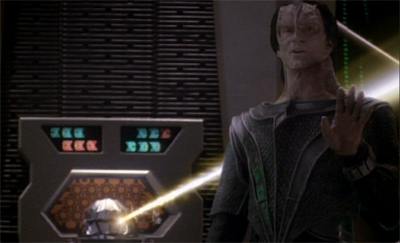
Defiant is a cheeky piece of work.

On the surface, it appears to be a rather lame bit of cross-promotion for the release of Star Trek: Generations. The first movie featuring the cast of Star Trek: The Next Generation had opened three-days before Defiant aired, and so it seemed like the perfect opportunity to get a nice cameo from a well-loved cast member and remind audiences that the film was currently in cinemas. Jonathan Frakes is a likeable actor, and Riker has been used as an ambassador for the series before. He appeared in Cybill, after all.

However, then Defiant takes one sharp left-turn, massively upsetting expectations and becoming something a lot more interesting than a cross-media tie-in.

Guess who's coming to Quark's...

Guess who’s coming to Quark’s…

Continue reading

Star Trek: Deep Space Nine (Malibu Comics) #29-30 – Sole Asylum (Review)

The September and October, we’re taking a look at the jam-packed 1994 to 1995 season of Star Trek, including Star Trek: Deep Space Nine and Star Trek: Voyager. Check back daily for the latest review.

Whatever happened to Thomas Riker?

Star Trek: Deep Space Nine receives a lot of credit for its move towards serialisation as a prime-time genre show. It wasn’t a pioneer in the same way that Babylon 5 was or even Murder One had been, but it was was definitely ahead of the curve. Deep Space Nine arguably holds up better today than any of the other Star Trek shows, and part of that is down to the way that the show leaned into serialisation. Actions had consequences, effects lingered after the credits.

Hostage of fortune...

Hostage of fortune…

The show was very much leaning that way in the second and third season, building up plot threads that would pay off down the line. The Dominion had been seeded in the show since Rules of Acquisition. The Romulan and Cardassian pre-emptive strike was foreshadowed by episodes like Defiant and Visionary. In the third season, it became clear that Deep Space Nine was ready to commit to some long-form storytelling, in a way that was unusual for a high-profile syndicated genre show in the nineties.

However, it is tempting to give Deep Space Nine a little bit too much credit. There were points where the show seemed to struggle with pay-off and arc-building. In Emissary, Sisko was tasked with bringing Bajor into the Federation; that never happened. After Battle Lines, Kai Opaka never appeared again. Characters who seemed important dropped into and out of the show at random; characters like Martok’s son Drex, Bajoran First Minister Shakaar Edon, Subcommander T’Rul… and Thomas Riker.

The welcome wagon...

The welcome wagon…

Continue reading

Star Trek: Deep Space Nine – Meridian (Review)

The September and October, we’re taking a look at the jam-packed 1994 to 1995 season of Star Trek, including Star Trek: Deep Space Nine and Star Trek: Voyager. Check back daily for the latest review.

Meridian is, to be frank, an absolutely abominable episode of Star Trek: Deep Space Nine. As a series, Deep Space Nine never really had a concentrated run of bad episodes, like the first and second seasons of Star Trek: The Next Generation or the second season of Star Trek: Enterprise or the third season of the original Star Trek. The first two seasons of Deep Space Nine might not be spectacular, but they are competently produced television – while there are a few scattered stinkers to be found, the bulk of the show comprises of mediocre and solid stories.

Instead, Deep Space Nine tended to pepper its weakest episodes throughout its run, perhaps a firm reminder that the show was never an entirely serialised experience. This wasn’t one story pushing forward, despite the presence of arcs and character development; Deep Space Nine was still prone to the pratfalls of episodic television. In this case, the pratfall was the necessity of churning out filler on a tight schedule and hoping to meet a deadline while pumping out two dozen episodes a year.

So we get unforgivably shoddy episodes like The Emperor’s New Cloak or Profit and Loss or Let He Who Is Without Sin mixed in with Deep Space Nine at the height of its form. The third season of Deep Space Nine lacks the highs of the later seasons, but that doesn’t mean it lacks the lows. Meridian stands out as the weakest episode of the season, and a serious competitor for one of the worst episodes of the show.

It appears that the toxic smell of the script is suffocating Terry Farrell...

It appears that the toxic smell of the script is suffocating Terry Farrell…

Continue reading

Non-Review Review: A Most Wanted Man

For better or worse, A Most Wanted Man is going to be overshadowed by the passing of its lead actor. Philip Seymour Hoffman was a giant, a performer with a wonderful gift for bringing flawed and real characters to life, and A Most Wanted Man serves as his last leading role in a major motion picture. It is impossible to talk about A Most Wanted Man without talking about Philip Seymour Hoffman’s performance, and that’s not necessarily a bad thing.

It is a great performance, one that reminds the audience of why they loved Hoffman in the first place – Günther Bachmann is the sort of flawed human being that Hoffman played so well, given a great deal of depth by the late actor.

What's on the table?

What’s on the table?

Continue reading

Star Trek: Deep Space Nine – Civil Defense (Review)

This September and October, we’re taking a look at the jam-packed 1994 to 1995 season of Star Trek, including Star Trek: Deep Space Nine and Star Trek: Voyager. Check back daily for the latest review.

Civil Defense is an episode that really worked a lot better than it should have. The third season of Star Trek: Deep Space Nine hit a bit of a stumbling block in the early part of the third season. Indeed, Second Skin had been shot from what was pretty much Robert Hewitt Wolfe’s first draft of a teleplay. The Abandoned felt like a good premise pushed in front of the camera too early. Civil Defense was similarly rushed into production, with very little turn around from the production staff.

However, despite these production concerns, Civil Defense turns out to be an enjoyable pulpy adventure. The production team wouldn’t royally screw up until the next episode. The biggest problem with the script is that it feels like we’re seeing it far too late in the show’s run. Civil Defense is a fun third season episode, but it would have been a spectacular first season adventure.

"Free dissident suppression system with every purchase over twelve bars!"

“Free dissident suppression system with every purchase over twelve bars!”

Continue reading

Star Trek: Deep Space Nine – The Abandoned (Review)

The September and October, we’re taking a look at the jam-packed 1994 to 1995 season of Star Trek, including Star Trek: Deep Space Nine and Star Trek: Voyager. Check back daily for the latest review.

The Abandoned is a problematic episode.

It’s brave and provocative and challenging, but it’s also incredibly grim and cynical. In fact, it is probably the most relentlessly pessimistic episode of Star Trek: Deep Space Nine‘s third season. And, given the episodes surround it, that is quite an accomplishment. Deep Space Nine has subverted classic Star Trek storytelling before. The Maquis was really a watershed moment for the series, suggesting that paradise itself might be unsustainable – attacking Roddenberry’s utopia rather brutally.

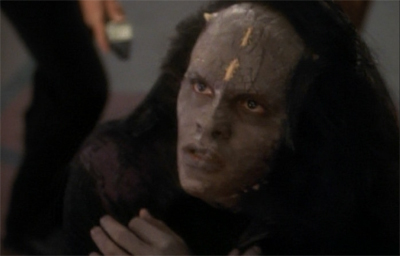
However, The Abandoned pushes things even further. There’s a social and racial subtext to this episode that grounds it in the racial politics of Los Angeles in the mid-nineties. The story of a young angry drug-addicted killer can’t help but feel associated with the increased profile of Los Angeles’ gangland in the early-to-mid-nineties. Casting the episode’s young Jem’Hadar soldier using African American actors invites this comparison, something that director Avery Brooks himself has conceded.

The racial politics of The Abandoned are decidedly uncomfortable, but they are clearly meant to be. Still, there’s something rather cynical and pessimistic about the episode’s conclusion that this young boy cannot be saved from a life of brutality and violence.

A Jem?

A Jem?

Continue reading

Non-Review Review: The Wizard of Oz (IMAX, 3D)

“For nearly forty years this story has given faithful service to the Young in Heart,” an introductory title card advises the audience, “and Time has been powerless to put its kindly philosophy out of fashion.” Although the opening of The Wizard of Oz makes reference to the classic series of children’s stories written by Frank L. Baum, the text is just as applicable to the film itself. It has been seventy-five years, but The Wizard of Oz still has the power to warm even the most jaded and cynical of hearts.

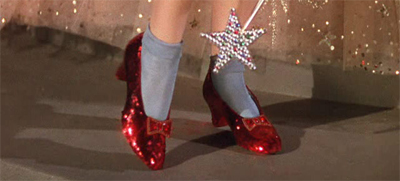
Dorothy is modelling our snazzy red slippers. Order now to avoid disappointment...

Dorothy is modelling our snazzy red slippers. Order now to avoid disappointment…

Continue reading

Doctor Who: Robot of Sherwood (Review)

Shortly, I shall be the most powerful man in the realm. King in all but name, for Nottingham is not enough.

It isn’t?

After this, Derby.

Right.

Then Lincoln. And after Lincoln…

Worksop?

The world!

– the Sheriff outlines his plot to Clara

Robot of Sherwood is a functional piece of television, with a wonderful closing scene capping a very light forty-five minutes. Mark Gatiss is a writer who tends to trade on nostalgia, and who clearly holds a great deal of affection for the past. As such, Robot of Sherwood provides a fairly effective and straightforward counterpoint to the heavy moral questions of Deep Breath and Into the Dalek. Is the Doctor a hero? It doesn’t matter, because his story is that of a hero.

There is a sense that perhaps Gatiss is being a little bit too glib here, to the point where Robot of Sherwood almost plays defensively – a justification of the writer’s tendency to rose-tinted nostalgia and a rejection of critical approaches towards history or story. Nevertheless, Robot of Sherwood does pretty much what it sets out to do. It provides Peter Capaldi with a suitably light script and a chance to flex his comedic muscles, while providing a suitably fairy-tale-ish pseudo-historical.

Legendary outlaw...

Legendary outlaw…

This season is introducing a new lead actor, a risky proposition for any show. As a result, the first half of the season tends to play it rather safe. Robot of Sherwood is the only episode in the first half of the season not to credit Steven Moffat as writer or co-writer; however, it is still written by an established Doctor Who veteran. After all, Mark Gatiss wrote The Unquiet Dead, the first episode of the relaunched series not written by Russell T. Davies. He also wrote Victory of the Daleks, the first story of the Moffat era not written by Moffat himself.

Indeed, the season returns to the classic “home”/“future”/“historical” opening triptych structure that defined the Davies era; it is the first time that this structure has been seen since Matt Smith’s opening season. (For Davies, “home” was twenty-first century London; for Moffat, it is the Paternoster Gang.) Robot of Sherwood is the show’s first proper “celebrity historical” since Vincent and the Doctor in that same opening season. “Safe” is very much the name of the game for this stretch of the season. Robot of Sherwood is very safe.
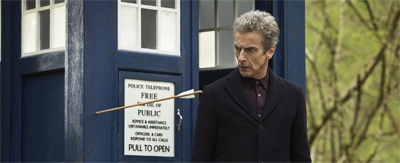
"You'll ruin the paint work!"

“You’ll ruin the paint work!”

Continue reading

Non-Review Review: The Guest

The Guest is a pulpy delight. It’s a glorious throwback to classic seventies horror, with writer Simon Barrett and director Adam Wingart perfectly channeling the mood and feel of classic seventies exploitation films. It’s affectionate and unapologetic. It is gleeful and grim. It is darkly hilarious and also brutally pulpy. The Guest is a film that knows exactly what it wants to be, and accomplishes that with great skill.

Seeing red...

Seeing red…

Continue reading

Star Trek: Deep Space Nine – Second Skin (Review)

The September and October, we’re taking a look at the jam-packed 1994 to 1995 season of Star Trek, including Star Trek: Deep Space Nine and Star Trek: Voyager. Check back daily for the latest review.

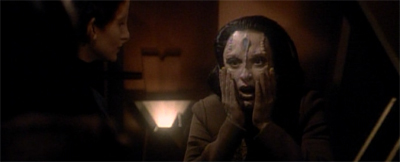
Second Skin continues the identity and reality themes running through the third season of Star Trek: Deep Space Nine. The Search revealed that the Dominion is led by shape-changing aliens who can impersonate anybody, after our heroes spend an episode in a virtual reality. House of Quark stemmed from lies Quark told about himself, only to discover that Klingon culture is not what it claims to be. Equilibrium revealed that Dax held secrets even from herself, having a whole other life. Second Skin confronts Kira with the idea that she may be everything she hates.

The theme will continue in the episodes ahead. The Abandoned is a rather cynical meditation on the nature-against-nurture debate. Civil Defense involves the Deep Space Nine crew discovering that the station itself is not as safe as they like to think. Meridian involves a subplot about Kira’s right to control her own body. Defiant is built around a crisis of identity for a doppelganger. Past Tense features Sisko stepping into the identity of a historical figure. And so it continues. Things are not what they appear to be; the truths we take for granted are not true.

Rewatching this first block of Deep Space Nine‘s third season, it’s amazing how cynical the show could be.

Face of the enemy...

Face of the enemy…

Continue reading