• Following Us

  • Categories

  • Check out the Archives


  • Awards & Nominations

The X-Files – Millennium (Review)

This November, we’re taking a trip back in time to review the seventh season of The X-Files and the first (and only) season of Harsh Realm.

There are any number of ironies around the cancellation of Millennium.

The show was cancelled by Fox to make room for Harsh Realm, hoping that Chris Carter’s new show would perform better in the Friday night slot. Of course, that did not turn out to be the case; Harsh Realm was cancelled after only three episodes had been broadcast, all failing to even match the already low numbers of the third season of Millennium. A show in its third season was cancelled to make room for a hip new show that was pretty much dead on arrival. However, that is not the only irony.

Frank Black's return...

Frank Black’s return…

Millennium concluded with Goodbye to All That in May 1999. The show fell seven months shy of its own deadline. If Fox had commissioned only eight new episodes, the creative team would have been able to take the show right up to the turn of the millennium itself. (Well, in a way that would make sense to most viewers. “Nobody likes a maths geek, Scully.” Even one who is technically correct.) It seems like Frank Black would not get to see the arrival of the date that had defined his show. (It was the title, after all.)

If Christmas is the season of goodwill to all men, then it is a nice gesture that The X-Files invited Frank Black to ring in the new year (and the new millennium) with them. It might not be much more, but it is a nice gesture.

... is just one thing that fans remember about this episode.

… is just one thing that fans remember about this episode.

Continue reading

Non-Review Review: Legend

Legend is a nostalgic gangster film.

Sure, it embraces its sixties aesthetic with relish. After all, setting a film in sixties London all but assures impressive production design. Legend looks and sounds quite lavish, evoking not so much the sixties but the cultural memory of the sixties. The film likes its loud blues and rich browns, but it also draws quite skilfully from the sounds of the era. Appropriately enough for a film adopting the title Legend, the film feels like it owes more to some hazy collective recollection than the concrete reality.

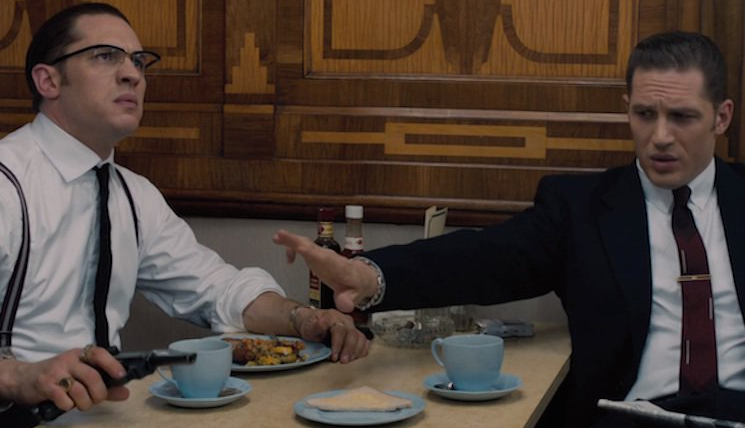
"Whoa! Let's READ the review first..."

“Whoa! Let’s READ the review first…”

However, Legend‘s nostalgia runs a great deal deeper than that. After all, writer and director Brian Helgeland has some experience with crime-based period pieces. The trailers to Legend loudly trumpet Helgeland as the writer of L.A. Confidential, and it’s an obvious comparison in terms of visual style. However, the narrative and structure of Legend feel a lot older. At its heart, Legend is an old-fashioned gangster biography, offering a broad and sweeping (and occasionally episodic) historical travelogue through the meteoric rise and catastrophic fall of the Krays.

It is an approach that has fallen somewhat out of style in recent years. The technique certainly has its weaknesses, particularly when applied by hands less skilled than those of Martin Scorsese. It is too much to suggest that Legend measures up to Goodfellas or Casino, but Legend makes good use of its format. It starts with enough energy to sustain its two-hour-and-ten minute runtime through the ebbs and flows of a familiar plot structure, allowing Tom Hardy enough room to craft two separate stunning performances.

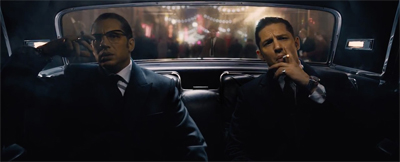
Twin town...

Twin town…

Continue reading

The X-Files – Hungry (Review)

This November, we’re taking a trip back in time to review the seventh season of The X-Files and the first (and only) season of Harsh Realm.

Hungry is an underrated episode of The X-Files.

Although it was the third episode of the season to air, it was actually the first episode produced, allowing David Duchovny and Gillian Anderson to ease themselves back into the demanding shooting schedule. As with Vince Gilligan’s script for Unusual Suspects, the idea was to write an episode that required as little of Mulder and Scully as possible. However, rather than building Hungry around an established member (or members) of the supporting cast, Gilligan decides to introduce a new character and make them the focus of the episode.

"I am sharkboy, hear me roar..."

“I am sharkboy, hear me roar…”

Hungry is not quite as experimental as X-Cops, but there is something deliciously subversive about telling a “monster of the week” story from the perspective of the monster. Gilligan is arguably building upon the work done by David Amann in Terms of Endearment, but Hungry is very much its own story. It pushes Mulder and Scully to the very edge of the narrative in a way that distorts many of the underlying assumptions about what The X-Files is and how it is supposed to work.

Hungry is proof that The X-Files still has legitimately great stories in it, even if the seventh season has a decidedly funereal atmosphere.

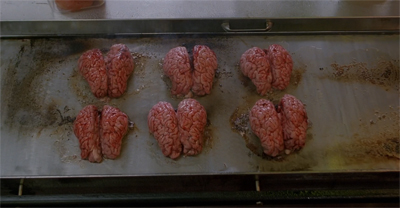
Brains...

Brains…

Continue reading

Non-Review Review: Irrational Man

If Blue Jasmine could be read as an adaptation of A Streetcar Named Desire, Woody Allen continues his journey through classic cinema (and novels and plays) with Irrational Man. The core of Irrational Man is built around the basic premise of Strangers on a Train, exploring the strange intersection of lives around a seemingly motiveless murder plot. Using the plot of Strangers on a Train as a springboard, Allen staged Irrational Man as a character study (very loosely) framed discussion of ethics and moral philosophy.

Set in a small-town New England college campus, Allen strips Patricia Highsmith’s novel down to its core elements. As with a lot of late-stage Woody Allen films, there is not so much a plot as a set of complications. The story is streamlined so as to allow a depth of focus on its central characters; murder is not swapped so much as volunteered, meaning that Irrational Man only has to focus on a single murder and its impact on a single set of characters. In this case, Allen focuses on Professor Abe Lucas and his student Jill Pollard.

Murder on the mind...

Murder on the mind…

Lucas is depressed and withdrawn; he is a philosopher who has lived a long and varied life, but who seems numbed by the experience. Lucas is not necessarily suicidal, but it doesn’t seem like he’d be too upset by the prospect of his own death. As fellow faculty member Rita Richards and bright young student Jill Pollard try to pull the philosopher out of his depression, a conversation overheard in a diner lights a spark. Listening to a stranger detail the injustices inflicted upon her, Lucas decides to set about righting wrongs on her behalf.

Irrational Man builds to a decidedly academic murder plot. It is very much “Woody Allen presents How to Get Away With Murder.”

"Voila Davis always gets higher student approval ratings."

“Voila Davis always gets higher student approval ratings.”

Continue reading

The X-Files – The Sixth Extinction II: Amor Fati (Review)

This November, we’re taking a trip back in time to review the seventh season of The X-Files and the first (and only) season of Harsh Realm.

My formula for greatness in a human being is amor fati: that one wants nothing to be different, not forward, not backward, not in all eternity. Not merely bear what is necessary, still less conceal it—all idealism is mendacity in the face of what is necessary—but love it.

– Friedrich Nietzsche, Ecce Homo

Everything burns...

Everything burns…

Continue reading

Star Trek: Enterprise – Season 3 (Review)

Next year, Star Trek is fifty years old. We have some special stuff planned for that, but – in the meantime – we’re reviewing all of Star Trek: Enterprise this year as something of a prequel to that anniversary. This August, we’re doing the third season. Check back daily for the latest review.

The third season of Star Trek: Enterprise is a mess.

It is very clearly the work of a production team still figuring out how to plot long-form stories and struggling with the logistical difficulties of mapping out a single narrative across what was originally planned as a twenty-six episode season. There are extended periods where narrative momentum stalls; there are key moments where it seems like the show has no idea where it wants to go next. It seems like the production team never sat down in the gap before production began to figure out what story they wanted to tell, and ended up improvising.

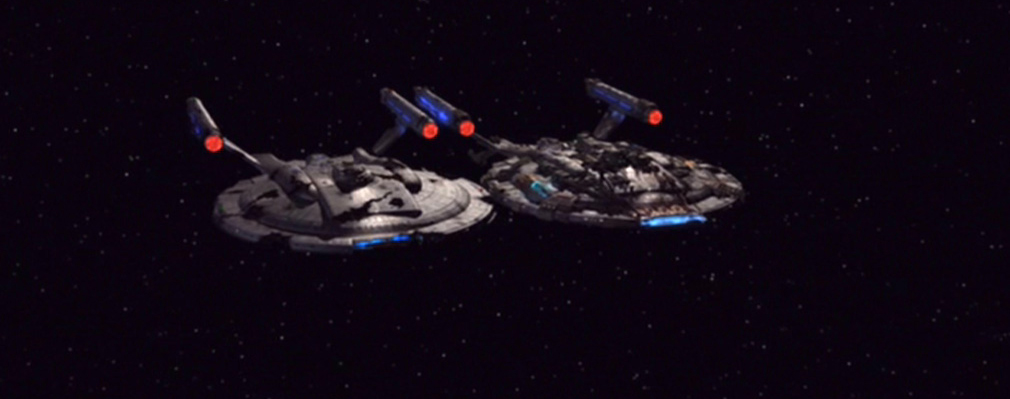
ent-e2f1

However, it is also a bold and ambitious piece of television. It demonstrates an energy and excitement that had been lacking from the Star Trek franchise since Star Trek: Deep Space Nine went off the air. It is a season of television that doesn’t always work, but that is to be expected when the production team are trying something new. The failures of the first two seasons of the show often stemmed from a lack of ambition on the part of the production team; the failures in the third season are rooted in a surplus of ambition. It is hard to find them too objectionable.

The Xindi arc doesn’t always work as well as it might, but it works more than often enough to excuse the clumsy missteps along the way. There is something compelling and dynamic about a Star Trek show that is willing to push itself so far outside its own comfort zone. There is a spirit of adventure to the third season of Enterprise that had been sorely lacking from the first two seasons of the show. The biggest disappointment is that it took the show this long to find that confidence and that adventurousness.

ent-thexindi25 Continue reading

The X-Files – The Sixth Extinction (Review)

This November, we’re taking a trip back in time to review the seventh season of The X-Files and the first (and only) season of Harsh Realm.

The fate of individual human beings may not now be connected in a deep way with the rest of the universe, but the matter out of which each of us is made is intimately tied to processes that occurred immense intervals of time and enormous distances in space away from us. Our Sun is a second- or third-generation star. All of the rocky and metallic material we stand on, the iron in our blood, the calcium in our teeth, the carbon in our genes were produced billions of years ago in the interior of a red giant star. We are made of star-stuff.

– Carl Sagan’s Cosmic Connection

Sea of blood...

Sea of blood…

Continue reading

Star Trek: Enterprise – Zero Hour (Review)

Next year, Star Trek is fifty years old. We have some special stuff planned for that, but – in the meantime – we’re reviewing all of Star Trek: Enterprise this year as something of a prequel to that anniversary. This August, we’re doing the third season. Check back daily for the latest review.

There was a very real chance that Zero Hour might have been the last episode of Star Trek: Enterprise to air.

In fact, it was entirely possible that Zero Hour‘s distinctive (and downright provocative) closing shot of an evil!alien!space!Nazi might have been the last shot of Star Trek to air on television for quite some time.

Time is running out...

Time is running out…

Continue reading

Harsh Realm – Inga Fossa (Review)

This November, we’re taking a trip back in time to review the seventh season of The X-Files and the first (and only) season of Harsh Realm.

Inga Fossa is a noteworthy episode of Harsh Realm for a number of reasons.

In production terms, it closes out the loose three-episode introduction to the series. The Pilot, Leviathan and Inga Fossa were all written by Chris Carter and served as an introduction to the world and rules of Harsh Realm. Perhaps owing to the relative complexity of the show’s premise, Carter takes a bit of time to lay out and establish the core ideas of the show. It isn’t until the end of Inga Fossa that characters like Thomas Hobbes and Sophie have reached the status quo that will carry them through the rest of the first season.

Game on...

Game on…

However, all of this is ultimately irrelevant. Inga Fossa will always be notable for being the final episode of Harsh Realm to air on Fox. Chris Carter’s new show was infamously cancelled after only three episodes were broadcast. The six episodes that had been produced before cancellation were quietly shuffled off Fox’s 1999 schedule; they eventually aired on FX in mid-2000, to little fanfare. The cancellation was a shocking development. The ratings were spectacularly terrible, but Harsh Realm had been intended to establish Carter as the network’s idea-generating machine.

Something was very wrong.

"You can't $@!# in here, this is the war room!"

“You can’t $@!# in here, this is the war room!”

Continue reading

Star Trek: Enterprise – Countdown (Review)

Next year, Star Trek is fifty years old. We have some special stuff planned for that, but – in the meantime – we’re reviewing all of Star Trek: Enterprise this year as something of a prequel to that anniversary. This August, we’re doing the third season. Check back daily for the latest review.

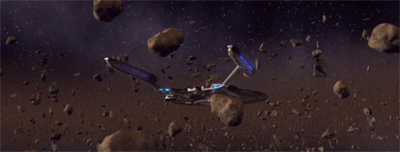
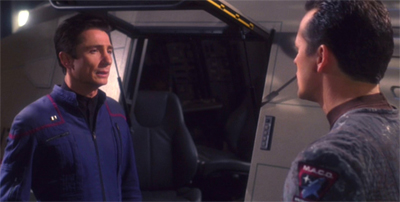
Star Trek: Enterprise spent a lot of the final stretch of the third season playing at being Star Trek: Deep Space Nine. There are a number of episodes that provide a direct parallel with stories from that earlier underrated Star Trek show. Damage riffs on In the Pale Moonlight. is very much Children of Time. More than that, the moral ambiguity and the long-form storytelling that define the third season of Enterprise also owe a very conscious debt to the work done on Deep Space Nine.

However, the final two episodes of the third season drift away from the ethical uncertainties and moral quagmires that defined a lot of the year’s stories. The Council effective resolved the big thematic questions hanging over the third season, allowing Archer the chance to propose a diplomatic solution to the Xindi crisis. This allows Countdown and Zero Hour to go about the task of providing a suitably impressive action climax to this twenty-four-episode season-long arc. There is precious little soul-searching here; instead, there is one big race against time.

The life aquatic...

The life aquatic…

In that respect, the last two episodes of the third season hark back to a more traditional form of Star Trek storytelling. In particular, Countdown and Zero Hour feel like an old-school blockbuster two-parter, in the style of Star Trek: The Next Generation or Star Trek: Voyager. In fact, with Archer’s fate in question and a hostile unstoppable force invading the solar system only to be destroyed in orbit of Earth, Countdown and Zero Hour play like an extended homage to The Best of Both Worlds.

While one of the most frequent criticisms of Enterprise is the sense that the writing staff are simply regurgitating classic Next Generation and Voyager plots, this feels almost earned. The third season has largely been about the show’s journey back to the heart of the Star Trek franchise, a trip that concluded with Archer embracing traditional Star Trek values in The Council. But what fun is that journey if you don’t get to celebrate it with an epic high-stakes world-ending rollercoaster ride?

"We cool?" "We cool."

“We cool?”
“We cool.”

Continue reading