• Following Us

  • Categories

  • Check out the Archives


  • Awards & Nominations

Harsh Realm – Manus Domini (Review)

This November, we’re taking a trip back in time to review the seventh season of The X-Files and the first (and only) season of Harsh Realm.

Manus Domini continues the influx of assistance from the writing staff on The X-Files, with John Shiban contributing a script to the first season of Harsh Realm.

Manus Domini is a very strange episode. In a way, it feels more keenly aligned with the sensibilities of Chris Carter than those of John Shiban. It is the most overtly religious episode from the short run of Harsh Realm, with characters contemplating faith and spirituality in an otherwise cruel world. It is the logical continuation of themes seeded and developed across the rest of the season, bringing the religious subtext of the show to the fore so that it might be acknowledged and explored.
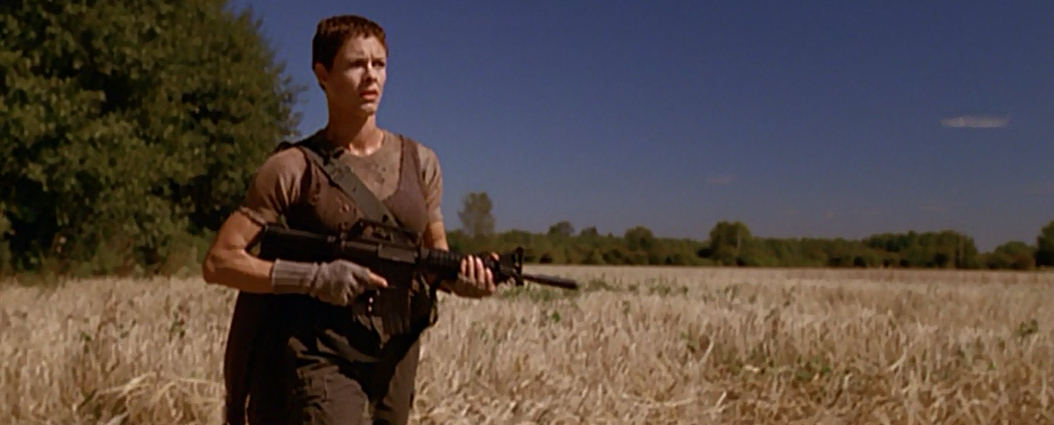
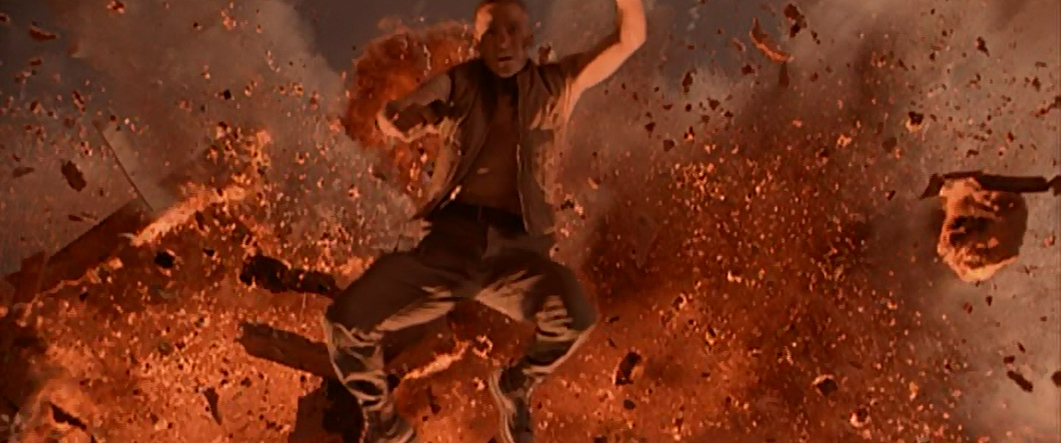
Florence in the machine...

Florence in the machine…

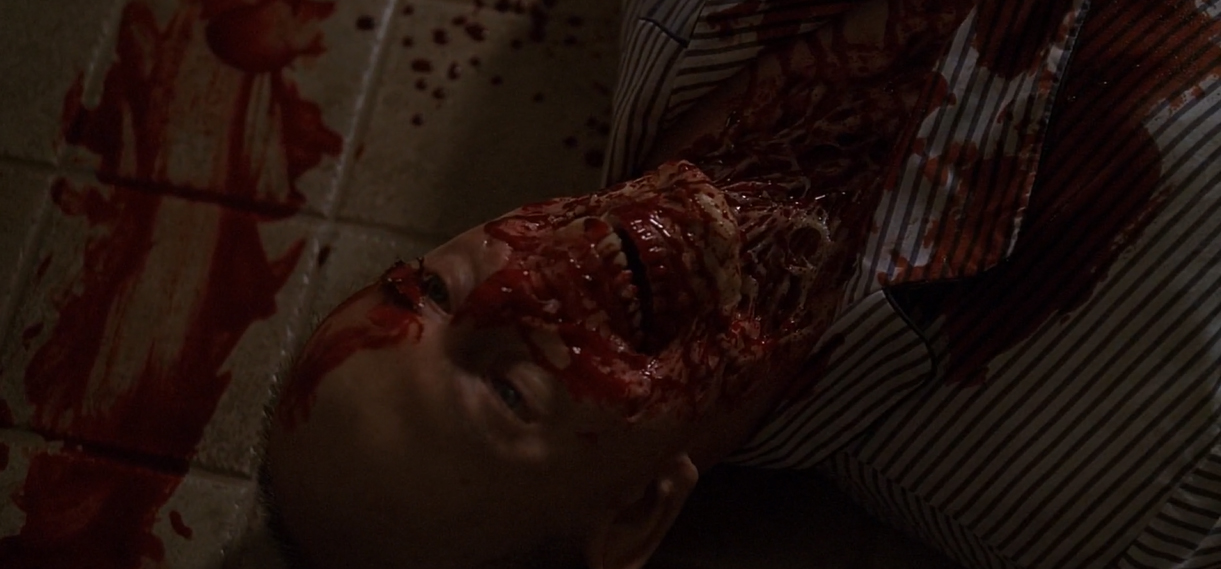
To be fair, there are elements that fit comfortably within Shiban’s oeuvre. Shiban is very much a fan of classic horror tropes, so it makes sense that his script should feature a monstrous supporting character whose complete moral decay is symbolised through grotesque facial deformities. (The element recurs in Camera Obscura, but is not as pronounced as it in this episode.) There are elements of Manus Domini that feel like they might have been lifted from classic seventies horror.

Nevertheless, Manus Domini is defined by its religious components, making it clear that the show retains the same core moral perspective that runs through Carter’s work; there is a recurring sense that faith and spirituality are essential to survive and endure in an increasingly faithless world.
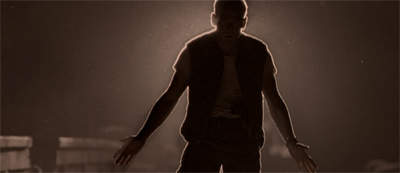
A literal mine field...

A literal mine field…

Continue reading

The X-Files – Hollywood A.D. (Review)

This September, we’re taking a trip back in time to review the seventh season of The X-Files and the first (and only) season of Harsh Realm.

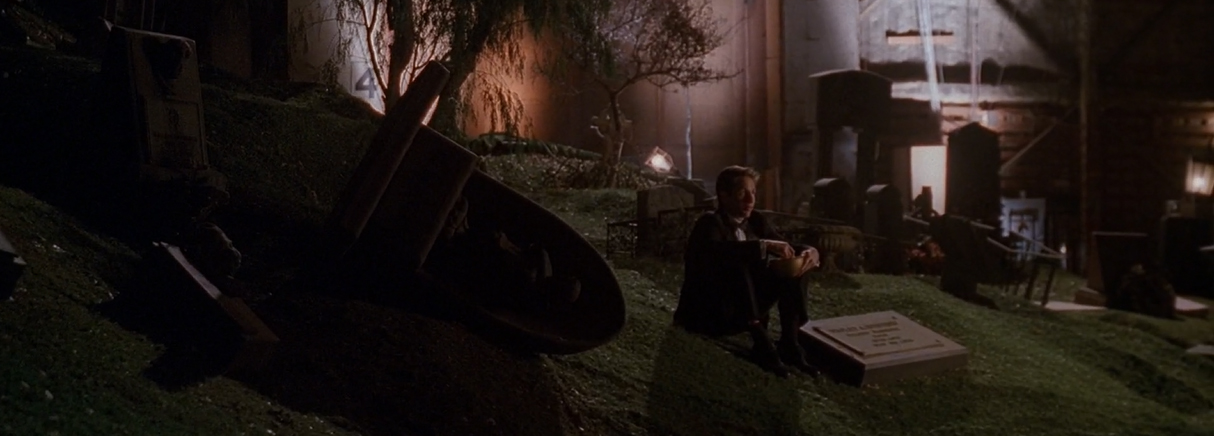
And now as we drift off the laughing agents and back to the graveyard , we see the Lazarus Bowl lying discarded beneath a tree.

A SWITCH, a broken tipped branch of the tree gets blown by the fan’s wind force down toward the plastic grooves of the replica as we move down toward it, we can read a “MADE IN ISRAEL” sticker on its bottom – the branch reaching toward the plastic,  like a woman’s arms to her lover —

Close on the splintered wood making contact on the colored plastic like a phonograph needle on vinyl —

And now MUSIC COMES UP – scratchy like an old record, the fourth track from BUENA VISTA SOCIAL CLUB, in a superior interpretation rendered by Mark Snow, called “PUEBLO NUEVO” – a beautiful stately cha cha instrumental —

We pull back wide as APPARITIONS appear to rise from their graves, rotting, but standing at atte ntion and then —

When the music kicks in, they begin to dance, all of them, in the round – dignified, changing partners… we hear the bones creaking, we see the gentlemanly half skulls smiling…

And now by the magic of Bill Millar & Co., the GREEN SCREEN becomes the rest of a HUGE GRAVEYARD with corpses dancing  stately and dignified upon it as we begin a slow pull out to a heavenly perspective…

This is what life’s about. This is what the dead would do if only they could. As we slowly fade to black, the band plays on.

And we end.

 – David Duchovny takes his bow

Everything ends.

Everything ends.

Continue reading

Doctor Who: Under the Lake (Review)

You’re going to go back in time? How can you do that?

Extremely well.

– Bennett and the Doctor lay down some ground rules

Part of the thrill of the ninth season is the ambition and experimentation involved.

As a rule, the Moffat era has tended towards compression, favouring individual episodes over epic two parters. While the final stories of Davies-era seasons tended to burst at the seams, with extended runtimes pushing stories beyond even the generous runtimes of two- (or even three-) part episodes, the Moffat era has favoured the standalone story. Moffat finalés are packed tight, with episodes like The Wedding of River Song and The Name of the Doctor feeling like they might come off the rails if they moved any faster.

An axe to grind...

An axe to grind…

Constructed an entire season of two-part episodes represents a very clear change in how Doctor Who is telling stories. The change in the type of story alters both the fundamental structure of the episodes and the underlying rhythm of the season. There is no precedent for this in the ten years since the show came back, which makes it all very exciting. The show has told multi-part stories before, but always as events rather than as default. It feels entirely appropriate that Under the Lake sets up quite a distinct and delineated two-part adventure.

Toby Whithouse is one of the most traditionalist writers working on Doctor Who, give or take Mark Gatiss. After all, it was Whithouse who was assigned to bring Sarah Jane into the present with School Reunion during the second season. With that in mind, it makes sense that Under the Lake and Before the Flood feel a little bit like an attempt to bring a very classic multi-part structure into the twenty-first century.

Siege the moment...

Siege the moment…

Continue reading

Harsh Realm – Three Percenters (Review)

This November, we’re taking a trip back in time to review the seventh season of The X-Files and the first (and only) season of Harsh Realm.

Three Percenters is written by Frank Spotnitz.

Spotnitz is the longest serving staff writer on The X-Files, with the exception of Chris Carter. He worked with Carter in shaping and defining the mythology, sharing credit on some of the biggest episodes of the series. He is credited as a screenwriter on both The X-Files: Fight the Future and The X-Files: I Want to Believe. He is the only writer apart from Carter to work on all Millennium, Harsh Realm and The Lone Gunmen. As such, Spotnitz is an essential part of the Ten Thirteen family.

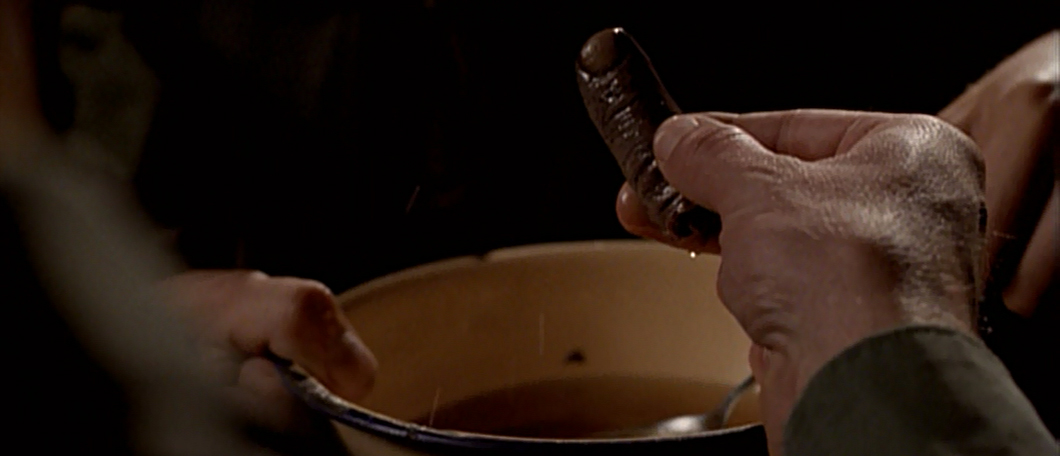
Talk about finger food...

Talk about finger food…

Spotnitz has a very clear of structure. Working on The X-Files, he was renowned for his ability to “break” a story, to split it down to its constituent elements and to make it make sense. His first credit on The X-Files was the script for End Game, which was a hugely important part of shaping and defining the mythology of the show. His two scripts for the first season of Millennium (Weeds and Sacrament) capture the spirit of the show in that moment in time, for better and for worse. It makes perfect sense for Spotnitz to script a first season episode of Harsh Realm.

However, Spotnitz’s script for Three Percenters perhaps demonstrates one of the problems with these initial nine episodes. Spotnitz is very good at understanding story structure and logic, but Harsh Realm doesn’t really have a set formula or template that he might be able to apply. Five episodes into its run, the show hasn’t settled into a grove in the same way that Millennium or The X-Files had. This perhaps explains why Three Percenters feels so odd and uneven; it occasionally seems like Spotnitz just pasted over a template from The X-Files itself.

Walking on water...

Walking on water…

Continue reading

Harsh Realm – Reunion (Review)

This November, we’re taking a trip back in time to review the seventh season of The X-Files and the first (and only) season of Harsh Realm.

So that in the first place, I put for a general inclination of all mankind a perpetual and restless desire of Power after power, that ceaseth only in Death. And the cause of this is not always that a man hopes for a more intensive delight than he has already attained to, or that he cannot be content with a moderate power: but because he cannot assure the power and means to live well, which he hath present, without the acquisition of more.

– Thomas Hobbes, Leviathan, The First Part, Chapter XI

Reunion continues the sense that Chris Carter envisioned Harsh Realm as something of an allegorical episodic adventure series through a post-apocalyptic reflection of contemporary America.

Carter quite clearly wanted to use Harsh Realm as a vehicle to explore and comment upon certain aspects of the American experience. Inga Fossa touched on the links between projected masculinity and violence; Cincinnati will find Santiago’s “manifest destiny” brushing up against the country’s Native American population. Even scripts like Three Percenters and Manus Domini feel tied into Carter’s large oeuvre, touching on the writer’s recurring fascination with homogeneity and spirituality in the modern world.

Things come to a head...

Things come to a head…

Reunion is very consciously a critique of excessive and abusive capitalism, presenting a vision of America built upon the economics of slave labour reinforced by the rhetoric of freedom and competition. In some respects, Reunion feels like Harsh Realm is channelling the spirit of classic science-fiction television like Star Trek or The Twilight Zone. Its central allegory is hardly subtle, but there is a goofy charm in carrying these ideas well past their logical extremes. The vision of labour presented in Reunion is grotesque and exaggerated, but it is not completely fantastical.

Reunion also reaffirms the link that exists between the digital world and the real world, suggesting that perhaps the world that we inhabit is not as far removed from the horrors of the virtual reality as might hope.

Family matters...

Family matters…

Continue reading

Non-Review Review: The Walk

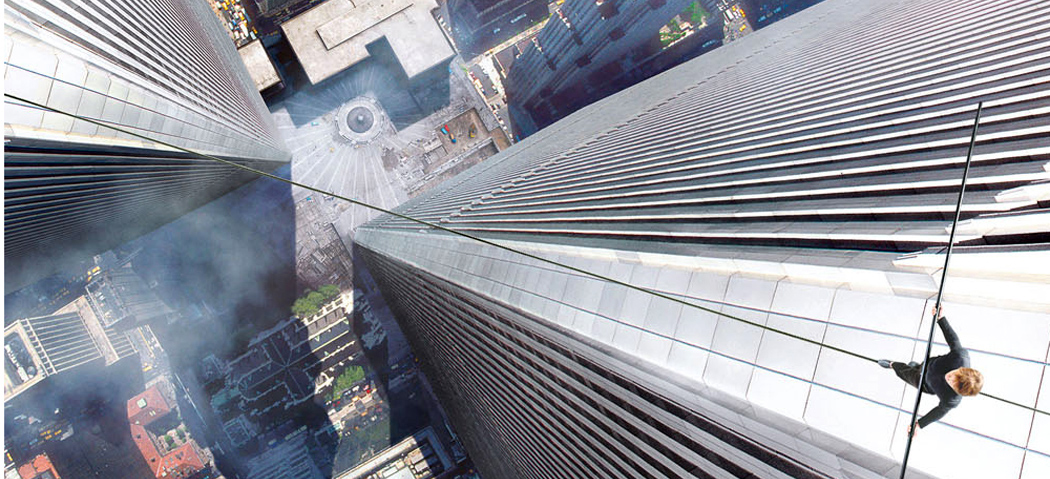
“It is not real,” Philippe Petit reflects quite early in The Walk.

Resting his chin against one of the steel supports running the height of the World Trade Centre, Philippe stares upwards into infinity. Up until that moment, the Twin Towers had existed as a conceptual object for the young French tightrope artist; he had only seen them in photographs and sketches, framed in comparison to the Eiffel Tower to afford them a sense of scale. Appreciating the majesty of the World Trade Centre in the flesh is almost too much to process. Making them more real has somehow made them less real.

Walk on the wild side...

Walk on the wild side…

Philippe could just as easily be talking about the film that surrounds him. Director Robert Zemeckis might be best known for his work on Back to the Future, but a lot of his twenty-first century filmography has been fixated upon the unreal; Zemeckis has become known for his fascination with motion-capture and computer-generated imagery, the illusive pursuit of verisimilitude through the uncanny valley. The special effects used to realise The Walk are superb and top of the line, but there remains a feeling of unreality to the whole film.

It would be impossible to film The Walk in a real location using real stunts. The Walk is an ode to New York City, but to a version of New York City that no longer exists. Tourists cannot visit it, although perhaps it might be found on a postcard or trapped in a photo. The Walk cleverly and consciously refuses to downplay that feeling of unreality, feeling almost like a nostalgic memory recalled through the fog of time. Philippe Petit’s tightrope walk between the Twin Towers was so effective because it was real; The Walk is so effective precisely because it is unreal.

Stepping out...

Stepping out…

Continue reading

The X-Files – Brand X (Review)

This September, we’re taking a trip back in time to review the seventh season of The X-Files and the first (and only) season of Harsh Realm.

Watching the seventh season of The X-Files only reinforces the sense that the production team got extremely lucky with the casting of David Duchovny and Gillian Anderson. The chemistry between the two actors has carried more than a few weak scripts across the seventh season. Lighter shows like Rush, The Goldberg Variation and The Amazing Maleeni were all able to coast off the charm of the pair. It doesn’t matter that the plot resolution in an exposition dump from Mulder when you end on Scully attempting a magic trick. However, this works both ways.

It the seventh season coasts of the charisma of David Duchovny and Gillian Anderson, this means that their inevitable absences are keenly felt. As The X-Files had become more popular, the demand upon Duchovny and Anderson had grown greater; most obviously, the show had dropped its production order from twenty-four to twenty-two episodes. Even allowing for that, the show could no longer make the same demands of Duchovny and Anderson that it had made in the first four seasons. Nor could they simply produce less television.

Smoke 'em if you got 'em...

Smoke ’em if you got ’em…

As a result, there are points in the show’s run when either (or both) David Duchovny and Gillian Anderson are unavailable. There are extended periods of the final two seasons that do not feature David Duchovny in any significant capacity. However, even within the seventh season, there are episodes where both leads are unable to fill the narrative space allocated to the lead characters. Gillian Anderson was largely absent from Chimera while working on all things; David Duchovny was largely absent from all things while working on Hollywood A.D.

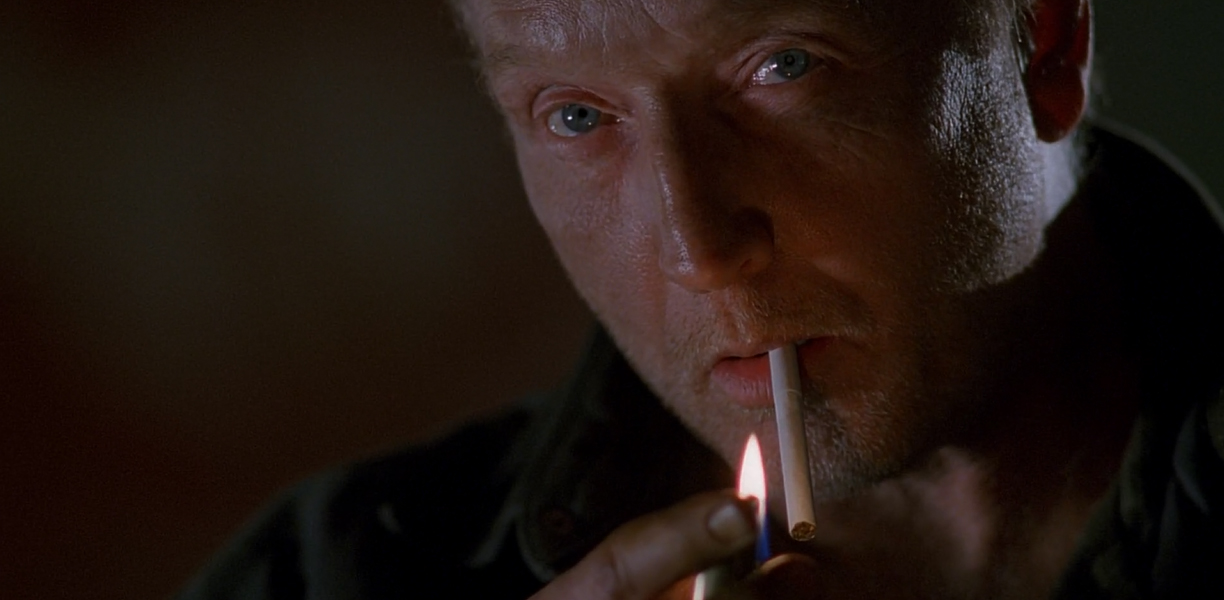
It is these absences which suggest an uncomfortable truth about The X-Files. The show might have its own chemical dependencies. In a metaphor stretched in an effort to tie it all back to Brand X, the audience might rely on Duchovny and Anderson as surely as a smoker relies on their quick nicotine fix. Any attempt to genetically reengineer the show to ensure a healthier and longer life could easily end up creating a monster.

Talk about a looming legal face-off...

Talk about a looming legal face-off…

Continue reading

Non-Review Review: The Intern

The Intern is a likeable, competent movie about likeable, competent people doing likeable, competent things.

What is most remarkable about Nancy Meyers’ latest effort is the fact that there is no real tension at play here. Sure, there’s a three-act structure; there are revelations; there are insecurities; there is crying. However, it seems like everybody in the movie wants nothing more than to get along with everybody else in the movie. Sure, there are the obligatory comedy screw-ups and miscommunication, but there’s never a real sense of risk or stakes as the movie wanders politely from one work-related crisis to another.

Nobody gets too bent out of shape...

Nobody gets too bent out of shape…

It is not an approach that makes for particularly compelling or exciting viewing. Indeed, the characters populating The Intern seem terrified about the idea of getting anybody’s blood pressure up; whether that of septuagenarian Ben Whittaker or the prickly mother of executive Jules Ostin. Everybody involved in The Intern, including the characters themselves, are professionals. Sure, mistakes happen and people mess up, but it’s not the end of the world. There is something oddly comforting in that, even if nobody watching The Intern will be on the edge of their seat.

In the end, The Intern is a lot like the eponymous character; it is steady and reliable, amicable and inoffensive. It looks smart and it knows just what to say. Everybody’s just wary about getting that heart beating a little too hard.

"You feel tense..."

“You feel tense…”

Continue reading

Harsh Realm – Kein Ausgang (Review)

This November, we’re taking a trip back in time to review the seventh season of The X-Files and the first (and only) season of Harsh Realm.

So, what does an average episode of Harsh Realm look like?

After all, the show was cancelled after only three episodes had been broadcast. Those three episodes were all written by the creator, and formed something of a loose introduction to the show. Inga Fossa ended with our protagonist finally accepting his place in the virtual world and his mission to defeat General Omar Santiago before the dictator can destroy the real world. There is a sense that the show had yet to even demonstrate what a regular episode of Harsh Realm might look like. It was over before it had even begun.

Jumping into action...

Jumping into action…

Kein Ausgang is the first episode of Harsh Realm to be written by somebody other than Chris Carter. As such, it is an important milestone in the development of the series. It is also the first of two episodes written by Steven Maeda, who would prove to be a pretty reliable set of hands in the life of the young show. Based on his contributions to Harsh Realm, it is easy to see why Carter drafted Maeda over to The X-Files in the wake of Harsh Realm‘s cancellation, even if his contributions to that show were a little more uneven.

Kein Ausgang offers an interesting glimpse of what Harsh Realm might have looked like going forward, if Fox had waited more than three episodes to cancel the show.

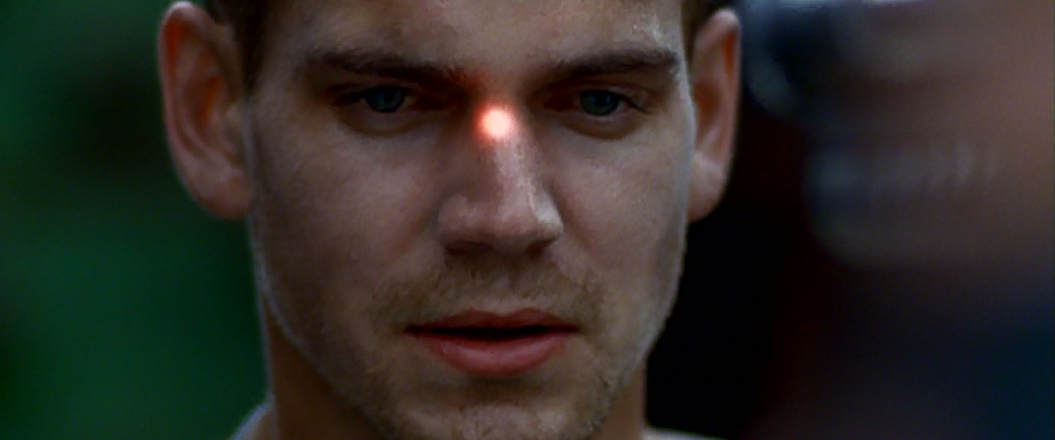
Shining a light on it...

Shining a light on it…

Continue reading

The X-Files – all things (Review)

This September, we’re taking a trip back in time to review the seventh season of The X-Files and the first (and only) season of Harsh Realm.

Say what you will about The X-Files, but the show was never afraid to be weird.

all things is a very odd piece of television. It is moody and atmospheric, philosophical and meandering. It is hard to contextualise, even within the framework of a season as eccentric and disjointed as the seventh season of The X-Files. It doesn’t really work, but that’s not a big problem. The seventh season is full of episodes that don’t quite work. There is definite ambition here, and a clear desire to say something that means something to actor (and director and writer) Gillian Anderson.

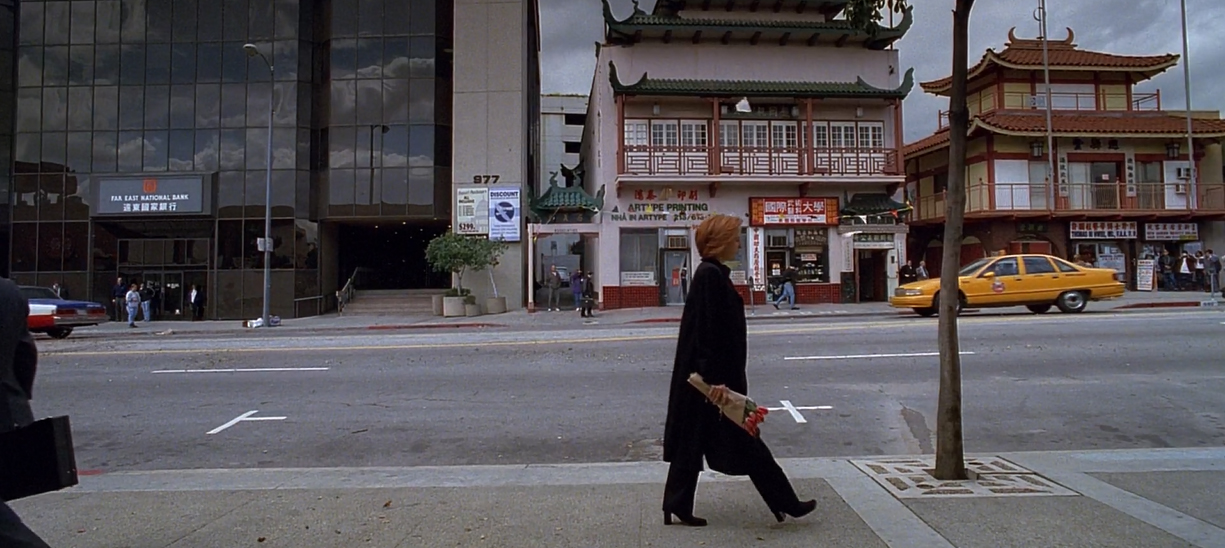
Walk o' life...

Walk o’ life…

Anderson exerts a very conscious gravity over all things. She is not the first actor to write and direct an episode of The X-Files, but she is the first to write and direct an episode centring on her character. all things is an episode written and directed by Gillian Anderson, with a heavy emphasis on Scully. This is as close to a treatise on the character as the actress is ever likely to produce. Perhaps this accounts for the heavy atmosphere and solemn tone of the piece.

all things is a mess of an episode, but it is an interesting mess. It is an episode that feels consciously at odds with both the show around it and the character at its centre. It is an awkward (and occasionally ridiculous) piece of television, but it looks and feels utterly unlike any other episode of The X-Files. That has to count for something.

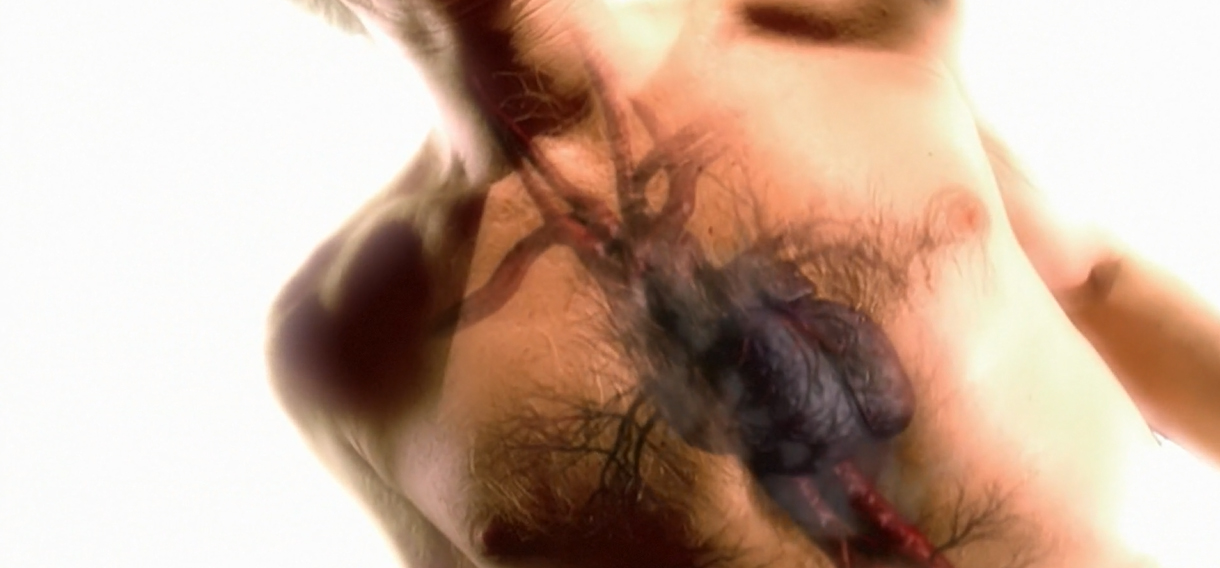
The beating of the world's heart...

The beating of the world’s heart…

Continue reading