• Following Us

  • Categories

  • Check out the Archives


  • Awards & Nominations

Non-Review Review: Kong – Skull Island

Kong: Skull Island has an endearingly “pop” sensibility to it.

There are moments at which Kong: Skull Island feels more like an evocative theatrical-length montage than a film. This is only the second feature-length film from director Jordan Vogt-Roberts, and the movie has jarring and disorienting quality to it. Vogt-Roberts saturates the screen with reds and greens, whirls the camera at incredible velocity, and cuts at an impressive tempo. Even dialogue heavy scenes are constantly panning and cutting.
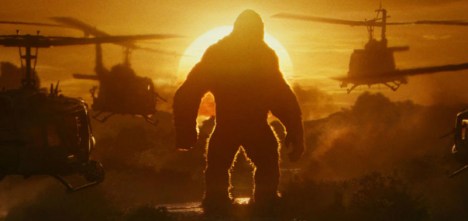
Sundown showdown.

This approach does no favours to the cast. Most of the players in Kong: Skull Island seem to have more trouble finding a consistent character throughline than mythical monsters. Tom Hiddleston seems quite lost for most of the film. Brie Larson probably does the best job of any of the major players, although the rapid-fire editing helps John C. Reilly seem suitably eccentric as the obligatory insane exposition character. Veteran performers like John Goodman and Samuel L. Jackson are forced to hold on for dear life.

However, none of this is a problem. For all its flaws, Kong: Skull Island never over-estimates how interesting its human characters are, mostly treating them as a vehicle to get to the promised monster mash. Vogt-Roberts’ direction might seem hyperactive and over-caffeinated, but it understands this. The camera and the cuts are always moving towards the monster, with the characters serving to deliver thematic dialogue and look suitably moody as seventies music plays over montage sequences.

“Oh, so that’s why they call it Skull Island.”

Kong: Skull Island never feels entirely cohesive as a feature film. That is not a fatal flaw. The movie feels weird and ethereal, the audience constantly kept off-balance by the heighten stylistic choices and the gusto with which the movie seizes upon these opportunities. After all, the eponymous island is a place where anything is possible and nothing is as it appears. It feels somewhat fitting that the movie drifts into a loose free-form style driven more by imagery than by story.

Kong: Skull Island feels in someways like a monstrous monster movie, and there’s something quite appealing in that.

No bones about it.

Continue reading

Star Trek: Deep Space Nine – Waltz (Review)

One of the more common observations about Star Trek: Deep Space Nine is that it is the most “morally ambiguous” Star Trek series, with characters engaging in actions that Picard never would have considered on Star Trek: The Next Generation.

In some ways, this observation makes sense. After all, Deep Space Nine was the first Star Trek show to feature an extended interstellar conflict. Its primary cast is comprised of unapologetic terrorists and untrustworthy wheeler-dealers. The Federation were no longer the unambiguous good guys of the larger Star Trek universe, monolithic humanity giving way to factions like the Maquis or Section 31. Deep Space Nine never took Gene Roddenberry’s utopia for granted, daring to ask what it might look like when paradise found itself under threat.

Eat, pray, hate.

Eat, pray, hate.

However, Deep Space Nine also a very strong moral compass. While there are episodes that flirt with the idea of the end justifying the means, like In the Pale Moonlight or Inter Arma Enim Silent Leges, they are very much the exception rather than the rule. Section 31 are unequivocally monsters, and never proven to be a necessary evil. The Federation wins the Dominion War without the help of their attempted genocide in Extreme Measures. Even the Maquis are treated as ineffective in Defiant, and only romanticised through eulogy in Blaze of Glory.

More than that, Deep Space Nine clearly has a very strong social conscience. This is particularly true in episodes written by executive producer and showrunner Ira Steven Behr. Past Tense, Part I and Past Tense, Part II rage against the treatment of the homeless in contemporary society, sending three regular characters back in time to protest a nineties Los Angeles ordinance. Bar Association insists upon the right to collective bargaining. Far Beyond the Stars is a poignant ode to the power of science-fiction as a window to a better future.

Psycho Sisko!

Psycho Sisko!

Even in the context of the show’s more controversial elements, that moral compass shines through. While the Dominion War might lead to murky compromises, the show goes out of its way to cast the Founders as monstrous; the enslavement of the Jem’Hadar as explored in The Abandoned or of the Vorta as touched upon in Treachery, Faith and the Great River, the use of biological weapons in The Quickening, the disregard for soldiers’ lives in Rocks and Shoals. The Dominion is monstrous, as unequivocally evil as Nazi Germany.

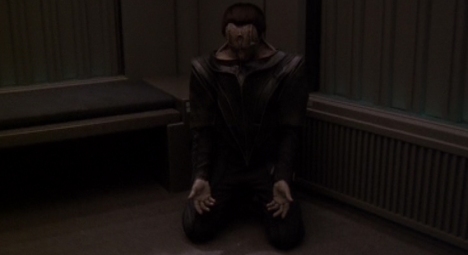
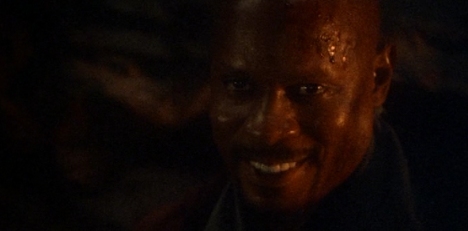
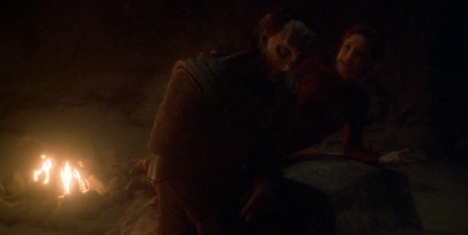
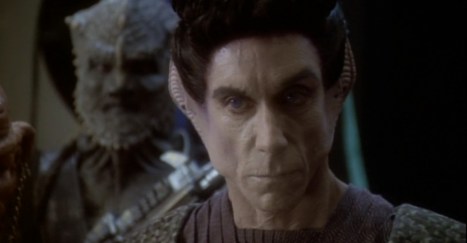
As such, Waltz really serves to confirm something that has always been true of the series. Despite the familiar refrain that Deep Space Nine embraces “moral ambiguity”, the truth is that Deep Space Nine has always believed “that there is really such a thing as truly evil.”

Rocky road to recovery.

Rocky road to recovery.

Continue reading

No Country For Old Man Logan: The Apocalyptic New West…

The American frontier is a formative myth, one that permeates popular culture.

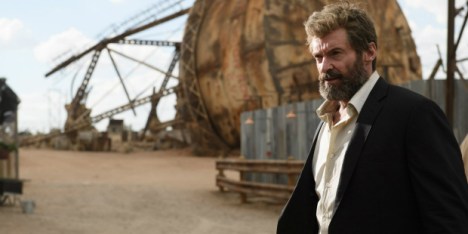
The cowboy is an American icon, as much as the gangster or the superhero. The archetype embodies a set of ideals that inform the country’s perception of itself. Indeed, part of the charm of Logan is seeing that archetype evolution rendered explicit. If The Wolverine posited its central character as a lost samurai who had evolved into a superhero, then James Mangold’s follow-up positions the character as a lost cowboy in a western wasteland. The third and final film in this series has been described as “Unforgiven, with claws.” It is a label that fits. A brand that sticks.

Logan even offers its closing judgment on the character by quoting directly from Shane, a very literal example of the superhero genre quoting from westerns. Mutants are not just an evolution of mankind, they also represent a storytelling evolution. Of course, the western has been evolving for quite some time. Many prognosticators announced the death of the western some time in the seventies, perhaps coinciding with the loss of faith in American institutions (and perhaps mythology) coinciding with the twin blows of Watergate and Vietnam.

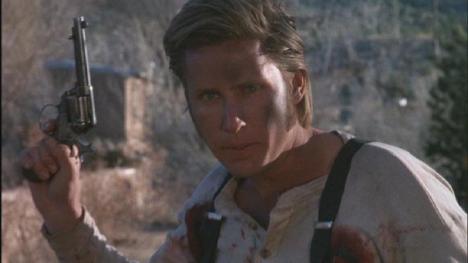
Of course, the western film never really went away. There were always westerns lurking in the background, even after Heaven’s Gate was erected as gigantic tombstone to the genre in 1980. Pale RiderSilveradoDances with Wolves, Unforgiven, Tombstone. However, the many of the more successful (and impactful) westerns of the era tended to have a very mournful and funeral tone to them. There is also something to be said about the success of playful or deconstructed westerns, from Young Guns to The Three Amigos to City Slickers.

Many prognosticators would argue that superhero films came to take the ideological place of the western, accessible entertainment for large audiences built on an American archetype. However, the twenty-first century found the western creeping back into cultural awareness. This took many forms; the neo-westerns of films like No Country for Old Men or Hell or High Water; the self-aware Tarantino scripts for Django Unchained or The Hateful Eight; the prestige picture charm of The Revenant; the cultural smash of Westworld.

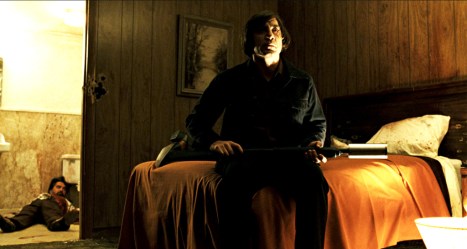
There were any number of interesting observations that might be made about these films. Most obviously, there was a recurring sense of horror to these reimaginings of the American west, whether reflected in the human-like form of Anton Chigurh or the zombie movie aesthetic of Ira Glass’ journey back to civilisation. However, there was also a very strong apocalyptic vibe to these modern westerns. Many classic westerns lamented the death of wilderness crushed beneath the heel of advancing civilisation. Modern westerns seem to fear the opposite.

Continue reading

Star Trek: Deep Space Nine – The Magnificent Ferengi (Review)

In some ways, The Magnificent Ferengi serves as a logical end point for the Ferengi.

It is, after all, the last good Ferengi episode of the Berman era as a whole. The Dogs of War is not terrible, but it has serious problems. It looks much better following on from the double-header of Profit and Lace and The Emperor’s New Cloak, which rank among the worst episodes of Star Trek: Deep Space Nine ever produced. Then again, it is not like the other Star Trek series had much better luck, with Inside Man on Star Trek: Voyager and Acquisition on Star Trek: Enterprise also falling flat. However, there is more to it than that.

The comedy really Pops here.

The comedy really Pops here.

The Magnificent Ferengi is an episode that revels in one of the franchise’s most reviled recurring alien species, serving as a grand celebration of the work that Ira Steven Behr has done with the Ferengi since The Nagus during the first season of Deep Space Nine. This is reflected within and without the text. The Magnificent Ferengi is  about a band of Ferengi who finally get to be the heroes of their own weird little war story. However, it’s also a celebration of how well-developed the species is that the episode has seven distinct major Ferengi characters.

Indeed, it could reasonably be argued that the best thing about The Magnificent Ferengi is that it puts a cap on the Ferengi as a concept, rendering any further Ferengi episodes completely superfluous to requirement.

Sharp wit.

Sharp wit.

Continue reading

21. John Wick: Chapter 2 – This Just In (#243)

People keep asking us if we’re going to be covering John Wick. I’m thinking, yeah, we’re going to be covering John Wick.

Hosted by Andrew Quinn and Darren Mooney and this week with special guest Graham Day, This Just In is a subset of the fortnightly The 250 podcast, looking at notable new arrivals on the list of the 250 best movies of all-time, as voted for by Internet Movie Database Users.

This time, Chad Stahelski’s John Wick: Chapter 2.

podcast-johnwick

Continue reading

Star Trek: Voyager – Mortal Coil (Review)

In its own weird way, Mortal Coil effectively amounts to a Star Trek: Voyager Christmas Special.

It unfolds in the lead up to the Talaxian festival of Prixin, which Neelix describes as “the Talaxian celebration of family. We observe it every year on Voyager.” Bringing friends and family together on an annual basis with ritualised food preparation and salutations, it serves as analogous to Thanksgiving or Christmas. Indeed, this sort of thinly-disguised Christmas celebration is a science-fiction stable. Perhaps “Life Day” from Star Wars Holiday Special is the most obvious example. To solidify this Yuletide sensibility, Mortal Coil aired the week before Christmas.

Choking on his Borgophobia.

They just keep killing Neelix.

There is something decidedly wry about the one and only Star Trek Christmas Special. (And no, the Christmas Party in Dagger of the Mind doesn’t really count.) This is after all an episode in which a regular character loses his faith in the existence of an afterlife and attempts to commit suicide in a transporter room. It is a strange choice for a seasonal story. In some ways, it feels very much like a Bryan Fuller script, a subversion of the traditional Christmas narrative. After all, Fuller has talked about Hannibal as an exploration of heterosexual male friendship. Just one with murder and cannibalism thrown in.

Mortal Coil is a fascinating episode, albeit one that feels decidedly clumsy in its execution. The episode hesitates and wavers on what it wants to say, offering a wishy-washy conclusion to a very powerful premise. Still, Mortal Coil is intriguing for its oddness.

I met a man who wasn't there.

I met a man who wasn’t there.

Continue reading

Non-Review Review: Tschick

This film was seen as part of the Audi Dublin International Film Festival 2017.

Tschick is a charming, if disorganised and overly episodic, coming of age road movie.

The basic set-up of Tschick is effective, if a little familiar. Maik Klingenberg is an imaginative and socially awkward teenager, the child of an alcoholic (if well-meaning) mother and a distant (and philandering) father. He is invisible to his classmates, except to the eponymous Tschick. Andrej Tschichatschow is a new arrival from Russia. He is antisocial, he smells bad, and he suffers from alcoholism despite only being a teenager. Naturally, he proves even less popular than Maik. The other students don’t know Maik exists, but they hate Tschick.

Cliffhanger ending.

Cliffhanger ending.

With his mother checked into rehab and his father absent for other reasons, Maik is left to fend for himself. He ends up embarking upon a cross-country road trip with Tchick in a stolen car. Along the way, the pair have a series of encounters with a wide variety of people and intersect with various other walks of life. As a result, Maik and Tschick have a unique shared experience, forging a deep bond and a mutual respect. The resulting journey is full of wry well-observed comedy and heart-warming moments, largely held together by the charm of leads Tristan Göbel and Anand Batbileg.

However, Tschick lacks the focus necessary to tie these elements together. It is both too focused on its own narrative and character arcs to fully embrace a stream-of-consciousness “on the road” travelogue style and too episodic to cohere into a single strong narrative. The result is a film that feels rather uneven and disjointed, a road trip constantly hitting speed bumps.

Venturing far afield.

Venturing far afield.

Continue reading

Star Trek: Voyager – Concerning Flight (Review)

Concerning Flight is a lovely, whimsical little episode.

Of course, the actual plot of the episode is complete nonsense. During a raid by alien pirates, a bunch of advanced technology is stolen from Voyager. Among that advanced technology is the EMH’s mobile admitted, the holodeck database, and the primary computer core. Somehow, the pirate prince responsible for this raid has the wherewithal to download a character from the holodeck database into the mobile emitter and employ him as an inventor. Conveniently enough, the hologram is Leonardo da Vinci and the arrangement resembles medieval patronage.

da Vinci's demons.

da Vinci’s demons.

It is all very ridiculous, relying on insane contrivance and random leaps in logic. At any given moment, the audience might be inclined to ask exactly what chain of decisions have led the characters to this exact point, right down to the sheer coincidence of having Leonardo da Vinci’s prototyple glider resting on a hilltop on the escape route that Janeway and da Vinci take in the final act. All of these criticisms are valid, and all of them are perfectly reasonable. Concerning Flight does not require suspension of disbelief, it requires a suspension bridge of disbelief.

However, the episode largely earns that trust. There is an incredible charm to this very simple and straightforward (if awkwardly contrived) story, a surprising warmth and engagement to the tale of the ultimate renaissance man confronted with the ultimate new world. Concerning Flight is a fun episode that places a lot of faith in the interplay between Kate Mulgrew and John Rhys-Davies. It is a choice that pays dividends.

O brave new world, That has such people in 't!

O brave new world,
That has such people in ‘t!

Continue reading

Star Trek: Deep Space Nine – Statistical Probabilities (Review)

Statistical Probabilities is an interesting episode of Star Trek: Deep Space Nine, on a number of levels.

Most notably, it is the first episode to truly engage deal with the fallout from Doctor Bashir, I Presume. After all, the mid-fifth-season episode dropped a fairly substantial bombshell into the back story of Julian Bashir. In that episode, Bashir became the first Star Trek regular to be a genetically-engineered human, something that made him unique in the franchise. Bashir effectively became a character who could trace his lineage back to Khan Noonien Singh, from Space Seed and Star Trek II: The Wrath of Khan.

Gambling with people's lives.

Gambling with people’s lives.

However, Deep Space Nine had done very little with that interesting little nugget of a character idea. There had been token attempts to emphasise Bashir’s transformation through dialogue, by having the character speak like a computer and having Garak draw attention to it in A Time to Stand. However, Alexander Siddig was quite uncomfortable with this direction for the character, and made his distaste known. However, even those dialogue flourishes and exposition dumps were a superficial way of addressing a substantial change to the character.

Then again, Deep Space Nine is still getting used to serialisation. It takes a little while for the consequences of individual episodes to trickle down to later scripts. The alliance between Cardassia and the Dominion in By Inferno’s Light was left on the backburner for episodes like A Simple Investigation or Business as Usual before being explored in Ties of Blood and Water. Despite the impressive and sprawling six-episode opening arc, the delay between Doctor Bashir, I Presume and Statistical Probabilities suggests that delay is still in effect.

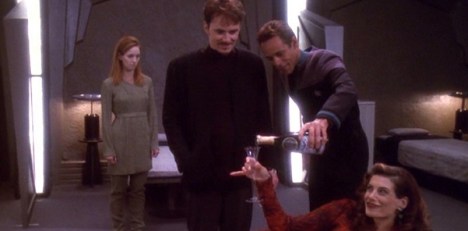
Drinking it in.

Drinking it in.

However, Statistical Probabilities is notable for the fact that it represents what might be the most direct point of intersection between the Star Trek franchise and the work of Isaac Asimov. Asimov is one of the most influential and iconic writers to work in science-fiction, formulating ideas and concepts that are taken for granted as genre shorthand by modern audiences. Asimov casts a long shadow over popular culture, including Star Trek. However, it is striking that Statistical Probabilities represents the most overt acknowledgement of his work.

Statistical Probabilities is essentially a Star Trek exploration of the concept of “psychohistory”, the fictional science at the heart of Asimov’s towering Foundation series.

Don't worry. Bashir would NEVER be that unprofessional.

Don’t worry. Bashir would NEVER be that unprofessional. Well, not this season.

Continue reading

Non-Review Review: Headshot

This film was seen as part of the Audi Dublin International Film Festival 2017.

The obvious (and easy) comparison for Headshot is The Raid.

Part of that is down to the superficial similarities. Both are relatively straightforward Indonesian action movies starring Iko Uwais with an emphasis on martial arts. Even beyond that, The Raid was a breakout hit and exists as one of the defining modern martial arts movies for wider audiences. Even without the similar stuntwork and the combination of lead actor and genre, The Raid would be a stock point of comparison for Headshot. The film even seems to invite and encourage the comparison, with directors Kimo Stamboel and Timo Tjahjanto consciously evoking Gareth Evans’ style.

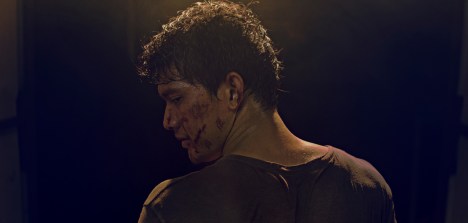
Headed into danger.

Headed into danger.

The comparison does Headshot no favours. For all the similarities between the two films, the differences are telling. Headshot has a style that consciously evokes The Raid, but it lacks its streamlined efficiency. It has a number of impressive prop-heavy set pieces that call to mind the impressive work in The Raid, but it never embraces the loose and freewheeling style that made The Raid so striking. More than that, Headshot never manages the delicate balance between rudimentary character work and a solid story, leading to a film that feels both paper-thin and over-developed.

Headshot is a solidly middle-of-the-road martial arts slugfest, but it lacks the sheer “wow!” factor that made The Raid pop.

Bar none.

Bar none.

Continue reading