• Following Us

  • Categories

  • Check out the Archives


  • Awards & Nominations

208. The Departed – Summer of Scorsese (#44)

Hosted by Andrew Quinn, Jay Coyle and Darren Mooney, with special guest Aoife Martin, The 250 is a (mostly) weekly trip through some of the best (and worst) movies ever made, as voted for by Internet Movie Database Users. New episodes are released every Saturday at 6pm GMT.

This time, continuing our Summer of Scorsese season, Martin Scorsese’s The Departed.

Martin Scorsese is one of the defining directors in American cinema, with a host of massively successful (and cult) hits that have shaped and defined cinema across generations: Taxi Driver, The Last Temptation of Christ, Age of Innocence, KundunThe Aviator, Shutter Island, Hugo. The Summer of Scorsese season offers a trip through his filmography via the IMDb‘s 250.

Boston gangster Frank Costello believes that boundaries are fungible: sinner/saint, hero/villain, cop/criminal. Sending one of his young followers to infiltrate the local police department, Costello quickly discovers that something similar is happening to him. As the stakes escalate, the boundaries between policemen and gangsters blur, as Colin Sullivan and Billy Costigan straddle the gulf.

At time of recording, it was ranked 44th on the Internet Movie Database‘s list of the best movies of all-time.

Continue reading

New Escapist Video! “The Mandalorian – Chapter 11: The Heiress”

I’m thrilled to be launching 3-Minute Reviews on Escapist Movies. Over the coming weeks and months, I will be joining a set of contributors in adding these reviews to the channel. For the moment, I’ll be doing weekly reviews of The Mandalorian.

The review of the third episode of the second season, The Heiress, is available below.

New Escapist Column! On “Creed” as the Perfect Legacy Sequel…

I published a new In the Frame piece at The Escapist this evening. Because Creed is five years old this month, it seemed like an appropriate time to look back at one of the defining legacy sequels.

Creed arrived at a point in time when these sorts of movies were becoming a lot more common; Star Wars: Episode VII – The Force Awakens would premiere a month later. However, there is a lot that later legacy sequels could learn from Creed and how it approaches the idea of passing the torch from one generation to the next. Creed is a love letter to the Rocky franchise, but never loses track of its own identity, accomplishing the rarest of balances.

You can read the piece here, or click the picture below.

Non-Review Review: Jingle Jangle – A Christmas Journey

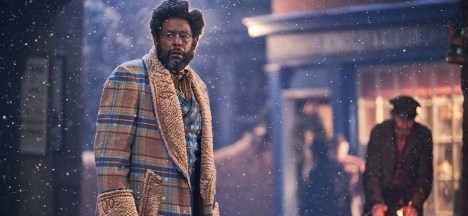
The big question with Jingle Jangle: A Christmas Journey is simple: what do audiences want from a Christmas film?

Jingle Jangle exists in the context of Netflix’s recent efforts to build a sturdy collection of modern holiday cinema, from the classic animation of Klaus to the adventure of The Christmas Chronicles to the formula of A Christmas Prince. These are clearly part of an effort to buttress the streaming service’s library with a collection of films that audiences can enjoy in the holiday season. Jingle Jangle marks the latest glitzy addition to that selection, starring Oscar-winner Forrest Whitaker and produced by Oscar-winner John Legend.

The Greatest Snowman.

Jingle Jangle is a fine execution of the standard Christmas movie formula. There are songs. There are children. There is a framing device involving a story that appears to blend fantasy and reality. There is lavish production design. There are morals about the importance of family. There are ominous deadlines that count down very specifically to Christmas. There are toys. There is missletoe. There is an improbably (and yet also inescapably) happy ending. There are also no surprises waiting beneath this lavishly decorated Christmas tree.

Then again, maybe that is the point. Maybe people don’t want surprises at Christmas, but instead the warm comfort of familiarity.

Going by the book.

Continue reading

New Escapist Video! “The Mandalorian – Chapter 10: The Passenger”

I’m thrilled to be launching 3-Minute Reviews on Escapist Movies. Over the coming weeks and months, I will be joining a set of contributors in adding these reviews to the channel. For the moment, I’ll be doing weekly reviews of The Mandalorian.

The review of the second episode of the second season, The Passenger, is available below.

Non-Review Review: Hillbilly Elegy

Hillbilly Elegy is misconceived on just about every possible level.

On the most superficial and surface level, Hillbilly Elegy is the most cynical form of Oscar bait. It is a vehicle for actors Amy Adams and Glenn Close to take a run at awards season, turning the inner dial on their performances up to eleven playing absurd caricatures of complex and nuanced human beings. There are moments when, entirely divorced from its form or substance, Hillbilly Elegy veers into the realm of self-parody, as Adams musters every dramatic bone in her body to shout “bad dog!” with as much conviction as possible, as if every moment could be an Oscar clip.

“Looks like we got ourselves a good old-fashioned act-off.”

It isn’t that Close and Adams are bad performers. Indeed, there’s a credible argument to be made that – on some level – Hillbilly Elegy might be “worth it” if it eventually allows Adams to take home what will effectively be a career award. However, everything in Hillbilly Elegy is a staggeringly ill-judged combination of heightened melodrama and earnest sincerity. Ron Howard directs the film with a solemn profundity that suggests he is peeling back the layers of the American heartland, as if viewing the film through the lens of Terrence Malick via the Russo Brothers.

However, underneath the surface, there is something more insidious and uncomfortable at place in Hillbilly Elegy. The film is based on the autobiography of J.D. Vance, a book that became a breakout sensation in 2016. The arrival of the book coincided with the election of Donald Trump, and so it became a cornerstone of a subgenre of literature built around understanding Trump voters – the kind of soul-searching that led to fawning profiles of white nationalists in The New York Times. (While Vance characterises himself as “a nationalist”, the film overtly avoids his politics.)

Ad-Vancing.

This context perhaps explains the assurance and self-importance of Hillbilly Elegy, which at every turn presents itself as a window into a different culture – the idea of the “forgotten” America or the “left behind” America. Unfortunately, it also explains the most horrific aspect of the film, the way in which Hillbilly Elegy treats its characters as exhibits in some grotesque zoo. While adapted from a book written by a character rooted in that community, Hillbilly Elegy often feels like an anthropological study constructed from second- or third-hand accounts.

However, the movie’s most egregious fault might be how profoundly it misunderstands Terminator 2: Judgment Day.

This Cagney and Lacey reboot is really something.

Continue reading

“I Erased You”: Identity, or Lack Thereof, in Martin Scorsese’s “The Departed”…

The podcast that I co-host, The 250, continued our belated Summer of Scorsese last week with a look at The Aviator. This week, we’re looking at The Departed. It is a fun and broad discussion that is well worth your time, but it spurred some of my own thoughts about Martin Scorsese’s Best Picture winning gangster film.

The Departed is about a lot of different things.

As one might expect from a Martin Scorsese film, it is very much an exploration of a certain type of masculinity. It is a story about fathers and sons, but also about how a man’s worth is measured. Indeed, The Departed arguably takes Scorsese’s fascination with a certain kind of hyper-exaggerated American masculinity to its logical endpoint, as Frank Costello serves as a nexus point tying together sex and violence without producing an heir and Colin Sullivan is forced to discuss his impotence as his girlfriend eats a banana.

However, The Departed ties into some of Scorsese’s other core themes – most notably the director’s recurring fascination with identity. Of course, The Departed is an adaptation of the Hong Kong thriller Infernal Affairs, so it makes sense that identity would be a core theme. The film is the parallel stories of two undercover movies; Colin Sullivan and Billy Costigan. Colin is a criminal posing as a cop, while Billy is a cop posing as a criminal. Naturally, the theme of identity and self-image inevitably ends up tied up in all this.

That said, The Departed is perhaps most interesting for how it ties back to Scorsese’s larger filmography. So many of Scorsese’s films are tied back to the idea of human connection and belonging, even as extreme counter-examples in films like “god’s lonely man” Travis Bickle in Taxi Driver. Particularly in Scorsese’s crime movies like Goodfellas and Casino, there is a clear emphasis on the idea of “belonging” and “conforming”, with his films often focusing on outsiders (like the Irish Henry Hill or the Jewish Sam Rothstein) trying to blend into the largely Italian American mob.
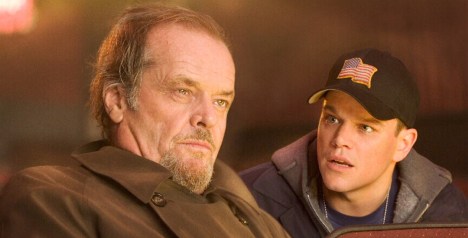
The Departed is largely built around the Irish mob in Boston, and so exists at a remove from Scorsese’s typical interest in the Italian mob in New York. (Notably, despite its Boston setting, large parts of The Departed were actually shot in New York City.) However, Scorsese’s portrayal of criminal life in The Departed marks a clear point of contrast from Goodfellas and Casino. While the characters in Goodfellas and Casino inevitably betray the bonds of family and loyalty to bond them together, they still acknowledge their importance. This is not the case in The Departed.

In The Departed, all of the characters eventually confront the reality that they exist in liminal spaces, caught more in the gravity of larger forces than held in place by ties of blood. The Departed marks a departure from Scorsese’s earlier crime films – arguably including Mean Streets and even Age of Innocence – because it completely disregards any sense of common community or shared identity. As Frank Costello opines in the opening scene, “When you’re facing a loaded gun, what’s the difference?”

Continue reading

New Escapist Video! On “The Mandalorian” and “Star Wars'” Fallen World…

So, as I have mentioned before, I am launching a new video series as a companion piece to In the Frame at The Escapist. The video will typically launch with the Monday article, and be released on the magazine’s YouTube channel the following week. This is kinda cool, because we’re helping relaunch the magazine’s film channel – so if you can throw a subscription our way, it would mean a lot.

With that in mind, here is last week’s episode. To mark the season premiere of The Mandalorian, we took a look at the series’ exploration of a fallen world. In particular, the trope of the last survivors of a fallen world wandering through the ruins has become a common trope in contemporary mass media science-fiction like the third season of Star Trek: Discovery or the new series Raised by Wolves. So we thought it might be interesting to look at the trope, and how it differs from the conventional portrayal of the Star Wars universe.

https://www.youtube.com/watch?v=IVzerz0fmh8

New Escapist Column! On “GoldenEye” and a James Bond Out of Time…

I published a new In the Frame piece at The Escapist this evening. Because GoldenEye is twenty-five years old this month, it seemed like an appropriate time to look back at one of the more underappreciated entries in the franchise.

GoldenEye arrived in a changed world, after the fall of the Berlin Wall and the collapse of the Union of Soviet Socialist Republics. Many of the underlying assumptions of the Bond franchise were no longer relevant to the new world order. At the same time, the Bond franchise was in an existential crisis following the commercial disappointment of the previous film and the longest gap between installments to date. However, GoldenEye hit upon a novel solution to this problem: instead of fighting against the idea of Bond as a man out of time, it would embrace it.

You can read the piece here, or click the picture below.

New Podcast! The Escapist Movie Podcast – “The Multigenerational Legacy of Sir Sean Connery”

The Escapist have launched a movie podcast, and I was thrilled to join Jack Packard and Stacy Grouden for the eleventh episode. With Halloween officially behind us, we turned our gaze to November movies like The Addams Family and The Addams Family Values. We also reflected on the passing of Sir Sean Connery. We took a look at the trailer for Songbird, the first pandemic-xploitation movie.

You can listen to the episode here, back episodes of the podcast here, click the link below or even listen directly.