• Following Us

  • Categories

  • Check out the Archives


  • Awards & Nominations

Non-Review Review: Artemis Fowl

Artemis Fowl is only ninety-three minutes long, but it feels much longer. In more ways than one.

As with Scoob! or Trolls World Tour, there’s something slightly cynical in releasing Artemis Fowl direct to streaming. The film feels like it might have wallowed in a theatrical release, with little to distinguish it from other young adult adaptations like The Maze Runner or The Mortal Engines. Although derived from a series of beloved children’s books, the cinematic adaptation of Artemis Fowl was never going to be this generation’s answer to Harry Potter and the Philosopher’s Stone or The Hunger Games – despite the belaboured sequel hooks.

Fowl play.

The most interesting question that occurs when watching Artemis Fowl is at what point this became clear to the production team. Artemis Fowl has the look and feel of a movie that has been fed through a meat grinder. It is appreciably shorter than most would-be tentpoles, even though there is a seemingly continuous voice-over delivering reams of exposition. The plotting is haphazard. The character arcs are broad. There is a palpable sense that something happened in getting from page to screen, and the real mystery is where in the process things went so wrong.

Watching Artemis Fowl becomes almost an interactive mystery of itself. Was the project always this disjointed and chaotic, or was that something that happened in postproduction? More than that, was that process something that happened before or after Artemis Fowl was earmarked for a streaming release? When exactly on the creative process did everybody working on Artemis Fowl just give up completely?

A flying finish.

Continue reading

New Podcast! The Time is Now – Season 2, Episode 20 (“A Room With No View”)

I have been lucky enough to appear quite frequently on the second season of The Time is Now, discussing the second season of Millennium, which remains one of my favourite seasons of television ever. So I was flattered to get asked back to join Tony Black to discuss the second season’s big Lucy Butler episode, A Room With No View.

A Room With No View is an interesting episode in a number of ways. Most obviously, it forms part of an arc that nominally connects the three otherwise disjointed seasons of Millennium, focusing on demonic forces at work in the world. However, it is also an episode that feels like it belongs to the second season specifically. It is a tale about the banality of evil and the intimacy of apocalypse, which are themes that play across the season. The result is something of a strange hybrid, and an episode of television that feels very distinct.

As ever, you can listen directly to the episode here, subscribe to the podcast here, or click the link below.

Continue reading

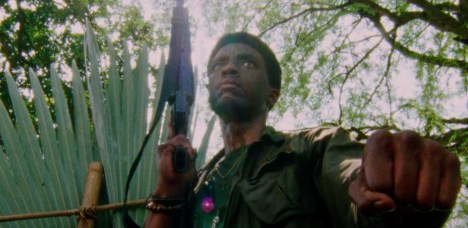
Non-Review Review: Da 5 Bloods

Da 5 Bloods argues that the wounds inflicted by the Vietnam War never truly healed.

The basic plot of Da 5 Plots is standard war movie stuff, recalling the set up of the classic Simpsons episode Raging Abe Simpson and His Grumbling Grandson in “The Curse of the Flying Hellfish”, which itself drew upon a variety of inspirations including episodes of M*A*S*H and Barney Miller. The film follows four veterans who return to Vietnam ostensibly to repatriate the remains of their lost squad commander “Stormin’ Norman.” However, it quickly becomes clear that these former soldiers also have their eyes on a more lucrative prize.

The past never stays buried.

Co-writer and director Spike Lee uses the familiar trappings of war movies – and specifically of Vietnam War movies – to interrogate the legacy of the conflicts and the scars that it left on the national psyche. Indeed, one of the most interesting structural choices in Da 5 Bloods is to effectively invert the basic structure of BlacKkKlansman, which opened as a pointed genre tribute before seguing into actual contemporary news footage during its final act. Da 5 Bloods starts by offering a glimpse of the chaos of the early seventies before diving into the story that it wants to tell.

The result is to contextualise both Da 5 Bloods and its statement on contemporary American identity, drawing a strong line from the unrest and horror of the Vietnam era to the madness of the present moment. Da 5 Bloods was obviously written and filmed well before the latest crisis in the United States, but Lee is a shrewd filmmaker with his finger on the pulse. Da 5 Bloods feels like a movie that is both about the nightmare of this particular moment and the tragic inevitability of that moment as the outcome of unprocessed trauma that has been festering for decades.

Normcore.

Continue reading

Non-Review Review: The King of Staten Island

The King of Staten Island is very much a typical late Judd Apatow project, in the style of Funny People, This is 40 or Trainwreck.

It is a serio-comic character study that essentially tries to wed the juvenile comedic sensibility that Apatow brought to the mainstream with films like Knocked Up and The 40-Year-Old Virgin with the more earnest adult coming-of-age stories that were popular in the early nineties. The results are sporadically funny and affecting, often built around a single or multiple star personas. In each cause, the quality of the film largely comes down to the quality of the star anchoring it, with Trainwreck standing out due to strong turns from both Amy Schumer and Bill Hader.

“King of One of the Boroughs of New York!”

The King of Staten Island tries this approach with Pete Davidson, the stand-up comedian who is currently best known for his work on Saturday Night Live that often involved him directly addressing his own personal controversies. As with Trainwreck, the film is driven by Davidson who shares a co-writing credit and whose character is transparently modelled on Davidson himself. As such, Davidson’s star persona exerts a strange gravity on The King of Staten Island, all the more notable for the fact that this is really Davidson’s first proper starring role of itself.

The King of Staten Island is occasionally moving and engaging, but it never manages to escape from Davidson’s shadow. Simultaneously, there’s something slightly frustrating in the way that for all The King of Staten Island transparently draws from Davidson’s own experiences and history, its narrative structure is painfully generic. Its central character arc is so routine as to undermine any real sense of personality or intimacy. This is the central paradox of the film. The King of Staten Island is both unable to escape Davidson’s gravity and unable to bring itself to look directly at him.

Fighting firemen.

Continue reading

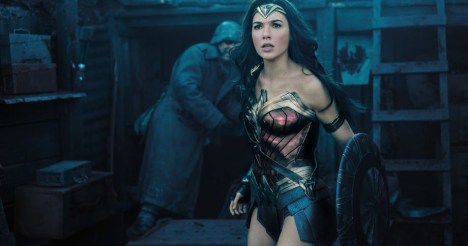
New Escapist Column! On “Wonder Woman” and What It Means to Be a Hero In a World Where Men Are Not Always Good…

I published a new In the Frame piece at Escapist Magazine this evening. Wonder Woman celebrated its third anniversary this weekend, and Wonder Woman 1984 was originally scheduled for release this weekend.

Wonder Woman is a fascinating film, in large part because it manages to feel like a decidedly old-fashioned story of heroism that reflects the anxieties of a modern world. Too many modern superhero films divorce themselves from even the idea of heroism, embracing the power fantasy of superheroism as an end of itself. In contrast, Wonder Woman asks what it means to try to be a good person in a world that is not.

You can read the piece here, or click the picture below.

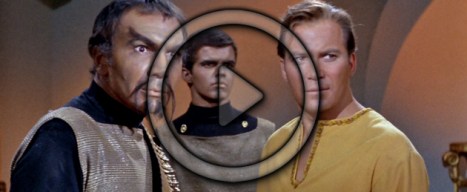
New Podcast! The Sanctuary – “A Private Little Vietnam”

I was flattered to be asked by the wonderful Tony Black to help him launch a new Star Trek podcast. The Sanctuary hopes to be a look at the politics and the social commentary of the larger Star Trek franchise, and will feature Tony and a host of guests looking at how the franchise examines a big issue.

As a pilot, Tony suggested that we might discuss how the original Star Trek series looked at the Vietnam War. It’s an interesting discussion, because it’s a very complex and evolving conversation that takes place across the run of the show, between various creative voices within the show. This is interesting, because the show itself unfolded against a backdrop of shifting public opinion on the topic, which means that it’s not as simple as a “pro” or “anti” position.

Anyway, it was a huge honour to be invited on to help launch the show, and I hope you enjoy it. You can subscribe to the show here. You can listen to the episode here, or click the link below.


New Escapist Column! On David as the Monster in “Prometheus” and “Alien: Covenant”…

I published a new piece at Escapist Magazine this evening. This week, Ridley Scott explained that he wanted to “re-evolve” the central monster from the Alien franchise.

This is an interesting argument, particularly given Scott’s long-standing criticism about the xenomorph, and his argument that the creature has perhaps outlived its relevance. Indeed, one of the most interesting facets of Prometheus and Alien: Covenant is the way in which David essentially updates many of the core thematic elements of the xenomorph. David takes the creature’s threat of sexual violence, and updates it for the twenty-first century.

You can read the piece here, or click the picture below.

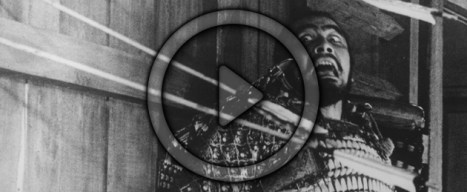
185. Kumonosu-jō (Throne of Blood) – This Just In/World Tour 2020 (#245)

Hosted by Andrew Quinn and Darren Mooney, and this week with special guest Chris Lavery, The 250 is a (mostly) weekly trip through some of the best (and worst) movies ever made, as voted for by Internet Movie Database Users.

This time, Akira Kurosawa’s Kumonosu-jō.

War rages across feudal Japan. Tsuzuki has finally managed to subdue the latest insurrection against his rule. Journeying through Cobweb Forest, victorious generals Washizu and Miki stumble across a strange woman, who offers a prophecy that augers great and terrible things for the two men. Promised the throne, can Washizu resist the lure and temptation of power? More to the point, what terrible things will he do to procure such power?

At time of recording, it was ranked 245th on the list of the best movies of all time on the Internet Movie Database.

Continue reading

New Escapist Column! On Harley Quinn and Brand Conscious Self-Awareness…

I published a new In the Frame piece at Escapist Magazine this evening. I don’t really have anything major to tie this one to, aside from the fact that I’ve been watching some television.

The DC Universe cartoon Harley Quinn is a fascinating piece of television. It’s immediately recognisable as belonging to a certain kind of adult-focused animation, shows like Rick and Morty or The Venture Bros. However, it’s rare to see this approach taken with an established brand, let alone an established brand tied to a blockbuster shared universe. After all, Harvey Birdman: Attorney at Law was hardly working with a smashing success and Deadpool didn’t emerge in the Marvel Cinematic Universe.

As such, it’s interesting to see a television show in which Diedrich Bader can reprise his role as the Caped Crusader from The Brave & The Bold, which also includes fans wearing “Release the Snyder Cut” t-shirts. You can read the piece here, or click the picture below.

Non-Review Review: The Vast of Night

The Vast of Night is a loving fifties homage, with more than a few contemporary resonances.

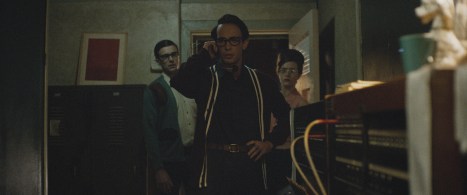
The film is structured so as to evoke pulpy science-fiction, opening on a slow push in on an old black-and-white television set airing Paradox Theatre, a show clearly designed to evoke the various fantastical anthology shows modelled after The Twilight Zone. Director Andrew Patterson keeps reminding audiences of this framing device, occasionally pushing out of his narrative on to the grainy distorted television screen and even occasionally cutting to black to underscore the fact that the narrative the audience is watching is being controlled.

Zero to fifties in only ninety minutes!

The premise of The Vast of Night is remarkably straightforward. One summer evening late in the fifties, something strange happens in a New Mexico town. As the bulk of the town gathers for a big basket ball game, only a handful of residents remain at home. Fay dutifully mans the town switchboard, while the charming DJ Everett handles the radio broadcast for the benefit of “the five of you out there listening.” However, his radio show is briefly interrupted by a strange noise, sparking an investigation that leads to somewhere very strange indeed.

The Vast of Night doesn’t really have too many surprises. After all, the basic premise all but suggests an inevitable conclusion: what could possibly be causing strange signals in New Mexico in the late fifties? However, The Vast of Night is elevated by a number of key factors. Patterson brings a very confident and assured direction to the story, making The Vast of Night a very compelling watch given its relatively low budget and tight focus.

Radio gaga.

However, writers James Montague and Craig W. Sanger deserve a great deal of credit for the script. The Vast of Night is a film that takes great pleasure in the trappings of its late fifties setting, and is keenly aware of the context in which its characters operate. “I am not now, nor have I ever been a member of the communist party,” Fay jokingly records into a microphone early in the film, while later events include accounts of the horror of radiation. The Vast of Night is a loving homage to the era in which it is set.

However, more than that, The Vast of Night understands the strange tethers that tie that idealised past to the more complicate present. By its nature, The Vast of Night is a film about hearing and listening. More than that, though, it is a story about the choices that people make in what they choose to hear and who they choose to listen to. It is a film about conversation, about signal, about noise, about cross talk, and about decay. The Vast of Night is a story about the breakdown of communication, and the horrors that unfold in what society tunes out as white noise.

Interview to a kill.

Continue reading