• Following Us

  • Categories

  • Check out the Archives


  • Awards & Nominations

Non-Review Review: Scoob!

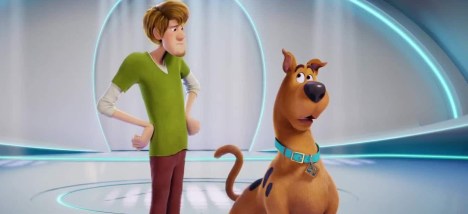
Have you ever wondered what it might look like is a beloved fifty-one-year-old children’s television franchise had a midlife crisis?

If so, Scoob! might just be for you.

We have lift-off.

Continue reading

New Podcast! The Time is Now – Season 2, Episode 15 (“Roosters”)

I have had the immense good fortune to appear on The Time is Now quite a lot lately, but was particularly flattered to be invited on to talk about Owls and Roosters, the big “mythology” two-parter in the late second season of Millennium. It’s an honour to join Kurt North for the second part of this conversation.

Owls and Roosters are two of my favourite episodes of television, because they demonstrate everything that Millennium did so well. They’re incredibly densely packed with information, in a way that really captures the sense of modern living – a constant influx of often contradictory stimulae that the individual often struggles to parse or process. In many ways, the second season of Millennium has aged remarkably well, capturing a sense of information overload in a manner that resonates even more strongly today than it did on broadcast.

As ever, you can listen directly to the episode here, subscribe to the podcast here, or click the link below.

Continue reading

New Escapist Column! On “Avengers: Age of Ultron” as a Limit Case for the MCU…

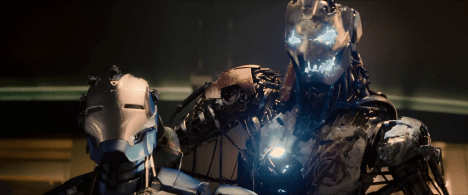
I published a new In the Frame piece at Escapist Magazine this evening. Given that Avengers: Age of Ultron turned five years old, it seemed like a good time to take a look back at it.

Age of Ultron was an interesting film at the time, and it has become an even more interesting film in hindsight, following the release of Avengers: Infinity War and Avengers: Endgame. In many ways, Whedon positioned The Avengers as an argument in favour of the superhero genre as a romantic fantasy worthy of attention and respect. Age of Ultron feels like the flipside of that argument, a film about the limitations inherent in the genre and its perpetual second act. Age of Ultron is a deeply flawed film, but one flawed in very interesting ways.

You can read the piece here, or click the picture below.

Non-Review Review: M.o.M. Mothers of Monsters

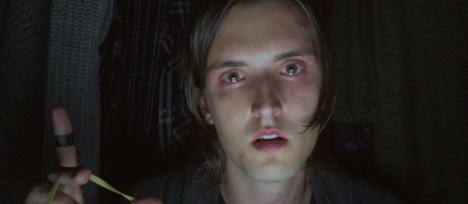
M.o.M. Mothers of Monsters is an ambitious and clever piece of indie horror constructed on a tight budget.

It marks the feature-length narrative directorial debut of Tucia Lyman. Lyman has a variety of experience in horror, particular on television shows like Fact or Faked: Paranormal Files, Ghosts of Shepherdstown and Ghosts of Morgan City. With that in mind, it makes sense that Lyman’s first narrative feature should borrow a lot of the language of paranormal reality television. M.o.M. is essentially a found-footage horror film, with the audience navigating and assembling a collection of seemingly raw video files into a cohesive narrative.

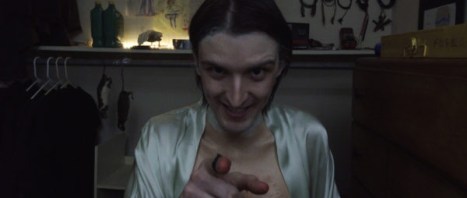
Will he snap?

There is something inherently old-fashioned about the found footage horror template. The format was all the rage in the early years of the twenty-first century, perhaps informed by the use of first-person camcorder footage to document events like 9/11. It arguably reached its apotheosis with the release of the security-camera home haunting horror Paranormal Activity in 2007. Contemporary horror has moved back toward more traditional approaches, prompted by the success of films like The Conjuring, making M.o.M.‘s found footage approach feel decidedly retro.

M.o.M. is occasionally a little clumsy and heavy-handed, sometimes stretching its premise a little too far and struggling to balance sharp tonal shifts between heightened sensationalism and grounded domestic horror. Still, there’s something endearingly committed and energetic in this low-fi horror thriller, an infectious and gleeful embrace of its more absurd elements.

Receiving a dressing gown.

Continue reading

New Escapist Column! On “Gladiator” as a Celebration of Spectacle…

I published a new piece at Escapist Magazine this evening. Gladiator was released twenty years ago this month, so it seemed like a good time to look back on it.

Gladiator is very obviously an example of classic Hollywood spectacle, harking back to the biblical epics of the middle of the twentieth century like Ben Hur or The Ten Commandments or Spartacus or even Cleopatra. However, there’s also a more reflective aspect to the film. Ridley Scott constructs Gladiator as a celebration of the art of spectacle, and the power of populist narratives to shape and define a larger society. Maximus does not triumph because he is a soldier or a general, he ultimately wins because he is an entertainer.

You can read the piece here, or click the picture below.


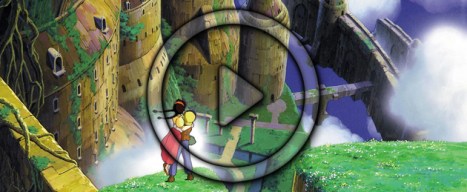
181. Tenkû no shiro Rapyuta (Laputa: Castle in the Sky) – Ani-May 2020 (#—)

Hosted by Andrew Quinn and Darren Mooney and with special guests Graham Day and Bríd Martin, The 250 is a (mostly) weekly trip through some of the best (and worst) movies ever made, as voted for by Internet Movie Database Users. New episodes are released every Saturday at 6pm GMT.

This year, we are proud to continue the tradition of Anime May, a fortnight looking at two of the animated Japanese films on the list. This year, we watched a double feature of Hayao Miyazaki’s Tenkû no shiro Rapyuta and Hauru no ugoku shiro. We’ll also be covering a bonus on a recent entry on the list, Naoko Yamada’s Koe no katachi.

This week, the first part of the double bill, Tenkû no shiro Rapyuta, the first official Studio Ghibli film.

Perhaps overshadowed by the movies either side of it – Nausicaä of the Valley of the Wind preceding it and My Neighbour Totoro and Grave of the Fireflies following it – Castle in the Sky is in some ways an archetypal Hayao Miyazaki film. What begins as a chance encounter between a lonely boy and a girl who falls to Earth evolves into a fable about the perils of militarism and the importance of environmentalism.

At time of recording, it was not ranked on the list of the best movies of all time on the Internet Movie Database.
Continue reading

New Escapist Column! On Tom Cruise as a Movie Star Defying Gravity…

I published a new In the Frame piece at Escapist Magazine this evening. Given that he just announced plans to shoot a movie in outer space, it seemed like a good time to discuss Tom Cruise.

Cruise is a fascinating movie star. He’s one of the rare movie stars who has managed to remain a movie star for over three decades, at a time when movie stardom increasingly seems like an outdated concept. It’s interesting to look at how Cruise has navigated this shift, by essentially exerting enough gravity to bend established intellectual property towards him. There is no boundary between Ethan Hunt and Tom Cruise, whether Hunt is dangling out of an airplane in Mission: Impossible – Rogue Nation or atoning for a failed marriage in Mission: Impossible – Fallout.

You can read the piece here, or click the picture below.

New Podcast! The Time is Now – Season 2, Episode 15 (“Owls”)

I have had the immense good fortune to appear on The Time is Now quite a lot lately, but was particularly flattered to be invited on to talk about Owls and Roosters, the big “mythology” two-parter in the late second season of Millennium. It’s an honour to join Kurt North for the conversation.

Owls and Roosters rank among my favourite mythology episodes in the Ten Thirteen canon, largely because they serve as a conscious unravelling of conspiracy theory. It is very common to compare Millennium to The X-Files, and with good reason. There’s considerable thematic overlap between the two shows; in fact, Patient X and The Red and the Black work as interesting companion pieces to Owls and Roosters. Both are stories about the limits of conspiracy, and the idea that entropy must eventually kick in and erode these empires of sand.

However, while The X-Files maintained a consistent belief in a singular unifying mythology, a belief in a single account of history, however convoluted that arc might be, Millennium opted for a more adventurous and postmodern approach. Millennium suggested a world in which all conspiracies were true, in which there were multiple competing narratives of history struggling against one another, with no clear or correct answer. Owls and Roosters offer the culmination of this approach, a car crash of competing narratives trying to account for a period of great instability.

As ever, you can listen directly to the episode here, subscribe to the podcast here, or click the link below.

Continue reading

New Escapist Column! On “Avengers: Endgame” as a Shared Cultural Experience…

I published a new In the Frame piece at Escapist Magazine this evening. Given that Avengers: Endgame is one year old, it seemed only fair to mark that anniversary with a reflective piece.

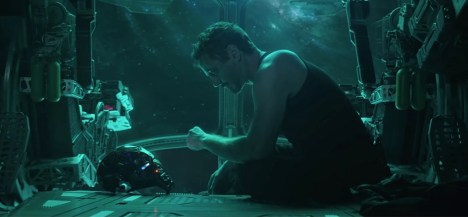
I’m not a huge fan of Endgame. I think it’s a modest movie that works very hard to avoid doing or saying anything substantive, wrapped up in the power fantasies that drive so much of the modern Marvel Cinematic Universe. And yet, in spite of that, I admire Endgame as something that has become increasingly rare in the twenty-first century: a piece of shared cultural experience that ties us all together.

You can read the piece here, or click the picture below.

New Escapist Column! On How “Trolls World Tour” Might Be the Most Important Movie of 2020…

I published a new piece at Escapist Magazine yesterday evening. It’s 2020, so of course Trolls World Tour might end up being a film that redefines the cinematic experience.

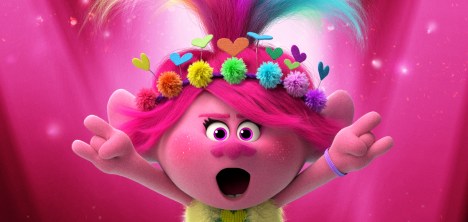
Trolls World Tour was released directly on to digital platforms following the coronavirus pandemic. The movie apparently managed to earn more in three weeks as a digital rental than the original Trolls earned in its entire five-month theatrical run. Naturally, this has made Universal bullish, suggesting that they might look at day-and-date digital releases for films like Jurassic World: Dominion and F9, which would radically change the cinematic landscape. Understandably, cinemas are less than thrilled with this.

You can read the piece here, or click the picture below.