• Following Us

  • Categories

  • Check out the Archives


  • Awards & Nominations

New Podcast! Scannain Podcast (2018) #30!

It’s time for the latest Scannain podcast.

This week, I join Ronan Doyle and Graham Day from Speakin’ Geek to discuss the week in film news, what we watched, the top ten and the new releases. Films discussed include The Long Goodbye2001: A Space Odyssey and Upgrade. New releases include a number of arthouse releases (including The Guardians) and reissues (including Mildred Pierce), along with more conventional fare like Christopher Robin and The Equaliser 2 – which is sadly still not called “The Sequaliser.” Oh, and Ronan discovers that Sergeant Stubby: An American Hero exists.

Give it a listen at the link, or check it out below.

Star Trek: Voyager – Inside Man (Review)

Inside Man is a curious episode.

It is a seventh season episode that feels very much like a first season episode. To be fair, this is perhaps par for the course with any long-running series approaching a definite ending. Both Star Trek: The Next Generation and Star Trek: Deep Space Nine got a little nostalgic in their final seasons. The Next Generation neatly bookended Encounter at Farpoint by picking up on the dangling thread of Q’s trial of humanity in All Good Things…, while Deep Space Nine revisited first season ideas like the “one hundred” in Chimera or Quark mistakenly thinking that he was replacing Zek in The Dogs of War.

“I’d counsel against that.”

Star Trek: Voyager was always going to be a little bit more nostalgic than most, given that the nature of the show involved a long journey back towards the familiar and the recognisable. The closer that Voyager got to home, the stronger the urge to look backwards. The seventh season of Voyager evokes the early seasons in a number of ways, such as the manner in which Repression tries to resurrect the Maquis conflict and even brings in a guest star last seen in Learning Curve or the surprise return of Joseph Carey as a guest star in Friendship One.

However, Inside Man has its own very strange nostalgia at its core. The episode builds on sixth season episodes like Pathfinder or Life Line, even including a number of recurring guest stars from those earlier episodes. However, its tone and its plot elements feel like they belong a much earlier script. Inside Man is an episode that treats the Ferengi as semi-serious antagonists who would murder more than a hundred people for a profit, which ignores a lot of their development on Deep Space Nine and jumps right back to their characterisation in early Next Generation episodes like The Last Outpost or Peak Performance.
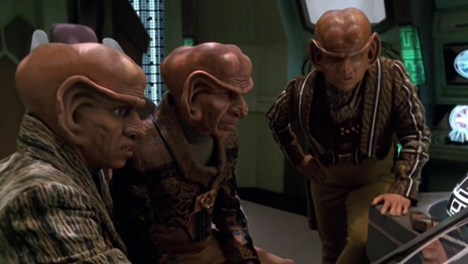
“I mean, to be fair, they also couldn’t outwit the Kazon.”

However, at the core of the episode is a plot device that the series largely moved past in its second season, and one which feels strangely out of place on what amounts to the home stretch of Voyager. The plot of Inside Man revolves around a promise to get the ship and crew home ahead of schedule, the kind of promise that was frequently dangled in front of the crew in earlier episodes like Eye of the Needle, Cold Fire and False Profits. While it would be teased in later episodes like Hope and Fear or Bliss, it was never with the same intensity.

The irony with these earlier stories was that the audience understood, on some level,how unlikely it was that the ship and crew would be getting home. After all, the entire premise of Voyager was that it was a starship stranded on the far side of the galaxy, isolated from familiar support systems. To bring the ship home would represent a complete betrayal of the premise, even more than downplaying the tension with the Maquis or completely ignoring questions about which set of rules the crew would follow. If Voyager brought the ship home in a random episode in those first seasons, it would be a catastrophic admission of defeat.
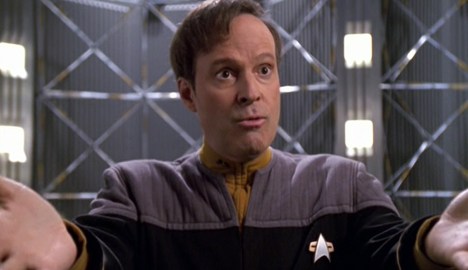
Just a Reg-ular Barclay.

In Inside Man, a slight variation on the same central tension exists. Any audience member with any level of televisual literacy would understand that the ship and crew would be returning home at the end of the seventh season; this was the end of Voyager, and that ending had to involve the fulfillment of the show’s basic premise. However, given the show’s conservatism, it was highly unlikely that the crew would be getting home in such an early episode and certainly not as part of a plot involving the Ferengi. Inside Man is the most obvious sort of shell game, where there’s nothing hidden under any of the cups.

However, what’s most striking about Inside Man is that the script seems almost self-aware. The episode is glib and wry, repeatedly seeming like an extended joke being played by the savvy audience and the smirking writers on the series itself. Inside Man is based around the promise that the crew might be returning home, but is immediately established to the audience as nothing more than an empty hustle. The cruel irony (and the most wry punchline) is that the characters themselves remain in the dark even after the con is long over.
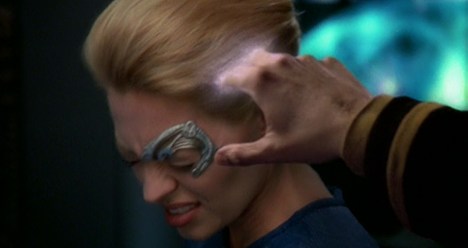
Getting into her head.

Continue reading

New Podcast! Scannain Podcast (2018) #29!

Half a Scannain podcast is better than none!

Owing to a technical hitch that was one hundred percent my fault, we ended up with only fifty percent of this episode.

Nevertheless, there’s some fantastic stuff in here. I’m joined by Alex Towers from When Irish Eyes Are Watching, Ronan Doyle and Jay Coyle to discuss the week in film. Topics include Ronan discussing his attendance of the GAZE film festival, Jay’s first watch of Avengers: Infinity War and a broad discussion of the already infamous Best Popular Film Category.

Give it a listen at the link, or check it out below.

New Podcast! Scannain Podcast (2018) #28!

Here we go again…

This week, I join Jay Coyle and Ronan Doyle for a discussion of the week in film. Topics of discussion include various seasons at the IFI, including both Aliens and Invasion of the Body Snatchers as seen during the IFI’s Dark Skies season and a discussion of their looming Orson Welles season. There’s also room to discuss Luca Guadagnino’s A Bigger Splash and bad MUBI advertisements. However, the real reason to give it a listen is to hear Jay and Ronan give Mamma Mia: Here We Go Again to podcast celebration that it deserves.

New releases include Teen Titans Go! to Movies and Ant Man and the Wasp.

Give it a listen at the link, or check it out below.

New Podcast! Scannain Podcast (2018) #27!

Your podcast, should you choose to accept it…

This week, I join Jay Coyle and Luke Dunne from Film in Dublin to discussion the week in film news. There’s a host of interesting stuff here, from the James Gunn controversy over Guardians of the Galaxy, Vol. 3 to the film noir compromise of Gilda to the divisive Dublin Oldschool. Along the way, we take a side-trip into discussions of vaguely unsettling YouTube algorithms aimed at children. However, perhaps the real reason to give it a listen is to hear Luke’s “grand unified theory of Tom Cruise” as part of a broad discussion about Mission Impossible: Fallout.

Give it a listen at the link, or check it out below.

New Podcast! Scannain Podcast (2018) #26!

Returning from the Galway Film Fleadh, it is the Scannain podcast.

This week, it’s a stacked panel with myself, Grace Duffy, Phil Bagnall, Ronan Doyle and Jay Coyle. There’s an extended discussion of Paul Schrader’s First Reformed, the dueling Emily Dickinson movies A Quiet Passion and Wild Nights With Emily. There’s also a bumper discussion of the new releases, to cover the films that were released while the podcast crew were in Galway, including Le Fidèle, Hotel Artemis, Madame, Mamma Mia: Here We Go Again and A Prayer Before Dawn.

Give it a listen at the link, or check it out below.

Non-Review Review: The Nun

Nobody really talks about how strange The Conjuring is.

James Wan has effectively managed to fashion Hollywood’s second most successful shared universe from a variety of old-fashioned horror tropes stitched together with a more modern blockbuster aesthetic. The films in franchise – which include The Conjuring 2, Annabelle and Annabelle: Creation – are remarkable because they seem like such a strange basis for a twenty-first century blockbuster franchise. They are all period piece jump-scare driven retro jorror movies that are produced with a very slick and modern sensibility.

Bad habits.

The Nun is another worthy (and interesting) addition to that canon. As with the other films in the series, its basic structure wields more modern storytelling and filmmaking techniques to a more classic horror tone. As with the other films, the production team also understand the appeal of a certain level of variety within that familiar template. The Conjuring was a throwback to beloved seventies haunted house films, Annabelle set its horror against the backdrop of the sixties, The Conjuring 2 moved to England and Annabelle: Creation unfolded against the backdrop of rural America.

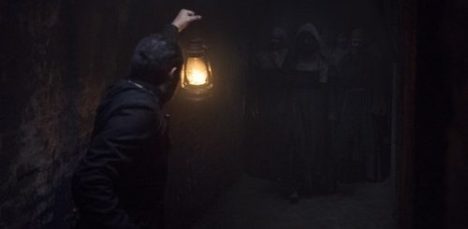
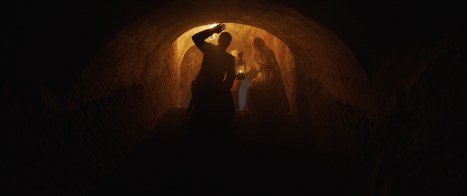
The Nun evokes gothic horror. Set in a creepy abbey in Romania during the fifties, following an investigator dispatched from the Vatican to investigate the suicide of a young nun, The Nun thrives in this environment with this iconography. The Nun falters a little bit in its storytelling, especially its exposition, and it stumbles a little bit when it comes to building a climax that works as both an action film and as a horror. However, the film is canny enough in its choice of setting and imagery that it never completely comes apart.

Who goes stair?

Continue reading

Non-Review Review: Mile 22

Mile 22 is an intriguing and muddled piece of work.

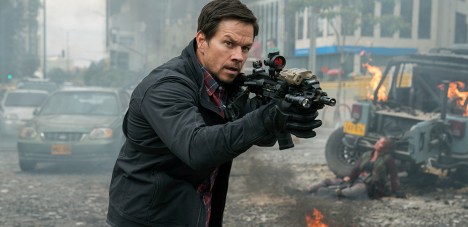
Judged by the standards of contemporary filmmaking, Mile 22 is a deeply frustrating and disjointed piece of cinema. In some ways, it seems strange to describe it as a movie. It is a film with one of the most blatant and transparent sequel hooks in recent memory, cutting to the credits at what feels like the end of the second act. This sense of confusion and bewilderment is only increased by Berg’s direction of action sequences, which are disorienting to the point where they come close to incomprehensibility.

Wahl-to-Wahl action.

However, while these elements add up to an underwhelming cinematic experience, there is something strangely compelling in the way that Berg stitches together this relatively straightforward narrative. The chaos at the heart of the movie makes it hard to enjoy the action sequences, but offers an endearing frenetic energy that sustains the film. There are moments when Mile 22 borders on the self-aware, particularly as at careens towards a climax that seems to have been reverse-engineered from two separate Mark Wahlberg memes.

The results are baffling, but fun to pick at.

Picking up the pace.

Continue reading

Bottom’s Up: The IMDb Bottom 100 and the Art of Identifying “Worst” Movies…

Readers of the site might be aware that I co-host a weekly podcast called The 250 with my good friend Andrew Quinn, in which we pick a movie ranked on the Internet Movie Database as one of the best movies of all-time. It’s a dynamic and public list, which means that it covers a wide variety of films and tastes. In the part couple of months alone, we’ve covered everything from Mission: Impossible – Fallout to Battle of Algiers to Paper Moon to The Secret in Their Eyes to The Prestige. I’m very proud of the podcast, and a lot of the discussions that we’ve had on it.

Part of this podcast has also involved looking at the list that the Internet Movie Database maintains of the worst movies ever made. We originally planned to rotate through both lists in an even-handed manner; five episodes of the top two-hundred-and-fifty for two episodes of the bottom one hundred. Indeed, we cover a number of the bottom one hundred as part of the show; episodes like Crimea and United Passions. However, we moved away from covering the bottom one hundred because we found that the movies populating the list weren’t so much awful as just mind-numbingly dull; Lawnmower Man 2, Crossover.

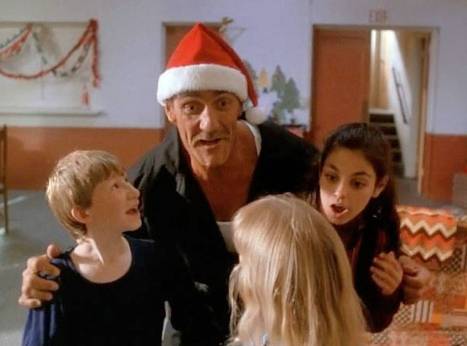
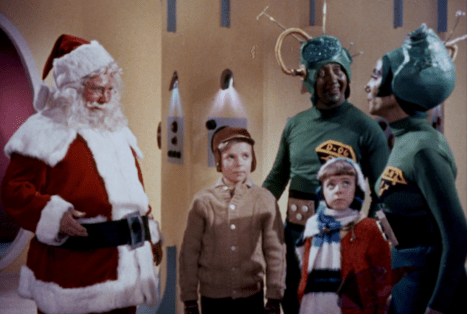
However, something vaguely interesting happened in the middle of July. The Internet Movie Database made a change to their list of the one hundred worst movies of all time that radically revised the nature and composition of the list. Suddenly, a lot of the smaller and stranger titles disappeared. Fringe films like Space Mutiny, Die Hard Dracula, Invasion of the Neptune Men and Santa With Muscles were all wiped out in an instant, replaced by more familiar and recognisable films like Jaws 3D, S. Darko, Blair Witch II: Book of Shadows, The Wicker ManBatman and Robin and Fifty Shades of Grey.

The result was a list that was suddenly a lot more fun to talk about, composed of films that people had actually seen instead of disastrously bad cult curiosities. Indeed, one very small consequence of this change is that we’re actually going to try to get back into talking about these terrible movies on a semi-regular basis on the podcast, because the list is now populated with films that will engender more interesting discussions both about the films themselves and their larger cultural context.

At the same time, it raises larger questions about what we consider to be the “worst” films, how we rank and access bad cinema and what that actually means in the grander scheme of popular culture. The change implemented to the IMDb’s bottom one hundred list is a conscious attempt on the part of the organisation to answer these questions, to create a broad consensus about what it means to be the “worst” films ever made. It’s an intriguing effort, and arguably something very different from trying to pick the “best” films ever made.

After all, it’s broadly possible to forge something resembling a consensus on the best movies. Trying to identify the worst is a much more difficult proposition.

Continue reading

96. Paper Moon (#229)

Hosted by Andrew Quinn and Darren Mooney, The 250 is a (mostly) weekly trip through some of the best (and worst) movies ever made, as voted for by Internet Movie Database Users. New episodes are released every Saturday at 6pm GMT, with the occasional bonus episode thrown in.

This time, Peter Bogdonavich’s Paper Moon.

Mose is a two-bit hustle who is passing through town in time to visit a funeral for an old flame. While there, the woman’s young daughter is thrown into his care. Mose immediately denies paternity of the precocious and intelligent young Adie, but the pair quick gel as they embark upon a string of hustles across Depression-era America.

At time of recording, it was ranked the 229th best movie of all-time on the Internet Movie Database.

Continue reading