• Following Us

  • Categories

  • Check out the Archives


  • Awards & Nominations

Non-Review Review: 22 July

22 July is both a very well made and a spectacularly ill-judged film.

Written and directed by Paul Greengrass, 22 July focuses on the infamous attacks conducted by Anders Behring Breivik in Norway in 2011. The attacks were brutal and horrific, and sent shockwaves across both Europe and North America. To a certain extent, Breivik’s attacks prefigured a wave of similar violence in the years that followed, violence driven by nativism and xenophobia, toxic forms of ethno-nationalism that crept in to the social and politic spheres. There is no denying that these attacks (and their aftermath) deserve attention and discussion. They are a formative moment in modern western politics.

However, there is also a sense that Paul Greengrass might not be the best director to tell this sort of story. There are several reasons for this, but most them come down to Greengrass’ stylistic sensibilities, his strengths and weaknesses as a filmmaker. It is incredibly obvious from the outset what kind of film Greengrass is trying to make. Greengrass is trying to capture the horror and brutality of Breivik’s actions, and to present the ordinary everyday heroism of those who survived and endured his assault. However, Greengrass’ directorial sensibilities conspire to undercut these aspects of the film.

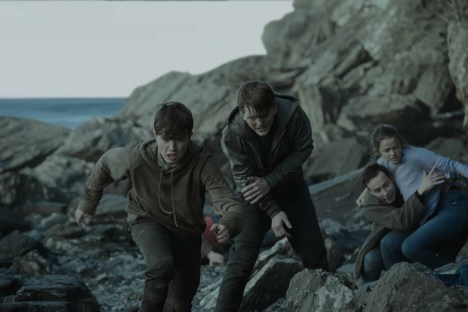
Greengrass may be a very naturalistic film director, who at times seems almost like a documentarian in his storytelling, but he can direct a visceral and effective action sequence. This means that the part of 22 July that really feels alive and propulsive is the mass shooting. More than that, Greengrass’ no-frills style means that most of the characters in 22 July never feel particularly well-developed or well-formed, never having a life outside of the frame or what the movie expects of them. As a result, the only character who does stand out is Brievik himself.
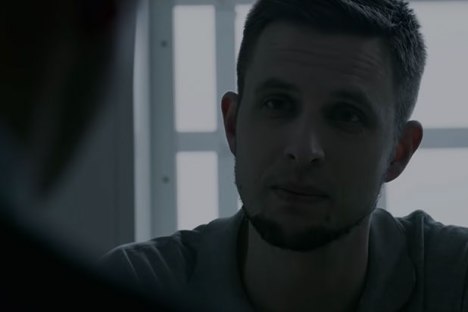
The result is a film about mass murder and ethno-nationalism that structurally resembles more conventional issue-driven movies, but without any of the strong emotional cues or distinctive performances that serve to place the moral weight within those narratives. Instead, 22 July often feels rather blunt and matter-of-fact, a collection of events and occurrences without any actual living characters to clog up the mechanics. The only things that stand out within 22 July are those elements that are (by their nature) heightened and extreme.

The result is a movie about a horrific terrorist attack that only seems to come alive in its depiction of the attack, and an ensemble drama about the cultural response to trauma where the only compelling character is a white supremacist terrorist.
Continue reading

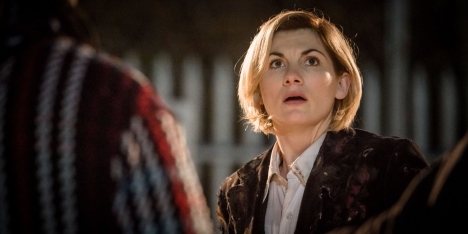
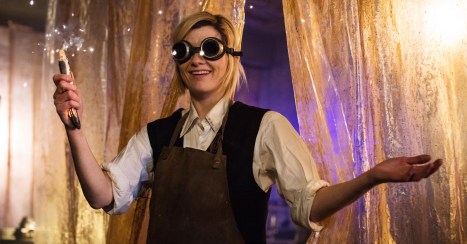
Doctor Who: The Woman Who Fell to Earth (Review)

“Don’t worry. I have a plan.”

“Really?”

“Well, I will have by the time I reach the top.”

– the more things change

The Woman Who Fell to Earth has a lot of pressure working upon it as Doctor Who season premieres go.

This is the first time that the Doctor has changed gender during regeneration, and is the first time that the title role will be played by a female actor. This is only the second time that the series has changed showrunner and rebuilt itself from the ground up since it returned more than a decade ago. There is a lot riding on The Woman Who Fell to Earth, and a lot of expectations that need to be satisfied.

Doctor who?

The Woman Who Fell to Earth is efficient, if not excellent. As a showrunner and scriptwriter, Chris Chibnall immediately and effectively establishes himself as a safe pair of hands. On some level, this is disappointing. After all, both Russell T. Davies and Steven Moffat were showrunners who immediately and aggressively asserted bold visions of what Doctor Who could be, announcing their arrival on the series with a confident statement of purpose that left the series scrambling to keep up. Instead, The Woman Who Fell to Earth seems to promise business as usual.

This isn’t inherently a bad thing, to be fair. There is some argument that Doctor Who might even need a safe and reliable pair of hands at this point. Chibnall is a writer who is much less adventurous than Davies or Moffat, but The Woman Who Fell to Earth is infused with a back-to-basics meat-and-potatoes approach. A lot of the episode is spent trying to avoid potential pitfalls that would emphasise Chibnall’s relative weaknesses, and instead play to a very broad “big tent” ideal of what Doctor Who can be.

Breaking out.

Indeed, The Woman Who Fell to Earth works best in its relatively straightforward nuts-and-bolts elements, when judged on the individual elements of the episode rather than how they all fit together. Jodie Whittaker throws herself into the lead role and understands that she’s effectively propelling the narrative forward. The new regular ensemble has a breezy and easy chemistry that feels suitably distinct from more recent inhabitants of the TARDIS. The actual plotting of the episode is fairly boilerplate Doctor Who, almost as if the series is showing that it can still do that.

That said, there’s a worrying lack of ambition evident in The Woman Who Fell to Earth and its business-as-usual approach to Doctor Who. This is a season premiere that feels more of a piece with episodes like Smith and Jones, Partners in Crime or Deep Breath, episodes that are less concerned with bold questions of vision than they are with the mechanics of simply introducing a new lead. It’s disappointing, because the stock comparison for The Woman Who Fell to Earth should be something as wonderful as Rose or The Eleventh Hour.

Jodie’s Wits-About-Her.

Continue reading

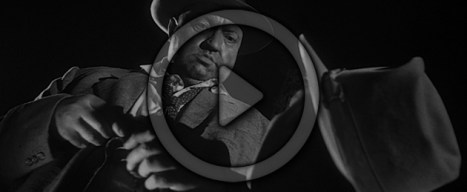
84. Touch of Evil (#241)

Hosted by Andrew Quinn and Darren Mooney and this week with special guests Charlene Lydon and Grace Duffy, The 250 is a (mostly) weekly trip through some of the best (and worst) movies ever made, as voted for by Internet Movie Database Users. New episodes are released Saturday at 6pm GMT.

This time, Orson Welles’ Touch of Evil.

A murder in a small border town stokes local tensions, as Ramon Miguel Vargas finds himself drawn into an investigation overseen by Police Captain Hank Quinlan. As Quinlan pursues his lines of inquiry, Vargas quickly comes to realise that his would-be partner is not what he appears to be.

At time of recording, it was ranked the 241st best movie of all time on the Internet Movie Database.

Continue reading

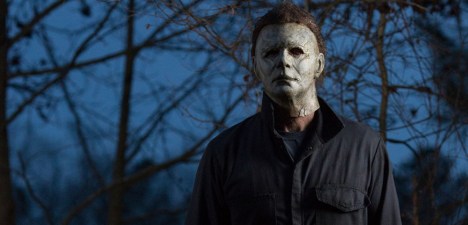
Non-Review Review: Halloween (2018)

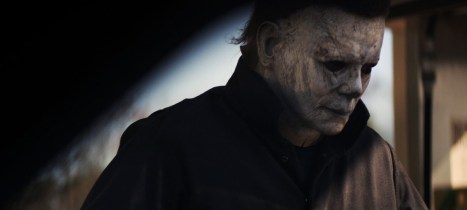
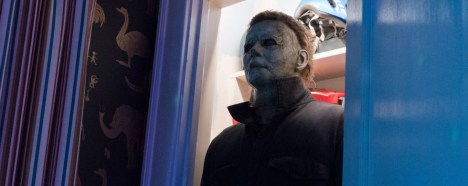
The Halloween franchise remains a strange beast, for a number of reasons.

Most notably, it is one of the relatively rare horror movie franchises that has actively and repeatedly refused the siren call of over-complication and entanglement. Michael Myers is an iconic horror character, on par with other seventies and eighties ghouls like the creature from Predator, the monster from Alien, Jason Voorhees from the Friday the 13th Franchise and even Freddie Krueger from A Nightmare on Elm Street. However, as the mythology of those characters has spiralled and intertwined, Michael Myers remains a very simple, straightforward concept.

The Shape of things to come.

The horror reboot is a fixture of the modern pop cultural landscape, and Michael Myers went through his own version of that. There’s an argument to be made that Myers came out much better than many of his contemporaries with Rob Zombie’s Halloween. However, even before that, the Halloween franchise seemed to emphasise its essential blankness. Halloween III did not feature Myers at all, which seems crazy in hindsight. Halloween: H20 effectively rewrote the franchise’s history so that only Halloween and Halloween II actually happened.

Of course, there were films in the series that indulged in all the standard horror movie tropes, which tried to develop and cultivate a mythology around the iconic masked killer. This is most obvious in the iterations of the franchise without Jamie Lee Curtis, particularly in the sixth film Halloween: The Curse of Michael Myers. However, it is telling that these sorts of complications and elaborations have frequently been brushed aside as detritus, understood in hindsight to diminish the power of the character and the franchise.

Facing up to him.

The latest iteration of Halloween understands that this inherent blankness, this resistance against the pull of over-complication or over-mythologisation, is the key to the franchise’s success. Like H20, Halloween is what might be termed a “deboot” in modern parlance, a direct reversal of an earlier change in direction. Indeed, it’s notable for the thoroughness of the debooting. In its opening five minutes, Halloween wipes away not only the Rob Zombie reboot, but also the earlier H20 deboot, and everything in the past forty years.

In the teaser, the audience is bluntly informed by a British true crime journalist that Michael Myers “for the past forty years, by all accounts, has not said a word.” That statement is more than just an important bit of continuity wrangling. It is an important statement of purpose for Halloween‘s understanding of its own franchise and its central character. Halloween very pointedly updates its storytelling mechanics and framework to reflect the forty years since the original film, but it also understands that part of the appeal of Michael Myers has always been his blankness.

Homecoming.

Continue reading

New Podcast! Scannain Podcast (2018) #37!

It’s time for the latest Scannain podcast!

This week, I join Jason Coyle, Ronan Doyle and Graham Day to discuss the week in film. As usual, we talk about the top ten and the new releases, as well as what we’ve watched this week. In this episode, Graham gives us a peak at upcoming cinematic delights including First Man and Mandy, Ronan discusses the underrated emotional appeal of Mamma Mia!: Here We Go Again, and Jay expounds upon his controversial “automatic four star film theory” as it relates to directors like Jeremy Saulnier and S. Craig Zahler.

We also talk about the best ways to celebrate a cinematic Halloween in Dublin, looking at both the Season of the Witch at the Lighthouse and the Horrorthon at the IFI, discuss the recently scheduled release date of The Lonely Battle of Thomas Reid, and the revelation that Russian bots have been stirring dissent around Star Wars: Episode VIII – The Last Jedi.

The top ten:

  1. The Little Stranger
  2. Hotel Transylvania 3: A Monster Vacation
  3. Mile 22
  4. Christopher Robin
  5. The Nun
  6. Crazy Rich Asians
  7. A Simple Favour
  8. Black ’47
  9. The House With A Clock In Its Walls
  10. Night School

New releases:

You can download the episode here, or listen to it below.

CinÉireann – Issue 9 (September 2018)

The latest issue of CinÉireann has just been released.

It’s full of the usual great stuff, mostly thanks to editor Niall Murphy. However, there’s also some other great stuff in there including Conor Murphy‘s regular column on cinematic education and Ronan Doyle‘s “Queer Ire” column. I contributed a piece on Black ’47, the Irish famine western that is one of my favourite films of the year so far, discussing it in the context of the mainstreaming of the postcolonial western.

As ever, there is some fantastic talent involved in the issue, and it is an honour to get a chance to write for CinÉireann. A massive “thanks” to the fantastic Niall Murphy over at Scannain for letting me be a part of it.

You can read CinÉireann as a digital magazine directly. You can even subscribe and get future issues delivered to you directly. Or click the picture below.

Non-Review Review: Venom

Transformative trauma is a cornerstone of the superhero genre.

Sometimes that trauma is emotional; the deaths of Thomas and Martha Wayne, the loss of Uncle Ben, the explosion of Krypton. Sometimes that trauma is physical; having piping hot metal coated over your bones as your memory is wiped, physically mutating into something unrecognisable as human, having your entire body turn to trauma. To misquote Stan Lee, “with great power comes great responsibility.” More often than not, it also comes with great suffering.

Back in black.

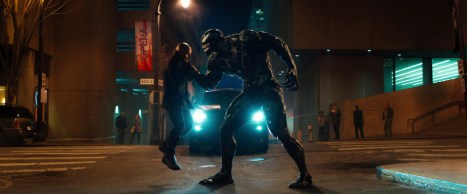
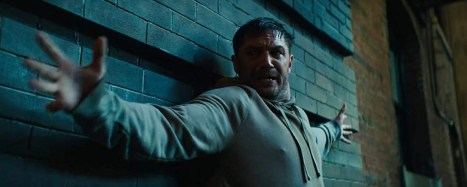
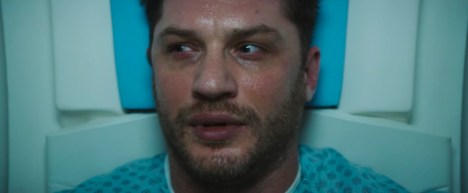
In its best moments, Venom seems to realise this. At the core of Venom is the traumatised character of Eddie Brock, who has watched his entire life fall apart and who suddenly finds himself sharing his body with a murderous alien entity with monstrous appetites. Brock is played by Tom Hardy, one of those rare actors with both immense physical presence and incredibly vulnerability. Unshaved and scruffy looking, with faded tattoos and wearing clothes that look like they haven’t been washed, Eddie looks like he’s been through hell even before his transformative experience.

There are moments when Venom almost plays as a weird psychological thriller about a character experiencing a real-time break from reality, a reporter who is losing his fragile grip on reality after suffering one too many personal and professional setbacks. As the situation gets worse, Eddie starts hearing voices in his head and losing control of his body. He finds himself in a situation where terrible things happen, but he is able to disassociate himself from the brutality and violence. Venom never quite commits to this idea, but it simmers through the story.

Wall’s well that ends well.

The first two acts of Venom are ropey and uneven, suffering from a fuzzy lack of detail and no strong focus on any of the film’s central ideas. Nevertheless, the film survives largely on the strength of Tom Hardy’s performance and the weirdness of the concept. However, things fall to pieces in the third act. Part of this is because Venom feels the need to transform into a regular superhero movie as it reaches its conclusion. Part of this is because Ruben Fleischer cannot direct action. Part of this is because of collision of clumsy exposition and muddled computer-generated imagery.

Venom loses what little control it has of itself as it reaches its climax.

MRI are we here?

Continue reading

“Maybe It’s Time To Let the Old Ways Die…”: “A Star Is Born” and Baby Boomer Rock Nostalgia…

It takes a lot to change, it takes a lot to try,

Baby, it’s time to let the old ways die.

A Star is Born would seem to be a massive success, before it has even been released.

The film has an impressive score on both Rotten Tomatoes and MetaCritic. The film has also been named as the presumptive Best Picture frontrunner by publications as diverse as Forbes, Playlist, Vulture and Vanity Fair. Of course, that may not actually mean much; presumptive Best Picture frontrunner status doesn’t always translate into ownership of that little gold statue. Just ask La La Land, the presumptive Best Picture frontrunner from two awards seasons back, a film that literally had the award snatched out of its hand by the underdog that could, Moonlight.

The comparison to La La Land is interesting. In many ways, A Star is Born is effectively the movie that many critics claimed to see in La La Land. By its nature, La La Land evoked nostalgia for a long-lost version of Hollywood, blending a story of an ascendant star with a cynical hipster, filtered through the lens of old-school musicals. Many read the film as the ill-judged story of a white guy saving jazz, glossing over the fact that it was instead a tragic story about a guy who kept an outdated notion of jazz alive in a basement club while shunning the opportunity to work with an African American artist to bring it to the masses.

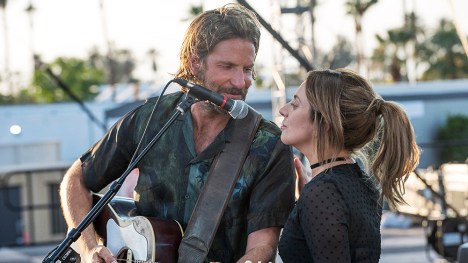
What is striking about A Star is Born is how it embraces many of the controversial aspects of La La Land and pursues them with uncritical earnestness. A Star is Born is a film steeped in seventies notions of authenticity, reflected not only in the past-his-glory stylings of rock daddy Jackson Maine, but also in the stylistic influences of Bradley Cooper who aspires towards the glory days of the New Hollywood movement. At the core of A Star is Born is a suggestion that popular culture was never more “real” than it was during the seventies, and that modern artists should look back to that authenticity, not craft their own identities.

A Star is Born is inevitably going to be nostalgic. It is the forth iteration of this particular fairytale to use the title, although the story itself has been reworked and reimagined in countless iterations over the past century. Fans were already identifying callbacks and homages to early versions of the story from the trailer. Much was made of the the passing of the torch, whether it was Kris Kristofferson allowing Bradley Cooper to use his set at Glastonbury to film a key sequence from the movie, or his and Barbra Streisand’s visit to the set. Nostalgia was woven into the fabric of A Star is Born.

However, A Star is Born is in theory about more than nostalgia. It is about evolution. It is about a dying star elevating a new voice from obscurity, providing a young artist with a platform from which they might launch themselves. A Star is Born is a tale of succession, of perpetual reinvention, of the passing of the torch from one generation of celebrity to another. This is why the story inevitably focuses on an over-the-hill rocker who discovers a startling young talent. It is a story about how celebrity changes and evolves. It is about acknowledging the future, and allowing the past to legitimise that future.

There are certainly shades of that in A Star is Born. There are certain songs that recur throughout the film, suggesting both potential hit singles from the soundtrack and important thematic markers. Shallow is one hell of a pop-rock love ballad, full of power and emotion. However, Jackson Maine keeps coming back to his own folksy country ballad Maybe It’s Time to Let the Old Ways Die. It seems like an important statement of purpose for the film, an exploration of what is actually happening when this aging crooner plucks young Ally out of obscurity and pushes her towards celebrity.

Unfortunately, the movie itself seems less concerned about letting the old ways die, and instead is much more anxious about what it sees as the lack of authenticity within popular culture. When A Star is Born positions Jackson Maine as an aging rock god, it is entirely sincere. It might accept the man’s flaws, but it heralds his message. A Star is Born is a story about how “real” celebrity looks like a bearded rocker with a guitar thrown over his shoulder singing about lost love, while more stylised modern pop culture is just vacuous nonsense. A Star is Born is a prestige picture celebration of baby boomer rock nostalgia.

Continue reading

Non-Review Review: Apostle

The paraphrase Ernest Hemmingway, Apostle happens at first very slowly and then all at once.

Written, directed and editted by Gareth Evans, Apostle wears its influences on its sleeve. The premise of the film invites an easy observation along the lines of The Raid meets The Wicker Man.” This is massively reductive, of course. It also misunderstands the film. If anything, the more accurate (but equally reductive) description of Apostle might be “The Raid by way of The Wicker Man.” Evans period piece exploration of religion and devotion is very much a game of two halves. Perhaps even that might be more accurately formulated as two-thirds-to-one-third.

The only boy who could ever reach me…

Apostle suffers somewhat in its pacing. The first two acts of the film are given over to a sense of mounting dread and anxiety, to the slow and gradual reveal of what precise brand of horror is unfolding on this mysterious island maintained by this mysterious cult. Evans is a capable director who skillfully creates a sense of the uncomfortable and the uncanny, but the issue with Apostle is that any cinematically literate audience has a very good idea where these two acts of mounting dread are inevitably leading.

However, Apostle really comes into its own when it finally plays the hand that it has been carefully and slowly hinting towards in its first ninety minutes.

Burning inside.

Continue reading