• Following Us

  • Categories

  • Check out the Archives


  • Awards & Nominations

Star Trek: Enterprise – Stratagem (Review)

Next year, Star Trek is fifty years old. We have some special stuff planned for that, but – in the meantime – we’re reviewing all of Star Trek: Enterprise this year as something of a prequel to that anniversary. This August, we’re doing the third season. Check back daily for the latest review.

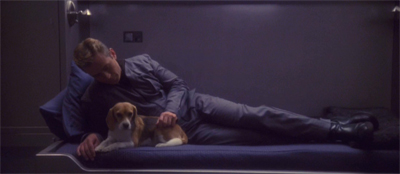
With Stratagem, the third season of Star Trek: Enterprise gets its head back in the game.

The recent stretch of third season episodes seemed to lose sight of what made this such an intriguing premise. Although Rick Berman had conceded that there was an escape hatch in place in case the Xindi arc could not sustain a full season of television, it was increasingly clear that the third season of Enterprise would be a single extended arc exploring Archer’s attempts to find the source of a deadly threat against mankind. It was a bold experiment for a show that had been quite rigidly episodic to this point. At least in theory.

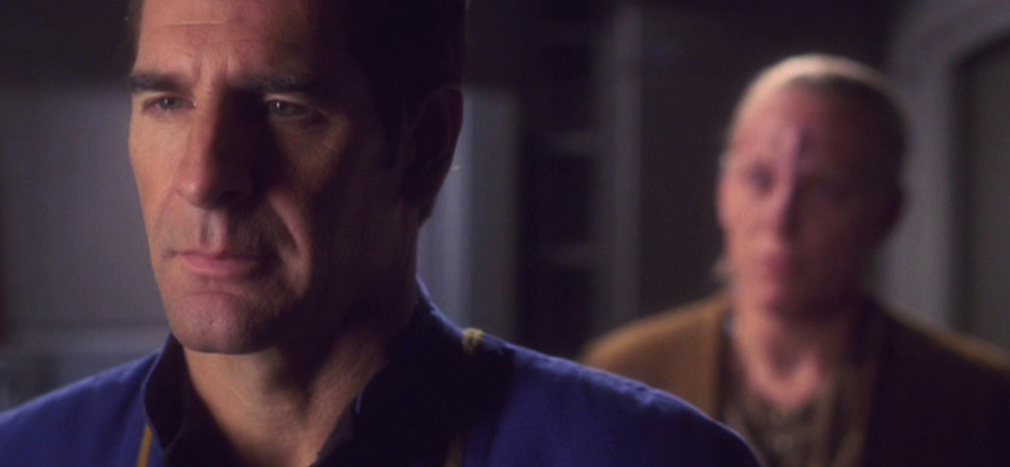
Archer's on candid camera...

Archer’s on candid camera…

In practice, the third season of Enterprise seemed to flounder a little bit once it got past the initial burst of speed powering it into the third season. All of a sudden, the crew found themselves involved in a number of increasingly stand-alone adventures with superficial ties to the larger arc. Episodes like Extinction and Chosen Realm could easily have been produced and broadcast during the show’s first two seasons, with minor alterations. Exile and North Star were only loosely connected to the season’s plot. Carpenter Street was a time travel episode.

Proving Ground had suggested that the show was ready to re-focus its attention on the matter at hand and get back to the imminent threat posed by the Xindi. At the same time, the episode was also keen to stress its episodic nature – most notably in its role as the show’s annual check-in with the Andorians. Stratagem is very much its own self-contained story, but it is a lot more confident about how it fits in the larger scheme of things, and where it fits in the broader arc of the season.
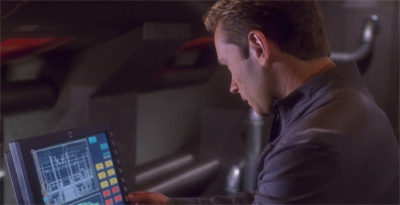
Engineering a convincing set-up...

Engineering a convincing set-up…

Continue reading

Star Trek: Enterprise – Proving Ground (Review)

Next year, Star Trek is fifty years old. We have some special stuff planned for that, but – in the meantime – we’re reviewing all of Star Trek: Enterprise this year as something of a prequel to that anniversary. This August, we’re doing the third season. Check back daily for the latest review.

Proving Ground is an odd episode to sit in the middle of the third season’s larger arc involving the Xindi and the threat against Earth.

In a very real sense, it is more serialised than a lot of the episodes leading up to it. The episode even opens with a fairly sweeping “previously…” section that is sure to include a lot of nice action shots from the first half of the year. Proving Ground contributes more to the arc than anything like Carpenter Street or Chosen Realm, featuring the testing of the Xindi weapon. It also features the Andorians, suggesting that Star Trek: Enterprise has not completely divorced itself from its original place in the Star Trek canon.

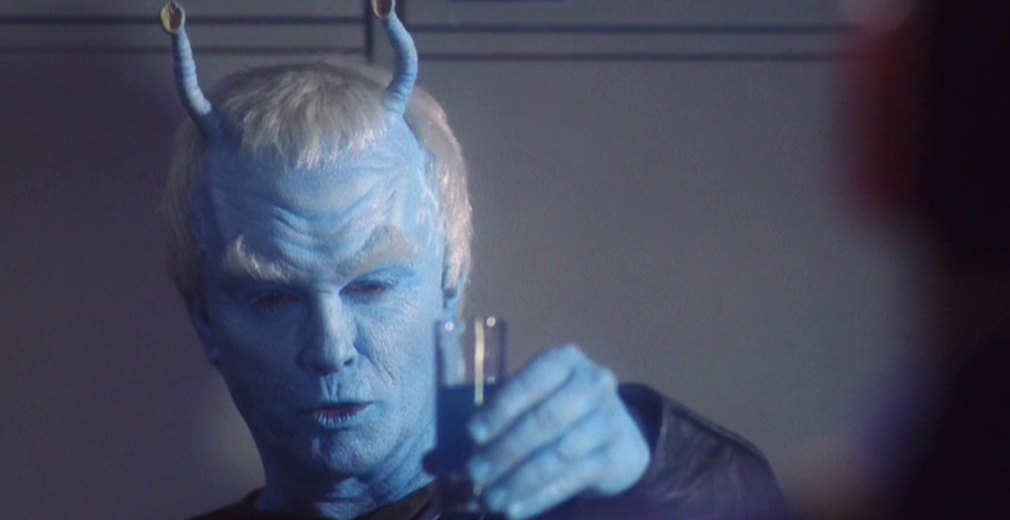
Drinking away the blues...

Drinking away the blues…

At the same time, the episode is also very episodic. Shran makes a very quick cameo in Zero Hour, but this is the extent to which the Andorians are involved in the larger plot of the third season. Much like the second season, there is a sense that Shran has been slotted into “the obligatory Andorian episode” as a way to fill a production slot in a chaotic season. The sense of weight and impact of the episode is relatively minimal, like Cease Fire before it. The conclusion seems to be that Shran might be a nice guy underneath it all. It’s hardly shocking.

More than that, the structure and plot of the episode can’t help but emphasise some of the more misguided creative decisions of the third season, with Proving Ground introducing a bunch of clever (and exciting concepts) into the arc only to take them right away at the end. The fact that Proving Ground is so fun and enjoyable is almost a detriment, inviting the audience to wonder whether some of that love and affection might have been distributed across the season.

Look who just blue in...

Look who just blue in…

Continue reading

Star Trek: Enterprise – Chosen Realm (Review)

Next year, Star Trek is fifty years old. We have some special stuff planned for that, but – in the meantime – we’re reviewing all of Star Trek: Enterprise this year as something of a prequel to that anniversary. This August, we’re doing the third season. Check back daily for the latest review.

Chosen Realm is Manny Coto’s second script for Star Trek: Enterprise.

His script for Similitude marked Coto as something of an old-fashioned Star Trek writer. It was clear that Coto harboured a great deal of affection for the source material, and Similitude was structured in the style of a classic Star Trek morality play. It was a story about the circumstances in which “the needs of the many outweigh the needs of the few… or the one.” There is a reason that Star Trek fans are so very fond of Similitude, particularly given its position in the middle of a rather polarising and provocative season.

Archer encounter an enemy with faith of the heart...

Archer encounter an enemy with faith of the heart…

However, it was not entirely clear just how traditional Manny Coto was in his approach to Star Trek until the broadcast of Chosen Realm. If Similitude felt like a classic Star Trek morality play, then Chosen Realm literally was a classic Star Trek morality play. A commentary on religious fanaticism and zealotry, Chosen Realm was very much an update of the iconic Let That Be Your Last Battlefield. Coto is quite explicit about this, rather blatantly borrowing the emotive (and poignant) ending from that episode.

Although it aired in the much-maligned third season, and has no shortage of its own problems, Let That Be Your Last Battlefield is an instantly recognisable Star Trek allegory. Casual fans – and even those with a passing familiarity with the franchise – remember “the one with the aliens who are half-black and half-white who are racist against the aliens who are half-white and half-black.” It is not a subtle or nuanced allegory, but it doesn’t really need to be. It is not as if the sort of blatant racism against which the Civil Rights movement fought was a grey area.

"I think I've seen this before..."

“I think I’ve seen this before…”

Unfortunately, Chosen Realm chooses to apply this simplistic metaphor to a complicated issue. In keeping with the War on Terror metaphor running through the third season, Chosen Realm explicitly ties religion into the larger arc. Archer finds his ship hijacked by a bunch of religious suicide bombers actively intent on turning Enterprise into a weapon that can be deployed against those who believe differently than they do. This is a very classic Star Trek morality tale – the “religion is bad” theme dating back to Who Mourns For Adonais? or The Apple.

Religion is undoubtedly an element of the War on Terror, but it is not the only issue or an issue that exists in isolation. Islamic extremism (as Chosen Realm never seems particularly interested in the trope of Christian extremism) is rooted in more than simply faith. There are political and economic factors at play that are just as vital to understanding why things happen in the way that they happen. Chosen Realm is uninterested in any of this, structuring itself as Richard Dawkins rant in science-fiction form.

What was that about politics or religion?

What was that about politics or religion?

Continue reading

Star Trek: Enterprise – Carpenter Street (Review)

Next year, Star Trek is fifty years old. We have some special stuff planned for that, but – in the meantime – we’re reviewing all of Star Trek: Enterprise this year as something of a prequel to that anniversary. This August, we’re doing the third season. Check back daily for the latest review.

This is the point at which it becomes all but impossible to argue that the production team knew what they were doing this season.

The third season of Star Trek: Enterprise holds together reasonably well, if the viewer pulls back to a big enough distance. The broad arcs are discernible and logical – there is a clear start point and a reasonable trajectory, even if the first half of the season tends to get a bit lost. It really pulls itself together during the second half of the season, with one or two exceptions, building towards a finalé that satisfies both the demands of a year-long arc and the franchise surrounding it. It is not perfect, but it is not bad for a first attempt.

Hey kids! It's Leland Orser!

Hey kids! It’s Leland Orser!

Of course, it is also quite clear that the production team really had no idea what they were doing – or even what they were trying to do. The fact that it comes together in the second half of the season all but concedes that it doesn’t hold together in the first half. The first half of the third season is populated with standalone episodes that tend to either fit thematically (North Star, Similitude) or tonally (Impulse, Exile) with the general direction of the show, but a rather limited sense of progress or advancement.

Carpenter Street is the point at which any real sense of trust between the audience and the production team snaps like a twig. It is a story that features the characters time travelling to modern-day Earth in the middle of a gigantic story arc about how they are more isolated than they ever have been before. It throws away any sense of internal logic or consistency, never really exploring how an alien species that can travel back to Detroit in 2004 should have a problem with Earth in 2153. And, crucially, it is not fun enough to excuse those issues.

Hey kid! It's Jeffrey Dean Morgan! (Really!)

Hey kid! It’s Jeffrey Dean Morgan!
(Really!)

Continue reading

Non-Review Review: Trainwreck

Trainwreck is a refreshing romantic comedy, a collaboration that plays to the strengths of both lead and writer Amy Schumer and director Judd Apatow. The comedy follows a young woman who learnt from an early age (through inappropriate doll metaphors) that “monogamy doesn’t work.” Amy is very much a female version of the arrested adolescent character that Apatow helped to popularise in mainstream American comedy, the immature adult who has yet to face any real personal or professional responsibility.

In some respects, Trainwreck is a continuation of a comedy trend that began with Bridesmaids, realising that male characters did not hold a monopoly on emotional disaster zones. Female characters are just as likely to exercise poor judgment and make questionable personal decisions. If Apatow figured out how to keep the romantic comedy fresh by tweaking the mental age and emotional stability of the male lead, then his collaboration with Schumer does something similar by swapping the gender dynamics.

Hold me.

Hold me.

The basic character and emotional arcs have not changed. After all, the romantic comedy can really only have one of two outcomes; they live happily ever after, or they don’t. Trainwreck charts the same course as The 40-Year Old Virgin or Knocked Up, which basically followed the same arcs as When Harry Met Sally or Sleepless in Seattle. For all the novelty of swapping the gender roles in the Apatowian comedy, Trainwreck is not particularly subversive or deconstructive.

Rather, Trainwreck is a stellar execution of a very traditional form. It is not a comedy that defies conventions or upsets expectations; it hits virtually every major beat that story like this can be expected to hit. It benefits from a rather wonderful collaboration of a writer (and actress) with a sharp eye for millennial humour working alongside a director who understands the mechanics of the genre intuitively. Trainwreck is perhaps the best mainstream romantic comedy that Hollywood has produced in quite some time.

Everything is on track...

Everything is on track…

Continue reading

Star Trek: Enterprise – Similitude (Review)

Next year, Star Trek is fifty years old. We have some special stuff planned for that, but – in the meantime – we’re reviewing all of Star Trek: Enterprise this year as something of a prequel to that anniversary. This August, we’re doing the third season. Check back daily for the latest review.

It is hard to talk about Similitude without talking about Manny Coto.

It is quite easy to get distracted from the episode itself, which is a sublimely moving piece of working with skilled direction from LeVar Burton and a beautiful central performance from Connor Trinneer. More than that, Similitude is very much pure Star Trek. It is a metaphor about the human condition, wrapped up in a morality play fashioned from some admittedly questionable science-fiction. This good old-fashioned allegorical science-fiction in a style that really works, capitalising on the status quo of the third season of Star Trek: Enterprise to tell a moving story.

Send in the clones...

Send in the clones…

And, yet, despite all that, this is the point at which Manny Coto arrives. Much like it is impossible to talk about The Bonding without talking about Ronald D. Moore, it is impossible to talk about Similitude without talking about Manny Coto. Coto arrived on the show fresh from Odyssey 5, and quickly made himself invaluable and essential. While his scripts were quite hit-and-miss on an episode-by-episode basis, Coto demonstrated an aptitude for producing television in general and Star Trek in particular.

Indeed, Coto managed to climb the franchise rungs faster than any producer and writer since Michael Piller in the third season of Star Trek: The Next Generation. Piller had found himself running the show after Michael Wagner suddenly decided to step down only a few episodes into the season. Coto had a bit longer to get the lay of the land; he would have half of the third season to establish himself before being placed in charge of the writers’ room for the start of the show’s fourth year when Brannon Braga stepped back into a more supervisory role.

Genetically engineered engineer...

Genetically engineered engineer…

A number of factors helped to establish Coto as an almost mythical figure in Star Trek lore. The dramatic change in tone and style into the fourth year, which catered to a core group of Star Trek fans – including Coto himself – surely helped. The fact that Coto was succeeding Brannon Braga probably helped establish his credibility as well – a vocal section of fandom has complete disdain for Braga’s style. Despite the fact that Coto was only in charge for twenty-four episode, he made a surprisingly enduring contribution to the franchise as a whole.

Hindsight seems to suggest that Similitude was almost prophetic; it is the story of incredible growth and development over an incredibly short amount of time, making a deep and lasting impression.

Designer baby...

Designer baby…

Continue reading

Star Trek: Enterprise – North Star (Review)

Next year, Star Trek is fifty years old. We have some special stuff planned for that, but – in the meantime – we’re reviewing all of Star Trek: Enterprise this year as something of a prequel to that anniversary. This August, we’re doing the third season. Check back daily for the latest review.

It is surprising just how hasty some sections of Star Trek fandom are to dismiss North Star as absurd or ham-fisted or ridiculous.

It is precisely those qualities the make North Star quintessential Star Trek.

Spectre of gun...

Spectre of gun…

Continue reading

Non-Review Review: The Man From U.N.C.L.E.

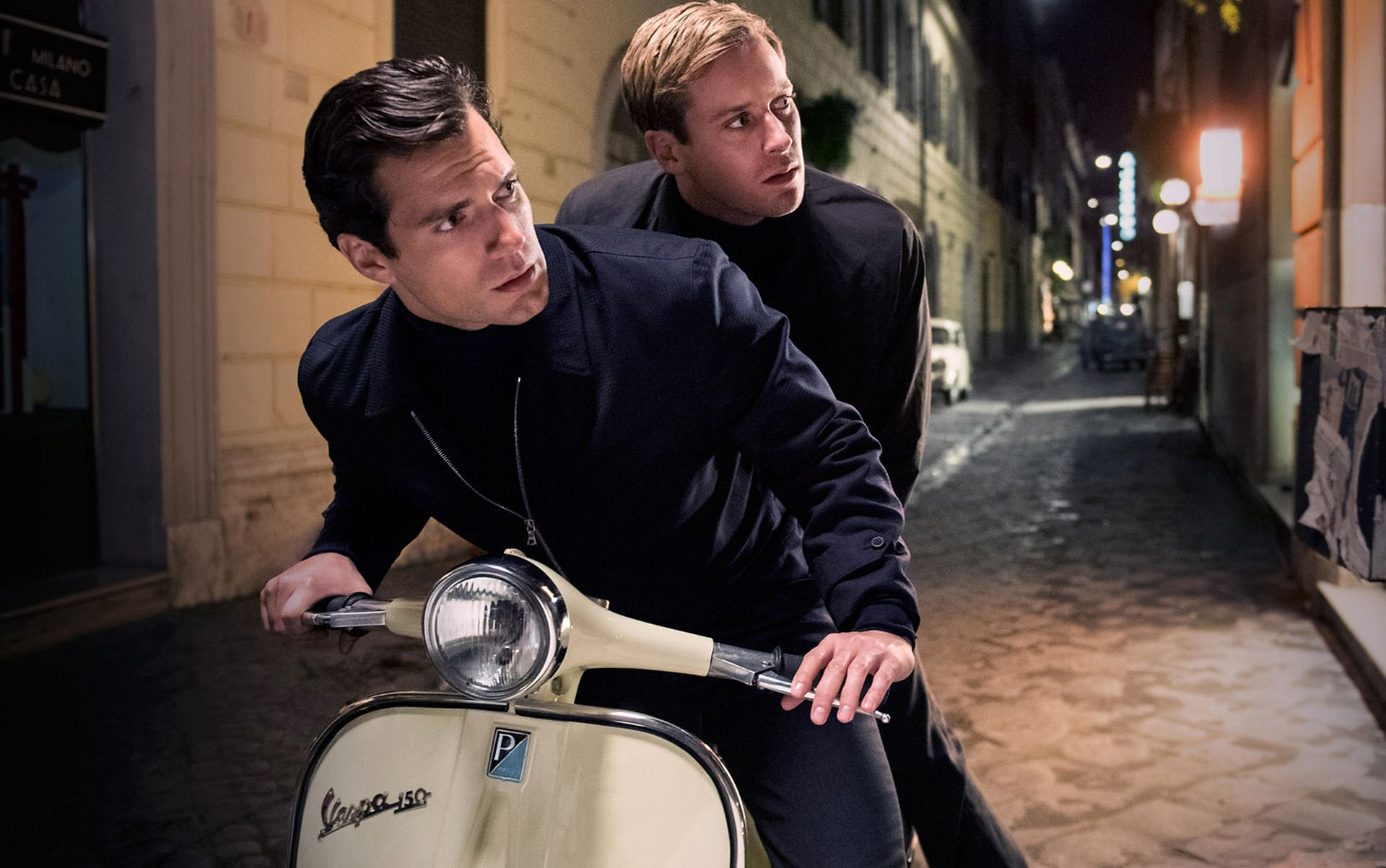
The Man From U.N.C.L.E. has style and charm. It doesn’t have much more than that, but never underestimate how far style and charm can get you. Guy Ritchie has always had a nice a sense of movement, and The Man From U.N.C.L.E. always moves at a nice pace, even when it’s not entirely sure where it is going. A film so light that it threatens to get caught in the gust as it breezes by, it is also important never to overestimate how far style and charm can get you either.

Ride along...

Ride along…

Continue reading

Star Trek: Enterprise – Twilight (Review)

Next year, Star Trek is fifty years old. We have some special stuff planned for that, but – in the meantime – we’re reviewing all of Star Trek: Enterprise this year as something of a prequel to that anniversary. This August, we’re doing the third season. Check back daily for the latest review.

Twilight is a fascinating piece of Star Trek.

There are some significant flaws with the episode, particularly in how it treats T’Pol as a character and the eagerness with which it grabs at the famed “reset button.” However, despite these problems, Twilight is pretty much perfectly positioned. Eight episodes into the third season, the new status quo has been established. The ground rules have been laid down. Over the past seven episodes, fans have been given a sense of how the third season of Star Trek: Enterprise is supposed to work.

Keep your shirt on, Archer...

Keep your shirt on, Archer…

However, there is a palpable sense of unease about the larger arc – a question of how Star Trek can tell a story like the Xindi arc while remaining true to itself. The Shipment was an awkward attempt to impose a traditional Star Trek moral structure upon the season. North Star and Similitude are very much traditional Star Trek morality tales set against the backdrop of the larger arc. Like many of the stronger shows towards the tail end of the second season, these episodes seem to ask how you can apply old Star Trek standards to the twenty-first century.

Twilight is an episode about what happens if the Xindi arc goes wrong. Obviously, this is a story about what happens if Archer cannot save Earth from the Xindi, documenting the slow death of mankind as they are hunted through the cosmos. However, on an external level, Twilight is a story about what happens if Star Trek bungles this big grasp at relevance. It is no coincidence that the debilitating impairment that Archer develops involves his long-term memory. If the franchise forgets itself, all is lost.

Everything dies...

Everything dies…

Twilight is not just the story about the death of Earth or the death of humanity. It is a story about the death of Star Trek. Two years earlier, the franchise had seemed almost invincible; the idea of there not being any Star Trek on the air after the end of Star Trek: Voyager seemed almost absurd. However, by the time that the show had reached the third season, its existence was very much in peril. Twilight is a story about how horrible and apocalyptic the future might be; how Star Trek might find itself hobbled and then destroyed.

As its name implies, Twilight is a lament for the franchise; perhaps a tacit acknowledgement that the show was nothing more than a dead man walking at this point. The result is a surprisingly moving piece of television, a thoughtful and considerate examination of just how much is on the line for the franchise as well as the characters.

Waking dream...

Waking dream…

Continue reading

Non-Review Review: Paper Towns

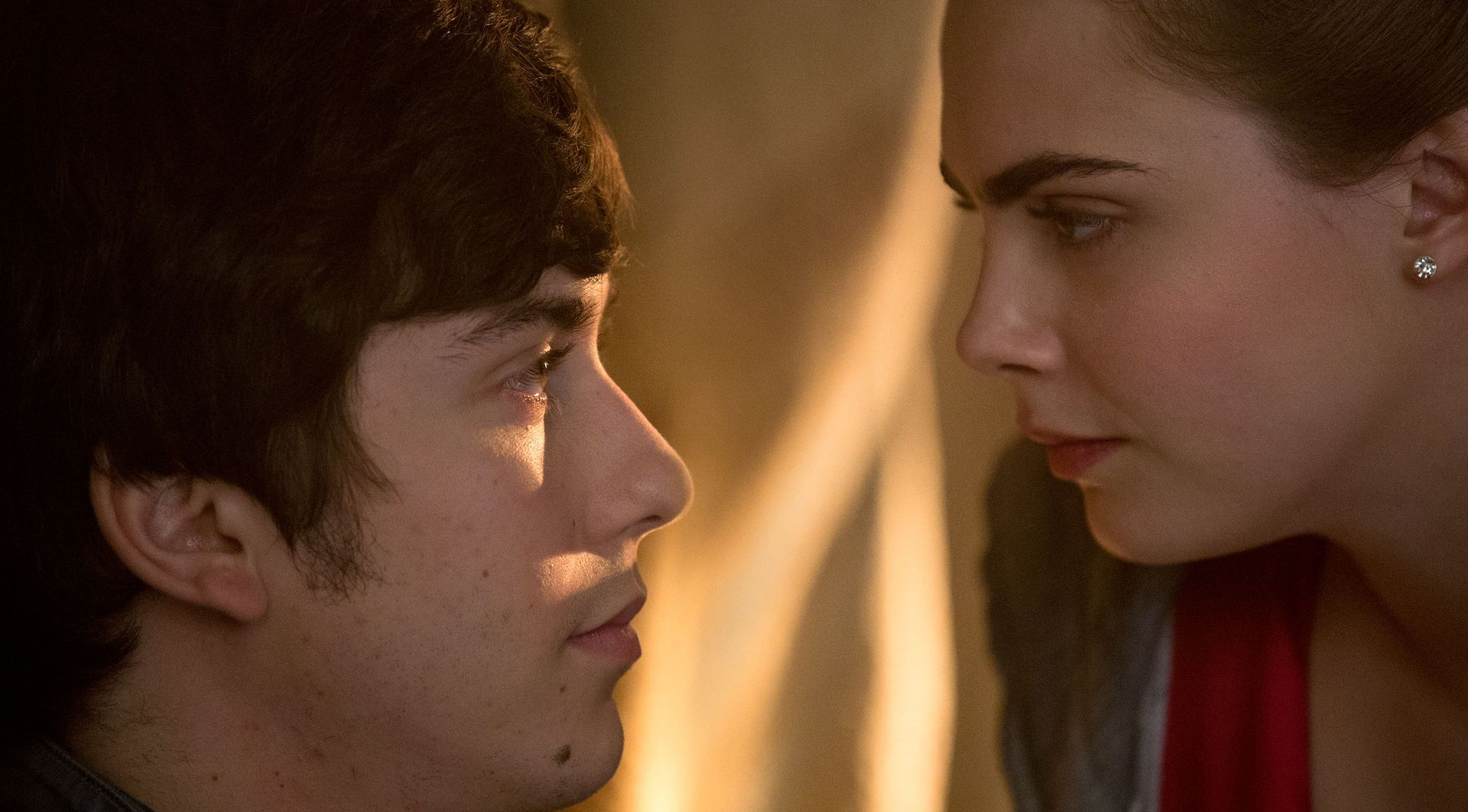
There is an irony at the heart of Paper Towns. In many ways, it is a typical teenage coming of age fantasy. Quentin is approaching the end of his high school life, which has been spent buried in books. One night, the girl next door sneaks into his bedroom and takes him on a whirlwind adventure through the Orlando nightlife. Reconnecting with the enigmatic Margo for the first time since childhood, old feelings are reignited; Quentin allows himself to feel excited and alive. However, the next morning, Margo is gone.

As Quentin begins a bizarre treasure hunt to track her down, he finds himself caught up in a dynamic adventure. Deciphering a series of clues that offer an indication of where Margo might have gone, Quentin discovers that there is more to life than his own narrow experiences to date. The pursuit of Margo allows Quentin to come out of his shell. “You’re cute when you’re confident,” Margo assures him at one point in the film. “Less so when you’re not.” Inevitably, Quentin learns that he has to venture outside of his shell and push past his comfort zone.

Dream girl...

Dream girl…

This is a classic teen movie trope, reinforcing the sense that key to adolescent (and even adult) fulfilment is comfort in your own skin. It’s a nice idea, because it is undoubtedly true. However, Paper Towns is not particularly convincing in its thesis statement. For a film about the need to be comfortable with your teenage self, Paper Towns tries very hard. There is a crispness and efficiency to Paper Towns that belies its big central idea, a sense that the film is urging its central character to try something it is not comfortable enough to do on its own terms.

The result is a film that is charming and witty on its own terms, but which occasionally feels just as illusory as any of the fictitious locales to which the title alludes.

Shopping for trouble...

Shopping for trouble…

Continue reading