• Following Us

  • Categories

  • Check out the Archives


  • Awards & Nominations

Non-Review Review: Electric Boogaloo – The Wild, Untold Story of Cannon Films

This film was seen as part of the Jameson Dublin International Film Festival 2015.

There is a lot of affection on display in Electric Boogaloo: The Wild, Untold Story of Cannon Films.

Sure, it’s the kind of affection that comes qualified with awkward laughter and wry self-aware sarcasm, but it seems like a lot of the participants in this documentary exploring the eventful life of the infamous film studio are pleasantly surprised that the ride lasted as long as it did. If there is one big recurring motif throughout the film, it is sheer wonderment at how the studio managed to continue operating – churning out questionable film after questionable film. There are commentators who seem in awe at the factory-like conditions of the studio.

americanninja

To be fair, Electric Boogaloo does afford a platform to those commentators with legitimate grievances against the studio. Writers lament the changes that their scripts went through, actors make observations about questionable choices made by directors, partners observe the difficulty of dealing with material churned out by the studio. More than one commentator offers their own crude impression of Menahem Golan and Yoram Globus. However, most of these observations come from a place of mild bemusement or open awe at what the studio got away with doing.

Writer and director Mark Hartley covers an impressive amount of material in his documentary, even if it suffers a bit from lack of focus. There is an incredible energy and sense of fun about the whole project – acknowledging that Golan and Globus had a tremendous influence on how the movie industry currently works, without romanticising their process. Electric Boogaloo: The Wild, Untold Story of Cannon Films is a fascinating watch for any film fan.

cannonfilms

Continue reading

Non-Review Review: From the Dark

This film was seen as part of the Jameson Dublin International Film Festival 2015.

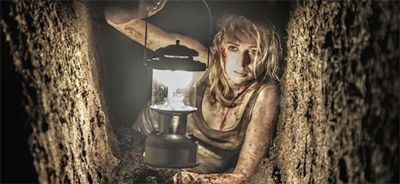
A large part of the joy of From the Dark is the way that the story translates its horror conventions to rural Ireland without breaking a sweat.

From the Dark is a very simple horror story that could be told anywhere. It is the standard story about a young couple who get lost in a remote location, discovering that their phones don’t work just as they stumble across some grotesque evil. It is a standard horror template, which feels particularly traditional once it becomes clear that the grotesque evil exposed by our two lead characters are very traditional vampires. However, director Conor McMahon does an excellent job executing all those traditional tropes against a very Irish backdrop.

A lot of the credit belongs to cinematographer Michael Lavelle who skilfully conveys the sense of rural Ireland as an isolated wilderness. From the Dark unfolds in Offaly, with Lavelle working hard to make the locality seem ethereal and haunted. Long grass sways in the wind, the sky lights up with beautiful colours at sunrise and sunset. From the Dark manages to expertly capture a sense of the countryside that is both breathtaking and alien. It seems like a world that is simultaneously magical and dangerous.

From the Dark is a rather efficient little thriller – one that moves along quite cleanly and efficiently. However, it is executed with a great deal of technical skill and proficiency, making for a satisfying old-school horror film.

fromthedark Continue reading

Non-Review Review: The Water Diviner

This film was seen as part of the Jameson Dublin International Film Festival 2015.

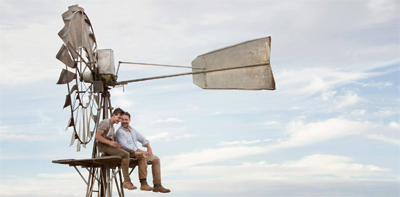
The Water Diviner is a solid directorial début for actor Russell Crowe, a well-intentioned and relatively under-explored story that occasionally wanders into clumsy melodrama.

Crowe works both in front and behind the camera, directing himself as a father who embarks on a journey across the world to bring his lost sons home. Set in the wake of the First World War, The Water Diviner charts Joshua Connor’s effort to recover the remains his three sons who perished in the battle for Gallipoli. Travelling from the Australia to Turkey, Connor finds himself fighting against bureaucracy and civil strife as he tries to keep the promise to bring his children back to home soil.

thewaterdiviner

It is a fascinating a compelling story. Crowe is a reliable leading man, imbuing Connor with a sense of humanity and relatability that helps to anchor a somewhat spotty screenplay. Crowe seems to trust his cast a great deal, affording them room to work and never rushing them along. However, he also seems somewhat sceptical of the audience. The Water Diviner is packed with repetitive flashbacks and awkward montages designed to impart information that the audience has already grasped.

The result is a rather uneven film. Much like its title character, it seems like The Water Diviner works best when it trusts its instincts; not when it tries to second-guess itself.

thewaterdiviner1

Continue reading

Non-Review Review: The Price of Desire

This film was seen as part of the Jameson Dublin International Film Festival 2015.

I have been informed that reviews for The Price of Desire are embargoed, despite the fact it was screened as the gala opening of the Jameson Dublin International Film Festival 2015, a high-profile event with tickets available to the public that afforded the film a significant public platform. (In the interest of disclosure, I purchased my ticket with my season pass – purchased for €245. Individual tickets for this screening were €20.)  As a courtesy to any fellow reviewers affected by the embargo, I have taken down the review.

However, as the film is eligible for the festival’s “audience award”, I am leaving my rating in place.

All audience members are asked to rank films in the festival from 1 (worst) to 4 (best). In the interest of full and frank disclosure, here is my score: 1 thepriceofdesire1

Millennium – Walkabout (Review)

This February and March, we’re taking a trip back in time to review the fourth season of The X-Files and the first season of Millennium.

Walkabout continues to demonstrate the flexibility of Millennium‘s format.

Millennium is often unfairly dismissed as a “serial-killer-of-the-week” show, an impression undoubtedly created by the stretch of early- to mid-season episodes that adopted an almost procedural formula in their exploration of evil. However, after Sacrament, the show takes a break from those narratives to do something a little more experimental and nuanced. Covenant had seen Frank investigating a murder that had already been solved. Here, Frank finds himself struggling to piece together a fractured memory of his own recent experiences.

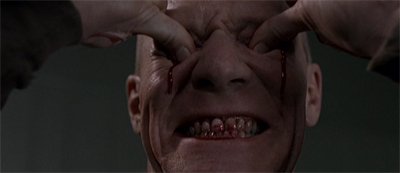
A bleedin' disaster!

A bleedin’ disaster!

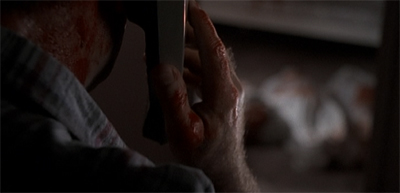
Walkabout is the third of four scripts from writer Chip Johannessen in the first season of Millennium. Each is a rather strange entity; doing something strange or unconventional for the show, helping to define the boundaries for this young television series. Walkabout is perhaps most interesting for the way that it engages with an aspect of Millennium that has been bubbling away in the background since The Pilot. Although Walkabout never explores the nature or purpose of Frank’s visions, the episode is built around the visions as a concept rather than simply a tool.

Walkabout is an unsettling and effective mood piece that grows more conventional as it progresses. While the final act is a little clunky, Walkabout is a fascinating piece of television and a demonstration of how Millennium has found its own voice.

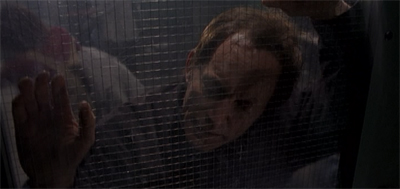
"Let me outta here!"

“Let me outta here!”

Continue reading

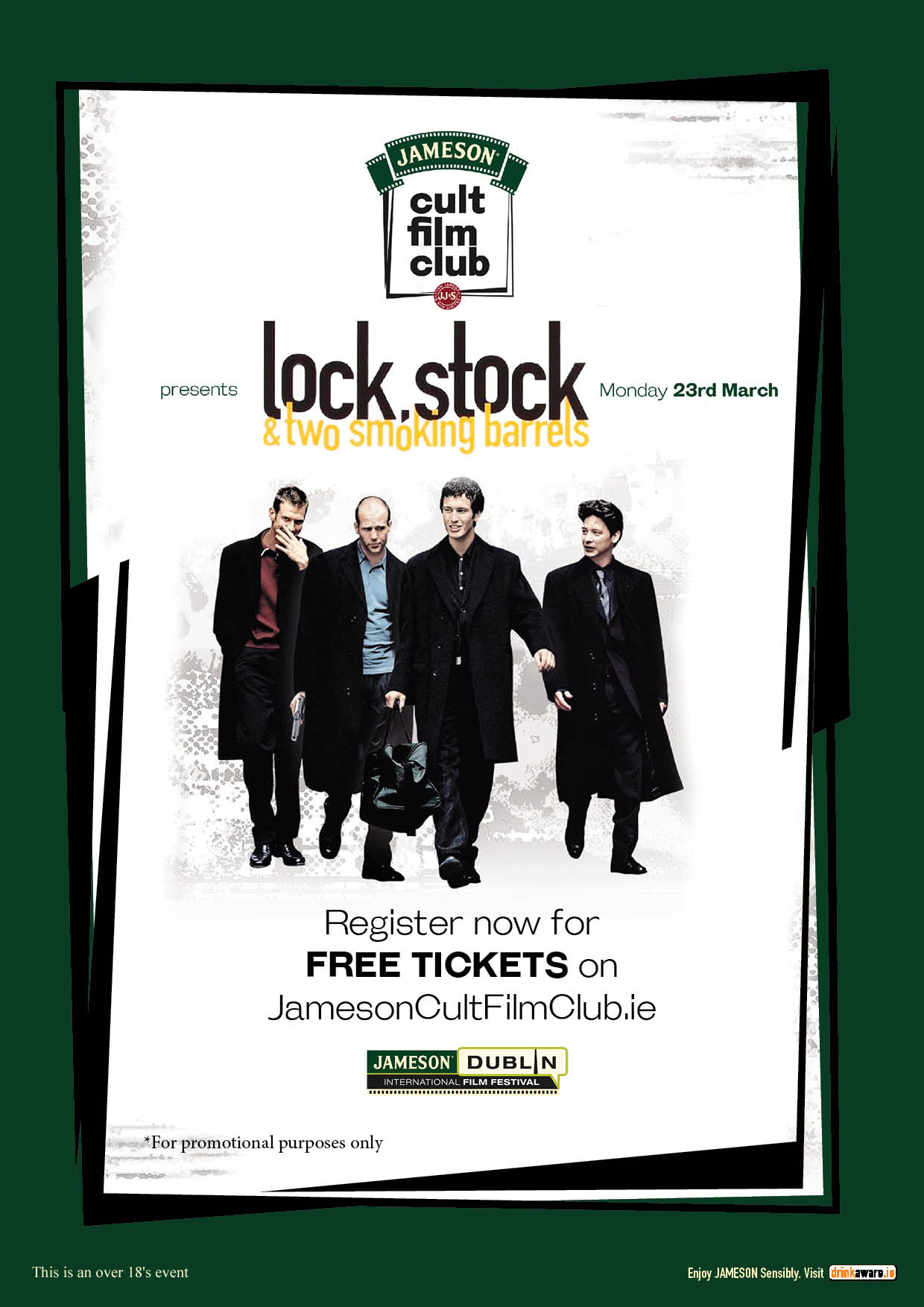
Win! Tickets to the Jameson Cult Film Club Screen of Lock, Stock and Two Smoking Barrels on Monday 23rd March!

The interactive Jameson Cult Film Club screening is widely regarded as one of the most hotly anticipated  events in the Jameson Dublin International Film Festival schedule, and this year is no different. Jameson  are kicking off the 2015 series of Jameson Cult Film Clubs with Guy Richie’s iconic crime comedy, Lock,  Stock and Two Smoking Barrels which will be screening during the Jameson Dublin International Film  Festival in a secret location on Monday 23rd March.

Jameson Cult Film Club screening of Lock, Stock and Two Smoking Barrels - 23.03.15

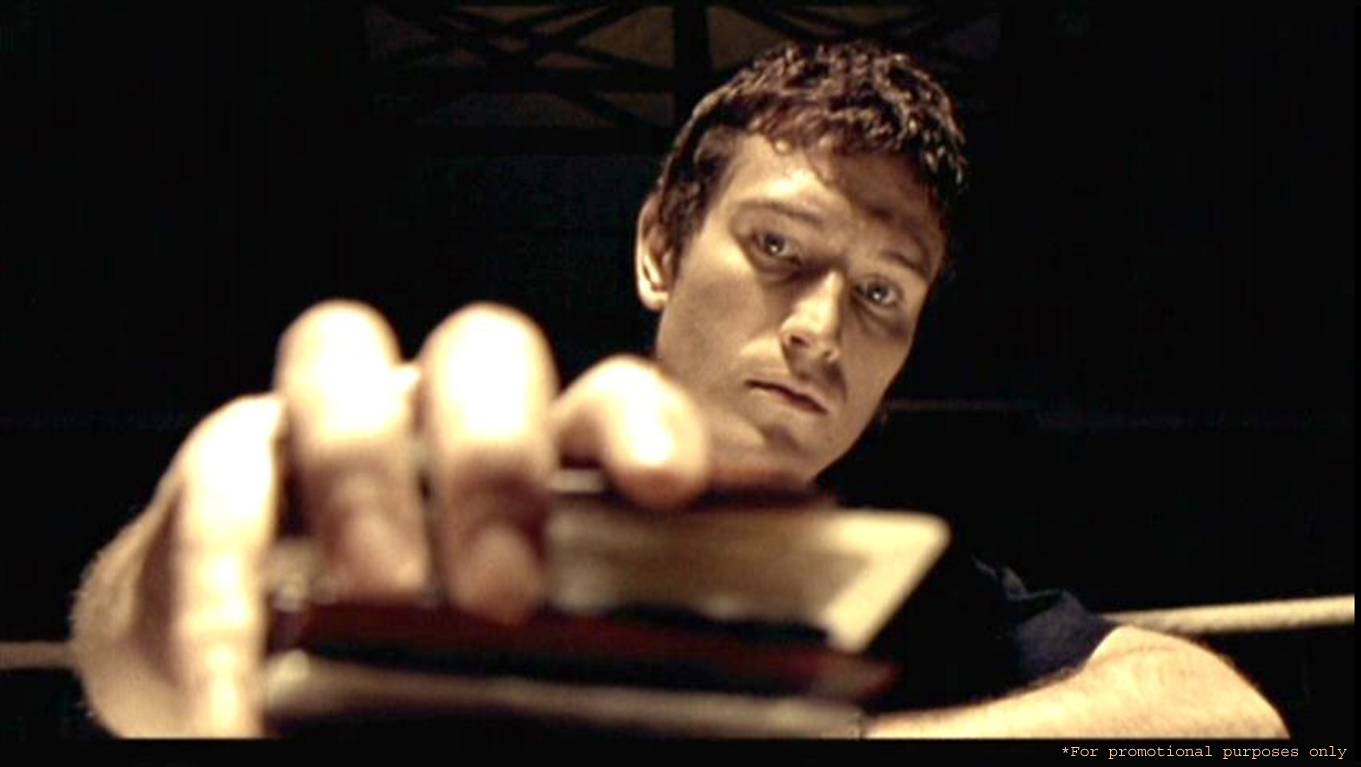
One of the film’s title characters, ‘Eddy The Gambler’, aka actor Nick Moran will be present for an exclusive Q&A with the audience before the movie, hosted by Dave Fanning. The venue, which is only revealed to ticket holders, will be completely transformed into a series of sets from the movie, while live theatre and special effects timed perfectly with on-screen action help to transport the audience right into the heart of London’s gritty East End.

Nick Moran

For your chance to win tickets to win tickets to this exciting screening, simply answer the below question:

← Back

Thank you for your response. ✨

Nick Moran’s character Eddy in Lock Stock and Two Smoking Barrels was a...(required)

You must be over 18 to enter this competition. Contact details provided will be used only to contact the winning entries.

Jameson Cult Film Club logo(1)

You can also register for free tickets to Jameson Cult Film Club events at their website. You really should. It’s a fantastic celebration of classic cinema.

The X-Files – Max (Review)

This February and March, we’re taking a trip back in time to review the fourth season of The X-Files and the first season of Millennium.

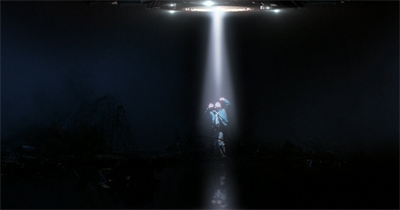
Reportedly, Tempus Fugit and Max took twenty-eight days to shoot. Assistant director Tom Braidwood described the two-parter as a “pretty challenging” effort for the show. The series built an air plane cabin specifically so that it could film those fantastic abduction sequences. There are fields and hangars strewn with dead bodies and the wreckage of a passenger air plane. By just about any definition, Tempus Fugit and Max comprise the most ambitious and large-scale two-part episode that the show has produced to date.

Paradoxically, this is also the smallest two-part episode that the show has produced to date. It brings back a minor guest star from a first season episode, only to kill him off casually in the teaser for the first episode. None of the big players show up for the drama. The most significant consequence of Tempus Fugit and Max is the death of Agent Pendrell. In many ways, Tempus Fugit and Max is the post-mortem story of a little guy who was crushed by the weight of something much larger than himself – caught between forces of immeasurable power.

In-flight serve will now resume...

In-flight service will now resume…

Tempus Fugit and Max do very little to advance the central mythology arc, which has stalled somewhat in the fourth season. However, they manage to encapsulate so many of the core themes of that central storyline. This is a story about the victimisation of the weak by the powerful; this is a tale about the sacrifices that are made in pursuit of the truth; this is a reflection on the appeal of conspiracy theory; this is a morality play about balancing lives against “the greater good.”

In many ways, Tempus Fugit and Max are the quintessential mythology episodes, despite not being that closely related at all.

Things are looking up...

Things are looking up…

Continue reading

Millennium – Covenant (Review)

This February and March, we’re taking a trip back in time to review the fourth season of The X-Files and the first season of Millennium.

Apparently, the original cut of Covenant ran over an hour and twenty minutes. This is not unusual in network television. Glen Morgan and James Wong faced similar problems when producing The Field Where I Died. However, while cutting The Field Where I Died down to forty-five minutes left something of a jumble, Covenant feels much stronger for the rather ruthless editing done to fit the episode into the broadcast slot. In many ways, Covenant feels quite minimalist – an episode that says the bare minimum, but conveys everything that needs to be conveyed.

Covenant is an episode that could easily seem exploitative. After all, there are points where Millennium feels like it is wallowing in human anguish and suffering. A story concerning the brutal murder of a nuclear family (including three children and a pregnant wife) is something that needs to be approached with care and delicacy. The original script for Covenant is perhaps overwritten, trying to draw too many parallels to Frank’s own family; these associations are best left unsaid.

Bloody handiwork...

Bloody handiwork…

In many ways, Millennium could be described as a “horror” show, and Covenant hones on some of the same fears that the first season has targeted repeatedly. Millennium is a show that is keen to assure viewers that their family members are not safe in their own homes and communities. However, there is a deftness and a tactfulness on display here that elevates Covenant above many of the similar stories in this début season. Covenant is all the more unsettling for its restraint and its control.

Covenant continues a strong late-season streak for Millennium, demonstrating the versatility and the nuance possible within the framework that the show has established. Covenant is a triumph for all involved.

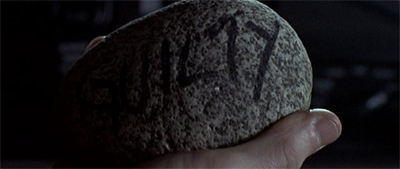
Solid as a rock...

Solid as a rock…

Continue reading

The X-Files – Tempus Fugit (Review)

This February and March, we’re taking a trip back in time to review the fourth season of The X-Files and the first season of Millennium.

Conspiracy lives in the gaps.

Conspiracy theories grow in the gaps of history. They multiple and divide in the absences on the historical record. They entangle and dissemble in the lacunas of memory. In many ways, conspiracy theories represent an attempt to impose order upon a chaotic universe, to know the unknowable. They grow from doubts and questions, holes and voids. Every ellipsis, every redacted line points towards infinite possibilities. Every “no comment” is but conformation of the worst possible outcome.

The truth is up there...

The truth is up there…

Tempus Fugit opens with a nine-minute gap before a plane crash that claims over one hundred lives. Max closes with another nine-minute gap that sees the ever-elusive proof slip through Mulder’s fingers once again. However, Tempus Fugit and Max are not truly “conspiracy” episodes. Characters like the Cigarette-Smoking Man, the Well-Manicured Man, Alex Krycek and Marita Covarrubias are all absent. Even the sinister functions of shadowy government officials are outsourced to “Cummins Aerospace”, a government contractor never mentioned on the show before or since.

Instead, Tempus Fugit and Max are focused on the little people trying to assemble what they can from these gaps. Mike Millar is an honest and hard-working member of the National Transportation and Safety Board trying to piece together a crashed aeroplane. Max Fenig is trying to piece together some meaning for all his suffering. Mulder and Scully are trying to piece together the truth. Even the aliens themselves seem to be searching. Tempus Fugit and Max are populated with characters trying desperately to make sense of the gaps.

Fly by night...

Fly by night…

Continue reading

The X-Files – Unrequited (Review)

This February and March, we’re taking a trip back in time to review the fourth season of The X-Files and the first season of Millennium.

Unrequited opens with Mulder and Scully’s attempts to stop an assassination attempt by an invisible man, before jumping back twelve hours to explain how our heroes got into this situation. With that set-up, Unrequited falls into a lot of the narrative traps associated with an in media res teaser. After all, there’s not really anything special about the teaser. There is no mystery to be solved, no strange behaviour to explain. What questions are we meant to ask, based on that opening scene? How are we meant to look at the rest of the episode differently, knowing what we know?

Sure, Mulder and Scully are protecting Major General Benjamin Bloch. That would seem to be a little bit outside the remit of “the FBI’s most unwanted”, but that is not too strange a situation for the duo. They are FBI agents, so there is a certain flexibility in their job description. The Field Where I Died – an episode with a much more effective non-linear teaser – featured Mulder and Scully collaborating with the ATF. So it isn’t as if the set-up should be striking or compelling.

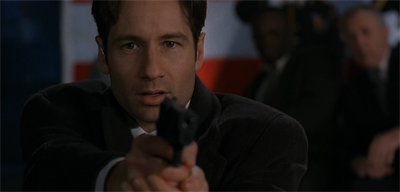
Stop, or my Mulder will shoot!

Stop, or my Mulder will shoot!

It seems like we are meant to focus on the monster of the week – Vietnam veteran Nathaniel Teager. Teager has the ability to turn himself invisible, which is quite something. Sure enough, the teaser to Unrequited offers a glimpse of that ability in action. But why is it important to have show us that ability in a scene from the climax of the episode? With a few adjustments, Teager’s first murder in the back of the limousine would serve the same purpose; introducing the audience to his powers without the need to recycle several minutes of footage from the climax.

After all, the most dissatisfying aspect of the in media res teaser is not the fact that it is completely inessential. Instead, the decision to use footage from the climax means that the audience has to sit through the same sequence twice. The teaser for Unrequited works well enough the first time around, but the sequence is not clever or inventive enough to merit a live-action replay towards the end of the hour. It just saps momentum from episode, rendering the final sequences somewhat tedious. That is the biggest problem with the opening of Unrequited, even beyond laziness.

Flags of our father figures...

Flags of our father figures…

Continue reading