• Following Us

  • Categories

  • Check out the Archives


  • Awards & Nominations

The X-Files – Zero Sum (Review)

This February and March, we’re taking a trip back in time to review the fourth season of The X-Files and the first season of Millennium.

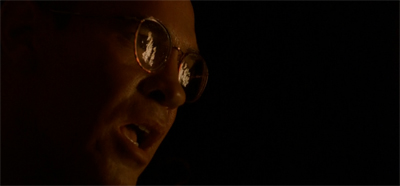
For all that The X-Files exists in a murky shadow world populated by ambiguous figures and a government conspiracy dating back generations, the show has a pretty straightforward sense of morality. No good can stem from evil, the show seems to suggest; the show’s central mythology repeatedly has Mulder and Scully confront the legacy of sins committed by their forefathers. Even the title of Zero Sum alludes to the hollowness of Walter Skinner’s deal with the devil, his moral compromise that has no demonstrable benefit and severe demonstrable harm.

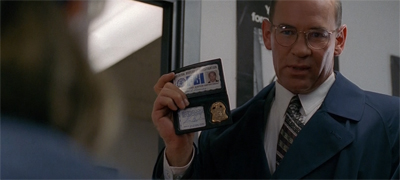
In Memento Mori, Walter Skinner compromised himself. He made a deal with the Cigarette-Smoking Man, in return for Agent Scully’s continued well-being. “What’ll it take?” Skinner asked, desperate for a chance to save Dana Scully. Ever ambiguous, the Cigarette-Smoking Man offered, “Well, I’ll have to get back to you on that.” Unfolding a few months later, Zero Sum is essentially about paying the piper. It is Walter Skinner settling up with the Cigarette-Smoking Man. He rolls up his sleeves and jumps into the dirty work.
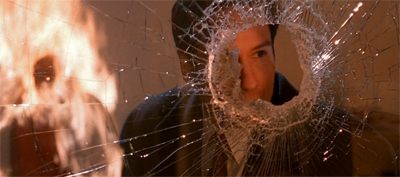
Fire and brimstone...

Fire and brimstone…

Zero Sum is a story that you could not tell with Mulder. Although Mulder never faces the same choice as Skinner, the show has been quite consistent in its portrayal of Mulder’s morality. Mulder does not compromise; Mulder does not subscribe to the theory that a deal with the devil could ever pay dividends. In contrast, Skinner is a more ambiguous and pragmatic figure. Skinner spent significant sections of the second season caught between Mulder and the Cigarette-Smoking Man. The show only firmly committed him to Mulder and Scully in Paper Clip.

Zero Sum is a fantastic example of how the world of The X-Files has really grown and expanded around the lead characters. While the show will never quite develop into an ensemble, it is a series with a broad cast. It makes sense that it should begin to use them in a productive manner.
"Walter Skinner, F.B.I."

“Walter Skinner, F.B.I.”

Continue reading

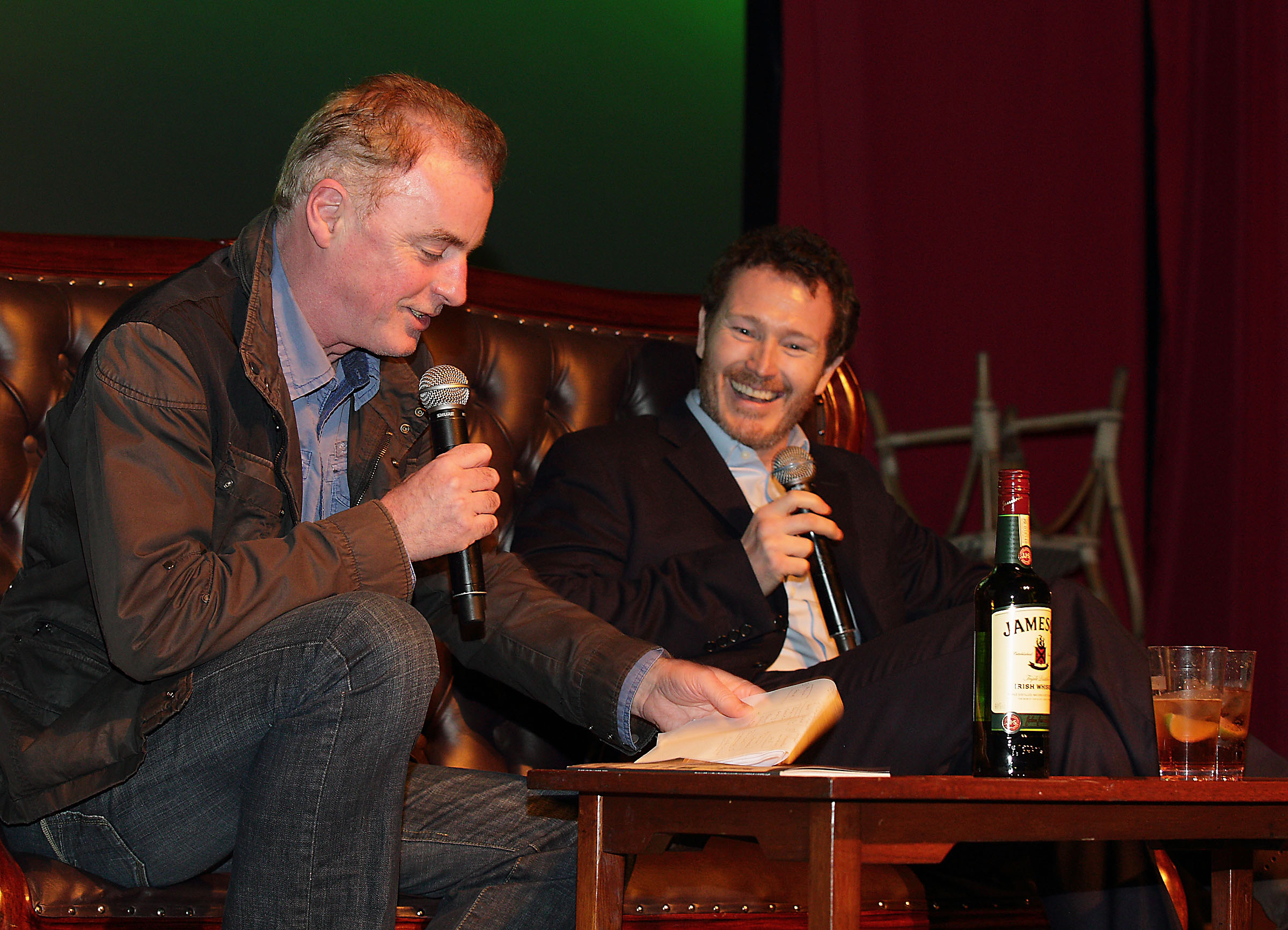
Jameson Cult Film Club: Lock, Stock and Two Smoking Barrels & A Talk With Nick Moran (JDIFF 2015)

This film was seen as part of the Jameson Dublin International Film Festival 2015.

One of the biggest losses of the dissolution of the long-standing relationship between Jameson and the Dublin International Film Festival this year (aside from the fact that “J-diff” is a pretty catchy acronym) is the fact that the Jameson Cult Film Club seems unlikely to be held as part of future festivals. The Jameson Cult Film Club is a wonderfully fun and casual celebration of cult classic cinema in a rich and atmospheric environment, often accompanied with very clever theatrical flourishes.

There are quite a few events hosted each year, but it always felt appropriate that perhaps the highest profile event was staged during the eleven-day film festival, as just one example of how film seemed to take over the capitol for that week-and-a-bit of cinematic fun. Nevertheless, what might just be the final Jameson Cult Film Festival companion piece went down spectacularly well; with a screening of Guy Ritchie’s low-budget debut caper film, Lock, Stock and Two Smoking Barrels.

Jameson Cult Film Club 1

A delight for the audience – those who had seen it and those who hadn’t – the screening was accompanied by an engaging (and occasionally quite candid) interview between veteran journalist Dave Fanning and star Nick Moran. Moran – a writer and director in his own right – was on fine form, regaling the audience with stories from the production of the film, along with his own anecdotes about fame and fortune. Eager to field questions from the audience, and impressed by the thoroughness of Fanning’s research, Moran proved a natural storyteller.

Witty and self-effacing, Moran was a perfect (and sporting guest) for what turned out to be a fascinating interview.

X

Continue reading

Non-Review Review: All About Eva

This film was seen as part of the Jameson Dublin International Film Festival 2015.

All About Eva has ambition to burn.

It is a modern film noir set against the backdrop of the Irish racing scene, filmed mostly on a single stately country home and with a functional budget that seems minuscule even by the standards of independent Irish film. The fact that it exists is a testament to everybody involved. The fact that it comes very close to working is icing on the cake. All About Eva is a very stylish piece of work that very clearly has a lot of ambition behind it. It is a trashy revenge saga that is produced with a very high level of competence. In particular, director Ferdia MacAnna does great work.

However, ambition is only so much. As good as the film looks relative to its budget, there are a number of key structural flaws that cannot support the weight heaped upon them. Most obviously, All About Eva is an attempt to hark back to the classic femme fatale movies, with a seductive and manipulative young woman infiltrating a racing dynasty so as to dismantle it from the inside. All About Eva lives or dies based on that central performance. Newcomer Susan Walsh simply does not have the ability to carry the movie around her.

To be fair, Walsh is let down by an uneven and scattered script, which revels in cliché. All About Eva is a film that seems wryly aware of its own trite plot beats and dialogue, but that self-awareness can only carry a film so far. There is a point where homage is not enough to sustain a genre pastiche. All About Eva comes surprising close to working, and has an energy that is almost infectious. Unfortunately, it cannot make it over the line.

allabouteva

Continue reading

Non-Review Review: Dennis Rodman’s Big Bang in Pyongyang

This film was seen as part of the Jameson Dublin International Film Festival 2015.

Dennis Rodman’s Big Bang in Pyongyang tells a story that would seem almost too absurd or too far-fetched if it were a scripted drama. The documentary charts the former NBA star as he attempts to organise a friendly basketball game between North Korea and the United States. The idea came from Kim Jong-Un, who had struck up an unlikely friendship with Rodman during an earlier trip to the isolated dictatorship. Over December 2013 and January 2014, Rodman helped to organise the most unlikely basketball friendly in history.

dennisrodmansbigbanginpyongyang2

Continue reading

Millennium – Powers, Principalities, Thrones and Dominions (Review)

This February and March, we’re taking a trip back in time to review the fourth season of The X-Files and the first season of Millennium.

High matter thou injoinst me, O prime of men,

Sad task and hard, for how shall I relate

To human sense th’ invisible exploits

Of warring Spirits; how without remorse

The ruin of so many glorious once

And perfet while they stood; how last unfould

The secrets of another World, perhaps

Not lawful to reveal? yet for thy good

This is dispenc’t, and what surmounts the reach

Of human sense, I shall delineate so,

By lik’ning spiritual to corporal forms,

As may express them best, though what if Earth

Be but the shaddow of Heav’n, and things therein

Each to other like, more then on earth is thought?

– Raphael, Paradise Lost, Book V

This is about to get biblical...

This is about to get biblical…

Continue reading

The X-Files – Small Potatoes (Review)

This February and March, we’re taking a trip back in time to review the fourth season of The X-Files and the first season of Millennium.

Darin Morgan’s absence haunts the fourth season of The X-Files.

According to Frank Spotnitz, Darin Morgan had originally hoped to contribute a script in the middle of the season. Unfortunately, that idea fell through. The scramble to fill that gap in the schedule led to Memento Mori, which ultimately became the centre of the fourth season’s mythology arc, for better or worse. Scully’s cancer arc was just one result of the Darin-Morgan-shaped hole in the fourth season. Small Potatoes is another, the show’s first real “comedy” episode since Morgan departed the staff at the end of the third season.

A sting in the tale...

A sting in the tail…

Darin Morgan often gets credit for introducing the concept of comedy to The X-Files. That is not entirely fair; Glen Morgan and James Wong wrote Die Hand Die Verletzt shortly before Darin Morgan wrote Humbug. However, Morgan did refine the idea of comedy on The X-Files. Darin Morgan won an Emmy for writing Clyde Bruckman’s Final Repose, and he still considers Jose Chung’s “From Outer Space” to be among the best things that he has ever written.

Despite Morgan’s departure, it was clear that The X-Files could not completely avoid comedy. Once a show has demonstrated that it can do something particularly well, it becomes very difficult to stop doing that thing. Comedy episodes became something of a staple on The X-Files, with the show regularly churning out light-hearted and funny episodes (with varying degrees of success) until the show was finally cancelled after its ninth season. However, there was a long stretch after Morgan departed where the series seemed quite grim. Somebody would have to go first.

The inside, looking out...

The inside, looking out…

So Vince Gilligan stepped up to bat. Gilligan had been on staff for a bout a year at this point. He had quickly established himself as one of the most promising young writers in the room. While his first script for the show – Soft Light – was arguably more interesting than successful, Gilligan enjoyed an incredible hot streak when he joined the staff. Pusher, Unruhe and Paper Hearts are among the best scripts of the third and fourth seasons. With Small Potatoes, he seemed to position himself as the logical successor to Darin Morgan.

Darin Morgan even appears in Small Potatoes to pass the metaphorical baton.

"Here's Mulder!"

“Here’s Mulder!”

Continue reading

Millennium – Lamentation (Review)

This February and March, we’re taking a trip back in time to review the fourth season of The X-Files and the first season of Millennium.

Taken together, Lamentation and Powers, Principalities, Thrones and Dominions represent something of a loose mythology two-parter for Millennium. The episodes are not linked by an explicit “to be continued…”, but they feed into one another in a very clear and structured manner. Each of the two episodes exists as a clear and independent entity, but – taken together – they exist as a story that shakes Millennium to its foundation. This is the point at which Millennium seems to know what it is and what it wants to be.

The first season of any show is a difficult time. Everybody working on the series struggles to find the right voice for the series. The goal is to figure out what the show is before the audience loses interest. Lamentation comes quite late in the first season – only four episodes from here to Paper Dove – but it does represent a very clear and dynamic shift. It follows through on a lot of the horror implied throughout the first season, suggesting that Frank Black might be facing something far more sinister and insidious than mere serial killers.

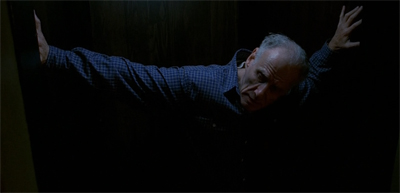
On top of the world...

On top of the world…

In fact, Lamentation exists as a fiendish subversion. It is a story that is very clearly set-up as the sort of procedural serial-killer-of-the-week story that the show was churning out towards the middle of the season. Doctor Ephraim Fabricant is released from prison so he can offer a kidney transplant to his sister; however, while he is recuperating, somebody helps him to escape police custody. Having profiled Fabricant during the initial manhunt, Frank is drafted in to track down Ephraim Fabricant before he inevitably starts killing again. The clock is ticking.

Then everything just explodes. Something from the dark heart of Millennium breaks loose; this more primal evil devours the serial-killer-of-the-week structure. It even leaves his second kidney on a plate in the fridge.

Everybody has their demons...

Everybody has their demons…

Continue reading

The X-Files – Synchrony (Review)

This February and March, we’re taking a trip back in time to review the fourth season of The X-Files and the first season of Millennium.

Time travel is one of the great science-fiction tropes.

Although magical or metaphorical time travel has long been a part of literary tradition, pseudo-scientific or pseudo-rational versions of science-fiction really took root towards the end of the nineteenth century. Although H.G. Wells blazed a trail with The Time Machine, Edward Page Mitchell actually beat him to the punch – he published the short-story The Clock That Went Backward fourteen years before Wells wrote The Time Machine. Nevertheless, time travel quickly caught on as a literary device.

The hole in things...

The hole in things…

There are films, television show, novels, comics and songs all playing with the idea of moving through time. Although there is considerable debate about the feasibility of actually travelling backwards through time, time travel serves as a wonderful narrative device. It opens up all sorts of possibilities for structure and style; it provides some pretty heavy themes; it opens up a myriad of settings and possibility. It is no surprise that there have been so many variations and permutations based upon the idea of going backwards in time.

Indeed, it seemed like it was only a matter of time before The X-Files got around to telling its own time travel story. Synchrony was as inevitable as the decision to close the episode with a clumsy hint toward predetermination.

Ghosts of future self...

Ghosts of future self…

Continue reading

Non-Review Review: La French (The Connection)

This film was seen as part of the Jameson Dublin International Film Festival 2015.

La French (aka The Connection) looks and sounds beautiful.

Working with cinematographer Laurent Tangy, director Cédric Jimenez manages to capture the scenic beauty of seventies Marseilles. The classic architecture, the sea views, even the hot night spots all look absolutely stunning. Le French manages to capture the crisp feeling of the late seventies without ever feeling stylised or staged. Similarly, Jimenez manages to pull together a beautifully evocative soundtrack, with songs as distinct as Call Me and This Bitter Earth helping to underscore emotionally-charged sequences and giving the film a sense of style and taste.

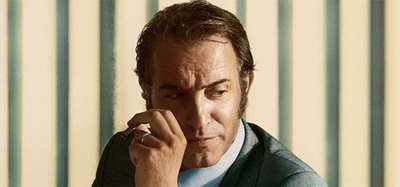
lafrench

La French is a stylishly-constructed crime thriller that stretches from the south of France to New York and back again, a family loosely inspired by the infamous “French Connection” that fed drugs into France and overseas to the United States. However, despite its obvious overlap with William Friedkin’s The French Connection, it seems like Jimenez owes more to the work of filmmakers like Michael Mann or Martin Scorcese, constructing a crime epic that flows beautifully and effortlessly, with an impressive soundtrack complimenting a dynamic visual style.

This is perhaps the biggest problem with La French, a sense that there might actually be too much style – that the film may occasionally feel a little too hollow or detached from its twin leads. However, Jimenez cleverly casts Jean Dujardin and Gilles Lellouche in the lead roles, who help anchor the film with a sense of humanity that only occasionally gets lost in the film’s beautifully-crafted production.

lafrench2

Continue reading

Non-Review Review: Cinderella (2015)

This film was seen as part of the Jameson Dublin International Film Festival 2015.

Kenneth Branagh’s Cinderella is probably the safest and most down-the-middle live action remake of a classic Disney cartoon. It is not as heavily stylised or esoteric as Tim Burton’s Alice in Wonderland, but it is also not as deeply flawed as Maleficent. If anything, Cinderella suffers from a lack of its own identity or energy. It is a well-made and functional film that avoids any truly significant problems, but it also lacks any real edge that might help it stand out.

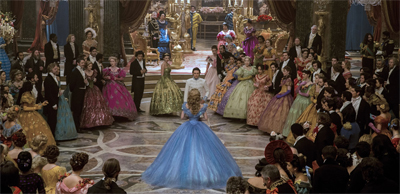
Cinderella looks lovely. Dante Ferretti’s production design and Sandy Powell’s costume designs are breathtakingly beautiful. Branagh’s direction is clean and crispy, avoiding excessive clutter and trusting the story to tell itself. The cast are great – with Cate Blanchett and Helena Bonham Carter doing wonderful work. Even the script does exactly what it needs to do, walking the line between traditional and self-aware with considerable grace. Cinderella does pretty much everything that you would expect a live action adaptation to do.

cinderella2

At the same time, it lacks any real sense of cinematic ambition. It is nowhere near as iconoclastic as Alice in Wonderland or as ambitious as Maleficent. This isn’t necessarily a bad thing – Alice in Wonderland attracted a lot of criticism for playing more as a Tim Burton movie than an Alice in Wonderland film, while Maleficent tripped over itself in its attempts to re-write the classing story of Sleeping Beauty as a feminist parable. Cinderella‘s problems are much less severe, but its accomplishments are also less noteworthy.

The result is probably the most solid and reliable live adaptation of a classic Disney cartoon, albeit one that never seems to have any real ambition or verve.

cinderella

Continue reading