• Following Us

  • Categories

  • Check out the Archives


  • Awards & Nominations

The X-Files – Season 2 (Review)

This August (and a little of September), we’re taking a trip back in time to review the second season of The X-Files. In November, we’ll be looking at the third season. And maybe more.

The first few seasons of a television show are very much about defining the show – figuring out what works and what doesn’t, and what form the show will take. After all, a lot of discussion and planning takes place during development, but all of that is on paper. It’s only once you’ve worked with the cast and had a chance to gauge audience response that it is possible to truly understand a television show.

The first two seasons of The X-Files seem like an attempt to map out the show, to mark the boundaries and do some fine calibration. The show had been a sleeper hit in its first season, popular enough to secure a second season on Fox. However, the second season had seen the series become a breakout hit. It climbed rather dramatically in the ratings, and the show would continue that ascent through to the fifth season in the lead-in to the feature film. However, the second season still feels like it’s a learning curve.
xfiles-onebreath6

There are exceptional episodes in the second season. The season provides a wealth of classic stories. Fresh Bones and Our Town stand out as two of the best monster-of-the-week stories that the show had done by this point in its life-cycle. Even outside of that, there are classics like One Breath or Humbug or The Host or F. Emasculata. However, there are also quite a few misfires like Fearful Symmetry or Excelsis Dei or 3.

There are a lot of points in the second season where it feels like The X-Files is experimenting, trying new things that would ultimately become part of the show’s unique identity. Not all of these elements worked, but that is the luxury of a second season. It allows the production team to do that sort of experimentation so they might find their groove.
xfiles-duanebarry16 Continue reading

Star Trek: Deep Space Nine – Equilibrium (Review)

The September and October, we’re taking a look at the jam-packed 1994 to 1995 season of Star Trek, including Star Trek: Deep Space Nine and Star Trek: Voyager. Check back daily for the latest review.

Equilibrium is another troubled Dax episode. Dax is probably the hardest character on the Star Trek: Deep Space Nine cast to write for, if only because of the character’s central premise. “Well-adjusted functionally immortal alien slug inside a young woman’s body” is a nice character description, but it’s hard to ground a character-driven story in that. It’s tempting just to turn the Dax symbiote into a convenient macguffin that can drive various plots.

To date, Playing God is really the only Dax-centred episode of Deep Space Nine that has placed the emphasis on Jadzia rather than the slug inside here. (Although Blood Oath did at least try to deal with how a current Trill host deals with obligations incurred by past lives.) In Dax, the symbiote was a gateway to a pretty conventional and generic murder mystery story. In Invasive Procedures, the symbiote was something particularly valuable to be stolen and exploited.

The biggest problem with Equilibrium is that – like Dax and Invasive Procedures before it – the episode uses the Dax symbiote as a springboard to a story that is more driven by Sisko and Bashir than it is by Jadzia Dax. While Equilibrium does have a great hook and some biting social commentary, Dax feels more like a plot point than a character in her own right.

Shocking behaviour...

Shocking behaviour…

Continue reading

The X-Files (Topps) #7 – Trepanning Opera (Review)

This August (and a little of September), we’re taking a trip back in time to review the second season of The X-Files. In November, we’ll be looking at the third season. And maybe more.

Trepanning Opera is something of a one-shot story, albeit the story where Stefan Petrucha begins to concede that his first year writing The X-Files tie-in comic is really one single long-form story. Initially, Trepanning Opera looks like a standard monster-of-the-week (or perhaps that should be “monster-of-the-month”) story, only to eventually reveal that the connections to the rest of Petrucha’s run are more than simply thematic in nature. “Everything is connected, Mulder,” his contact assures him. “Everything.”

Head's up...

Head’s up…

Continue reading

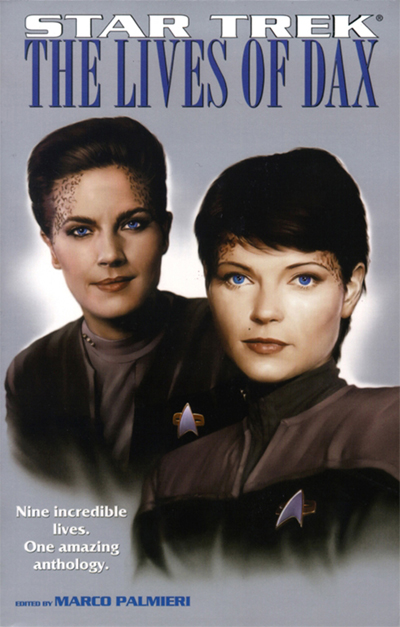
Star Trek: Deep Space Nine – The Lives of Dax: Allegro Ouroboros in D Minor (Joran) by S.D. Perry (Review)

The September and October, we’re taking a look at the jam-packed 1994 to 1995 season of Star Trek, including Star Trek: Deep Space Nine and Star Trek: Voyager. Check back daily for the latest review.

Joran Dax was a much more interesting character in Equilibrium than he became in later appearances. In shows like Facets and Field of Fire, Joran went from being a socially dysfunctional individual who murdered his supervisor to a serial killer with an in-depth understanding of the psyche of a killer. The shift is understandable. After all, “killer” is much more eye-catching with word “serial” placed in front of it.

Unfortunately, it has a tendency to diminish the character. Serial killers are a dime-a-dozen in pulp fiction. Although they had been a fixture of the American popular consciousness for quite some time, the critical and commercial success of The Silence of the Lambs had turned serial killers into a cottage industry within popular culture. Films and television shows about people hunting serial killers became fixtures of the pop culture landscape, to the point where it all got exhausting.

The story of Joran Dax as presented in Equilibrium is tragic and more than a little compelling. In that story, Joran was a damaged individual who was not ready to merge with another mind. The process shattered his psyche completely, breaking his tenuous hold on reality. As a result of poor screening and a quirk of fate, the thing he had wanted for the most of his life pushed him over the edge. He lashed out, killing the person who had initially rejected him from the initiation programme.

It is a story that makes Joran seem like a creature to be pitied. Indeed, Equilibrium ends with Jadzia embracing Joran – as if accepting that his actions were not entirely his fault. Unfortunately, Allegro Ouroboros in D Minor rather heavily re-writes this back story, in favour turning Joran into a serial killer. Reading Allegro Ouroboros in D Minor, Joran comes off as even more of a Hannibal Lecter knock-off than he did during Avery Brooks’ scenery chewing in Facets. Which is saying something.

ds9-thelivesofdax1 Continue reading

The X-Files – Anasazi (Review)

This August (and a little of September), we’re taking a trip back in time to review the second season of The X-Files. In November, we’ll be looking at the third season. And maybe more.

Burn it.

– C.G.B. Spender, 16 April 1995

On alien soil...

On alien soil…

Continue reading

Non-Review Review: Maps to the Stars

It is a cliché to suggest that Hollywood loves movies about Hollywood.

Sure, quite often these are celebratory meditations on how great Tinseltown is – Argo was the story of how Hollywood saved the lives of Americans caught up in the Iranian Revolution; Hitchcock celebrated the making of Psycho. Sometimes these are more cynical and jaded explorations of how Hollywood works, seeking to expose the community’s seedy underbelly to the world – Robert Altman’s The Player remains the definitive example, but films like What Just Happened probably count as well.

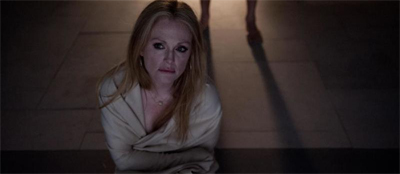
These stock Hollywood-story-about-Hollywood are the weakest aspects of Maps to the Stars. The movie often feels like it’s trying too hard to add a surface gloss of what people expect from a film about Hollywood, on top of a much more interesting and compelling tale of dysfunction and decay. Maps to the Stars is held together by a rake of terrific performances and a wonderfully creepy central metaphor, but it feels let down by the more superficial elements of the script.

We're all in the gutter...

We’re all in the gutter…

Continue reading

Star Trek: Deep Space Nine – House of Quark (Review)

The September and October, we’re taking a look at the jam-packed 1994 to 1995 season of Star Trek, including Star Trek: Deep Space Nine and Star Trek: Voyager. Check back daily for the latest review.

House of Quark is a delightful episode that probably does a better job of setting the tone for the third season of Star Trek: Deep Space Nine than The Search. As much as the Dominion were introduced as “a big deal” and clearly intended to change the show’s status quo, the third season does very little with them. There are a few mentions here and there, a late-season two-parter, two scattered episodes looking at aspects of the Dominion, and a series finalé, but they don’t drive the third season as much as one might expect, or as much as they drive the fifth through seventh seasons.

In contrast, House of Quark is a decidedly irreverent look at the world of Star Trek, a decidedly cynical perspective on one of the franchise’s sacred cows – a downright subversive exploration of something that the franchise takes for granted.

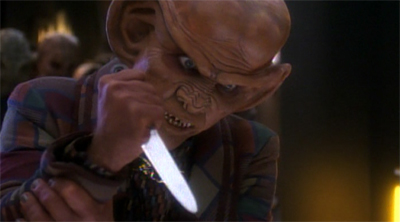
A knife story, there, Quark...

A knife story, there, Quark…

Continue reading

Non-Review Review: The Hundred-Foot Journey

Guest review by Sinéad Finegan. You can find her at sineadfinegan.com.

Anyone who goes to see this foodie film to sample a little of the its finest dish – Helen Mirren – will not be disappointed. Humour, light-hearted fun, and a gently simmering Mirren are definitely on the menu; and who would complain?

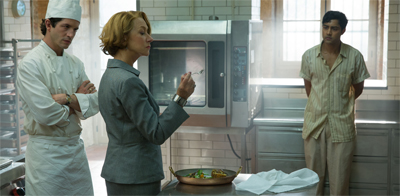
One particularly memorable scene stands out: Mirren as Madame Mallory, the impeccably dressed proprietress of a Michelin-starred restaurant, stands before her assembled staff and silently holds up a single, rather flaccid-looking, asparagus which droops mournfully and looks an altogether unappetising specimen. Food should not be like a tired marriage, she informs us; no, the food in her restaurant must be a steamy affair. Which is rather a good assessment of the film itself: a fun, light-hearted and steamy foodie affair.

100footjourney5

Continue reading

The X-Files – Our Town (Review)

This August (and a little of September), we’re taking a trip back in time to review the second season of The X-Files. In November, we’ll be looking at the third season. And maybe more.

A rare “monster of the week” script from Frank Spotnitz, Our Town could be seen as a mirror to Humbug. Humbug seemed to mourn the way that eccentric little communities seemed to be fading into history in the nineties – the loss of unique and distinct little hamlets. Our Town seems to offer a counterpoint, suggesting that perhaps the intrusion of the outside world into these tightly-knit communities is not a bad thing.

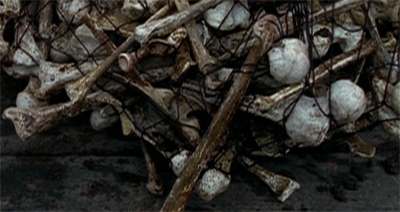
Inspired by the classic Spencer Tracy film Bad Day at Black Rock, Our Town sees Mulder and Scully investigating a small-town disappearance that eventually leads the duo to uncover a horrifying secret at the heart of the local community.

Fresh bones...

Fresh bones…

Continue reading

Star Trek: Deep Space Nine – The Search, Part II (Review)

The September and October, we’re taking a look at the jam-packed 1994 to 1995 season of Star Trek, including Star Trek: Deep Space Nine and Star Trek: Voyager. Check back daily for the latest review.

In a way, The Search feels almost like a parody of the classic Star Trek season-bridging cliffhanger. It is a story told under the same title, but with both halves of the story feeling distinct enough to stand on their own two feet. Written by two different writers and directed by two different directors, it very much feels like two very different stories linked primarily by an efficient cliffhanger.

It’s not radically dissimilar to the two-parters from Star Trek: The Next Generation. Redemption and Descent come to mind, two-part adventures that very much feel like two different stories melded together rather than one single over-arching story. This disjointedness makes a great deal of sense, given the standard operating procedure when it came to Star Trek cliffhangers, as established by Michael Piller with The Best of Both Worlds, Part I. The logic is simple: write part one; go away for a few months; return and try to write part two.

Of course, The Search very clearly isn’t a season-bridging cliffhanger. It’s a season-opening two-parter. And it’s so cleverly and consciously structured as two very different episodes that it can’t help but feel like a sly nod at the inevitable outcome of that approach to writing – playfully self-aware of how disjointed the whole experience feels as a single story.

A whole new Vorta problem...

A whole new Vorta problem…

Continue reading