• Following Us

  • Categories

  • Check out the Archives


  • Awards & Nominations

X-Men: Inferno – Avengers (Review/Retrospective)

With our month looking at Avengers comics officially over, we thought it might be fun to dig into that other iconic Marvel property, the X-Men. Join us for a month of X-Men related reviews and discussion.

This weekend, we’re taking a look at one or two of the smaller Inferno crossovers. These issues are collected in the crossovers companion book.

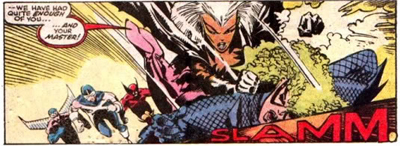
In many ways, Chris Claremont’s Inferno can be read as something of a practice run for John Byrne’s Acts of Vengeance. Both were massive crossovers that spread across a significant portion of Marvel’s publishing line, demanding writers to tie their stories in to these big and over-arching events. While Inferno‘s reach was arguably more modest than that of Acts of Vengeance, it seemed that the demonic invasion of New York could not be contained to the X-Men books, and ended up impacting titles as diverse as The Fantastic Four and Daredevil. Walt Simonson’s Avengers tied into Inferno as well, making an interesting attempt to launch a new team against the backdrop of an X-Men event.
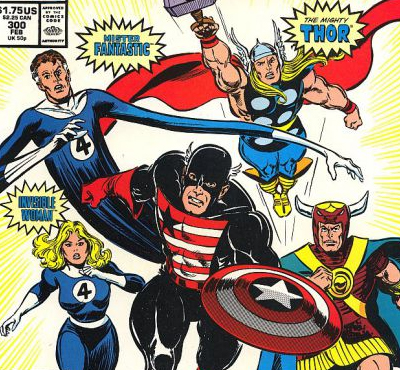
Meet the new team…

Continue reading

X-Men: Inferno (Review/Retrospective)

With our month looking at Avengers comics officially over, we thought it might be fun to dig into that other iconic Marvel property, the X-Men. Join us for a month of X-Men related reviews and discussion.

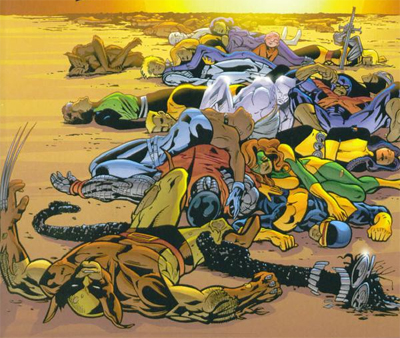
I don’t like Inferno. There, I said it. There have been dry patches in Claremont’s Uncanny X-Men run before, and some would argue that his work following Inferno would be quite esoteric, but Inferno has always represented, to me at least, the creative low-point of Claremont’s Uncanny X-Men run. That doesn’t mean that I can’t appreciate it for what it is, or acknowledge the care with which the writer crafted it, but it is just too much of a big random mess to really enjoy it. It’s a disjointed crossover that resolves the long-running Madelyne Pryor mystery that Claremont had been weaving through the book, but also features demons and goblins for some reason. It’s just a great big mess.

There’s a Storm comin’…

Continue reading

Fall of the Mutants: Uncanny X-Men (Review/Retrospective)

With our month looking at Avengers comics officially over, we thought it might be fun to dig into that other iconic Marvel property, the X-Men. Join us for a month of X-Men related reviews and discussion.

Part of me does feel a little bit sorry for Chris Claremont. After all, his Uncanny X-Men run was trapped in a perpetual second act. He hadn’t introduced the franchise, inheriting it from a bunch of other writers and artists, and he couldn’t resolve it either. So, as a writer, Claremont was charged with keeping readers interested in an on-going narrative that spanned well over a decade. Occasionally, the writer would try to keep things fresh, and Fall of the Mutants represents just such an attempt. Trying to transition his team from one status quo to another, you have to give the writer credit for pitting the team against an enemy who is (effectively) God, even if it does make this chapter in his on-going saga the equivalent of Star Trek V: The Final Frontier.

United we fall…

Continue reading

Fall of the Mutants: X-Factor (Review/Retrospective)

I’ll freely concede that I’m generally wary of Louise Simonson’s X-Factor. Her contributions to the Mutant Massacre were the weakest part of the crossover, and she didn’t exactly make Inferno an exceptionally readable event. While I can understand why some fans are fond of her writing, I’ve found the X-Factor I’ve read to generally be an awkward and heavy-handed attempt to emulate Chris Claremont’s patented soap opera stylings.

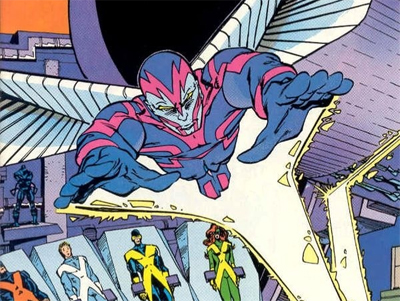
However, I will concede when I’m impressed, and Simonson has more than impressed me here. While I respect Claremont’s Uncanny X-Men tie-in to Fall of the Mutants more than I enjoy it, Simonson’s X-Factor feels like a much stronger offering, feeling like the book is really firing on all cylinders. Fall of the Mutants allows Simonson to bring all manner of plotlines to a head, tying together years of build-up into a fascinating, exciting and compelling pay-off. I have no qualms in suggesting that Simonson’s X-Factor is the highlight of this gigantic collection.

A wing and a prayer…

Continue reading

X-Men: The Asgardian Wars (Review)

With our month looking at Avengers comics officially over, we thought it might be fun to dig into that other iconic Marvel property, the X-Men. Join us for a month of X-Men related reviews and discussion.

It has been said that the X-Men rarely interact with the broader Marvel Universe. While characters like Wolverine and the Beast might have appeared on a roster or two of The Avengers, and Storm might have popped up in Fantastic Four, events within the X-Men line seemed to be self-contained, with Marvel’s mutants generally fighting their own problems in their own way. After all, Captain America was hardly a champion of civil liberties if he didn’t stand up for mutant rights, so it made sense to keep the mutants relatively self-contained.

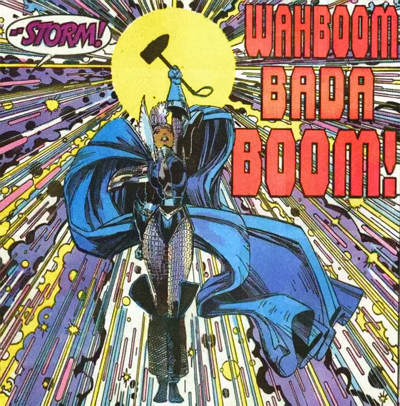
However, despite this (somewhat deserved) reputation, it’s interesting to look back at the connections that writer Chris Claremont fostered with the wider Marvel Universe. Some of these (like the Claremont’s frequent connections to the Ka-Zar mythos) were relatively frequent within the pages of the main title (and no less strange for it), but Claremont was also a fan of making an event of a crossover between the X-Men and any other major players – things like Fantastic Four vs. X-Men. This story arc, told over four special issues, is something similar, making a big deal of the crossover between the world of Thor and the X-Men.

The Goddess of Thunder!

Continue reading

X-Men: Mutant Massacre (Review/Retrospective)

With our month looking at Avengers comics officially over, we thought it might be fun to dig into that other iconic Marvel property, the X-Men. Join us for a month of X-Men related reviews and discussion.

Mutant Massacre represents something of a minor game changer in the world of the X-Men titles that Marvel was producing. Originally proposed by Uncanny X-Men scribe Chris Claremont as a story to be told within that title, editorial seized upon the opportunity to connect their developing line of mutant titles, having each monthly issue of Uncanny X-Men, X-Factor and The New Mutants serve as a single chapter in an expansive storyline. It really was the first X-Men crossover, setting the template for dozens to follow over the coming decades from “thematic” crossovers like Fall of the Mutants to more straight-forward examples like Inferno or X-Tinction Agenda, or even ones that came long after Claremont like Messiah Complex or Second Coming. More than that, though, Mutant Massacre demonstrated the key attributes of Claremont’s rapidly expanding universe, reintroducing a sense of uncertainty and dread into the comics.

Tearing the X-Men to pieces…

Continue reading

Uncanny X-Men by Chris Claremont Omnibus, Vol. 1 (Review/Retrospective)

With our month looking at Avengers comics officially over, we thought it might be fun to dig into that other iconic Marvel property, the X-Men. Join us for a month of X-Men related reviews and discussion.

Chris Claremont wrote Uncanny X-Men for seventeen years, which is really quite a run in mainstream American comics, especially for a writer who didn’t create the property that he was working on. Over the course of a defining run that lasted almost two decades, the creator shaped the franchise from the forgotten stepchild of Stan Lee and Jack Kirby – cancelled and reduced to reprints – into Marvel’s biggest and most successful comic book franchise. While the book hadn’t quite made it to the top of the sales charts by the end of this omnibus collection, it was well on its way – and you can see Claremont gradually moulding the team into the iconic collection of mutants that we’d see across a myriad of mediums.

Marvel had a smash hit on their hands…

Continue reading

Requiem for The Wolverine: Why Darren Aaronofsky was the Perfect Choice to Direct The Wolverine…

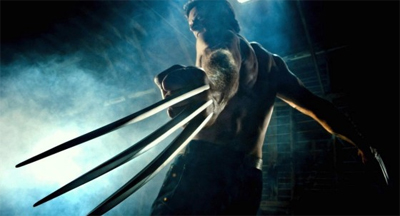
I was actually really anticipating what Darren Aronofsky could bring to The Wolverine, the sequel to the rather lackluster X-Men Origins: Wolverine. So I was actually genuinely disappointed when it was announced – rumoured to be for the inevitable creative reasons – that Aronofsky would not be directing the film after all. While it’s great that this affords Aronofsky complete creative freedom on the next film he works on, and while I certainly don’t want a film that has been subject to Fox’s executive meddling, I can’t help but regret what might have been.

Blades of glory?

Continue reading

Non-Review Review: X-Men – First Class

X-Men: First Class is easily the best thing to emerge from Bryan Singer’s X-Men movie franchise since X-Men II, all those years ago. Jane Goldman’s smart script and Matthew Vaughn’s confident direction help inject life back into the franchise that stirred up this current superhero blockbuster fad, providing one of the finest examples of the subgenre. Although the movie does occasionally veer a little bit too close to (and, once or twice, right into) camp, it’s also a clever, brave, bold and exciting action adventure, which provides the best characterisation of the series to date.

We've got it covered...

Continue reading

X Marks the Spot: Taking the X-Men Back to Relevance…

I am quite looking forward to Matthew Vaughan’s upcoming X-Men: First Class, which looks to be the first “retro” superhero film. You could, of course, make the claim that the accolade belongs to Watchmen, which was set in the eighties, but it was an alternate eighties at that – where Nixon was President and big blue men wandered around with their glowing privates on display. However, it’s fascinating that the X-Men are the film franchise to really do that, to actually construct a period piece set amidst the Cuban Missile Crisis while John F. Kennedy was squaring off against the Soviet Union. Perhaps it’s ideal, because the sixties and seventies were undoubtedly the time at which the mutant metaphor was at its most potent.

Click to enlarge...

Continue reading