• Following Us

  • Categories

  • Check out the Archives


  • Awards & Nominations

Non-Review Review: Aliens (Theatrical Cut)

To celebrate the release of Prometheus this week, we’ll be taking a look at the other movies in the Alien franchise.

I think Aliens might be my favourite James Cameron movie. Of course, the guy has any number of iconic movies vying for that position – The Terminator and Terminator 2 both come to mind, for example – but I can’t help but admire how efficiently the director constructed his first big budget motion picture. Regardless of its place within an iconic science-fiction franchise, Aliens is practically a guidebook on how to effectively construct a movie, from writing the script to directing the action and absolutely everything in between. It’s hard to look at Aliens as anything less than a complete triumph, no matter which angle you examine the film from.

Queen bee…

Continue reading

Non-Review Review: Falling Down

Falling Down is something of a cult classic. It, along with Phone Booth, stands as proof that Joel Schumacher is actually a rather wonderful director, as much as his failures might occasional overshadow his accomplishments. Filmed in the midst of the Los Angeles riots, Falling Down manages to speak to a lot of the anger of urban living, as William “D-Fens” Foster takes out his frustration on an urban environment that has gone completely mad. Almost twenty years after it was originally released, Falling Down is still a potent little film.

The best D-FENS…

Continue reading

More Than You Embargoed For: Thoughts on Review Embargoes…

I know I’m a bit late on this one, but I’ve been thinking a bit about movie review embargoes of late. For those unaware, embargoes are those restrictions on when a reviewer can publish a review. They’re normally enforced by studios, limiting the publication of reviews to within a one week window of the movie’s release. I’ve had the fortune over the past few months to be invited to screenings of The Avengers and Pirates! In An Adventure With Scientists long before the window, and have held my review until it’s okay to publish. Still, I can’t help but feel a little uneasy at the prospect.

Nothing to get too Fury-ous about…

Continue reading

Alfred Hitchcock Presents: The Horse Player (Review)

As part of the “For the Love of Film” blogathon, I’ll be taking a look at Alfred Hitchcock’s contributions to his celebrated anthology series Alfred Hitchcock Presents. I’ll be looking at some of the episodes of the classic show that he directed. The “For the Love of Film” blogathon this year is raising money to keep one of Hitchcock’s earlier works, The White Shadow (which he wrote, edited, designed and assistant-directed), available on-line and streaming for free. It’s a very worthwhile cause and you can donate here.

The Horse Player actually makes for a nice conclusion to our run of Alfred Hitchcock Presents reviews. It aired in 1961, towards the end of the sixth season of the anthology show, a year before the show would be rebranded The Alfred Hitchcock Hour. It was the second last half-hour show that Hitchcock personally directed, but is generally agreed to be much stronger than his final effort, a morality play titled Bang! You’re Dead. Instead, The Horse Player is an enjoyable and engaging meditation on those cardinal virtues of faith, hope and charity.

Continue reading

Alfred Hitchcock Presents: Back For Christmas (Review)

As part of the “For the Love of Film” blogathon, I’ll be taking a look at Alfred Hitchcock’s contributions to his celebrated anthology series Alfred Hitchcock Presents. I’ll be looking at some of the episodes of the classic show that he directed. The “For the Love of Film” blogathon this year is raising money to keep one of Hitchcock’s earlier works, The White Shadow (which he wrote, edited, designed and assistant-directed), available on-line and streaming for free. It’s a very worthwhile cause and you can donate here.

Shrunken heads are a hobby of mine. Collecting them, of course, not making them. It takes too long to make one. First, you must wait until the original owner of the head dies. I haven’t the patience for that. As you have no doubt already guessed, tonight’s story has nothing whatsoever to do with shrunken heads. It is called ‘Back for Christmas’.

– Hitchcock’s introduction. No, really.

It’s amazing how much variety Hitchcock managed to bring to Alfred Hitchcock Presents. After all, Revenge was a straight-up noir tale and The Case of Mister Pelham was an existential mystery. Back For Christmas is Hitchcock doing wonderfully dark comedy, to the point where the surrealist introduction above perfectly sets the tone. It’s also an episode that will probably add fuel to the “Alfred Hitchcock was a misogynist” debate.

Continue reading

Alfred Hitchcock Presents: Breakdown (Review)

As part of the “For the Love of Film” blogathon, I’ll be taking a look at Alfred Hitchcock’s contributions to his celebrated anthology series Alfred Hitchcock Presents. I’ll be looking at some of the episodes of the classic show that he directed. The “For the Love of Film” blogathon this year is raising money to keep one of Hitchcock’s earlier works, The White Shadow (which he wrote, edited, designed and assistant-directed), available on-line and streaming for free. It’s a very worthwhile cause and you can donate here.

Breakdown is an interesting concept, but one that feels like it has been adapted into the wrong medium. Most of the story centres around an executive who survives a car crash, paralysed. We are treated to his inner monologue as various people come along and interact with him. Adapted by Francis M. Cockrell and Louis Pollock from the latter’s short story, I can’t help but feel the concept might have worked better as a radio play than in television. Still, the idea is solid, and Joseph Cotton gives a nice central performance. It just feels a bit clunky for a television adaptation.

Continue reading

Non-Review Review: The Dictator

The obvious point of comparison for The Dictator would seem to be Borat or even Bruno. After all, the film reteams Sacha Baron Cohen with director Larry Charles, while providing a vehicle for exploring American society. However, The Dictator is a very different beast – it’s a much safer film, which is quite something to say about a film featuring a joke about “911 2012.” It is more conventional, more accessible, and more driven by a clearly focused narrative. In a way, it feels almost closer to Ali G in da House, only a lot funnier.

The Dictator is a very funny film, but it does feel like Cohen is a little more constrained than usual, a lot more rigidly structured. This lacks the sort of anarchic spirit that viewers have come to expect from Cohen, and I’d be lying if I said I didn’t miss it. Still, Cohen has a unique ability to blend offensive boundary-crossing with classic comedy, and The Dictator feels like a film that will have a broader appeal than his cult hits. Despite the abundance of jokes about male and female anatomy, I think this might be the first Sacha Baron Cohen film I would recommend to my parents.

Coming to America…

Continue reading

Uncanny X-Men by Chris Claremont Omnibus, Vol. 1 (Review/Retrospective)

With our month looking at Avengers comics officially over, we thought it might be fun to dig into that other iconic Marvel property, the X-Men. Join us for a month of X-Men related reviews and discussion.

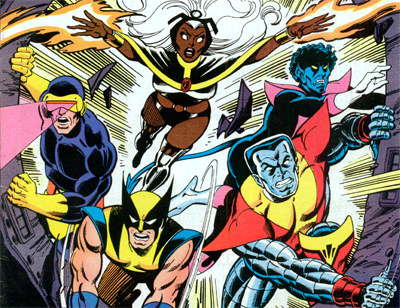
Chris Claremont wrote Uncanny X-Men for seventeen years, which is really quite a run in mainstream American comics, especially for a writer who didn’t create the property that he was working on. Over the course of a defining run that lasted almost two decades, the creator shaped the franchise from the forgotten stepchild of Stan Lee and Jack Kirby – cancelled and reduced to reprints – into Marvel’s biggest and most successful comic book franchise. While the book hadn’t quite made it to the top of the sales charts by the end of this omnibus collection, it was well on its way – and you can see Claremont gradually moulding the team into the iconic collection of mutants that we’d see across a myriad of mediums.

Marvel had a smash hit on their hands…

Continue reading

Acts of Vengeance: Fantastic Four vs. Congress (Review/Retrospective)

April (and a little bit of May) are “Avengers month” at the m0vie blog. In anticipation of Joss Whedon’s superhero epic, we’ll have a variety of articles and reviews published looking at various aspects of “Earth’s Mightiest Heroes.”

In celebration of the release of The Avengers, this weekend we’re taking a look at the massive 1989-90 crossover “Acts of Vengeance”, which pitted various villains against some unlikely heroes. I’ll be looking at some of the most fun match-ups. This arc is collected in the companion omnibus.

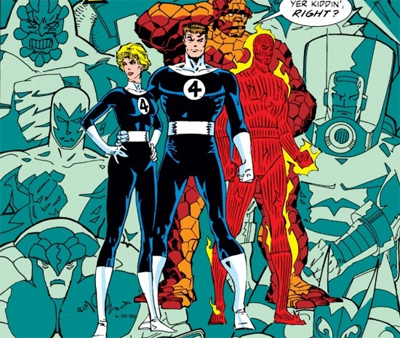
The more I read of Acts of Vengeance and its related crossovers, the more I think that the collections work best as a slice of Marvel, capturing a couple of issues from a vast array of creative teams working on a huge number of titles, to give a sampling of Marvel’s output at the time. Walt Simonson’s Fantastic Four is very highly regarded by quite a few fans of the comic book series. While it arguably hasn’t become as popular as John Byrne’s Fantastic Four or even Mark Waid’s Fantastic Four, I have to admit that I’m delighted to be able to sample three issues collected in a nice oversized hardcover. Simonson seems to gently (or not-so-gently) mock the premise of the event itself, but his three issue story arc here is fascinating and decades ahead of its time.

No, Ben, we ain’t…

Continue reading

The Sopranos: Pax Soprana (Review)

I think it’s possible to make the argument that The Sopranos can be read as that illusive “great American novel”, just handily divided into eighty-six chapters and televised as opposed to written. Sure, it’s a show about the mob, but it’s also a compelling examination of the disillusionment festering at the heart of the American psyche. Tony might be a New Jersey mob boss, but most of his problems aren’t too far disconnected from those eating away at the American middle class. (Hell, I’d argue that it speaks volumes to the Irish psyche and probably many other nationalities as well.) As such, across the crucial first season, Chase and his team of writers seem to lay down and establish the core themes, allowing Tony to confront and explore just one of the many gnawing insecurities eating away at any middle-class father. In College, Tony wrestled with the idea that his daughter might discover who he truly is, while Pax Soprana explores the notion of impotence and insecurity – some times literally.

Psyche!

Continue reading