I just finished the third season of The Wire on DVD. I am impressed. I never caught the show the first time around, so – as with many of today’s fine televisual treats – it seems to be one best sampled on DVD, at your own pace. It’s a fantastic saga that really capitalises on the previous two seasons (which, while very good fell just short of greatness). I may not be entirely convinced that it is, loike, the best TV show in the world… ever, but I can see why George Hook likes the show.
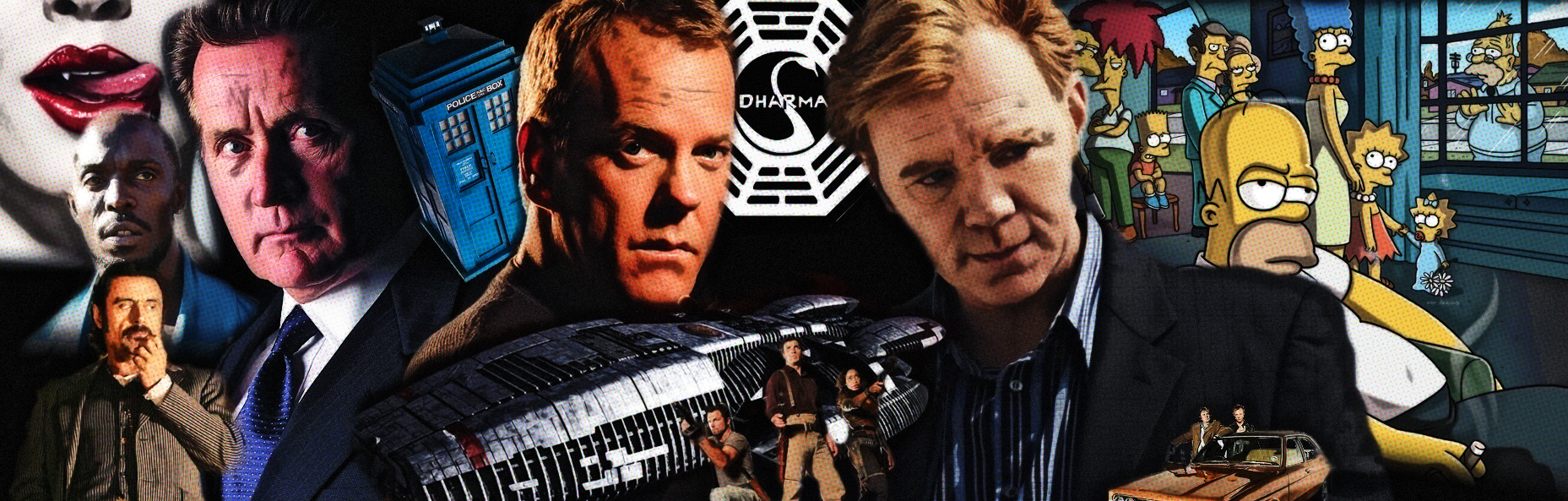
As I was watching the development of themes and character and mood in the twelve-hour set, I began to think about how far television has come within its own context in the past few years. I remember the days when it was the height of praise to describe a show as being like ‘a new movie every week’. The X-Files, Law & Order, Miami Vice and Star Trek: The Next Generation seemed to epitomise the early wave of this view point, as the networks seemed desperate to sell the illusion that viewers shouldn’t go out to the cinema – the can find entertainment of a similar scale on the box.

Not only can they look moody, the cast of The Wire can also act pretty damn awesome as well...
Of course, this wasn’t quite the case. No matter the loft heights that the narratives may reach (and the best television can be as compelling as the best movie or novel or play), the shows were always confined by the ceiling of their budget. So Crockett could crash a speedboat and watch it explode, but he couldn’t blow up a building, or Mulder could see an alien spaceship, but only from the distance as a sequence of blurry lights. You can really only fool the audience so often – eventually they’ll realise the champagne you’re serving is simply apple juice mixed with white lemonade. And treating television as literally a ‘home box office’ also confined the plot: each story had to be self-contained, or you couldn’t mess with the status quo too much, nor develop the characters too far beyond their original positions. It goes without saying that – unless you’re planning a franchise – movie makers rarely have to put the pieces back where they found them. Sure, shows might make a token effort – The X-Files mythology comes to mind – but it would plod rather than glide, if it moved at all.
Television isn’t filmmaking. That should go without saying. As such, it came as a bit of a surprise that it wasn’t really until the last fifteen or so years that writers and producers really embraced the idea. Movies have bigger budgets, but smaller canvas. Your plot pretty much has to fit within two hours (or four if you’re really powerful and can overpower the editor). A television show runs on average about one hundred and fifty episodes. It spans several years in the lives of a bunch of characters. Sometimes events don’t simply occur in handy forty-minute blocks.
As ever, science fiction lead the way, really – but didn’t get the credit. Babylon 5 embraced a complex narrative arc-structure that made the show nigh-impossible to casually follow. Many science fiction nuts would accuse one of the Star Trek spinoffs (Star Trek: Deep Space Nine) of stealing the gimick with a densely layoured (yet still relatively accessible) two-and-a-half-year war storyline balancing a huge number of individual characters whose lives changed from week-to-week. Then again, it’s quite likely that not many people know either of these shows. The more geek-aware would note season-long arcs (again carefull constructed so as to not alienate casual followers) on Joss Whedon’s shows Buffy: The Vampire Slayer and Angel.
The approach really made its jump to the mainstream with The West Wing. I love the show, but will readily admit that most of the time the plots made little-or-no-sense in-and-of-themselves, but rather played into larger arcs both in terms of narrative and character. Big events were seldom concluded within the same hour that they commenced (the shooting, the impeachment hearings, the re-election campaign, the middle east initiative, the primaries and the general election, for example). The show went down as the prestigious pretentious drama it was intended to be, but it began to signal that maybe a change was coming.
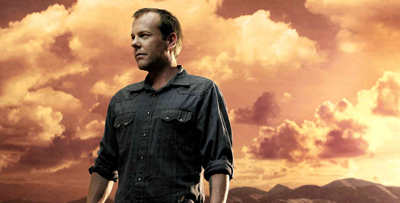
This was taken on Jack's day off...
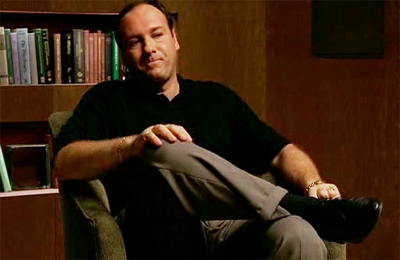
About the same time, Home Box Office began producing its own run of series. Oz, though I love it, was a glorified night time soap opera and a respectable first attempt. The Sopranos is generally acknowledged as their masterpiece, though those seeking to be a little contrarian will champion The Wire as the best HBO series. Either way, both unfolded almost as gigantic miniseries, needing to be viewed as a whole to be appreciated in their full beauty. Sure, most episodes of The Sopranos unfold around an issue of the week in Tony’s life, but these generally play as a solo movement in a larger concerto. I know nothing about music, so I don’t know if I messed up that metaphor.
At the same time, regular television shows such as Lost proved that modern audiences could follow an interweaving, no-answers-up-front style of storytelling, with a carefully-constructed six year arc. Well, either that or they’re making it up as they go along, depending on who you ask. Love it or loathe it, it represents a huge step forward in modern storytelling – contestably one story in 150 smaller chapters. A more obvious example is 24, where literally every hour on screen is an hour in Jack Bauer’s really bad day. The advent of the DVD market at around this time undoubtable helped these shows reach people who want a big story, but are afraid of missing an episode on the television.
I love that television seems to have found a unique way of telling a story. That’s how media evolves. Film took a while to find its feet (initially stalling in boring uninspired adaptations of stage plays), emulating an earlier media form much as television aspired to. Sure, you’ll still find a movie-of-the-week style show or two (Law & Order and the CSI franchise spring to mind), but even those shows seemingly following an episodic story format will infulge the odd long game (the CSI franchise like serial killers, unsurprisingly; Life on Mars saw Sam try to get home while solving the crime o’ the week; House is as much about the protagonists many, many, many on-going issues as it is the patient of the week).
I love movies. I also love television. Variety is the spice of life.
I’m ordering the fourth season of The Wire now…
Filed under: Movies | Tagged: 24, angel, buffy, csi, DVD, hbo, law & order, lost, miami vice, miniseries, Movies, star trek, Television, telly, the wes wing, the west wing, the wire, tv | Leave a comment »


















 the m0vie blog