• Following Us

  • Categories

  • Check out the Archives


  • Awards & Nominations

Space: Above and Beyond – Choice or Chance (Review)

This November (and a little of December), we’re taking a trip back in time to review the third season of The X-Files and the first (and only) season of Space: Above and Beyond.

Hostile Visit and Choice or Chance follow the two-part template established by The X-Files, keeping things fresh by offering a pretty dramatic shift between the two episodes in question.

Hostile Visit featured a covert trojan house mission to infiltrate enemy space and stage a devastating attack behind enemy lines. The episode ended with the mission a failure and our heroes drifting through space. Choice or Chance features our heroes landing on a prison planet maintained by the Silicates, the evil artificial organisms that have skirted around the edge of the show’s mythology to this point.
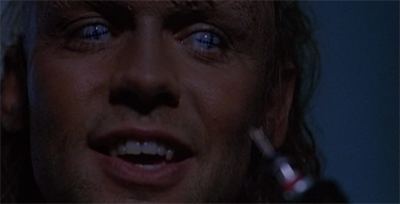
Here's Douggie!

Here’s Douggie!

Choice or Chance comes very close to working. It is a lot more dynamic than Hostile Visit was, which is a good thing for the second half of a two-parter airing during November Sweeps. However, while Hostile Visit felt a little padded and extended, never quite building the momentum necessary for the story to work, Choice or Chance feels a little over-stuffed. There’s a lot of nice stuff here, but no room to properly digest it. It’s an episode that comes up with something for every member of the cast to do, but this inevitably means that the character arcs feel abbreviated and shortened.

There is a  pretty solid two-part episode to be constructed out of the ingredients of Hostile Visit and Choice or Chance. Sadly, the resulting two-parter is not it.

Crash and burn...

Crash and burn…

Continue reading

The X-Files – Nisei (Review)

This November (and a little of December), we’re taking a trip back in time to review the third season of The X-Files and the first (and only) season of Space: Above and Beyond.

The most interesting aspect of Nisei and 731 is the fact that there’s very little forward movement by the end of it.

The previous multi-part conspiracy episodes typically featured big hooks and shock revelations. Duane Barry and Ascension demonstrated that the government was officially responsible for alien abductions, to the point where they could arrange Scully’s abduction. Colony and End Game featured shape-shifting aliens and confirmation that Samantha Mulder was a big part of this. Anasazi, The Blessing Way and Paper Clip revealed that Mulder’s father was part of a conspiracy involving Second World War criminals working on American soil to create an alien-human hybrid.

The only way its getting off this planet is in a bodybag...

The only way its getting off this planet is in a bodybag…

Nisei and 731 don’t contain any truly seismic revelations. The biggest moments here – the reveal that Japanese war criminals have been experimenting on Americans with the assistance of the government, and that the bodies in the box car in Anasazi were probably originally human – all build on what Paper Clip already established. There’s nothing as significant as the reveal of the Bill Mulder’s complicity in the conspiracy from Paper Clip, or the first appearance of the Black Oil in Piper Maru.

Nisei and 731 really seem to be about taking stock of what has happened so far in the show – as close to a “breather” mythology episode as the show could manage at this point. Of course, this being The X-Files, this “breather” episode still moves a break-neck pace and climaxes with a death-defying leap on to a moving train. As you do.

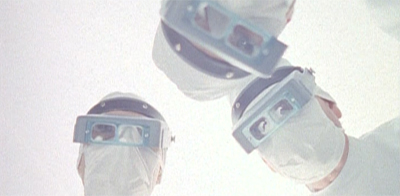
The doctors are in...

The doctors are in…

Continue reading

The X-Files (Topps) #10-12 – Feelings of Unreality (Review)

This November (and a little of December), we’re taking a trip back in time to review the third season of The X-Files and the first (and only) season of Space: Above and Beyond.

Feelings of Unreality marks the end of Stefan Petrucha and Charles Adlard’s first year on Topps’ licensed X-Files comic book.

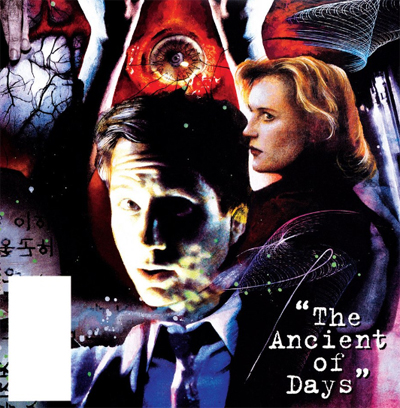
It also marks the end of their extended arc. It became clear around six issue into their run that Petrucha and Adlard were really just telling one large and expansive story that could be broken down into small bite-sized chunks. From Not To Be Opened Until X-Mas through A Dismembrance of Things Past through Firebird and Silent Cities of the Mind, these were all separate pieces of a larger puzzle waiting to be fitted together. Feelings of Unreality marks a conclusion to this ambitious and expansive arc.

Slightly unreal...

Slightly unreal…

What has been fascinating about Petrucha and Adlard’s run on The X-Files comic book as been the way that the team has adapted the show’s format to fit within this distinct medium. Writing a tie-in like this, it would would be very tempting to do “a television episode, in comic book form!” There’s a very serious argument to be made that the comics would be pushed in that direction after Petrucha departed. However, there’s something much more compelling about a story that takes advantage of its own medium, rather than offering a flat imitation of another.

For all its flaws, Feelings of Unreality – like Petrucha and Adlard’s epic Firebird before it – feels like a comic book story. It’s pulpy, exciting, ambitious, expansive, silly. And just a little brilliant.

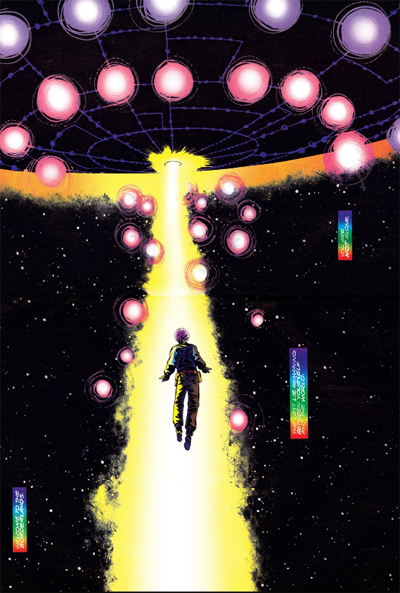
Lift me up...

Lift me up…

Continue reading

The X-Files – Oubliette (Review)

This November (and a little of December), we’re taking a trip back in time to review the third season of The X-Files and the first (and only) season of Space: Above and Beyond.

There’s a plausible argument to be made a large part of The X-Files‘ third season is doing what worked in the first and second seasons, only better.

The Walk feels very similar to a less racist and sexist version of Excelsis Dei. 2Shy decides to split the difference between Tooms and Irresistible, with David Nutter directing. The show keeps the mythology two-parters during sweeps, and David Duchovny gets to contribute to two key stories over the course of the season. It’s not a bad approach, and it pays dividends. There is a reason that the third season of The X-Files works as well as it does. It’s a ruthlessly efficient television production machine.

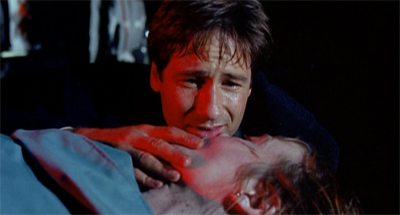
Drowning his sorrows...

Drowning his sorrows…

If that argument holds water, then perhaps Oubliette can be seen as an update to Aubrey. Both stories build on the idea that horrific crimes leave very lasting consequences, and that women often have to live with the scars inflicted by men. More broadly, they are shows about our relationship with history – the idea that the past cannot ever be escaped, and that violence and pain tend to linger on years after they are initially inflicted.

Given the broader themes of the mythology in the third season, about the secret shameful legacy of America’s conduct in the aftermath of the Second World War, Oubliette plays like a thematic prelude to Nisei and 731. However, that doesn’t do the episode justice. Oubliette is a thoughtful, moving and sentimental episode that tempers its darkness with the very faintest traces of optimism. While it is a story about abuse and exploitation and neglect and failure, it is also a story about empathy.

Shining some light on the issue...

Shining some light on the issue…

Continue reading

Space: Above and Beyond – Eyes (Review)

This November (and a little of December), we’re taking a trip back in time to review the third season of The X-Files and the first (and only) season of Space: Above and Beyond.

Eyes is perhaps the most ambitious that Space: Above and Beyond has been to this point in the season.

Eyes develops scraps hinted at in The Pilot and The Farthest Man From Home into a complex web of intrigue, with an assassination plot playing out against all sorts of institutionalised prejudice and suggesting sinister conspiracies at work behind the horrific war that drives the show. The last episode of Space: Above and Beyond credited to Glen Morgan and James Wong in 1996, the episode feels like it is solidifying the series. Six episodes in, enough foundations have been laid that development can begin.

An unstoppable killing machine.

An unstoppable killing machine.

Eyes is rather epic in scale, and massive in scope. It is a story about politics and scheming, unfolding quite far away from the front lines. In episodes like The Pilot, The Farthest Man From Home and even Ray Butts, it often felt like our lead characters were quite divorced from the big decisions. It seemed like the show was very much preoccupied with a day in the life of a space marine, rather with the larger forces at play seen only in glimpses and shadows.

Eyes is a show that does a lot to build the world of Space: Above and Beyond, doing a much better job than The Dark Side of the Sun or Mutiny at giving a sense of this dark future. While the script is perhaps a little too cluttered for its own good, it is a very well-constructed paranoid conspiracy thriller.

That's not at all fascist.

That’s not at all fascist.

Continue reading

Space: Above and Beyond – Ray Butts (Review)

This November (and a little of December), we’re taking a trip back in time to review the third season of The X-Files and the first (and only) season of Space: Above and Beyond.

Ray Butts is a collection of familiar war movie clichés.

Space: Above and Beyond is effectively a gigantic Second World War movie in space, and Ray Butts allows creators Glen Morgan and James Wong to roll two of the most instantly recognisable war movie archetypes into a single character. The eponymous officer is at once a soldier traumatised by his past experiences and a tough new commander for a young unit. He is a source of friction on the show, kept ambiguous and mysterious for most of the episode’s runtime.

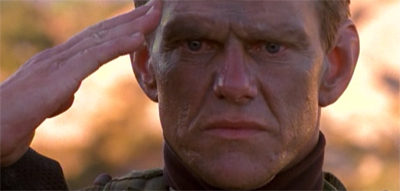
We salute you...

We salute you…

Ray Butts piles on the questions. The show doesn’t reveal his orders for quite a while, asking the audience to decide whether they trust the orders – let alone the man assigned to carry them out. The show also plays up questions around Butts himself; is Butts a man trying work through his own issues in his own way, or simply a risk-taking and borderline incompetent commanding officer? Ray Butts doesn’t have too many surprises, but it works because Morgan and Wong know how to structure an episode of television.

After the misfiring ambition of The Dark Side of the Sun, it feels almost like Ray Butts puts Morgan and Wong back in their element.

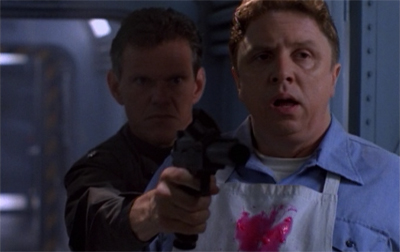
Don't shoot the chef!

Don’t shoot the chef!

Continue reading

The X-Files – The List (Review)

This November (and a little of December), we’re taking a trip back in time to review the third season of The X-Files and the first (and only) season of Space: Above and Beyond.

The List taps into a lot of contemporary anxieties.

As with Chris Carter’s last stand-alone script for The X-Files, there is something very timely about The List. The late second season medical conspiracy thriller F. Emasculata had aired at a point where national anxieties about Ebola and other killer diseases were at a high, with the high-profile release of Outbreak and the publication of Crisis in the Hot Zone. One of Carter’s strengths as a producer and a writer was his ability to take the national pulse, and to make The X-Files reflect whatever made nineties America uncomfortable.

A capital idea...

A capital idea…

Continue reading

The X-Files – Paper Clip (Review)

This November (and a little of December), we’re taking a trip back in time to review the third season of The X-Files and the first (and only) season of Space: Above and Beyond.

And now we return to your scheduled viewing.

In many respects, Paper Clip feels like the real third season premiere. It establishes a lot of the recurring themes and ideas for the mythology of the season, from Krycek-on-the-run through to collaboration in the wake of the Second World War. It builds on the successful multi-part formula established by episodes like Ascension or End Game during the show’s second season. It moves things along in a way that The Blessing Way simply refused to. (It even resolves the cliffhanger from the last episode on screen.)

The light at the end of the tunnel...

The light at the end of the tunnel…

Paper Clip demonstrates the strengths of the third season of The X-Files. The third season was the point at which the show really pushed the mythology out, building on earlier implications that there was form to be found in the shadows. The third season also looked to the second season to determine what had worked and what had not worked. Paper Clip is very clearly modelled on the successful aspects of second parts like Ascension or End Game.

It moves. The power of Paper Clip comes from an incredible forward momentum that allows the show to maintain tension and excitement while refusing to allow the audience to catch their breath. Instead of resolving the bigger plot threads from the first episode, questions and hints are thrown out with reckless abandon as the script just drives through set pieces and emotional beats and suspenseful sequences. It is a very meticulously, very cleverly constructed piece of television.

Watching the skies...

Watching the skies…

Continue reading

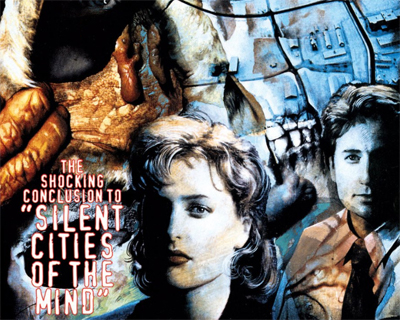
The X-Files (Topps) #8-9 – Silent Cities of the Mind (Review)

This November (and a little of December), we’re taking a trip back in time to review the third season of The X-Files and the first (and only) season of Space: Above and Beyond.

Silent Cities of the Mind is a very “comic book” story – it’s a story that might easily seem outlandish or ridiculous if committed to film, but which works very well within its medium. After all, the plot centres around a bunch of ancient Aztec priests who built an elaborate underground city that could project itself above ground as a mirage. Indeed, the story seems to accept this as a given, with Scully instead spending most of the adventure questioning whether memories can be transmitted via cannibalism.

It’s a concept that could easily seem ridiculous, and it’s a testament to writer Stefan Petrucha and artist Charles Adlard that it works as well as it does. Silent Cities of the Mind is a decidedly pulpy adventure, but that lends the story an undeniable charm. It’s a story packed to the brim with clever and fascinating ideas – from ancient aliens to ritual cannibalism to hidden cities to crystal skulls. All this is crammed tightly into two issues, meaning that everything moves so fast there’s no real time to stop and nitpick it all.

It's all in the mind...

It’s all in the mind…

Mulder is negotiating with survivalists! There are memories transferred through the act of ritual cannibalism! Mulder and Scully are shot down over Alaska! Mulder is trapped with a cannibal! There’s a hidden Aztec city buried underground! Mulder has discovered ancient Aztec mythology! There’s an army rescue team that isn’t a rescue team! There’s a macguffin that allows its wearer to commune with the gods! There’s a stand-off!

It’s all rather exhausting, but in a fun and exciting sort of way. Silent Cities of the Mind is perhaps the best example of how Petrucha and Adlard were writing The X-Files as a comic book, positioning the show’s tropes and iconography within the framework of comic book conventions.

Bonfire of the vanities...

Bonfire of the vanities…

Continue reading

The X-Files – The Blessing Way (Review)

This November (and a little of December), we’re taking a trip back in time to review the third season of The X-Files and the first (and only) season of Space: Above and Beyond.

The Blessing Way is the first mythology episode of The X-Files that doesn’t really work.

And it doesn’t really work for a lot of the same reasons that some of the later mythology episodes don’t really work. Its pacing is terrible. It wallows in new age mysticism, allocating characters thoughtful monologues that awkwardly state themes and render subtext as supratext. It plays into the deification of Mulder, trying to bend Mulder’s story to fit into an archetypal “chosen one” narrative. More than that, it is very clearly a holding pattern, an effort to eat up time without moving forward.

Wiping it all out...

Wiping it all out…

However, despite the fact that The Blessing Way really doesn’t work, it is still a fascinating episode. It’s a wonderful demonstration of how The X-Files has developed a fleshed-out world inhabited by compelling characters. The best moments in The Blessing Way are character-focused, with Skinner caught between his duty to the government and his loyalty to his agents, the Cigarette-Smoking Man revealed to be middle-management at best, and the implication that even vast sinister government conspiracies are hostage to chaos.

The Blessing Way is an oddity, a rather strange piece of television that is almost endearing in its stubborn refusal to deliver what the audience wants and expects. That doesn’t make it good, but it does make it interesting.

The truth is up there...

The truth is up there…

Continue reading