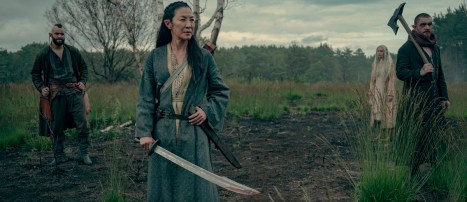
I published a new piece at The Escapist this week. With the release of The Witcher: Blood Origin on Netflix, it seemed like a good time to discuss an unsettling trend in modern television: the idea that modern shows are really just super-extended movies, and the consequences of that.
Blood Origin demonstrates what happens when a studio treats a television show like a movie. The series was written and filmed as six episodes, but was horrible cut down in the editting bay. Two whole episodes were stripped out of the show, leaving it incoherent and nonsensical. In many ways, this was exactly what happened with Joss Whedon’s cut of Justice League, which was similarly cut down to have a runtime of under two hours. If television shows are just films now, they are subject to the same sort of meddling.
You can read the piece here, or click the picture below.
I published a new piece at The Escapist last week. With the recent chaos at HBO Max and the removal of content from the service, it seemed like a good time to discuss of film and television have suddenly become ephemeral again.
One of the big selling points of the streaming age was that everything would be immediately available to audience members at the click of a mouse; vast libraries of content would be made available to stream via these services, representing a boon for conservationists and archivists everywhere. Nothing would be lost, because everything would be at hand. However, the removal of entire shows from HBO Max illustrates that these projects are as intangible as they have ever been, and that they can removed and even destroyed without any warning whatsoever.
You can read the piece here, or click the picture below.
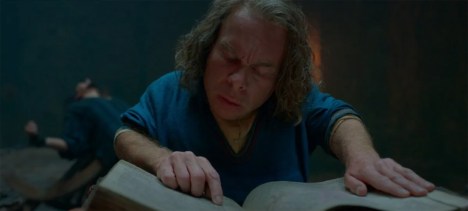
I am doing weekly reviews of Willow at The Escapist. They’ll be dropping every Wednesday evening while the show is on, looking at the legacy sequel as it progresses from one episode to the next.
It is too much to call Willow a deconstruction or a subversion of classic fantasy tropes. Certainly, the show is often a celebration of the trappings of high fantasy, and a much more old-fashioned take on the genre than contemporary shows like The Lord of the Rings: The Rings of Power or House of the Dragon. At the same time, the series is written with an understanding of the tropes and conventions of the genre, and a willingness to play with those ideas in a way that deepens and explores its own themes. Given that this is a show about divorce, Willow eagerly dives into familiar fantasy tropes about blood and lineage.
You can read the piece here, or click the picture below.
I am doing weekly reviews of Andor at The Escapist. They’ll be dropping every Wednesday evening while the show is on, looking at the Rogue One prequel as it progresses from one episode to the next.
Rix Road brings the first season of Andor to an end, closing the cricle by bringing the primary cast back to where it all began. It’s a fascinating and compelling way to close out the season, underscoring how much these characters have changed by bringing them back to their starting position. Rix Road is a breathtaking and impressive season finale to what has been the most consistent run of Star Wars ever produced.
You can read the piece here, or click the picture below.
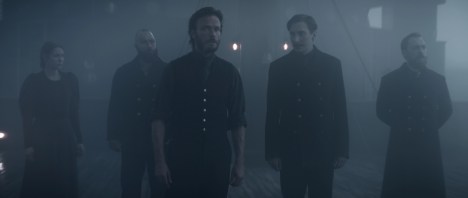
I published a new piece at The Escapist over the weekend. Last week saw the release of Netflix’s 1899, a surreal mystery thriller from the creative minds behind Dark.
1899 is an impressive show in many ways, a multilingual series with a diverse cast, that is also the most expensive television show ever made in Germany. It is packed with big ideas, and grapples with heady themes, without ever stopping to apologise for itself or condescend to its audience. There’s undoubtedly something appealing in that. However, there’s a strange coldness to the show, a detachment that makes it very hard to emotionally invest in the series as anything more than an intellectual exercise.
You can read the piece here, or click the picture below.
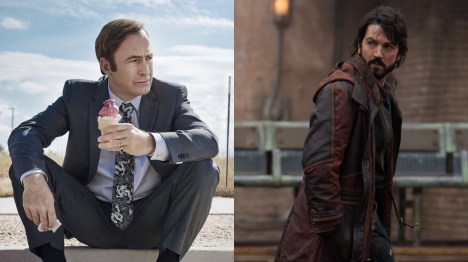
I published a new piece at The Escapist earlier this week. As Andor winds down its first season, garnering rave reviews but not attracting as strong an audience as its predecessors, comparisons come to mind concerning Better Call Saul, which has quietly become one of the best television shows of the decade despite never reaching the same level of popularity as its predecessor.
What do Better Call Saul and Andor have in common? What is it that makes both shows so compelling, but which also makes them a tougher sell to audiences than what came before? Are they both just out of step with the zeitgeist, reflecting a mode of television production that doesn’t have the same cultural cachet that it once did? And, most importantly, does any of that matter if they are both creative triumphs? It’s interesting to explore and unpack.
You can read the piece here, or click the picture below.
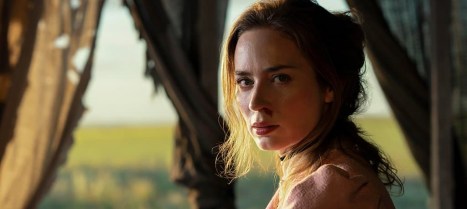
I published a new piece at The Escapist yesterday. This week marks the premiere of The English, a co-production between the BBC and Amazon.
The English is effectively a spaghetti western with a very British sensibility. It is written and directed by Hugo Blick. It stars Emily Blunt, and its supporting cast is populated with British and Irish character actors like Ciarán Hinds, Toby Jones, Rafe Spall and Stephen Rea. However, it is a thoughtful exploration of the genre, and an obvious love letter to the exploitation movies of the sixties and seventies. The show is occasionally a little to reverent to its inspirations, but it is beautifully shot and deeply moving, anchored in two great central performances from Chaske Spencer and Emily Blunt.
You can read the piece here, or click the picture below.
I published a new In the Frame piece at The Escapist this evening. With the recent launch of Netflix’s ad-supported tier, it seemed as good a time as any to take a look at the larger trends in contemporary streaming.
Streaming services have moved away from the binge model. They have become more transparent in their ratings. They have begun scheduling the release of particular episodes across various days of the week. They have even begun releasing some episodes in prime time. The plotting on these shows has become a lot more reminiscent of turn of the millennium zeitgeisty mystery box shows than early streaming stories. All of this is to suggest that the future of streaming seems to look a lot like old-fashioned television.
You can read the piece here, or click the picture below.
We’re thrilled to be launching a weekly multimedia podcast at The Escapist, called The Recap. I’m hoping to be a regular fixture of it, stremaing live every Tuesday evening. This is kinda cool, because we’re helping relaunch the magazine’s film content – so if you can throw a subscription our way, it would mean a lot.
This week, we took a look at the splurge of recent news from Marvel Studios, including new trailers, new writer announcements, the first big reveals about Deadpool 3, directorial departures, and streaming shows that are becoming movies. We also caught up with our opinions on Rings of Power, House of the Dragon and Andor. It’s a fun discussion. Check it out.
We’re thrilled to be launching a fortnightly video companion piece to In the Frame at The Escapist. The video will typically launch every second Monday, and be released on the magazine’s YouTube channel. And the video will typically be separate from the written content. This is kinda cool, because we’re helping relaunch the magazine’s film content – so if you can throw a subscription our way, it would mean a lot.
This week, we took a look at one of the more under-explored and unspoken issues facing the so-called “streaming age.” In an era where there is so much content, and so much content derived from intellectual property that major corporations protect so severely, where are these studios going to find the writers and storytellers to guide these series? One of the more interesting shifts in television over the past decade has been a slow creep away from the idea of it as a writers’ medium, but that shift comes with a surprisingly high cost.


















 the m0vie blog