• Following Us

  • Categories

  • Check out the Archives


  • Awards & Nominations

Star Trek: Deep Space Nine – Civil Defense (Review)

This September and October, we’re taking a look at the jam-packed 1994 to 1995 season of Star Trek, including Star Trek: Deep Space Nine and Star Trek: Voyager. Check back daily for the latest review.

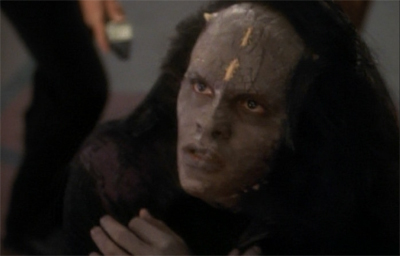
Civil Defense is an episode that really worked a lot better than it should have. The third season of Star Trek: Deep Space Nine hit a bit of a stumbling block in the early part of the third season. Indeed, Second Skin had been shot from what was pretty much Robert Hewitt Wolfe’s first draft of a teleplay. The Abandoned felt like a good premise pushed in front of the camera too early. Civil Defense was similarly rushed into production, with very little turn around from the production staff.

However, despite these production concerns, Civil Defense turns out to be an enjoyable pulpy adventure. The production team wouldn’t royally screw up until the next episode. The biggest problem with the script is that it feels like we’re seeing it far too late in the show’s run. Civil Defense is a fun third season episode, but it would have been a spectacular first season adventure.
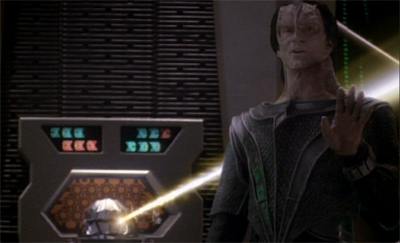
"Free dissident suppression system with every purchase over twelve bars!"

“Free dissident suppression system with every purchase over twelve bars!”

Continue reading

Star Trek: Deep Space Nine – The Abandoned (Review)

The September and October, we’re taking a look at the jam-packed 1994 to 1995 season of Star Trek, including Star Trek: Deep Space Nine and Star Trek: Voyager. Check back daily for the latest review.

The Abandoned is a problematic episode.

It’s brave and provocative and challenging, but it’s also incredibly grim and cynical. In fact, it is probably the most relentlessly pessimistic episode of Star Trek: Deep Space Nine‘s third season. And, given the episodes surround it, that is quite an accomplishment. Deep Space Nine has subverted classic Star Trek storytelling before. The Maquis was really a watershed moment for the series, suggesting that paradise itself might be unsustainable – attacking Roddenberry’s utopia rather brutally.

However, The Abandoned pushes things even further. There’s a social and racial subtext to this episode that grounds it in the racial politics of Los Angeles in the mid-nineties. The story of a young angry drug-addicted killer can’t help but feel associated with the increased profile of Los Angeles’ gangland in the early-to-mid-nineties. Casting the episode’s young Jem’Hadar soldier using African American actors invites this comparison, something that director Avery Brooks himself has conceded.

The racial politics of The Abandoned are decidedly uncomfortable, but they are clearly meant to be. Still, there’s something rather cynical and pessimistic about the episode’s conclusion that this young boy cannot be saved from a life of brutality and violence.

A Jem?

A Jem?

Continue reading

Doctor Who: Deep Breath (Review)

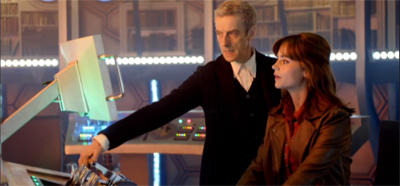
“Dormant.”

“How do you know?”

“I don’t. Just hoping.”

– the Doctor and Clara discover things haven’t changed too much

The regeneration from Matt Smith to Peter Capaldi represents the third time that Doctor Who has changed its lead actor since its relaunch in 2005. It is the third time that a regeneration has forced a change in the opening credits. Along the way, there have been a number of other on-screen regenerations, from Derek Jacobi to John Simm through to John Hurt to almost!Christopher Eccleston. And that excludes River’s transformations or David Tennant’s pseudo-regeneration at the end of the fourth season.

All of this is to say that, as we approach the tenth anniversary of the revived Doctor Who, audiences are quite familiar with the concept of regeneration. This isn’t as dramatic a shift as it was when Christopher Eccleston melted into David Tennant at the end of The Parting of the Ways. That was a freshly relaunched show swapping out its lead actor after less than a year. In contrast, Deep Breath marks a much more orderly and logical transition. It isn’t earth-shattering.

doctorwho-deepbreath14

All of this means that producer and writer Stephen Moffat gets to have a bit of fun with the concept. Moffat’s previous regeneration episode, The Eleventh Hour, had the burden of demonstrating that Doctor Who could survive without both Russell T. Davies and David Tennant. In fact, it was rumoured the BBC had considered just cancelling the show at that point. As such, The Eleventh Hour was an episode designed to reassure fans that not everything had changed; this was still the same show. Moffat’s first season as showrunner was very much “business as usual.”

Deep Breath has no such weight attached to it. It is an episode that doesn’t feel the same need to reassure its audience that everything is okay and everything is the same. Instead, it can revel in what is different; it can celebrate what is new. Deep Breath lacks the sheer energy and powerful charisma that made The Eleventh Hour so fantastic, but it has a comforting sense of certainty to it that makes it a joy.

doctorwho-deepbreath4

Continue reading

Picket Fences – Away in the Manger (Review)

This August (and a little of September), we’re taking a trip back in time to review the second season of The X-Files. In November, we’ll be looking at the third season. And maybe more.

The crossover that almost was.

Red Museum is a mess of an episode. There are a lot of reasons for that, but perhaps the most obvious is the fact that it was originally intended as a very different story. In fact, Chris Carter had planned to cross The X-Files over with Picket Fences. While The X-Files was airing on Fox, Picket Fences was broadcast on CBS. Perhaps predicting the long-running feud that would evolve between those two networks in the twenty-first century, CBS decided it had better things to do on Friday nights than promote The X-Files.

We can talk about it till the cows come home...

We can talk about it till the cows come home…

The result is that Chris Carter and David E. Kelley had to hastily re-work their episodes, averting the crossover rather late in the cycle. Carter shifted the location of the story, and had to write a new ending. Kelley seems to have been a bit more casual, with Away in the Manger feeling like an episode that takes place perpendicular (if not quite overlapping) to Red Museum. The result is curious, two episodes that speak to their own shows – but also the differences and similarities between Picket Fences and The X-Files.

In some ways, Away in the Manger feels almost like an episode of The X-Files shot from a different perspective.

Agent Morrell, FBI...

Agent Morrell, FBI…

Continue reading

The X-Files – Red Museum (Review)

This August (and a little of September), we’re taking a trip back in time to review the second season of The X-Files. In November, we’ll be looking at the third season. And maybe more.

While Firewalker is a solid episode ill-served by its position in the schedule and its similarity to an early episode of the show, Red Museum is just a mess.

The production issues with Red Museum are infamous. It was intended as the first part of a crossover between The X-Files and Picket Fences, both airing on Friday nights. The idea was that fans could tune into The X-Files on Fox for the first part of the story, and then move over to CBS after the credits rolled to pick up the case on Picket Fences. It was an ambitious effort – too ambitious. Although showrunners Chris Carter and David E. Kelley agreed on the idea, CBS vetoed it. It resulted in two orphaned hours of television, Red Museum and Away in the Manger.

Well, not quite. The result is something of a malformed two-parter composed of two individual malformed episodes.

He likes to watch...

He likes to watch…

Continue reading

The X-Files – One Breath (Review)

This August (and a little of September), we’re taking a trip back in time to review the second season of The X-Files. In November, we’ll be looking at the third season. And maybe more.

If there were ever any doubt that The X-Files is fundamentally about faith in the nineties, One Breath should put the matter to rest.

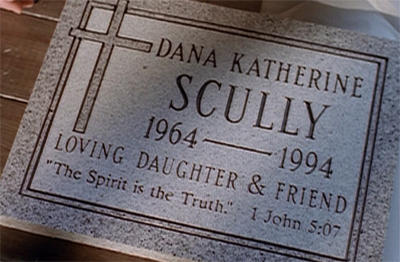
An astounding, moving, staggering and thoughtful piece of work, One Breath not only wraps up the arc that opened the second season, it also provides closure to the themes that writers Glen Morgan and James Wong had been seeding throughout this first stretch of the season. One Breath bookends the meditation on faith that began in Little Green Men and serves as a counterpoint to the paranoia of Blood and the nihilism of 3.

One Breath is a tremendous piece of work, the best episode of the season and one that deserves to be mentioned among the very best the show ever produced.

Grave stakes...

Grave stakes…

Continue reading

The X-Files – Ascension (Review)

This August (and a little of September), we’re taking a trip back in time to review the second season of The X-Files. In November, we’ll be looking at the third season. And maybe more.

Ascension is effectively a giant chase sequence and an epilogue to the first six episodes of the second season. While lacking the tight focus of Duane Barry, Ascension moves fast enough and provides enough plot momentum that it feels like a satisfactory conclusion. For an episode that was essentially written to deal with a cast member’s unexpected pregnancy, it’s a pretty fantastic piece of television.

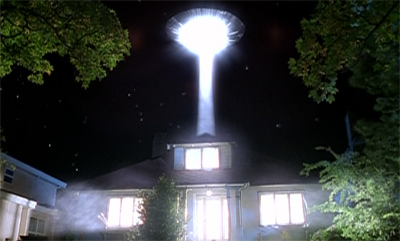
Keep watching the skiis... er, skies!

Keep watching the skiis… er, skies!

Continue reading

The X-Files – Duane Barry (Review)

This August (and a little of September), we’re taking a trip back in time to review the second season of The X-Files. In November, we’ll be looking at the third season. And maybe more.

Duane Barry is Chris Carter’s directorial début on The X-Files, and it’s a staggering confident piece of work. From the opening scene where Carter’s camera stalks through Duane Barry’s run-down house through to the memorable abduction sequences and decision to play the episode’s big action sequence against a black screen, Duane Barry looks very impressive. It’s an episode that stays with the viewer, one that is every bit as visually distinctive as Blood earlier in the year.

It’s also a demonstration of how versatile The X-Files actually is. The show has already proven its horror bona fides, carving out a niche for itself on the Friday night line-up on Fox with a variety of spine-tingling adventures. While Duane Barry retains the show’s alien mythology, it arguably works best as a straight-up hostage suspense thriller. Mulder is drafted in to assist with a hostage crisis, and then finds himself getting more and more caught up in the story told by the raving gun man.

Duane's world...

Duane’s world…

This is pretty far outside the “procedural” format that has been loosely established by the show, and Duane Barry plays out rather differently than any of the earlier cases-of-the-week. Of course, The X-Files would go on to get more and more experimental in later seasons, but Duane Barry sees the show consciously stepping outside the box. This is a demonstration of how strong the show’s foundations are, proof that it can carry itself as a legitimate drama. Duane Barry is an episode that argues The X-Files is not cult television, but just good television.

It’s no wonder that Duane Barry picked up the show’s first two Primetime Emmy nominations and a significant number of Creative Emmy nominations on top. It’s also a damn fine piece of television.

The Truth is up there...

The Truth is up there…

Continue reading

The X-Files – Blood (Review)

This August (and a little of September), we’re taking a trip back in time to review the second season of The X-Files. In November, we’ll be looking at the third season. And maybe more.

It’s interesting to get The Host and Blood produced back-to-back. Both episodes serve to draw writer Darin Morgan into the world of The X-Files. Brother of staff writer Glen Morgan, Darin Morgan would go on to become one of the most unique and distinctive voices to work on Chris Carter’s television shows – his scripts for The X-Files and Millennium stand out among the very best episodes the shows ever produced, with a very subversive and wry approach to the subject matter.

Morgan enjoyed one of the most surreal paths to the writers’ room imaginable. An actor with a few scattered credits on eighties television, including various shows his brother worked on like 21 Jump Street and The Commish, Morgan was cast as in the thankless role of “Fluke man” in The Host. However, he also found himself drawn into the production of the next episode, Blood. An episode with some production difficulties, Darin Morgan offered some ideas on how to develop the story.

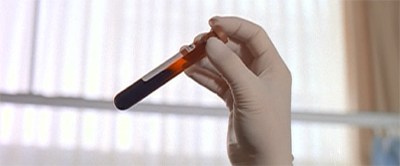
Blood work...

Blood work…

Ultimately, Darin Morgan didn’t write Blood. The script was written by Glen Morgan and James Wong, with Darin receiving a “story” credit on the finished episode. However, his ideas had impressed producer Howard Gordon, who would later propose that Darin Morgan join the writing staff. Morgan would accept the invitation and write Humbug later in the second season, before producing two genuine classics during the show’s phenomenal third year. (And also War of the Coprophages.) Darin Morgan would later write two more scripts for Millennium.

As such, Blood isn’t really a Darin Morgan episode. As it was written by Glen Morgan and James Wong, their own sensibilities shine through on the broadcast episode. However, Blood does contain a few of the wonderful trademarks of Darin Morgan’s approach to the show, not least of which a very post-modern cynicism about cynicism. Blood feels like a rather subtle and incisive critique of the culture of paranoia that The X-Files thrives on, refusing to offer clear-cut answers and suggesting that Mulder might be just a little bit off-balance.

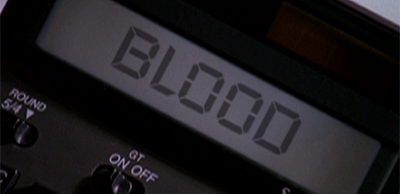
A very calculated title drop!

A very calculated title drop!

Continue reading

Star Trek: The Next Generation – Family (Review)

This January and February, we’ll be finishing up our look at the second season of Star Trek: The Next Generation and moving on to the third year of the show, both recently and lovingly remastered for high definition. Check back daily for the latest review.

He’s still out there. Dreaming about starships and adventures. It’s getting late.

Yes. But let him dream.

– Robert and Marie try to figure out what all this “Star Trek” milarky is about

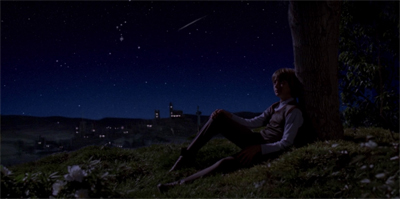
Starry, starry night...

Starry, starry night…

Continue reading