• Following Us

  • Categories

  • Check out the Archives


  • Awards & Nominations

The Lone Gunmen (Review)

This October/November, we’re taking a trip back in time to review the eighth season of The X-Files and the first (and only) season of The Lone Gunmen.

The Lone Gunmen seemed destined to be an oddity.

When it arrived in March 2001, it must have felt like a throwback. The production team had consciously modelled the series on the classic episodic spy and adventure shows of the sixties, seventies and eighties. Mission: Impossible and The A-Team served as cultural touchstones, with both The Pilot and Eine Kleine Frohike making visual references to Brian dePalma’s cinematic adaptation of Mission: Impossible while Maximum Byers featured an extended discussion of the pros and cons of Pros and Cons, an early first season episode of The A-Team.
lonegunmen-pilot14a

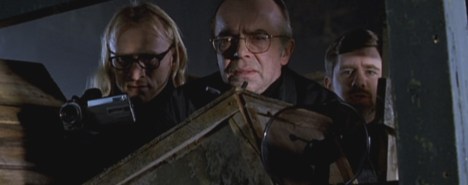
In terms of structure and tone, The Lone Gunmen seemed to hark back to the golden age of two-knuckled action adventure television shows like The Man From U.N.C.L.E. or MacGyver. Threads rarely carried over from episode to episode. Only one actor who didn’t appear in the opening credits would appear in more than a single episode of the show. There was no hint of a “mythology” and no clear structure from week-to-week beyond “the Lone Gunmen get into wacky adventures and hijinks ensue.”

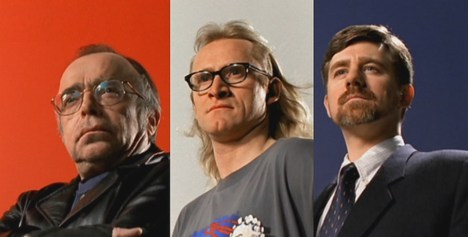
In many ways, The Lone Gunmen was the kind of show that had quietly shuffled off the air in the early nineties. It felt like it belonged to a generation of television predating The X-Files rather than succeeding it. Even the opening credits to the show were much less abstract and much more traditional than those of The X-Files, playing as something of a highlight reel of the early first season. There is something very aggressively old-school about the aesthetic of The Lone Gunmen.
lonegunmen-likewaterforoctane2

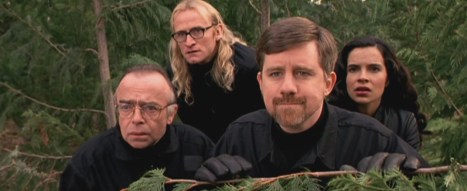
The Lone Gunmen would have seemed somewhat outdated had it aired before Homicide: Life on the Streets during the late nineties; it was doubly out of place in the emerging era of reality television. However, there are elements of The Lone Gunmen that feel like they might have played better had the show arrived a few years later. Byers, Langly and Frohike were too eccentric to anchor an hour-long show on a major network, as Fox had already become. They might have fared better on another network after the cable television explosion.

It is easy enough to imagine The Lone Gunmen as an oddity airing on a smaller cable network like HBO or Showtime or AMC. Indeed, the perfect pitch for The Lone Gunmen would seem to land somewhere between Bored to Death and The X-Files. The audience for The Lone Gunmen might have been small in terms of major television networks, but it was devoted. Smaller providers – even on-line providers like Amazon or Netflix – would love to court that sort of fanbase. Had The Lone Gunmen arrived a few years later, it may have had a chance.
lonegunmen-planetofthefrohikes13

As such, The Lone Gunmen feels like a television show out of time. It is a series that landed at the wrong moment on the wrong channel, and which likely never had a chance. The animators on King of the Hill were incorporating jokes about the inevitable cancellation of The Lone Gunmen before the episode even aired. The viewing figures were far from spectacular, but they were better than the shows that had aired in the same slot in the season prior and the season following. March 2001 was just not the right moment for The Lone Gunmen.

Then again, it feels appropriate that The Lone Gunmen should so perfectly mirror its central character. Heroic, endearing, charming, but also undeniably odd.
lonegunmen-diagnosisjimmy19

Continue reading

The X-Files – Existence (Review)

This October/November, we’re taking a trip back in time to review the eighth season of The X-Files and the first (and only) season of The Lone Gunmen.

This is not the end.

But it really should be. At least for Mulder and Scully.

There was no season nine. What are you talking about?

There was no season nine.
What are you talking about?

Continue reading

The X-Files – Alone (Review)

This October/November, we’re taking a trip back in time to review the eighth season of The X-Files and the first (and only) season of The Lone Gunmen.

In a way, the entire final third of the eighth season is an extended finalé for The X-Files – or, at the very least, an extended finalé for a version of The X-Files starring Mulder and Scully.

This seems quite ironic, considering the confusion that existed towards the end of the seventh season, when it seemed like the production team were unsure whether they could (or should) commit to the idea of The X-Files coming to an end. The seventh season was never entirely sure what (if anything) was going to come next, and so it did not have the opportunity to gracefully set up all of its plot points. As a result, the eighth season had to retroactively incorporate elements like Mulder’s brain illness or Scully’s fertility treatment.

Cue cliché marriage jokes.

Cue cliché marriage jokes.

In contrast, the eighth season seemed quite conscious of the end. The entire eighth season is structured as a strange hybrid; it feels like it could serve as both the final season of the show as it aired for seven years, while also serving as a launching pad to something new and exciting. The final eight episodes of the eighth season are largely about tidying away the character arcs and dangling plot thread associated with Mulder and Scully so that their journey might finally end. If the ratings are strong enough, then Doggett might get to launch his own show.

As such, Alone is positioned very much like Je Souhaite had been and like Sunshine Days would be. It is potentially the “one last monster of the week” story marking the end of an era. While Je Souhaite had marked the end of the Mulder and Scully era of the show, Alone seems to mark the end of the transitional period between Mulder and Scully and whatever is supposed to come next. It is a very light episode, no less effective for that. As with a lot of the late eighth season, its biggest problem is the way that the nineth season creative decisions retroactively undercut it.

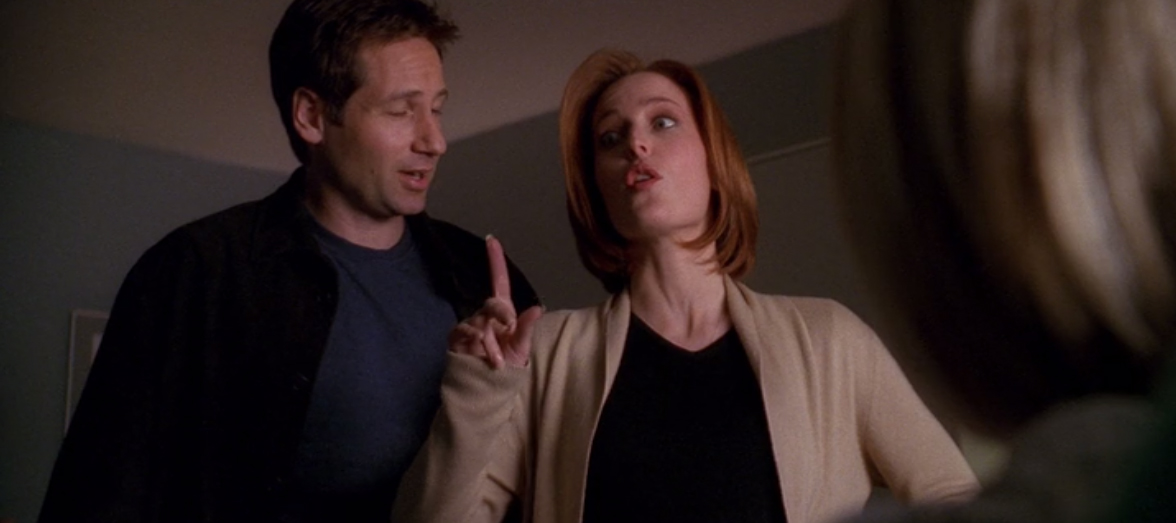
Leyla... L-E-Y-L-A... Leyla.

Leyla… L-E-Y-L-A… Leyla.

Continue reading

The Lone Gunmen – Maximum Byers (Review)

This October/November, we’re taking a trip back in time to review the eighth season of The X-Files and the first (and only) season of The Lone Gunmen.

With Maximum Byers, it seems like The Lone Gunmen has wandered back into the wilderness.

Madam, I’m Adam and Planet of the Frohikes suggested a show that had found its own voice and figured out how best to tell stories featuring theses characters. Those two episodes worked by eschewing the caper-driven hijinks of episodes like Like Water for Octane and Three Men and a Smoking Diaper in favour of character-driven melancholy. Planet of the Frohikes might be the single funniest episode of the show’s short run, but it mostly works because it is underpinned by a sense of genuine tragi-comedy. Its characters felt real; even the talking monkey.

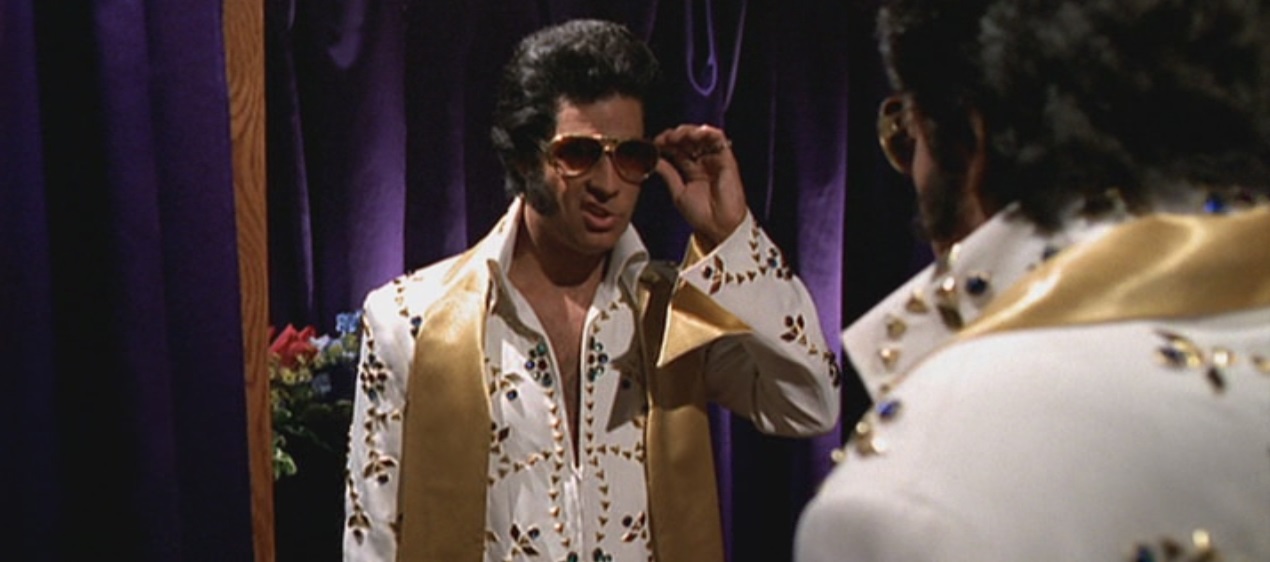
"Thank you very much..."

“Thank you very much…”

Maximum Byers seems to set the clock back to the early first season, sending the Lone Gunmen on a wacky self-aware adventure designed to evoke classic episodic television. It is a model very similar to that employed by scripts like Eine Kleine Frohike or Diagnosis: Jimmy, where the objective is to drop a major character into an unlikely situation and hope that the plot (and the laughs) take care of themselves. After all, “Byers undercover in prison!” seems as compelling as “Frohike undercover as a woman’s long lost son!” or “Jimmy in hospital!”

For most of its runtime, Maximum Byers is fairly bland and inoffensive. It is not particularly memorable or hilarious, but it is not close to the worst episode of the show. Unfortunately, then the ending happens. One of the more frequent criticisms of The Lone Gunmen is that the show had difficulty balancing its tone. While there is an element of truth to this observation, it is never quite as clear as in the final act of Maximum Byers. Then again, it is probably quite tough to do a comedy set on death row.

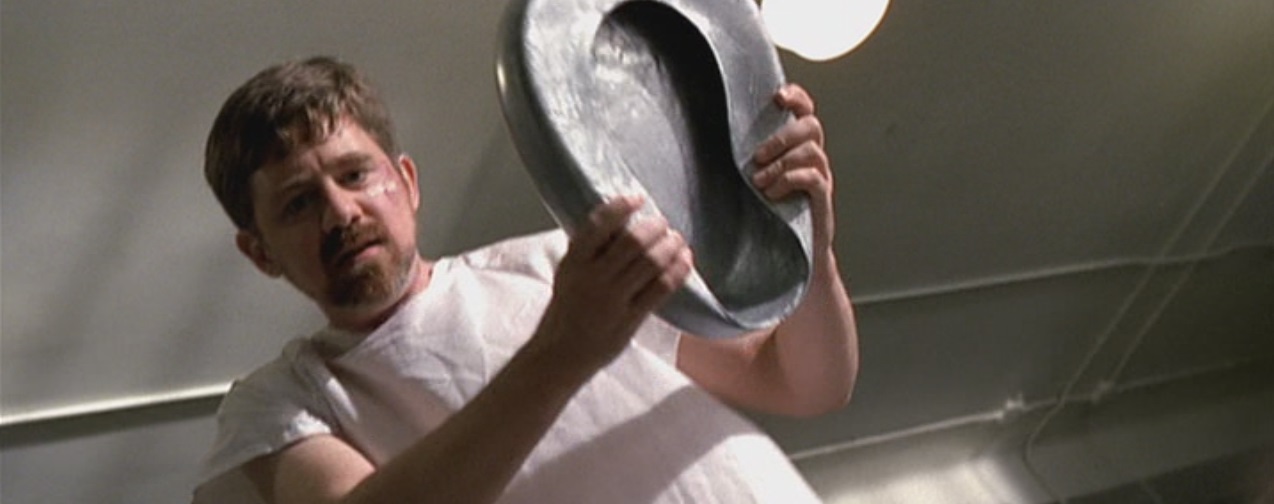
Critics couldn't wait to (bed)pan the episode...

Critics couldn’t wait to (bed)pan the episode…

Continue reading

The X-Files – Three Words (Review)

This October/November, we’re taking a trip back in time to review the eighth season of The X-Files and the first (and only) season of The Lone Gunmen.

There is no “to be continued…” explicitly linking DeadAlive to Three Words, but there doesn’t have to be.

In this final stretch of the eighth season, The X-Files adapts a somewhat serialised narrative model. Although stories like Empedocles and Vienen technically serve as “monster of the week” stories that stand alone, they feel very particular to this moment in the show’s history. Mulder’s return to the land of the living in DeadAlive does not mark a return to the status quo, despite his best efforts. Instead, it creates a highly volatile (and, by its nature, transitory) set-up that cannot be maintained over an extended period.

Howard Salt was willing to go to any lengths to return the President's copy of The X-Files film.

Howard Salt was willing to go to any lengths to return the President’s copy of The X-Files film.

This is not a sustainable status quo. This is not “business as usual.” This is not what the ninth season will look like. This is not like those other changes to the status quo that occurred at the start of the second and sixth seasons, when Mulder and Scully were taken off the X-files but continued to investigate cases that were X-files in all but name. Episodes like Blood or How the Ghosts Stole Christmas could be transitioned into a regular season order with a minimum of changes, but these episodes all feel uniquely tailored to this point in the show’s history.

As such, the end of the eighth season takes on a loosely serialised quality, and not just in the story of the new mythology or the so-called “super soldiers.” The character dynamics evolve and grow, with the individual episodes seeding character development leading the season finalé. Episodes like Three Words and Vienen make it increasingly clear that Mulder is not back in an permanent sense by first pushing him away from the X-files and then firing him from the FBI. Scully’s pregnancy is actually allowed to progress at this point in the season.

He's back!

He’s back!

This serialisation is apparent in the discrepancies between the production and broadcast order. As with extended sections of the fourth season, the final stretch of the eighth season was produced in a different order than it was broadcast. Unlike the fourth season, however, this shift does not create any dissonance as significant as the conflict between the version of Never Again that was filmed and the one that was broadcast. Despite being produced in a different order, these stories could not work in any order other than the broadcast order.

Although The X-Files frequently gets credit for pioneering and popularising (or, at the very least, re-popularising) serialised narratives on prime-time television, the final stretch of the eighth season is perhaps the serialised stretch of the entire nine-year run.

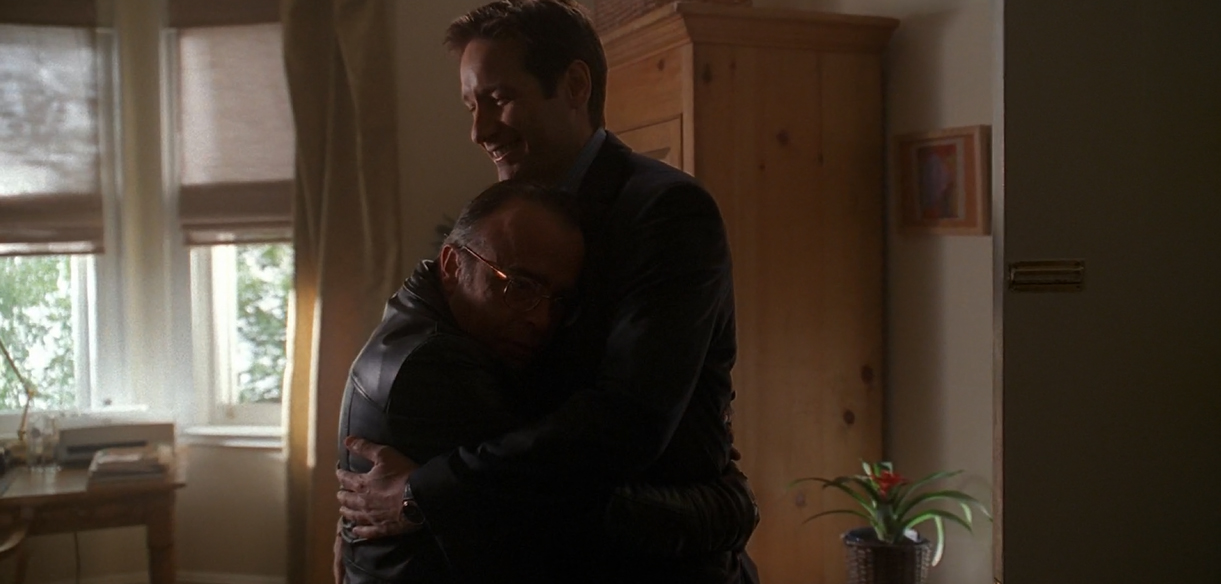
A touching reunion...

A touching reunion…

Continue reading

Harsh Realm (Review)

This November, we’re taking a trip back in time to review the seventh season of The X-Files and the first (and only) season of Harsh Realm.

Harsh Realm seems destined to be a curiosity in the career of Chris Carter.

Sure, other projects would fail. Millennium had lasted three seasons, but its audience had been in decline since the second episode was broadcast. The Lone Gunmen would fold after only half a season. However, nothing was quite as sudden and brutal as the failure of Harsh Realm. The show did not even make it to half a season. It was cancelled by the network during the production of its ninth episode, after only three episodes had aired. The six unaired episodes were shunted over to FX, where they could be broadcast away from the media spotlight.

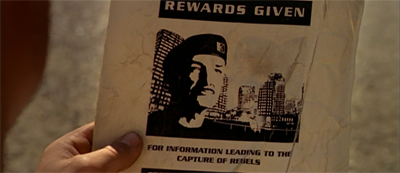
harshrealm-pilot34

This might not have been such a big deal if it wasn’t the first project developed by Chris Carter as part of his new contract at Fox, if it hadn’t been hyped up and analysed and debated. Harsh Realm was one of the most talked about new dramatic shows of 1999, and so its death was not a quiet or dignified affair. The cancellation became something of a public spectacle. Most of the attention fell on Fox Chief of Programming Doug Herzog, who seemed to be out of his depth running a major network.

Inevitably, though, some of the attention was focused on Chris Carter. Harsh Realm was a spectacular commercial failure for Carter, and one which raised questions about whether Carter and his production team were ready to face the twenty-first century.

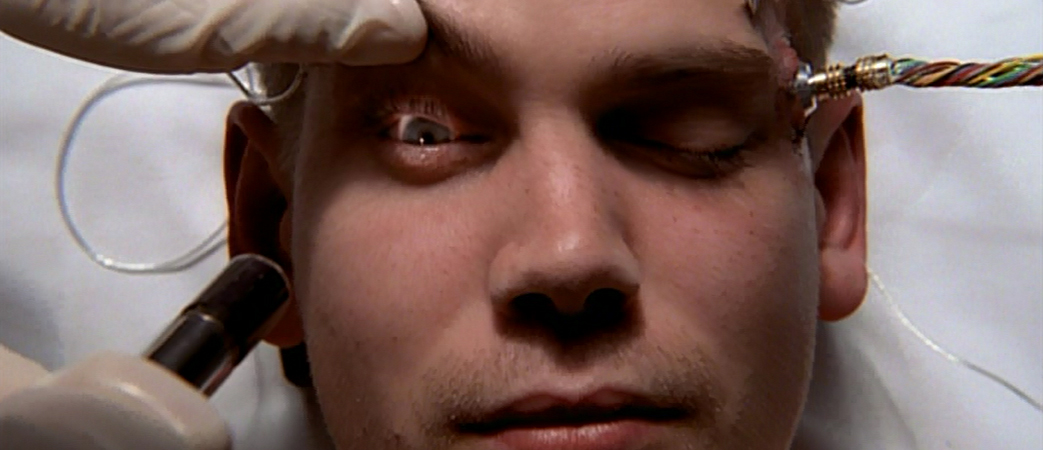
harshrealm-leviathan5

Continue reading

Harsh Realm – Manus Domini (Review)

This November, we’re taking a trip back in time to review the seventh season of The X-Files and the first (and only) season of Harsh Realm.

Manus Domini continues the influx of assistance from the writing staff on The X-Files, with John Shiban contributing a script to the first season of Harsh Realm.

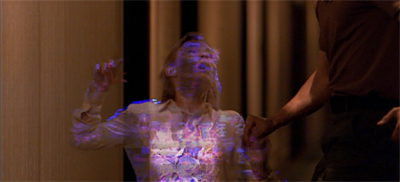
Manus Domini is a very strange episode. In a way, it feels more keenly aligned with the sensibilities of Chris Carter than those of John Shiban. It is the most overtly religious episode from the short run of Harsh Realm, with characters contemplating faith and spirituality in an otherwise cruel world. It is the logical continuation of themes seeded and developed across the rest of the season, bringing the religious subtext of the show to the fore so that it might be acknowledged and explored.

Florence in the machine...

Florence in the machine…

To be fair, there are elements that fit comfortably within Shiban’s oeuvre. Shiban is very much a fan of classic horror tropes, so it makes sense that his script should feature a monstrous supporting character whose complete moral decay is symbolised through grotesque facial deformities. (The element recurs in Camera Obscura, but is not as pronounced as it in this episode.) There are elements of Manus Domini that feel like they might have been lifted from classic seventies horror.

Nevertheless, Manus Domini is defined by its religious components, making it clear that the show retains the same core moral perspective that runs through Carter’s work; there is a recurring sense that faith and spirituality are essential to survive and endure in an increasingly faithless world.

A literal mine field...

A literal mine field…

Continue reading

The X-Files – The Goldberg Variation (Review)

This November, we’re taking a trip back in time to review the seventh season of The X-Files and the first (and only) season of Harsh Realm.

Jeffrey Bell does whimsical very well.

The Rain King and The Goldberg Variation are perhaps Bell’s two strongest contributions to The X-Files, and they stand as some of the show’s most light-hearted episodes. In a way, Bell was the perfect new writer for a show moving from moody Vancouver down to sunny Los Angeles, with his best contributions to the show managing to preserve the weirdness that fans had come to know and love while turning up the brightness at the same time. They were episodes that felt much more applicable to the show’s new home in California.

Eye see...

Eye see…

The Rain King and The Goldberg Variation are bright episodes, and not just in a literal sense. There is an optimism that runs through both scripts, suggesting that maybe the world is not an inherently hostile place and maybe not every X-file is plotting to eat your liver or carve out your cancer. Strange things happen in the world on every day, and some times those strange things can be wondrous as well as terrifying. While quite far removed from the aesthetic of the first five seasons, The Rain King and The Goldberg Variation are no less true to the spirit of the show.

The Goldberg Variation is light entertainment. It is so light that there are points where it almost seems ready to float away. That may not be such a bad thing.

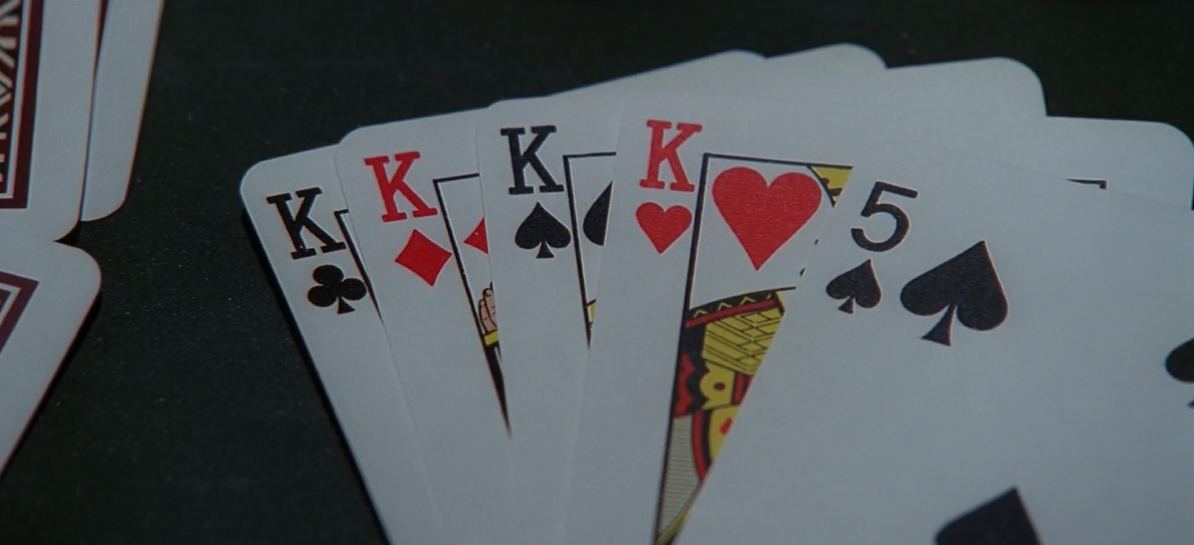
Sometimes you have to play the hand you're dealt...

Sometimes you have to play the hand you’re dealt…

Continue reading

Harsh Realm – Leviathan (Review)

This November, we’re taking a trip back in time to review the seventh season of The X-Files and the first (and only) season of Harsh Realm.

The first three episodes of Harsh Realm are an interesting combination, and not just because they were the only three episodes of the show to air before cancellation.

All three episodes are written by Chris Carter. The first two are directed by Daniel Sackheim. Taken together, they form a loose triptych. They are effectively three separate stories that come together to form a three-part pilot for the show. It is only by the end of Inga Fossa that Thomas Hobbes (and the audience) fully accept the virtual world into which they have been placed, embracing the hero’s journey that lies ahead. It isn’t until Kein Ausgang that the show really offers the audience a sense of how it might work on a weekly basis.

Fading out...

Fading out…

This is not to suggest that the events of The Pilot flow elegantly into Leviathan, nor that the events of Leviathan bleed over into Inga Fossa. All three episodes of television are discreet and individual; foreshadowing the format that the show would take in its relatively brief life. Interestingly, Carter does not take advantage of the show’s video game structure to enforce more rigid serialisation. If anything, most the nine episodes (particularly the back six) are rigidly episodic.

Leviathan is particularly relaxed in its structure. The Pilot offered all the spectacle and exposition necessary to establish Harsh Realm. In contrast, Leviathan is a bit more focused on mood and atmosphere. There is an impressive action sequence to close out the episode, but there is a larger sense that Leviathan is about establishing what day-to-day existence must be like in this virtual world.

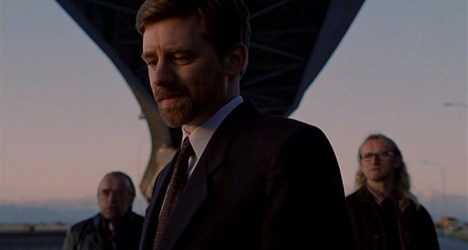
General problems...

General problems…

Continue reading

Harsh Realm – Pilot (Review)

This November, we’re taking a trip back in time to review the seventh season of The X-Files and the first (and only) season of Harsh Realm.

Hereby it is manifest, that during the time men live without a common Power to keep them all in awe, they are in that conditions called Warre; and such a warre, as is of every man, against every man.

– Thomas Hobbes, Leviathan, The First Part, Chapter XIII

Harsh Realm is essentially a war story, or a collection of war stories.

To be fair, there are other themes that bleed through the show’s short nine-episode run; a critique of late-stage capitalism, a healthy dose of Chris Carter’s patented nineties existential spirituality, an exploration of American masculinity. The show plays on all sorts of genres across its short lifespan, from horror story to western to modern noir film. However, all of these unfold against the backdrop of a world locked in total warfare. The opening scenes of The Pilot unfold against the Siege of Sarajevo, setting the tone for the rest of the series.

Tom's not here, man...

Tom’s not here, man…

Carter tends to wear his cinematic and televisual influences on his sleeves. The X-Files was a spiritual successor to Kolchak: The Night Stalker, with a little bit of The Parallax View and The Silence of the Lambs thrown in for good measure. Millennium launched in 1996 and owed a lot to the look and feel of David Fincher’s work on se7en. Harsh Realm owes a lot to the resurgence in war movies towards the end of the twentieth century, coming less than a year after Saving Private Ryan and The Thin Red Line both scored Best Picture nominations.

On the commentary for The Pilot, Chris Carter notes that the show’s protagonist was named for the philosopher Thomas Hobbes. Carter cites that Hobbes’ most famous observation is that life is “solitary, poor, nasty, brutish, and short.” The same might be said of the life of Harsh Realm.

Fading out...

Fading out…

Continue reading