• Following Us

  • Categories

  • Check out the Archives


  • Awards & Nominations

Absolute All-Star Superman (Review/Retrospective)

This post is part of the DCAU fortnight, a series of articles looking at the Warner Brothers animations featuring DC’s iconic selection of characters. I’ll be looking at movies and episodes and even some of the related comic books. With All-Star Superman confirmed as the next animated DC feature, I thought I’d take a look at Grant Morrison’s original comic book story. In case you haven’t noticed, it seems the DCAU guys are big Morrison fans.

Doomed Planet.

Desperate Scientists.

Last Hope.

Kindly Couple.

Superman.

– Grant Morrison reduces perhaps the most iconic origin story down to fewer words than this synopsis, …Faster… (Chapter 1)

I have to admit, nothing quite psyches me like holding a Grant Morrison book in my hand – save maybe holding an Alan Moore book in my hand. Sure, I might not love what he’s writing and it might not necessarily be the most complete narrative experience that could have been provided, but I always want to read it again after I’m done – even if I hated it. As a writer, Morrison can crank out crazy-yet-clever concepts like nobody’s business, finding a way to put a new slant on an old piece of mythology or making a change seem like a logical extension of what came before. All-Star Superman is perhaps his most widely respected work, an attempt to boil the iconic Man of Steel down into twelve easy-to-disgest chunks, for new and old fans alike. It’s a stunning piece of comic book literature and perhaps the closest experience one could have to holding the quintessential elements of Superman in your hands.

Last sun of Krypton…

Continue reading

Justice League – Twilight, Parts 1 & 2 (Review)

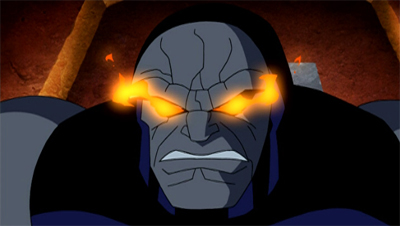
This post is part of the DCAU fortnight, a series of articles looking at the Warner Brothers animations featuring DC’s iconic selection of characters. I’ll be looking at movies and episodes and even some of the related comic books. Earlier today, I looked at Superman/Batman: Apocalypse, so I thought I might explore a Justice League episode which was heavy on Superman, Darkseid and Batman…

One of the things that Bruce Timm and his talented bunch of writers found when producing Superman: The Animated Series was that the Man of Steel simply didn’t have as strong a supporting cast of bad guys as Batman had. Without such a recognisable and eclectic collection of rogues to act as foils to their lead, the guys at the DC Animated Universe decided to co-opt in some outside help. In particular the creations of Jack Kirby’s Fourth World. Sure, these characters had been related to the Superman mythos all along (first appearing in Superman’s Pal, Jimmy Olsen of all places), so it wasn’t a stretch. Although Twilight certainly isn’t the last appearance of the New Gods (as Kirby named them) within the DC Animated Universe, it is perhaps the climax. And, quite possibly, the best.

You wouldn’t like him when he’s angry…

Continue reading

Non-Review Review: Superman/Batman – Apocalypse

This post is part of the DCAU fortnight, a series of articles looking at the Warner Brothers animations featuring DC’s iconic selection of characters. This is one of the “stand-alone” animated movies produced by the creative team that gave us the television shows. 

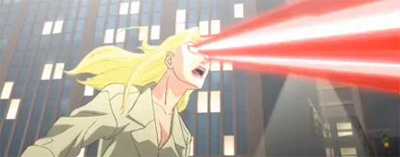
Prompted by the massive success of Superman/Batman: Public Enemies, Superman/Batman: Apocalypse is the first direct sequel in this line of animated films. It adapts the second arc of Jeph Loeb’s Superman/Batman run, and contains several direct references to the first film (including a news report covering “President Luthor’s impeachment”). While the first film worked on the sheer fun of a super-powered buddy cop film, there’s admittedly less to endear this particular movie to an audience – most notably because this same production team had already animated it as Little Girl Lost, an episode of Superman: The Animated Series.

Some looks CAN kill…

Continue reading

Final Crisis (Review/Retrospective)

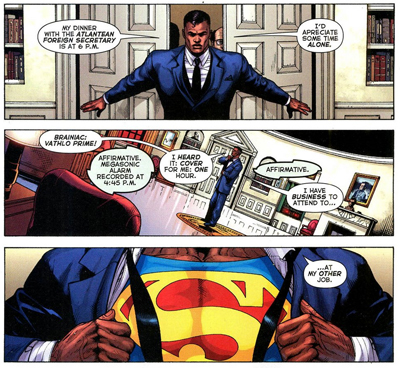
This post is part of the DCAU fortnight, a series of articles looking at the Warner Brothers animations featuring DC’s iconic selection of characters. I’ll be looking at movies and episodes and even some of the related comic books. Later on today, we’ll be reviewing Superman/Batman: Apocalypse, so I thought I might take a look at a comic book tale which was heavy on Superman, Darkseid and Batman…

This epic elegy for a doomed civilisation, declining from splendor to squalor. This Final Crisis. This last ditch attempt to save creation itself from a loathing and greed beyond measure.

– Grant Morrison outlines the whole point of the book, in case you weren’t paying attention… in a narration which deserves to be read in the most pompously ridiculous style possible

Look, I could hitch a ride back with you. I have a real talent for gritty drama no one’s ever thought to exploit.

– Merryman makes a pitch for “relevance” in the hopes of escaping comic book “limbo”

Destruction or creation. Everything or nothing. A universe full or a universe empty. Life or anti-life. Grant Morrison certainly lives up to his reputation as a frustrating and challenging author – is Final Crisis the statement of a genre looking to make peace with itself, or nonsensical Silver Age surrealism repackaged for a modern world? Is it pretentious or profound? Insightful or devoid of interest? Can’t it be both, or are these mutually exclusive states?

We all knew Obama was Superman…

Continue reading

Superman: The Animated Series – Brave New Metropolis

This post is part of the DCAU fortnight, a series of articles looking at the Warner Brothers animations featuring DC’s iconic selection of characters. I’ll be looking at movies and episodes and even some of the related comic books. Since I looked at Justice League: Crisis on Two Earths earlier, I thought it might be worth a look at what a world run by a well-intentioned Superman might look like.

The interesting thing about Superman is that, as a character, he’s very frequently defined by what he isn’t – or what he shouldn’t be. It’s very hard to codify what Superman is, but easy to agree on what he shouldn’t be (for example, the suggestion that Superman should be light and fuzzy is more likely to spark an argument than the observation that he shouldn’t be dark; or the suggestion that he should be a “sci-fi” hero is bound to more controversial than the suggestion that he shouldn’t be a street-level vigilante). Stories like Mark Millar’s superb Red Son define the character by what he isn’t (a proactive political figure) – while interpretations seeking to define the character in more positive terms are frequently divisive (for example, the space hero of James Robinson’s New Krypton or the “down with the people” “wandering the earth” traveler in Grounded). Brave New Metropolis follows a similar structure, in defining Superman by what he isn’t or shouldn’t be: he shouldn’t be a ruler or people.  

Lex Luthor is bald because he got sick of people holding him like that...

Continue reading

Non-Review Review: Justice League – Crisis on Two Earths

This post is part of the DCAU fortnight, a series of articles looking at the Warner Brothers animations featuring DC’s iconic selection of characters. This is one of the “stand-alone” animated movies produced by the creative team that gave us the television shows.

Okay, well maybe it’s not quite “stand-alone”, seen as it’s based off a script that was intended to bridge the two animated series Justice League and Justice League Unlimited. Anyway, some of these movies – such as Justice League: New Frontier – are excellent examples of Western animation in their right. Some – such as Wonder Woman – are spectacular introductions to characters that perhaps never really got the attention that they so sorely deserved. On the other hand, some are just animated versions of a Jerry Bruckheimer blockbuster production.

Justice League: Crisis on Two Earths is one of those.

Owlman is a bird of prey...

Continue reading

Grant Morrison’s Run on Justice League of America – The Deluxe Edition, Vol. 3-4 (Review/Retrospective)

This post is part of the DCAU fortnight, a series of articles looking at the Warner Brothers animations featuring DC’s iconic selection of characters. I’ll be looking at movies and episodes and even some of the related comic books. With the review of Justice League: Crisis on Two Earths later on today, I thought I’d take a look at Grant Morrison’s graphic novel which inspired it in someway. However, I figure – given that large debt that the entire Justice League cartoon owes Morrison’s iconic tenure on Justice League of America – it’s time to take a look at the latter half of Morrison’s run on the title.

We have no powers, there are millions of them and there’s a child in there who needs us to save the world. Let’s go.

– another day at the office for Superman

I remarked in my review of the first two deluxe hardcovers collecting his work on the series that I was perhaps a lot less impressed than most with Morrison’s work on the title. It was grand and bombastic, but it ended up feeling more than a little hallow, especially measured against some of his bolder efforts within the superhero genre. Although time and a few re-reads have softened my perspective quite a bit, I will concede that I don’t measure this as the writer’s best work. It’s epic and smart and fun, but never really becomes anything too much more.

But, then again, they are the Justice League. If I want deep characterisation of philosophical meanderings, I can check out a different book.

It actually looks quite peaceful when you're not saving it...

Continue reading

Justice League: A Better World

This post is part of the DCAU fortnight, a series of articles looking at the Warner Brothers animations featuring DC’s iconic selection of characters. I’ll be looking at movies and episodes and even some of the related comic books. Tomorrow I’ll be reviewing Justice League: Crisis on Two Earths, so I thought it might be worth a look at what a world run by an evil Justice League might look like.

One of the central challenges that the iconic Justice League characters have had to face over the years has been the way that the comic book world has slow and sometimes subtly morphed into something far more sinister than the bright-coloured origin stories of the forties, fifties or even sixties. There was a time when supervillains were a relatively harmless sort, the hero would always save everyone’s life and there would be a “happy ever after” ending thrown on – most obviously in the Silver Age, which produced characters like the modern Flash and Green Lantern. Even the characters who were originally somewhat darker and edgier – Superman and Batman, for example, were originally relatively indifferent to human life – passed through this phase with a healthy respect for a game based around rules – the first being “thou shalt not kill”. However, times changed. Villains went from being theives and irritations to being murderers and rapists. Naturally, the fact that no prison could hold a popular bad guy long enough kinda undermines the good that these heroes do – the Joker is always going to kill more people unless he is eventually killed.Sure, there’s comic book logic at play here – the same way that having genius heroes hasn’t altered the way normal people live too much – but at some point the old fashioned values seem a little outmoded. Somebody suggests that a line should be crossed. Various iterations of the characters have tackled the issue in multiple ways, and A Better World is the attempt by Bruce Timm and the writers of the DC animated universe to address it. 

Being the group's plucky comic relief isn't without risks...

Continue reading

Superman: The Animated Series – The Late Mr. Kent

This post is part of the DCAU fortnight, a series of articles looking at the Warner Brothers animations featuring DC’s iconic selection of characters. With the review of Superman: Doomsday yesterday, I thought it might be worth taking a look at some of the other times Superman has “died” in these animated stories.

Superman: The Animated Series wasn’t quite the huge success that the earlier Batman: The Animated Series had been. It was still a superb animated adaptation of an iconic comic book property, but perhaps Superman is just a tougher character to get a handle on than the Dark Knight – there’s no denying the popular perception that Superman is “boring” by virtue of the fact that he can do just about anything. We can debate that idea back and forth, but I’d argue that the a really good Superman story makes his powers irrelevant by avoiding (or at least downplaying) the physical threat. The character isn’t necessarily defined by how hard he can hit things or how fast he can fly, but by who he is. (Of course, this doesn’t really excuse the “emo-Superman” approach DC seem to be so fond of with Superman Returns and all that.) The Late Mr. Kent is – for my money – one of the most fascinating episodes of the animated series by virtue of the fact that it finds a rather interesting and deeply personal angle on the Man of Steel, without feeling the need to be “grand” or “epic”. Sometimes it’s enough to be intimate.  

Clark was blown away by the story he uncovered...

Continue reading

Justice League – Hereafter (Parts I & II)

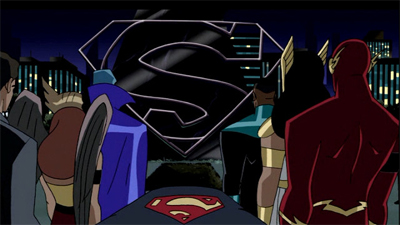
This post is part of the DCAU fortnight, a series of articles looking at the Warner Brothers animations featuring DC’s iconic selection of characters. With the review of Superman: Doomsday earlier, I thought it might be worth taking a look at some of the other times Superman has “died” in these animated stories.

Despite the rather large cast that the writers and producers used in producing Justice League and Justice League Unlimited, I always felt that the show was better with a more narrow focus. Of course, new characters like Green Lantern and Wonder Woman got their own episodes, but Batman and Superman were rarely the focus of attention – perhaps because they had each had their own television show beforehand, and ample time for exposure. Hereafter is a two-part episode which really feels like two separate stories, both of which are fundamentally about Superman. The first is an exploration of who the hero is, based around removing him from the fictional universe and examining the holes left in his absence. The second half explores what makes Superman a hero, if it isn’t his collection of superpowers.

Part of me wonders where Clark Kent is buried...

Continue reading