• Following Us

  • Categories

  • Check out the Archives


  • Awards & Nominations

Luke Cage – Wig Out (Review)

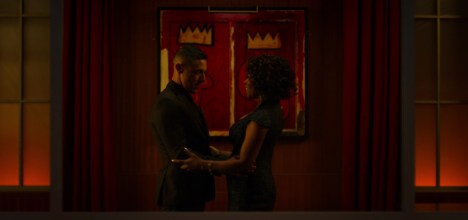
The second season of Luke Cage engages with the idea of masculinity in a number of interesting ways.

This is an interesting choice on a number of levels. Most obviously, the idea of exploring masculinity within the framework of a Marvel Netflix show should (in theory) belong to Jessica Jones. With the character of Kilgrave, it was the streaming service’s first female-led superhero series that marked out the idea of masculinity as a concept worth exploring within the framework of a superhero narrative. However, the second season of Jessica Jones is very engaged with the idea of female relationships, whether friendly or familial.

In doing so, Jessica Jones may have passed the theme on to the second season of Luke Cage. This makes sense on a number of levels. Most superficially, Luke Cage was actually introduced as a recurring guest star on the first season of Jessica Jones, and so ideas about masculinity are clearly woven into the character’s core identity. Beyond that, there is some value in Luke Cage in exploring the idea from a different perspective. After all, Luke Cage is a series with a male heroic lead. Its approach to the theme of masculine identity would be radically different.

As such, the second season of Luke Cage is perfectly positioned to explore notions of masculine identity.
Continue reading

Non-Review Review: Thor – Ragnarok

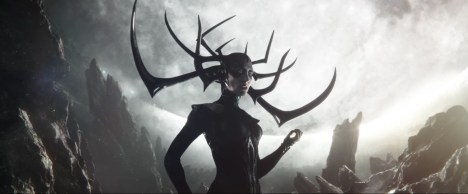
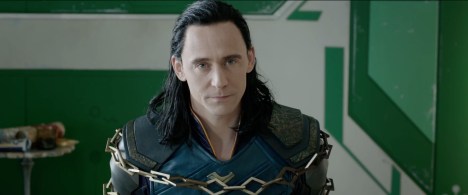
Thor: Ragnarok is a pure pop superheroic pleasure.

Thor has always been the most archetypal member of the Avengers, the character cast in the most conventional superheroic mould. Captain America was a soldier; Tony Stark and Bruce Banner designed weapons; Black Widow was an assassin; Hawkeye was a cosplayer with a bow and arrows. In contrast, Thor was a literal demigod. He looked the part of a conventional superhero, with his billowing red cape and his awesome power.

To Hela back.

Part of the joy of superhero stories is the way in which they form a strange oral history tradition; the stock comparison is to modern mythology, and there are certain shades of that. Superhero stories provide a lens through which classic and archetypal stories might be reimagined and reconstructed. Building on Chris Claremont’s characterisation of Wolverine, James Mangold pitched the superhero as the spiritual descendant of the samurai in The Wolverine and of the cowboy in Logan.

Thor: Ragnarok understands the potential of the comic book superhero as a framework for remixing and reimagining classic tales, as a weird cultural cocktail that effortlessly blends countless different flavours. In this respect, director Taika Waititi is being faithful to the source material. The appeal of Stan Lee and Jack Kirby’s work on Thor was the synthesis of classic mythology and retro science-fiction to construct something that was utterly unique. Thor was both a Norse god and a cosmic champion, a superhero and a mythic figure.

Wave after wave.

Thor: Ragnarok is perhaps a little over-stuffed, particularly in its opening act. Ragnarok races to hit plot points and fill in details, with an ensemble that feels far too deep for a two-hour-and-ten-minute romp. The biggest problem with Ragnarok is that the movie is practically overflowing with delight and joy. This not a serious problem by any measure. The movie never drags, and its goofy charm is never anything but infectious. Ragnarok could be structured and paced better, but the chaotic nature of the movie is part of its appeal. Ragnarok constantly threatens to burst.

The result is a movie that lacks the finesse and efficiency that define the best of the Marvel Cinematic Universe, but one that is overflowing with an energy and an eagerness that are endearing.

The ties that bind.

Continue reading

Jessica Jones – AKA The Sandwich Saved Me (Review)

It could be argued that Jessica Jones is at its strongest when it embraces its status as an anti-superhero story.

The weakest points in the first season come when Jessica Jones embraces its superhero elements too readily, like when AKA Crush Syndrome or AKA It’s Called Whiskey fixated upon the idea of Kilgrave’s “weakness” as if Jessica is going to pull a glowing purple rock out of her pocket that will solve everything or when AKA 99 Friends made a point to tie the show into the events of The Avengers. This is not a show that lends itself to those sorts of superhero conventions.

jessicajones-thesandwichsavedme20a

Instead, Jessica Jones works best when it ignores many of the more common tropes of the genre. Kilgrave is particularly creepy for the fact that he doesn’t want to rule the world or destroy New York. Jessica Jones and Luke Cage are more interesting for the fact that they cannot be reduced to a series of cause-and-effect chain of consequence. These are real and messy lives that just happen to exist in a world full of giant green rage monsters and Norse deities. The juxtaposition is part of the appeal.

In that respect, AKA The Sandwich Saved Me plays as something of a gleefully subversive origin story. It exists primarily as a negative space, a story that rejects enough of the preconceived notions of superhero tales that it fosters a compelling dissonance.

jessicajones-thesandwichsavedme24a

Continue reading

The X-Files – Rush (Review)

This November, we’re taking a trip back in time to review the seventh season of The X-Files and the first (and only) season of Harsh Realm.

When did The X-Files get so old?

As with a lot of the seventh season, Rush is an episode that seems consciously aware of the series’ advancing age. Whether watching Mulder’s life go by in The Sixth Extinction II: Amor Fati or battling zombies in Millennium, the seventh season is acutely aware of the fact that any prime-time drama that has been on the air for seven years is rapidly approaching obsolescence. What was once young and fresh becomes old and tired. There is a sense that the series really wouldn’t mind the prospect of retirement, now that it’s well past the syndication mark.

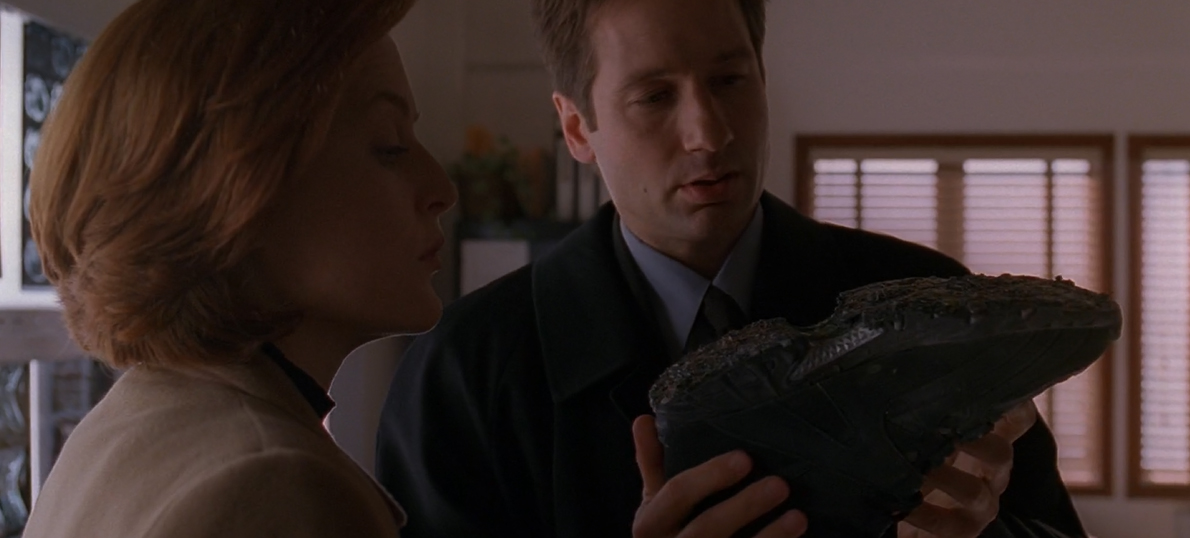
"He wore sneakers... for sneaking."

“He wore sneakers… for sneaking.”

Rush emphasises the advancing years of the show, often awkwardly putting its tongue in its cheeky as it suggests that Mulder and Scully are really lumbering dinosaurs trying to navigate the fast-paced world of high school. David Amann’s script is occasionally a little too wry and self-aware for its own good; this is an episode based around a laboured pun about how “speed” is also a drug, after all. Rush often demotes Mulder and Scully to passive observes, quipping and flirting from the sidelines as the plot unfolds around them.

Rush lacks the charm and dynamism that define the show’s (and the season’s) standout hours, but it is a well-constructed and enjoyable standalone adventure on its own terms. As with Hungry, it feels like a conscious effort to get “back to basics” with the series. If the seventh season is going to fixate on the series’ status as a televisual lame duck counting down its last few episodes, this is not such a bad way to do it.

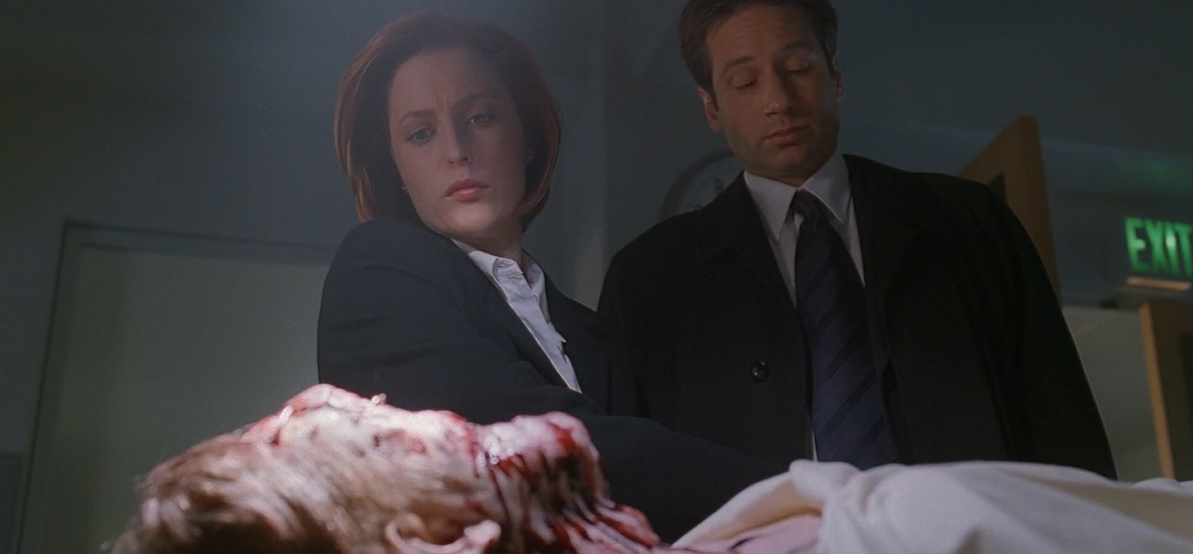
Scully'll take a run at this...

Scully’ll take a run at this…

Continue reading

Daredevil – Speak of the Devil (Review)

To celebrate the launch of Marvel’s Daredevil and the release of Avengers: Age of Ultron, we are reviewing all thirteen episodes of the first season of Marvel and Netflix’s Daredevil. Check back daily for the latest review.

There is an interesting inherent contradiction baked in Daredevil, perhaps mirroring the conflicts within the show’s title character.

In many respects, Daredevil is utterly unlike anything else produced by Marvel Studios. It stands quite firmly apart from the studio’s style in projects like The Avengers or Thor or Guardians of the Galaxy or Agents of S.H.I.E.L.D. The show is a lot more cynical and grounded. It is a lot more violent and gritty than anything else that the company has produced as part of their shared on-screen universe. It looks and feels quite distinct from the rest of the company’s output. It has a style and mood all of its own.

daredevil-speakofthedevil

However, for all that darkness and brooding, Daredevil is arguably the most familiar and traditional of superhero narratives produced by Marvel Studios. Matt Murdock might be more violent and brutal than any other major character in this shared universe, but he is also the most typical superhero. He is the only hero in the Marvel Cinematic Universe to have a proper secret identity. He is also the only hero in the Marvel Cinematic Universe to have a firm “no kill” rule.

This creates an absolutely fascinating conflict within the structure of the show, as Daredevil manages the wonderful task of being both the most typical and the most atypical of the Marvel Studio productions.

daredevil-speakofthedevil37

Continue reading

The Flash (1987-2009) #12-14 – Velocity 9/Savage Vandalism/Wipe Out (Review)

So, I’m considering reviewing this season of The Flash, because the pilot looks interesting and I’ve always had a soft spot for the Scarlet Speedster. I’m also considering taking a storyline-by-storyline trek through the 1987-2009 Flash on-going series as a companion piece. If you are interested in reading either of these, please let me know in the comments.

Does anything date a mainstream superhero comic worse than the almost obligatory anti-drug issue?

In the wake of Crisis on Infinite Earths, DC made a rather conscious effort to engage with younger readers. Some of these worked, but quite a few were cringe-induncing in execution. On paper, introducing more diversity into the shared universe via New Guardians was a good idea; in practice, these diverse characters were little more than stereotypes. On paper, killing Barry Allen and replacing him with the younger Wally West was worth doing; in practice, it seemed like the company had no idea how to make him relatable.

Drugs are bad, m'kay?

Drugs are bad, m’kay?

Quite a few of the comics published around this time have dated poorly. They seem like awkward attempts to reengage with the cultural zietgeist, without understanding that zietgeist at all. Mike Baron had given fans a younger and more grounded version of the Flash, but immediately had the character win the lottery and move to the Hamptons. There was a sense that the comic wanted to dispel criticisms that DC was old-fashioned or stuffy, but had no idea of how to actually go about that.

This leads to stories like Velocity 9, the obligatory “winners don’t use drugs” story that tries to be timely and cutting edge, but simply doesn’t work.

Tripping himself up...

Tripping himself up…

Continue reading

Mark Waid’s Run on Justice League of America – Tower of Babel (Review/Retrospective)

23rd July is Batman Day, celebrating the character’s 75th anniversary. To celebrate, this July we’re taking a look at some new and classic Batman (and Batman related) stories. Check back daily for the latest review.

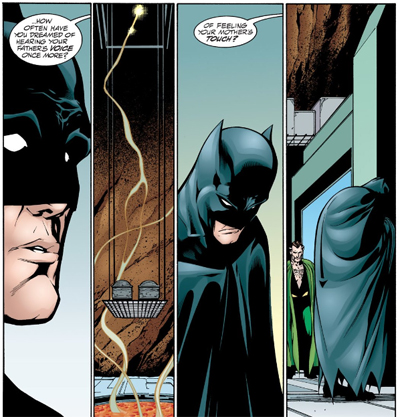
Although actually published in 2000, Tower of Babel is the third definitive Batman story of the nineties. Running only four issues instead of a massive sprawling crossover across an entire line of comic books, Tower of Babel is certainly more condensed than either Knightfall or No Man’s Land, hitting on many of the same themes and concepts. It is very much constructed as a cautionary tale – a warning about taking a particularly cynical approach to Batman to its logical extreme.

Due to his stand-off-ish nature, the nineties iteration of Batman is sometimes affectionately (or not so affectionately) referred to a “Batjerk.” This version of the character has a wonderful knack of pushing his friends and allies away, making enemies, and escalating problems due to arrogance and ego. In many respects, Tower of Babel is a quintessential “Batjerk” story, where Batman’s anti-social tendencies lead to the humiliation and defeat of the entire Justice League using his own plans.

The last temptation of Batman...

The last temptation of Batman…

Continue reading

Kurt Busiek’s Avengers – Avengers Assemble! Vol. 4 (Review/Retrospective)

April (and a little bit of May) are “Avengers month” at the m0vie blog. In anticipation of Joss Whedon’s superhero epic, we’ll have a variety of articles and reviews published looking at various aspects of “Earth’s Mightiest Heroes.”

Read our review of The Avengers here.

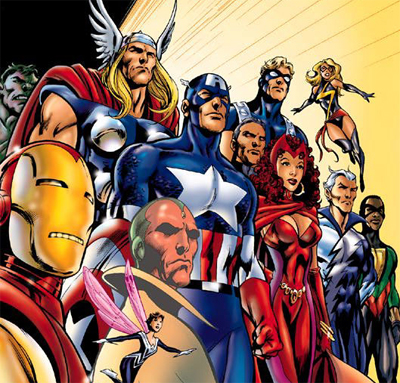
I don’t envy the fourth collection of Avengers Assemble! On one side of this collection, you have three volumes of work featuring the collaboration between writer Kurt Busiek and artist George Perez. On the other side, you have the epic conclusion to Busiek’s run, The Kang Dynasty. Between the two, you have this collection – which features only six actual issues of The Avengers, the rest padded out with annuals or specials or miniseries. It’s something of a transitional time. A lot of the story is about the impact of what has happened so far, while foreshadowing what’s to come.

One 4 all?

Continue reading

Brad Meltzer’s Run on Justice League – The Lightning Saga (Review/Retrospective)

This January, I’m going to take a look at some of DC’s biggest “events.” This week I’ll be taking a look at Brad Meltzer’s impact on the DC universe. This is a crossover with Geoff Johns’ second run on Justice Society of America.

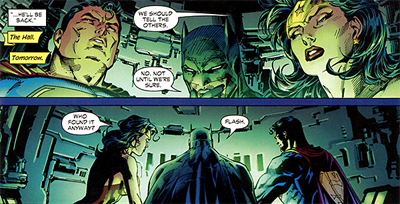
I can’t help but feel like having Brad Meltzer write this Justice League was a huge waste of what could have been a very impressive run. After all, Meltzer is a big novelist, and turning his attention to DC was a big deal at the time. More than that, though, it seemed like a move that could have pushed the Justice League very much to the fore. Imagine a team of DC’s most iconic properties, helmed by a respected and successful author, and sold outside of comic book stores. Imagine the trade paperback possibilities – I imagine there’s potential to get a Brad Meltzer Justice League book into the hands of somebody who has never read comic books before, and that’s got to be a win. Indeed, the book seems to acknowledge that by advertising a foreword by Patton Oswalt on the front page – it screams “mainstream! mainstream!” Unfortunately, though, it’s the only aspect of this crossover that does, leaving me with only a faint taste of what might have been. It’s not that it’s bad – it’s that it could have been so much better.

The whole trinity...

Continue reading

The Absolute Authority, Vol. 2 (Review)

With Wildstorm being officially folded into the relaunched DCU (the “DCnU”), I thought I might take a look at some of the more successful and popular Wildstorm titles that the company produced. In particular, The Authority, the superhero saga that spun out of Stormwatch – a series that is getting its own post-relaunch book written by Paul Cornell, easily one of my more anticipated titles.

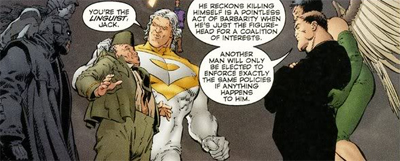
In many ways, it was The Authority that established Mark Millar and Frank Quitely as talents to watch in their own rights, rather than through their associations with Grant Morrison. As a concept, the series was launched by Warren Ellis and Bryan Hitch, but the duo picked their own replacements. I have to say, I think they chose rather wisely, even if the series has lost a rather considerable amount of its bite nearly a decade after its initial publication. That said, it’s still a highly entertaining superhero book, and one which had more than its fair share of influence on the mainstream titles over the last ten or so years.

There's a new Authority in town...

Continue reading