• Following Us

  • Categories

  • Check out the Archives


  • Awards & Nominations

Doctor Who: The Reality War (Review)

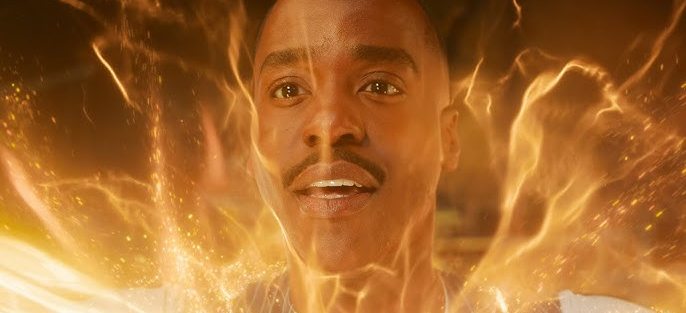
“Oh, hello.”

Well, Russell T. Davies winds up the Fifteenth Doctor’s era by taking a second shot at The End of Time, Part II.

Fifteen’s minutes of fame.

Continue reading

Doctor Who: Wish World (Review)

“We’re going to bring down God. Are you with us?”

In many ways, Wish World feels like a thesis statement for Davies’ return to Doctor Who.

It is a story that is, very overtly, about the power of stories and narratives to warp reality. It is a story about the violence that comes from attempts to impose restrictive and suffocating conformist narratives upon people, and how media can bend reality to a point that doubt can cause the world itself to literally crack open. Davies’ return to Doctor Who has been fascinated by the porous nature of reality and the power of television as a medium, and all of that comes crashing to a head with Wish World.

A delightful John-ty adventure.

Wish World is very obviously setting up The Reality War, the big blockbuster-sized finale that will be the first episode of Doctor Who to premiere on BBC One since The Giggle, allowing for the Christmas Specials The Church on Ruby Road and Joy to the World. A significant portion of the episode amounts to pieces being moved around the board so that they can deliver in the season finale, to the point that the Rani herself has to acknowledge that the final act of the episode is largely “exposition.” It is always difficult to discuss the first part of a two-part episode in isolation, and that is especially true of a the first part of a season finale.

However, Wish World works largely on its own terms, crystalising the ideas that have been simmering across these twenty episodes since The Star Beast, articulating themes that are clearly weighing on Davies’ mind.

Continue reading

Doctor Who: The Interstellar Song Contest (Review)

“Did I just fly through space on a confetti cannon?”

“Yeah.”

“Camp.”

The Interstellar Song Contest is a very strange episode of Doctor Who, both inside and outside the narrative.

Internally, there is a surprising tension within the episode, which is transparently Die Hard at Eurovision.” This is an inherently camp premise. It is, in classic Doctor Who tradition, a “frock” premise. It is goofy, silly, and inherent queer-coded. However, once the episode gets moving, it shifts gears into something much darker and more intense; this is an episode which opens with the audience blown into space, weaves through genocide and builds to a sequence of the Doctor sadistically torturing the villain. The episode balances on a tonal knife-edge.

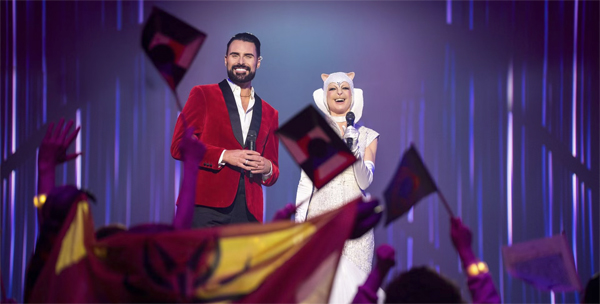
Spaced out.

However, there is also an uncomfortable tension in the air around The Interstellar Song Contest, a story that was conceived and written two years ago, intended to air on the night of Eurovision, and which was obviously intended as a criticism of consumptive capitalism, but which takes on a lot more weight by simple virtue of the events that have unfolded in the time between when the episode was commissioned and when it was broadcast. The Interstellar Song Contest is an episode is watched in a different context than it was made, despite being ostensibly tailored for this moment.

The result is a deeply fascinating and unsettling episode of television, one that demonstrates both the urgency and the immediacy of television as a medium, but which also illustrates the risks that come with that.

Tune in.

Continue reading

Doctor Who: Lucky Day (Review)

“At least your special effects are improving.”

To be fair, a pretty solid run had to end at some point, and a Pete McTighe script is as good a place as any.

Lucky Day is an interesting episode. It solidifies the sense of this second Davies era as its own distinct object with its own distinct rhythms and structures. Just as one might pair Space Babies and The Robot Revolution, The Devil’s Chord and Lux, or Boom and The Well, Lucky Day is very obviously designed for the same slot as 73 Yards. This is another Doctor-lite episode built around Ruby Sunday, featuring U.N.I.T., set on contemporary Earth. It even brushes against rural folk horror, invoking The Wicker Man in its discussion of English villages.

Food for thought.

However, the episode takes a sharp and ambitious turn in its second half. As with a lot of recent Doctor WhoLucky Day is an episode engaged with the larger context of the show and its place in the popular discourse. It is obviously structured around things that matter to both Davies and McTighe. It is commendably self-aware and playful. There is, on paper, a lot to appreciate about Lucky Day.

The problem is the execution, as the episode’s themes break like waves against the actual narrative itself. Lucky Day only really makes sense as metatext, but cannot support the weight of its big ideas whether inside or outside the fictional universe. It’s an unlucky break.

Absolutely floored.

Continue reading

Doctor Who: The Well (Review)

“There’s still hope.”

“Hope is irrelevant.”

The Well is a strange and triumphant exercise, a collection of contradictions that coheres remarkably well.

It is a chamber piece, a very basic Doctor Who story that could easily have been executed on the classic BBC budget, blown up with Disney+ money. It is a very obvious sequel to at least one beloved story from Davies’ original tenure as showrunner, and saturated with references to others, while still feeling undeniably like a produce of his second era overseeing the show. It is an exercise in nostalgia, but also a story about how that nostalgia is cursed. It is also Russell T. Davies revisiting his early work, while taking cues from Steven Moffat.

All’s well…

It shouldn’t work. The Well should collapse under its own weight. It should feel like an indulgent mess, a collection of clashing recycled imagery and iconography. However, The Well manages to strike a very careful balance between its competing priorities, allowing the individual elements to add up to more than the sum of its individual parts. It’s an episode that feels like an extension of Davies work in both The Robot Revolution and Lux, solidifying a rich thematic vein running through the first three stories of the season.

The Well is a remarkable accomplishment.

Spaced out…

Continue reading

Doctor Who: Lux (Review)

“And tell me, how did you enter this world?”

“I’m a two-dimensional character, you can’t expect backstory.”

There has been a lot of discussion about the reduction in the number of episodes of Doctor Who produced within a year. These discussions are often alarmist in nature, and framed in some sort of despairing lament about how the show is not what it once was. However, there is less discussion about how this compression of the show affects its format.

While Davies can be a chaotic writer within individual episodes, particular rushing towards a climactic resolution to a story or a season, he has always had a very vision of the structure of a given season of Doctor Who. Both of Davies’ successors, Steven Moffat and Chris Chibnall, experimented with different season structures.

Ring-a-Ding-Ding…

Moffat’s fifth season was structured identical to the previous four, and then his sixth season was structured as an inversion of that – opening with an epic two-parter, closing with a single run-around episode. His seventh season was all stand-alone episodes, while his ninth season was comprised primarily of two-parters, most of which adopted an interesting approach to the basic structure of a two-parter.

Chibnall’s first season was comprised entirely of standalone and disconnected episodes, with the Stenza serving as recurring antagonists. Chibnall’s second season was much more arc-focused, opening and closing with two big two-part adventures, with The Timeless Children rewriting the show’s lore. Chibnall’s third season was a single narrative spread across six episodes, Doctor Who: Flux.
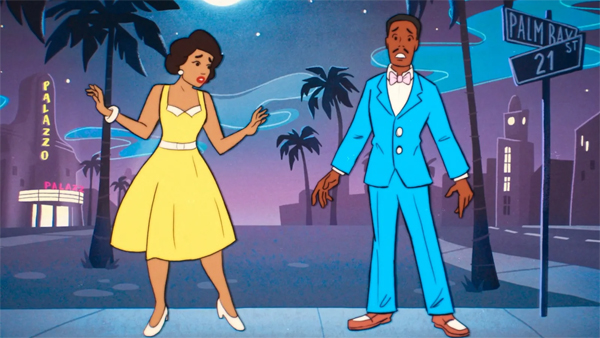
An animated discussion.

However, Davies had a structural formula and he largely stuck to it. Davies’ seasons often opened with triptych of present-past-future stories to orient new viewers in the world of Doctor Who, before leading into a toyetic monster two-parter. This would be followed later in the season by a more high-brow two-parter, and then a two-part season finale that had been seeded through the season to that point. Davies adhered rigidly to that structure.

That structure worked within the confines of thirteen-episode seasons, but obviously cannot be applied to an eight-episode season. After all, just counting through the “obligatory” episodes within that structure eats up nine of the season’s episodes. So Davies has had to come up with a new structure for the show’s seasons. Space Babies and The Robot Revolution effectively compress those opening three episodes into a single story, while The Devil’s Chord and Lux suggest an entirely new narrative archetype.
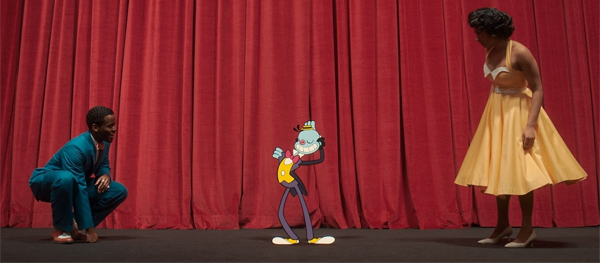
The next stage of the show…

There is some online debate about whether Davies is repeating himself, whether his approach to Doctor Who is meaningfully different now than it was twenty years ago. While it’s easy to focus on the places where Davies’ writing is similar – notably the premieres and the finales – it is also worth acknowledging where it is different. The Devil’s Chord and Lux are two episodes that are of a piece with one another, two episodes as similar to one another as Rise of the Cybermen and The Age of Steel are to The Sontaran Stratagem and The Poison Sky, fitting within Davies’ season structure.

However, they are also new and exciting. They are a type of episode that is fundamentally different from anything that Davies even attempted during his first tenure as showrunner. Indeed, they are fundamentally different from anything that Moffat and Chibnall attempted as well. They are big, bold and self-aware. They represent a clear evolution of what is possible on Doctor Who. If nothing else, they prove the show is still alive – that it is still animated.
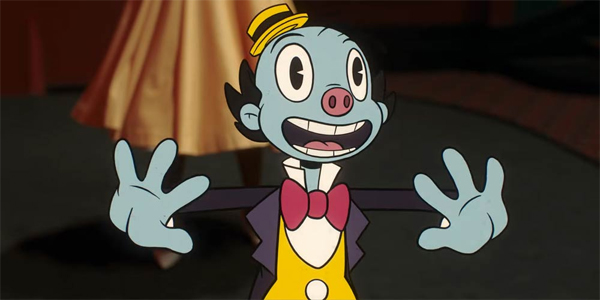
Rave about this episode until you are blue in the face…

Continue reading

Doctor Who: The Robot Revolution (Review)

“I’m saying no.”

“With regret, your powers are only nominal.”

“Why is it all so mad? Why is everything on this planet so stupid?”

One of the interesting consequences of the relatively compressed modern season of Doctor Who is the way that it collides episodes into one another.

With only eight episodes in a given season, there isn’t room for the sort of structure that Davies brought to his first four years overseeing Doctor Who, when he would reintroduce the show to audiences each year with a triptych that opened in the present and followed with a celebrity historical and a futuristic science-fiction episode. Rose gave way to The End of the World and The Unquiet DeadSmith and Jones led into The Shakespeare Code and Gridlock. Partners in Crime fed into The Fires of Pompeii and Planet of the Ood. Davies’ second season was the exception, opening with New Earth and Tooth and Claw, but that was notably the only one of Davies’ four seasons that didn’t have to open with the introduction of a new companion, with The Christmas Invasion having introduced the Tenth Doctor.

Extending its reach.

The Robot Revolution is put in the awkward position of having to combine the typical Davies season opener that introduces Belinda Chandra as a companion but also being Davies’ big high-concept pseudo-political idiosyncratic science-fiction story like Gridlock or Planet of the Ood. The result is a strange cocktail, that doesn’t quite cohere but is nevertheless compelling. For all the criticism of Davies’ return as showrunner, his second tenure does not lack for ambition and ideas. The Robot Revolution is bursting with concepts and thoughts, with Davies eager to scream his ideas at the loudest possible volume. The Robot Revolution is, in typical Davies style, incredibly maximalist in its storytelling. It brushes past plot points and ideas with reckless abandon and breathless enthusiasm.

Whatever the episode’s flaws, it’s certainly not the product of assembly line production.

The march of progress…

Continue reading

Doctor Who: The Devil’s Chord (Review)

“Why have I never done that before?”

The Devil’s Chord is, to put it frankly, a mess.

It is an episode that is trying to do so many things. It is an attempt at a celebrity historical featuring the Beatles. It is a journey into the history of Doctor Who. It is an attempt to build up lore to play into the larger arc of the season around it. It is an attempt to argue for the very idea of art as something with intrinsic value at a time when writer Russell T. Davies is openly lamenting the erosion of the BBC. It is an effort to introduce a new memorable villain, played by a notable guest star. It is an attempt of that classic trope, the musical episode.

There is a sense that all of this is too much. The Devil’s Chord is bursting with ideas. Like Wild Blue Yonder, it feels like an episode written by a showrunner who has had more than a decade to kick around new ideas for Doctor Who and is bristling to get them into the show. While Wild Blue Yonder was able to make those ideas cohere into a single narrative, The Devil’s Chord fractures and breaks under the sompeting impulses driving it.

Unfortunately, The Devil’s Chord strikes a bum note.

This Venom sequel is not what I expected.

Continue reading

Doctor Who: Space Babies (Review)

“There’s no such thing as monsters. Just creatures you haven’t met yet.”

Space Babies is an interesting season premiere, in large part because it feels like a test case for Russell T. Davies’ return to Doctor Who.

Of course, the three sixtieth anniversary specials were in effect a miniature season. The Star Beast was structured like a classic Davies premiere and The Giggle delivered a lot of the spectacle that one might expect from a Davies era finale. Still, Space Babies represents the start of Davies’ first full season as returning showrunner. It is also the first episode to premiere on Disney+. As such, it is a mission statement. Space Babies is an interesting demonstration of how Davies has changed and how he remains consistent.

Space Babies is recognisable as a Davies era premiere, evoking stories like Rose, New Earth, Smith and Jones and Partners in Crime. It is a decidedly low-stakes adventure featuring a couple of appealingly goofy elements and a fairly generic plot, which allows Davies to foreground character and theme while also outlining his vision of the show in a way that is designed to be welcoming to new viewers. It’s a solid example of what Doctor Who is, particularly under Davies. Davies has been away from Doctor Who for nearly fifteen years, but some things remain consistent.

At the same time, it’s also very obviously written with the understanding that Davies is pitching the show to a slightly different audience than he used to. This changes are subtle, but they are instructive. While the plot and rhythms of Space Babies suggest that Davies himself hasn’t changed, there are shifts that demonstrate an understanding of how the show itself has changed.

“It’s Space, Babes.”

Continue reading

Doctor Who: The Star Beast (Review)

“There’s just this… gap.”

“It’s no great mystery. You had a bit of a breakdown, sweetheart. And then you got better.”

“Sometimes I think there’s something missing. Like I had something lovely, and it’s gone.”

Doctor Who is back.

Who’s back.

Continue reading