• Following Us

  • Categories

  • Check out the Archives


  • Awards & Nominations

Star Trek: Enterprise – A Night in Sickbay (Review)

Next year, Star Trek is fifty years old. We have some special stuff planned for that, but – in the meantime – we’re reviewing all of Star Trek: Enterprise this year as something of a prequel to that anniversary. This April, we’re doing the second season. Check back daily for the latest review.

A Night in Sickbay may be the most divisive episode of Star Trek: Enterprise ever broadcast.

On the one had, it seems like fans hated the episode with an incredibly passion. The Agony Booth described A Night in Sickbay as “the worst episode of one of the most cringe-worthy shows of the last ten years.” The episode is frequently included in those very popular “worst episodes ever!” polls that the internet loves so much. The only episode that seems more certain to provoke fan vitriol is These Are the Voyages…, the series finalé which has little to say about the actual series.
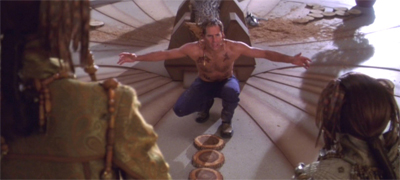
"I am THIS sorry..."

“I am THIS sorry…”

However, the hatred for A Night in Sickbay is not universal. It was one of two Enterprise episodes to make the shortlist for the 2003 Hugo Award for Best Dramatic Presentation in the “short form” category. More than that, A Night in Sickbay actually polled ahead of the other nominated episode of Enterprise, Carbon Creek. Even in commercial terms, A Night in Sickbay was a success, earning the highest ratings (and share) of the show’s second season.

It seems that A Night in Sickbay exists in a rather strange grey area. It enjoys the support and appreciation of members of the cast and even those outside Star Trek fandom, while it provokes nothing but hatred from hardcore fans. This immediately makes A Night in Sickbay a fascinating watch; any show that can provoke such a polarising response must have some interesting aspects.

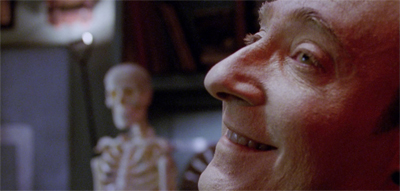
Smile!

Smile!

Continue reading

Star Trek: Enterprise – Season 1 (Review)

Next year, Star Trek is fifty years old. We have some special stuff planned for that, but – in the meantime – we’re reviewing all of Star Trek: Enterprise this year as something of a prequel to that anniversary. This January, we’re doing the first season. Check back daily for the latest review.

The first season of Star Trek: Enterprise is caught at a crossroads.

On the hand, it needs to be something new and exciting. The first Star Trek show of the new millennium, Enterprise has to find a way of updating the franchise and pushing forward. It has to find a way to challenge audience expectations and demonstrate that – after fourteen consecutive years and twenty-one overlapping seasons – Star Trek still has something fresh and exciting to offer fans. After all, the television landscape had changed significantly since the late eighties. It was time for Star Trek to change with it.

ent-brokenbow3

On the other hand, there’s a clear desire to seek familiar comforts. Star Trek has been on the air consistently for over a decade now. That wouldn’t be the case if the franchise didn’t have its own merits. There’s a sense that the first season of Enterprise is drawn to the idea that it can keep doing what worked before, offering generic Star Trek stories with a new cast and a new theme tune. This is still Star Trek, after all. There’s nothing gained by changing it to the point where it is unrecognisable.

Throughout the first season, these two impulses seem to be at odds with one another, leading to a surreal sense of whiplash. Episodes that feel as unique as Breaking the Ice, Dear Doctor or Shuttlepod One sit alongside generic shows like Civilisation, Sleeping Dogs or Rogue Planet. The show frequently pushes itself in interesting directions, only to pull relent as it approaches the point of committal. The result is a first season that is uneven, but intriguing, one that has great potential – if not necessarily the will to fulfill it.

ent-shockwavepart1m Continue reading

Star Trek: Enterprise – Shockwave, Part I (Review)

Next year, Star Trek is fifty years old. We have some special stuff planned for that, but – in the meantime – we’re reviewing all of Star Trek: Enterprise this year as something of a prequel to that anniversary. This January, we’re doing the first season. Check back daily for the latest review.

Re-watching a television show with the benefit hindsight is a particularly intriguing experience. Knowing that certain plot lines or character threads will or won’t pay off can be a liberating experience. While a disappointing ending to a particular story can undermine a lot of what came before, foreknowledge of the inevitable anticlimax allows the viewer to manage their expectations and temper their enthusiasm. It stops the viewer from getting too involved with threads that lead to dead ends, and heightens appreciations for those that pay dividends.

The Temporal Cold War plot on Star Trek: Enterprise never went anywhere. This is rather obvious in hindsight, given that it has been a decade since the end of the show. However, it’s worth acknowledging that many viewers correctly predicted as much on the initial airing of Broken Bow in late 2001. None of the questions raised will be answered, none of the plot threads will be resolved. It will just sit there, nestled snugly in the heart of this Star Trek spin-off, possibly embodying the show’s unfulfilled potential.

Enterprise isn't quite going to make it to seventh (season) heaven...

Enterprise isn’t quite going to make it to seventh (season) heaven…

While the Temporal Cold War lacks a clear resolution, it does provide the impetus for some pretty good storytelling on its own terms. In many respects, the plot works best when it exists as a driving force in the background of an episode – rather than being pushed to the fore. This is probably why Cold Front and Shockwave, Part I work much better than episodes like Shockwave, Part II – episodes that use the Temporal Cold War as a jumping off point to character work and development, rather than an end of itself.

Shockwave, Part I is notable for ending the first season of Enterprise on a cliffhanger. This was the first time that the opening season of a Star Trek had show had closed on a cliffhanger. The other shows closed out their freshman season with open-ended stand-alone stories, with the last episodes in the first seasons of Star Trek: Deep Space Nine and Star Trek: Voyager emphasising how far their cast had come. In contrast, Shockwave, Part I closes the first year of Enterprise on an honest to goodness “to be continued.” And a good one at that.

Seeking a friend at the end of the world...

Seeking a friend at the end of the world…

Continue reading

Star Trek: Enterprise – Shuttlepod One (Review)

Next year, Star Trek is fifty years old. We have some special stuff planned for that, but – in the meantime – we’re reviewing all of Star Trek: Enterprise this year as something of a prequel to that anniversary. This January, we’re doing the first season. Check back daily for the latest review.

Shuttlepod One is the best episode of the first season of Star Trek: Enterprise.

If you want to be particularly cynical about it, you could argue that it’s the show’s first absolutely unequivocal success. Enterprise‘s first season is a lot stronger and more interesting than most give it credit for, even if most of its stronger episodes were qualified successes – like Breaking the Ice, Cold Front or Dear Doctor – that hinted at a new type of character-driven Star Trek without entirely committing to it.

... it is very cold in space...

… it is very cold in space…

The first season of Enterprise tried quite a lot of new things that didn’t always work. That’s fine. That’s what a first season should be for. The greater tragedy is that the second season (or even the tail end of the first season) didn’t necessarily try to improve on those experimental successes, and instead fell back on that conventional Star Trek plotting that had been competing with that more experimental style in the first two-thirds of the first season.

In many ways, Shuttlepod One is the unlikely zenith of the first season. It comes off a string of flawed-but-intriguing episodes only briefly interrupted by the misfire that was Sleeping Dogs. However, the episode was written by creators Rick Berman and Brannon Braga to save budget in the second half of the season, filmed as a way to recoup budget overruns from elsewhere in the year. Despite that, it’s a compelling glimpse of Enterprise as it seemed to want to be – very much character-driven Star Trek.

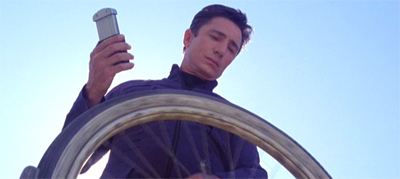
Reed has a close shave...

Reed has a close shave…

Continue reading

Star Trek: Enterprise – Terra Nova (Review)

Next year, Star Trek is fifty years old. We have some special stuff planned for that, but – in the meantime – we’re reviewing all of Star Trek: Enterprise this year as something of a prequel to that anniversary. This January, we’re doing the first season. Check back daily for the latest review.

Terra Nova is a rather unfortunate fifth episode for Star Trek: Enterprise. The show is in its first season, so there are bound to be mistakes and missteps along the way. However, Unexpected and Terra Nova provide a one-two punch of unfortunate back-to-back episodes, shows that aren’t just the result of an uncertain creative time stumbling while trying to find their groove. Like Unexpected directly before it, Terra Nova is an episode that is toxic from the ground up.

It is, in short, precisely the kind of story that you don’t want to tell about mankind’s first adventures into the cosmos. While the episode very much evokes the mood and style of classic Star Trek, it also inherits all the franchise’s worst colonial impulses. This is an episode that belongs alongside the more ill-judged entries in the first season of Star Trek: The Next Generation, like The Last Outpost or Lonely Among Us.

He's got faith, faith of the heart...

He’s got faith, faith of the heart…

Terra Nova takes a fascinating starting point – something very intrinsically tied to the premise of Enterprise – and twists it into a show about our human protagonists dealing with silly off-world people. Those silly off-world people happen to be humans, who need to be reminded of their humanity, in such a way that our protagonists can feel proud and superior about how advanced and sophisticated they are. Those silly humans who have “gone native” could really learn a lot from our super-advanced heroes.

Terra Nova feels like an episode that sets Star Trek back fourteen years, proof that some of the worst aspects of Roddenberry’s vision of the franchise have endured surprisingly well.

On yer bike, Reed...

On yer bike, Reed…

Continue reading

Star Trek: Enterprise – Unexpected (Review)

Next year, Star Trek is fifty years old. We have some special stuff planned for that, but – in the meantime – we’re reviewing all of Star Trek: Enterprise this year as something of a prequel to that anniversary. This January, we’re doing the first season. Check back daily for the latest review.

So, male pregnancy, eh?

Talk about a nipple slip...

Talk about a nipple slip…

Continue reading

Star Trek: Enterprise – Strange New World (Review)

Next year, Star Trek is fifty years old. We have some special stuff planned for that, but – in the meantime – we’re reviewing all of Star Trek: Enterprise this year as something of a prequel to that anniversary. This January, we’re doing the first season. Check back daily for the latest review.

Strange New World is the first episode of Star Trek: Enterprise to come from a writing team other than Brannon Braga and Rick Berman. Berman and Braga would dominate the writing credits for the first season. Even when the final teleplay was credited to another writer or writing team, there was often a “story by” credit given to Berman and Braga. Braga himself has conceded that he essentially re-wrote all of the episodes of the first season.

Still, Strange New World is credited to the writing team of Mike Sussman and Phyllis Strong. Both had worked on Star Trek: Voyager before migrated to Star Trek: Enterprise along with André Bormanis. Sussman had pitched the story for Meld and worked on a number of solo stories and scripts before teaming with Strong on the seventh and final season of the show. The two would remain a writing team for the first two seasons of Star Trek: Enterprise, hitting their stride with some of the strongest episodes of the troubled second season.

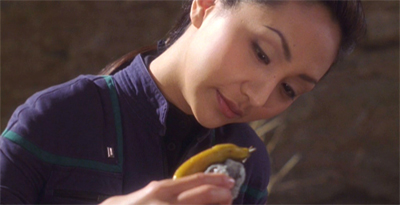
Picture perfect...

Picture perfect…

Strange New World is an interesting début for the pair. On the hand, it is a story that celebrates the unique place of Star Trek: Enterprise in the Star Trek pantheon. It’s a story about how great it must be to set foot on an alien planet, and how wondrous it must be to breath air from outside our atmosphere. With its emphasis on shuttlepods and primitive transporters, it does remain relatively true to the prequel premise of Enterprise.

On the other hand, Strange New World is a very familiar Star Trek template. Indeed, it’s a very familiar first season template. It’s the episode where the crew of the ship are exposed to some strange outside force that makes them all act out of character. It’s something of a Star Trek standard. The original Star Trek had The Naked Time and Star Trek: The Next Generation had The Naked Now, while Star Trek: Deep Space Nine had both Babel and Dramatis Personae. In many ways, Strange New World feels like a familiar old story.

Strange yellow daisy fields forever...

Strange yellow daisy fields forever…

Continue reading

Star Trek: Enterprise – Fight or Flight (Review)

Next year, Star Trek is fifty years old. We have some special stuff planned for that, but – in the meantime – we’re reviewing all of Star Trek: Enterprise this year as something of a prequel to that anniversary. This January, we’re doing the first season. Check back daily for the latest review.

Fight or Flight is reasonably solid as second episodes go. It’s very clear that Rick Berman and Brannon Braga are making a conscious effort to avoid the mistakes of Star Trek: Voyager. There’s a sense that they are trying to give Star Trek: Enterprise its own unique mood and flavour. As such, Fight or Flight feels like a story that isn’t just tailor-made for Enterprise, but is tailor-made for early in the first season of the show. It isn’t a story that could be done by another spin-off, and it’s also not a story that could be done by Enterprise even a year later.

While Fight or Flight works on a conceptual level, the execution feels a little strange. While Broken Bow was a big and bombastic Star Trek pilot with its own feel and rhythm, Fight and Flight feels almost quaint. As a piece of television, it’s constructed in a very meticulous and very precise manner, one that seems suspiciously outdated for a show broadcast in late 2001.

Slugging it out...

Slugging it out…

Continue reading

Star Trek: The Next Generation – Brothers (Review)

This January and February, we’ll be finishing up our look at the second season of Star Trek: The Next Generation and moving on to the third year of the show, both recently and lovingly remastered for high definition. Check back daily for the latest review.

Brothers is Star Trek: The Next Generation getting back to business at usual. Well, not quite usual, but close enough. Following the monumental season-bridging epic that was The Best of Both Worlds and the breathing space afforded by Family, Brothers is a good old-fashioned science-fiction adventure story revolving around one of the show’s most popular character and really written to satisfy a laundry list of Star Trek tropes and conventions.

Although its notable for maintaining a thematic consistency that is threaded through the fourth season, and also for affording Brent Spiner to play three different roles, the most striking aspect of Brothers from a production point of view is the fact that it is written by Rick Berman. Berman had been serving as producer on the show since Encounter at Farpoint, but this was his first scripting contribution. He’d only write one more episode of The Next Generation before the show went off the air.

Given Berman’s production style, it feels strangely appropriate that Brothers is so carefully and meticulously structured and constructed.

"Let's put a smile on that face..."

“Let’s put a smile on that face…”

Continue reading

Star Trek: The Next Generation – The Ron Jones Project & The Best of Both Worlds OST (Review)

This January and February, we’ll be finishing up our look at the second season of Star Trek: The Next Generation and moving on to the third year of the show, both recently and lovingly remastered for high definition. Check back daily for the latest review.

We’ll be supplementing our coverage of the episodes with some additional materials – mainly novels and comics and films. This is one such entry.

In 1991, The Best of Both Worlds got a CD soundtrack release. It was incomplete, running just under forty-seven minutes. (Five minutes music would be included on The Ron Jones Project and 2013 would see a release of a more complete two CD set running fifty-five minutes.) However, this was the first soundtrack album released for Star Trek: The Next Generation since Dennis McCarthy’s score to Encounter at Farpoint in 1988.

The music for The Best of Both Worlds is iconic. In the Regeneration documentary included with the blu ray release of the episode, Seth McFarlane jokes about hiring Ron Jones on the strength of that closing sting. The impressive orchestral score to The Best of Both Worlds remains one of the most instantly recognisable soundtracks in the Star Trek canon. And yet it was written by a composer who was on his way out the door.

Of the twelve discs in The Ron Jones Project soundtrack collection covering the episodes scored by Jones, only three include scores for episodes that aired after the second part of The Best of Both Worlds. (And the third-to-last disc only features one episode from the fourth season.) So, what happened?

tng-ronjones12

Continue reading