• Following Us

  • Categories

  • Check out the Archives


  • Awards & Nominations

Non-Review Review: Mr. Holmes

Memory is a tricky thing, particularly as distinct from history. History often occurs as a sequence of events, a laundry list and cause and effect and happenstance. Memory is the chord that we use to tie that all together, the narrative that we weave through these isolated events. Mr. Holmes is an exploration of the gulf as it exists between the two concepts, following an ageing Sherlock Holmes as he attempts to piece together his own faded memory from facts and evidence scattered around.

Adapted from Mitch Cullin’s A Slight Trick of the Mind, writer Jeffrey Hatcher and director Bill Condon position Holmes’ famous deductive prowess as a clever metaphor. Holmes’ ability to effortless build random strands of information into cohesive theories and explanations is set against two rather unconventional targets. As his faculties begin to fail him, Holmes tries to reconstruct memory from the few details available to him. At the same time, Holmes struggles with his own difficulties understanding human nature as it exists beneath these subtle hints and clues.

Holmes for Summer...

Private investigations.

Although the publication of A Slight Trick of the Mind predates the development of Steven Moffat and Mark Gatiss’ cult adaptation Sherlock, there is considerable thematic overlap between both stories. As with the BBC series, it seems like the Sherlock Holmes of Mr. Holmes is more concerned with the mystery that is other people than with any individual case. The result is a surprisingly (and effectively) low key film that plays more as a meditation on the human condition than as a convention Sherlock Holmes mystery.

There are points where Mr. Holmes does feel a little too heavy-handed or a little too manipulative in its exploration of the eponymous character. However, Condon very clever grounds the film in a beautifully vulnerable central performance from Ian McKellen.

The long walk Holmes...

The long walk Holmes…

Continue reading

The X-Files – Chinga (Review)

This May and June, we’re taking a trip back in time to review the fifth season of The X-Files and the second season of Millennium.

Chinga is the episode of The X-Files that was written by Stephen King.

That is a pretty big deal. Stephen King is one of the most influential American writers of the twentieth and twenty-first centuries. He is a writer who has enjoyed tremendous commercial success, but who has also balanced that popularity with considerable respect of critics and academics. His work has permeated popular cultured, and sparked all sorts of analysis and exploration. While no creator of that calibre works without at least some small level of backlash, King is one of the most successful American writers by any measure.

Play time!

Play time!

Writing about King in A Century of Great Suspense Stories, Jeffery Deaver argued that the author “helped free the popular name from the shackles of simple genre writing. He is a master of masters.” As such, he should be quite a comfortable fit for The X-Files. Even aside from any stylistic sensibilities that he might share with the series, King is a creator who manages to consistently producer work that might be dismissed as “genre”, but manages to compete with more prestigious and high-profiler literature.

The X-Files did something similar in the nineties. It was a show that frequently dabbled in cult genres – it was a show that dealt with horror and science-fiction themes on a regular basis. However, thanks to the craftsmanship of those involved, The X-Files was frequently able to compete with more “serious” fare at the major awards ceremonies. Chris Carter worked very hard to prevent the show from being relegated to the horror or science-fiction “ghetto.” It was a show that could slide to high-brow to low-brow over a single act; that was part of what made it so fun.

A bloody disaster...

A bloody disaster…

So landing King was very much a coup for The X-Files. He was one of the best-selling and most prolific American writers of the nineties, with his name all over a wealth of media. All that Chinga really needs to do is exist. It would be next to impossible for Chinga to be anything but “that episode of The X-Files written by Stephen King.” Indeed, it seems almost unreasonable to expect anything more from it. The hype on Chinga was unbelievable – as one might expect from a television show that had bagged one of the most popular fiction writers around.

Chinga is a very flawed piece of television, an episode that feels too much like an early draft than a fully-developed concept. The styles of Chris Carter and Stephen King blend reasonably well, but there is a sense that neither is pushing the other out of their comfort zone. Chinga is a pretty average piece of television, a pretty average Stephen King story, and a pretty average episode of The X-Files. While not necessarily a catastrophic failure, it is hardly a fantastic success.

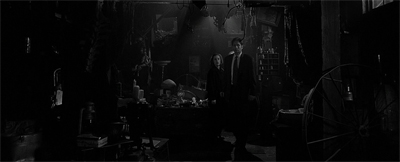
"Yeah, I'm sure this vacation will be completely uneventful!"

“Yeah, I’m sure this vacation will be completely uneventful!”

Continue reading

Non-Review Review: Spy

Spy is broad, but it is funny. It might just be the best collaboration between director Paul Feig and actress Melissa McCarthy.

Feig reteams with McCarthy following on from the critical and commercial successes of Bridesmaids and The Heat. Both films were frequently cited as leading a new wave in female-led comedy, proving that audiences and critics would respond to classic comedy movie tropes executed with a largely female cast. Although Spy features an ensemble that is more gender-balanced, it remains a feminist comedy. Feig’s screenplay is never heavy-handed in its gender politics, but it wryly aware of how its female characters are wading into a traditionally masculine space.

I spy a winner...

I spy a winner…

Continue reading

Non-Review Review: San Andreas

San Andreas is a b-movie that desperately wants to be taken seriously.

The film is at its best when it engages with its corniness. The characters make terrible baseball-related puns as the world falls to pieces. Our protagonist has a clever idea inspired by a passer-by’s choice of headware. Paul Giamatti sells his seismological terror. A desperate mother decides to plough a boat through a window into the room where her daughter is already close to death. The disaster relief efforts are interrupted so that the news reporters can thank the team of hard-working seismologists who predicted the disaster whole minutes before it happened.

Pilot error?

Pilot error?

However, the film has no real sense of tone or mood. The script longs for a deeper resonance, and so aims a lot higher than it can actually hit. The main characters spend most of the disaster working through the death of a child several years earlier, with cliché flashbacks striving for heart-breaking but landing on groan-inducing. Plot points are dutifully and awkwardly set up, with characters spending most of the first act spewing obvious foreshadowing more than meaningful dialogue.

The result is a mismatched and uneven piece of work, a disaster movie in more than the way that the production team intended.

"Um, I found a plot hole..."

“Um, I found a plot hole…”

Continue reading

The X-Files – The Post-Modern Prometheus (Review)

This May and June, we’re taking a trip back in time to review the fifth season of The X-Files and the second season of Millennium.

The Post-Modern Prometheus is a decidedly strange little episode.

As the title suggests, it is a stunningly indulgent piece of television. Written and directed by Chris Carter, The Post-Modern Prometheus is an off-beat adventure shot in black-and-white, stylistically referencing everything from James Whale’s Frankenstein to the work of Cher to the iconic dance sequence from Risky Business. The script is chocked full of literary and cinematic references, stitching them together in a way that suggests the monster alluded to in the title of the episode.

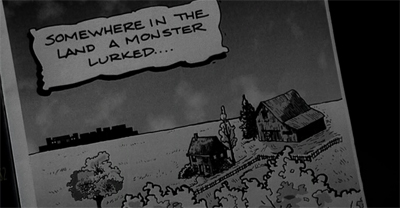
Once upon a time...

Once upon a time…

There are more than a few moments of awkwardness in the script. As with Small Potatoes, there seems something a little awkward about a comedy episode that treats a serial rapist as the jumping-off point for a wacky comedy adventure. (“This is a very serious crime,” Mulder asserts at one point, but the script never seems too bothered by it.) There is something quite knee-jerk and reactionary about how The Post-Modern Prometheus plays into the stereotype of scientific development and research as morally questionable by default.

And, yet, despite these fairly sizable problems, there is a lot to love here. It has been suggested that Carter considers The Post-Modern Prometheus as a deeply personal work – it is not hard to see why. The Post-Modern Prometheus is a story obsessed with the act of creating – whether through biological reproduction or scientific experimentation or even by way of storytelling. It is an episode engaging with a story that has long since slipped out of the control of its creator, and which is free to evolve and develop in infinite directions.

Drivin' to Memphis...

Drivin’ to Memphis…

There is a joy and energy to The Post-Modern Prometheus that almost compensates for the more unpleasant aspects of the script. There is a lot of fun to be had here, whether listening to the creature singing along with Cher or simply watching Mulder and Scully dance as they provide a monster with a (literal) storybook ending. There is a sense that The Post-Modern Prometheus was written almost entirely without cynicism, an incredible celebration of Chris Carter’s own thoughts on storytelling and mythmaking.

The Post-Modern Prometheus is perhaps too deeply flawed to be the classic that it desperately wants to be, but it is a fascinating and bold piece of nineties television that demonstrates just how much enthusiasm and verve The X-Files could bring to proceedings when it wanted to.

It is never a happy mob...

Basement dwellers…

Continue reading

Non-Review Review: Tomorrowland

Tomorrowland encapsulates a number of recurring themes in American mainstream science-fiction,

In many respects, it harks to sixties utopianism. Tomorrowland positions itself as a spiritual companion piece to films like Star Trek or X-Men: First Class or Interstellar. Although most of the film is set in the present day, its retro futurism is firmly anchored fifty years in the past. An early flashback takes place in the 1964 World’s Fair. Space flight is explicitly described as the “new frontier”, recalling Kennedy’s famous speech. Tomorrowland is absolutely fascinated with the idea of organised space flight as a beacon calling mankind forward.

Field of dreams...

Field of dreams…

It almost seems like, to paraphrase George W. Bush, “The future was better yesterday.” There is a paradoxical nostalgia to Tomorrowland, which feels like a desperate plea for the modern generation to abandon their own visions of the future and embrace those of their predecessors. It is a fascinating conflict at the heart of the film, and not necessarily one that writer Brad Bird and Damon Lindelof comfortably resolve. There are aspects of Tomorrowland that do feel distinctly uncomfortable and contradictory.

At the same time, it feels like a genuine and heartfelt criticism of the tendency towards the apocalyptic in mainstream fiction – an impassioned and aggressive urge to embrace a more hopeful and optimistic future. Tomorrowland has its heart in the right place, but it occasionally gets a little lost.

Going against the grain...

Going against the grain…

Continue reading

Non-Review Review: Mad Max – Fury Road

Mad Max: Fury Road is a live action cartoon in the best possible sense.

It is a movie that seems like an incredible gamble. Warner Brothers essentially gave director George miller $150m and let him loose in the Namib Desert to make a belated follow-up to his cult Mad Max trilogy. There is precious little sanitation here, no sense of order. It seems like Mad Max: Fury Road was never screened in front of focus groups, as if Miller never really received any studio notes that weren’t ringing endorsements or encouragement. Mad Max: Fury Road would be a strange film under any circumstances, but it’s a particularly strange summer blockbuster.

Just deserts...

Just deserts…

But it works.

Mad Max: Fury Road is gloriously gonzo, an extended two-hour car chase across a desert wasteland where it seems like dialogue is a commodity as scarce as oil or water. The script is surprisingly light on exposition, trusting the audience to pick up everything that it needs from descriptive nouns like “the Bullet Farmer” or “the People Eater.” The film makes no real nods towards conventional popcorn film-making, but is all the more effective for it. It is a movie that is utterly unashamed of its pulpy sensibilities, offering a live action post-apocalyptic Wacky Races.

Front and centre...

Front and centre…

Continue reading

Non-Review Review: Big Game

Big Game is a rather unlikely combination. Jalmari Helander’s comedy action movie plays as a cocktail of Airforce One and E.T., a coming of age film blended with a old-fashioned action adventure film. It is a combination that works surprisingly well, allowing Big Game to be both playful and charming. Big Game feels like an homage to classic eighties and nineties cinema – the emotional beats are broad, the action is absurd, the irony is layered on pretty heavy. Big Game is always wry and self-aware, but never quite breaks character.

It is a potent mixture, and one that manages to hold itself together remarkably well across the film’s ninety-minute runtime. Big Game never takes itself too seriously, providing a light and exciting action adventure treat.

“I’m king… er… leader of the free world!”

Continue reading

Non-Review Review: The Good Lie

The Good Lie works very well.

Margaret Nagle’s script was inspired by the “lost boys” who escaped the Sudanese Civil War. These displaced refugees found themselves scattered. Some walked hundreds of miles to neighbouring countries like Ethiopia or Kenya. Some travelled even further, emigrating to countries like the United States. The Good Lie is a fascinating exploration of the lives of four such immigrants who arrive in their new home in the year 2000, finding themselves struggling to adapt to life in America. It is a subject that could easily seem exploitative or maudlin.

Packing light...

Packing light…

It would be easy to turn The Good Lie into a heavy-handed meditation on human suffering as explored through the eyes of these four immigrants. The poster for The Good Lie allots considerable space to actress Reese Witherspoon, and it would be easy to write the story as told from the perspective of the American characters who interact with these new arrivals. It is to the credit of Nagle’s script that The Good Lie never allows its focus to shift, that it is never distracted by the more prominent American cast members.

The Good Lie is perhaps a little bit too broad in its humour at points, and its structure occasionally feels a little contrived. However, there is a lot of warmth and affection underpinning the script, with the sense of humour helping to relieve what could easily descend into an overly solemn drama.

Leaving on a jet plane...

Leaving on a jet plane…

Continue reading

Non-Review Review: Avengers – Age of Ultron

Avengers: Age of Ultron is a hot mess.

It is fun, witty and fast-moving. However, it is also disjointed, uneven and awkward. Age of Ultron is a big and bombastic summer blockbuster, but it feels like Marvel learned very little from The Avengers. Rather than simply taking what worked in the first film, it often seems like Age of Ultron doubles down on every part of its predecessor. There’s more action, there’s higher stakes, there’s bigger conflict, there’s more Tony, there’s even less of an idea what to do with Thor, there’s more continuity.

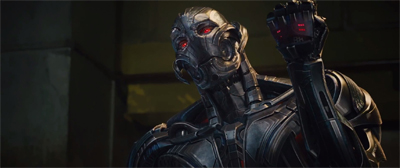
"Hey, at least I beat the Terminator prequel to cinemas, right?"

“Hey, at least I beat the Terminator prequel to cinemas, right?”

“More” seems to the be the word here. Age of Ultron is bigger than its predecessor in just about every way. The film boasts an ensemble so large that it threatens to collapse under its own weight – a fact perhaps wryly acknowledged by the genocidal robot’s evil plan at the climax. While it is nice to have more diversity in the cast – The Avengers are no longer a bunch of white guys and their token female colleague – it does seem like Age of Ultron strains and groans under all that Joss Whedon and Marvel heap upon it.

Bigger is not always better.

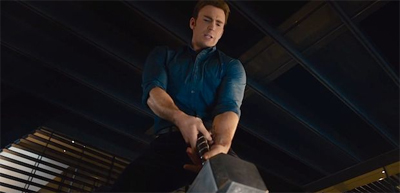
You know, "pull Thor's hammer" is probably not a family friendly party game...

You know, “pull Thor’s hammer” is probably not a family friendly party game…

Continue reading