• Following Us

  • Categories

  • Check out the Archives


  • Awards & Nominations

Star Trek – The Changeling (Review)

The first Star Trek pilot, The Cage, was produced in 1964. To celebrate its fiftieth anniversary, this December we are reviewing the second season of the original Star Trek show. You can check out our first season reviews here. Check back daily for the latest review.

The Changeling, an episode so good that they made it twice.

Sarcasm aside, The Changeling is mostly interesting for reasons outside the episode itself. It is the first contribution from John Meredyth Lucas, who would become the show’s producer towards the end of the season. Lucas took over from Gene L. Coon and is notable for being the first production staff member on Star Trek to direct an episode from his own script, with Elaan of Troyius in the show’s troubled third season. The Changeling arguably had an even bigger influence on the franchise, serving as a template for the first feature film.
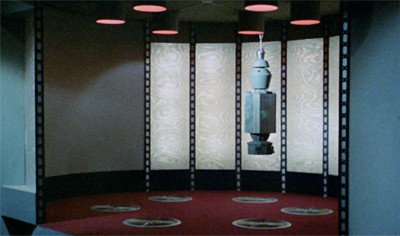
Probing problems...

Probing problems…

Okay, “template” may be a slight exaggeration. However, you can definitely feel the influence of The Changeling on Star Trek: The Motion Picture. However, that may simply be because the script to The Changeling hits quite heavily on some of Gene Roddenberry’s pet themes. It has a villainous robot outwitted by emotional humans, Kirk besting a god-like entity, and larger philosophical questions about religion and theology.

Even outside of the themes that resonate specifically with Roddenberry, The Changeling hits on a variety of other classic Star Trek tropes – from a threat leaving nothing but dead star systems in its wake through to an abundance of dead red shirts. There’s an argument to be made that The Changeling is one of the most archetypal Star Trek episode. If you were to bake a Star Trek episode from a stock list of ingredients, it would look a lot like this. For better or worse.

Melding metal...

Melding metal…

Continue reading

The X-Files – Revelations (Review)

This November (and a little of December), we’re taking a trip back in time to review the third season of The X-Files and the first (and only) season of Space: Above and Beyond.

Religion, eh?

In the mid-nineties, religion was a very difficult subject to navigate on network television. The so-called “culture wars” were in full swing at the middle of the decade, with religious values serving as a particularly brutal battleground. Religion is a very thorny and contentious subject. As recently as 2012, more than 40% of polled Americans stated they would not vote for an atheist candidate in a presidential election. Pete Stark would admit to being an atheist in 2007, becoming the first self-identified atheist in the United States Congress.

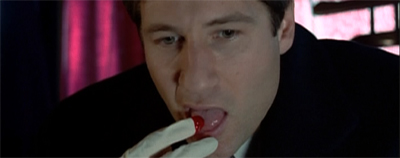
Mulder's got a taste for adventure...

Mulder’s got a taste for adventure…

As a result, it is very difficult to have a meaningful and thoughtful conversation about it. “There’s a man that I work with – a friend – and usually I’m able to discuss these things with him… but not this,” Scully confesses at the end of the episode. While undoubtedly a comment on Mulder’s stubborn refusal to engage with Scully on the topic, it also feels like a commentary on the awkwardness of any public discussion about religious beliefs or values, which was prone to become highly charged and contentious.

The conventional wisdom was that you didn’t talk about religion at the dinner table. It wasn’t much easier on television. This puts Revelations in a very awkward position.

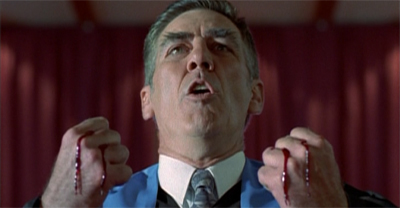
A bloody business...

A bloody business…

Continue reading

Star Trek: Deep Space Nine – Destiny (Review)

This September and October, we’re taking a look at the jam-packed 1994 to 1995 season of Star Trek, including Star Trek: Deep Space Nine and Star Trek: Voyager. Check back daily for the latest review.

The biggest problem with Destiny is that it doesn’t feel fully-formed. The show plays more like a series of vignettes than a single story. There are some nice character beats, and a sense that Star Trek: Deep Space Nine is an ensemble show, but Destiny meanders far too much. It seems like it wanders around without any singular purpose, any strong central point to tether it.

Is it about Sisko’s relation to the title of “Emissary”? Is about peace between Bajor and Cardassia? Is it about O’Brien and flirty Cardassians? Is it about Kira’s faith and her position on Deep Space Nine? Is it about end time prophecies?

It seems to be about all these things, but with no real commitment to any of them above the others. The end result is that it’s not about any of them particularly well.

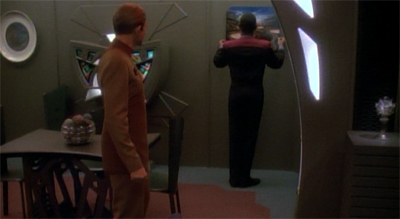
Picture perfect...

Picture perfect…

Continue reading

The X-Files (Topps) Annual #1 – Hallow Eve (Review)

This August (and a little of September), we’re taking a trip back in time to review the second season of The X-Files. In November, we’ll be looking at the third season. And maybe more.

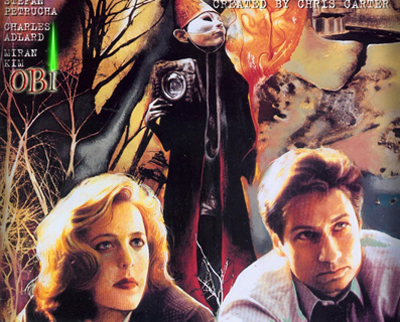
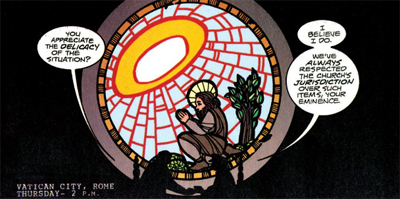
No matter how you cut it, the creative team of Stefan Petruscha and Charles Adlard were prolific. The duo only worked on The X-Files comics book for seventeen months between January 1995 and May 1996, but they put out a phenomenal amount of work. On top of sixteen issues of the monthly series, there were also two digests, a number of short stories and an annual. In most cases, some of this work would be outsourced to another creative team, but Petrucha and Adlard remain the creative team for Topps’ X-Files comic.

While this undoubtedly required a great deal of creative energy from Petrucha, churning out scripts on a regular basis, it is worth pausing to praise artist Charles Adlard. These days, for a variety of reasons, it seems that major comic book artists have difficulty producing twelve twenty-odd-page issues in a year. Not only was Adlard able to meet that objective, he was able to do that while drawing a large volume of supplementary material, including this feature-length annual.

All about Eve...

All about Eve…

It’s remarkable how consistent it all is. One of the advantages of a tie-in comic book with a steady creative theme is that there’s a much clearer authorial voice. Although Chris Carter oversaw the production of The X-Files, the demand of weekly network television mean that some episodes got more attention than others, and that particular voices tend to shine through. Darin Morgan writes his own version of The X-Files, as do Glen Morgan and James Wong or Howard Gordon or Vince Gilligan. (This isn’t a bad thing, by the way.)

On a comic, with all the issues written by the same author and illustrated by the same artist, there is a bit more consistency. Even though Hallow Eve is a stand-alone one-shot story that exists quite separate to Petrucha and Adlard’s twelve-issue meta-arc, it fits quite comfortably with their themes and subtexts. It’s an episode about history and memory, and perception and reality.

Shocking...

Shocking…

Continue reading

The X-Files – The Calusari (Review)

This August (and a little of September), we’re taking a trip back in time to review the second season of The X-Files. In November, we’ll be looking at the third season. And maybe more.

The Calusari is very heavily and very clearly influenced by classic horror cinema. With its demon child and dramatic ritual sequences, the episode seems constructed as a gigantic homage to The Omen and The Exorcist, two of most iconic horror films of the seventies. On paper, this isn’t a bad idea. The show hasn’t done a straight-up quasi-exploitation horror episode since Fresh Bones, and “scary kids” worked well enough for the show in Eve.

On the other hand, the show has historically had trouble doing straight-up classic horror stories – Shadows was a misfire of a ghost story, while Shapes was a questionable werewolf tale and 3 was a disaster of a vampire show. More than that, The Calusari pushes the show into fairly uncomfortable territory, dealing as it does with the religious beliefs of immigrant communities. The Calusari is not as bad as it could be, but it’s also not particularly good, either.

A haunting tale?

A haunting tale?

Continue reading

The X-Files – Fearful Symmetry (Review)

This August (and a little of September), we’re taking a trip back in time to review the second season of The X-Files. In November, we’ll be looking at the third season. And maybe more.

Fearful Symmetry is an embarrassing mess of an episode. It’s ambitious, but it’s clumsy and over-wrought. It aspires to great things, but is instead completely banal. For a show featuring an invisible elephant, that’s no small accomplishment.

Tyger, Tyger...

Tyger, Tyger…

Continue reading

The X-Files – Die Hand Die Verletzt (Review)

This August (and a little of September), we’re taking a trip back in time to review the second season of The X-Files. In November, we’ll be looking at the third season. And maybe more.

Die Hand Die Verletzt is a fascinating piece of work, for a number of reasons. The most striking reason, however, is that it is essentially a comedy episode. While The X-Files has always had a wry sense of humour – Mulder’s viewing habits are a recurring joke, after all – this is the first time the series has tried to produce a full-length comedy episode. Die Hand Die Verletzt is still a horror story, and the comedy is pretty black, but it does seem to prove that the show can do an entire episode that is funny.

The implications of this are far-reaching. At its height, the beauty of The X-Files was its versatility. The show could tell just about any sort of story imaginable, flitting between prestige drama, out-and-out horror, pastiche, broad comedy, political thriller, satire or even romance. While you could always bet on at least a hint of the supernatural and a dash of horror, The X-Files could really be anything that Chris Carter and his writers wanted it to be. It was even a show that could collide with other shows, as in The Springfield Files or X-Cops.

She's the devil in disguise...

She’s the devil in disguise…

To be fair, the second season is already reaching towards that approach to The X-Files. Although he has yet to produce a script for the series, the show has hired Darin Morgan to work on the writing team; his sensibilities would be proven truly and brilliantly gonzo. Irresistible proved that you could produce an episode of The X-Files without an overt supernatural horror, focusing on a more grounded horror. Red Museum provided an “almost crossover” with another television series.

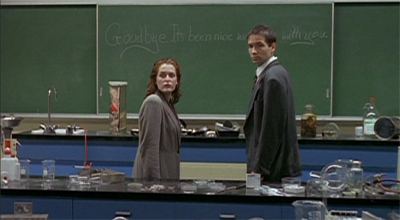
However, Die Hand Die Verletzt is the point at which the show does something that looks truly weird in the context of what has come before, yet feeling strangely comfortable in light of what has followed. The script may mark the departure of Glen Morgan and James Wong from the show – the duo leaving to produce Space: Above & Beyond – but it isn’t the end of an era so much as the start of a new one.

The writing's on the... er... chalkboard...

The writing’s on the… er… chalkboard…

Continue reading

The X-Files (Topps) #1 – Not To Be Opened Until X-Mas (Review)

This August (and a little of September), we’re taking a trip back in time to review the second season of The X-Files. In November, we’ll be looking at the third season. And maybe more.

If you needed proof that The X-Files had made it, then the forty-issue Topps comic book series from the mid-nineties seems a place to start. Of course, this has less to do with the stories published in the comics themselves – though some are very interesting – and more to do with the comic book market in the nineties and the business model employed by Topps. The comic book industry was perhaps at its peak in the nineties – at least when it came to exposure and public profile.

Chris Claremont and Jim Lee’s X-Men #1 became the biggest-selling comic book of all time in 1991, selling over eight million copies. A year later, DC Comics published The Death of Superman, a sprawling highly-publicised comic book event that killed off (and then revived) the Man of Steel. The year after that, Batman got in on the action with the Knightfall trilogy, a suitably spectacular event that featured the crippling of Bruce Wayne, his replacement as Batman, and the eventual return of the Caped Crusader.

The truth is in here?

The truth is in here?

It is important to put those figures in perspective. While this was a financial peak for the comic book industry, it was still something of a fringe economy. In the mid-nineties, a television show attracting only eight million viewers would find itself on the bubble line when it came to renewal. However, that figure was the largest readership of any comic book ever. (Audience diversification means that both television audiences and comic book readers have dwindled in the years since, but the latter much more than the former.)

However, the business model for comic books in the nineties made them highly profitable, despite their smaller audience. Price gouging was not uncommon, with some retailers charging as much as $30 for Superman #75 in 1992. Poly bags, gimmick covers, variant artwork, celebrity authors – comics were largely driven by gimmicks in the nineties. More than that, the emphasis on comic books as an investment in the mainstream media helped to suggest the industry was more for collectors than for readers.

Holy conspiracy, Mulder!

Holy conspiracy, Mulder!

It is telling that the company to land the license for The X-Files was Topps, a company famous for producing sports memorabilia. The company had branched into comics in 1993, as the industry was growing and growing, hoping to license various characters and properties. The implication was that The X-Files comic had been designed more as an accessory than as a story. The cover to Not To Be Opened Until X-Mas ever features a handy “first collectors item issue” tag below the “1” at the top left-hand corner.

Licensed comic books have something of a chequered history. In the context of the mid-nineties, it would be easy to write off the forty-one issues (and change) of The X-Files as a cynical cash-in. However, the series has moments of brilliance and insight that mark it as a worth extension of the brand name.

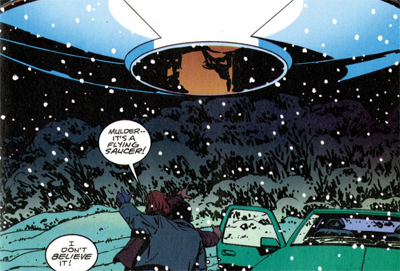
Up in the sky!

Up in the sky!

Continue reading

Star Trek – The 25th Anniversary (Review)

This June, we’re taking a look at some classic Star Trek movie tie-ins. Check back daily for the latest reviews and retrospectives.

Star Trek VI: The Undiscovered Country was released quite close to the twenty-fifth anniversary of Star Trek. With Star Trek: The Next Generation at the height of its popularity, the franchise was able to mark the occasion with a variety of celebrations. There were comic books and prose books celebrating the occasion. Both Spock and Scotty appeared on The Next Generation around the time of the anniversary.

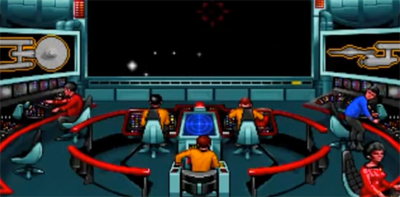
Perhaps the most obvious example was the release of Star Trek: The 25th Anniversary by Interplay. While it was not the first video game to be based on the Star Trek franchise, it was the first high profile release. It set the tone for commercial Star Trek video games, remaining one of the best-selling Star Trek video games ever produced. It paved the way for everything from Bridge Commander to A Final Unity to Elite Force.

Ship shape...

Ship shape…

Released across multiple platforms and featuring seven episodic adventures structured like episodes of the classic television show, The 25th Anniversary set a dramatic and effective precedent for Star Trek video gaming. The CD-ROM edition of the game took things even further, featuring voice recordings of the show’s primary cast to help lend a sense of continuity and credibility to events. The 25th Anniversary is littered with easter eggs and in-jokes, and it’s constructed with the utmost love and affection.

However, perhaps what is most interesting about The 25th Anniversary is the way that it plays into all these established Star Trek clichés and tropes, but with a rather sophisticated outlook. It’s a wonderful example of how the original Star Trek show never stopped reinventing itself, only really reaching a truly idealised form long after it had been off the air.

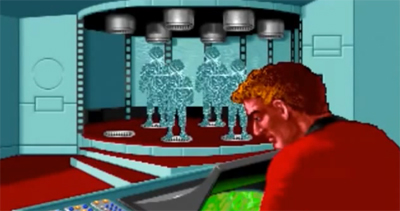
Beam me up, Kyle!

Beam me up, Kyle!

Continue reading

Star Trek – The Fearful Summons by Denny Martin Flinn (Review)

This June, we’re taking a look at some classic Star Trek movie tie-ins. Check back daily for the latest reviews and retrospectives.

One of the great things about a franchise as expansive and as well-documented as Star Trek is that no idea is even completely lost to history. The franchise is sprawling enough that episodes and films inevitably end up lost to history. Scripts are written and re-written, with ideas changing dramatically from original conception through to the final released version. Even Star Trek: Phase II is well accounted for, affording fans a glimpse at how things might have gone for the franchise.

It’s interesting to imagine the possibilities that exist at given moment for the franchise – how radical things might be now had a particular event gone a different direction. Imagine Bryan Fuller and Bryan Singer bringing Star Trek back to television with Angela Bassett in the big chair. Or Spock on the grassy knoll. Or Oscar nominee Geneviève Bujold as Janeway. Or a first season of Star Trek: Enterprise set primarily on Earth during the development of the warp five drive.

So much of the franchise is discussed and analysed that ideas like this tend to bubble through. Occasionally, the franchise allows an echo of what might have been to break through. Star Trek: The Next Generation adapted two aborted scripts from Star Trek: Phase II into The Child and Devil’s Due. Harlan Ellison’s original script for The City on the Edge of Forever is being adapted into a comic book. That is to say nothing of writers like D.C. Fontana and David Gerrold working with fan productions.

However, Denny Martin Flinn’s novel, The Fearful Summons, is a particularly interesting glimpse at what might have been. It’s essentially a novel based around his original idea for Star Trek VI: The Undiscovered Country. It’s a rather bizarre and occasionally awkward glimpse at what might have been for the franchise.

tos-thefearfulsummons

Continue reading