• Following Us

  • Categories

  • Check out the Archives


  • Awards & Nominations

The X-Files – Demons (Review)

This February and March, we’re taking a trip back in time to review the fourth season of The X-Files and the first season of Millennium.

The fourth season of The X-Files is an oddity.

That is particularly true when it comes to the show’s mythology. Not only has any sense of narrative progression stalled after the “to be continued…” hook of Talitha Cumi, the fourth season seems to branch the mythology out in multiple directions that never really get anywhere. Tunguska and Terma introduce a Russian conspiracy that quickly becomes a footnote. Tempus Fugit and Max focuses on private military contractors who are never mentioned again. Memento Mori gives Scully cancer halfway through the season, and the rest of the year tries to catch up.
A cigarette-smoking spectre...

A cigarette-smoking spectre…

Demons is an episode that sits rather awkwardly as the penultimate episode of the season. An episode about Mulder undergoing aggressive therapy to recover lost memories seems a little out of place with everything else going on around him. After Memento Mori, you would imagine he would be worried about Scully. After Zero Sum, you imagine he would be wary about putting himself in a vulnerable position. Demons feels very much like it would make a good first season episode, a product of the time when Samantha Mulder was our lead’s primary driving motivation.

Instead, Demons sits awkwardly before the big season finalé with its own clear agenda. Scully’s closing monologue is clearly designed to lead into Gethsemane as almost a four-part season-bridging epic. However, the execution feels a little too haphazard, a little too casual, a little too disorganised. Demons feels less like the lead-in to an earth-shattering story and more like a script designed to plug a gap late in the season.
"Hey, look on the bright side, this time next year, you'll be in a psychiatric institution."

“Hey, look on the bright side, this time next year, you’ll be in a psychiatric institution.”

Continue reading

Star Trek: Enterprise – Shadows of P’Jem (Review)

Next year, Star Trek is fifty years old. We have some special stuff planned for that, but – in the meantime – we’re reviewing all of Star Trek: Enterprise this year as something of a prequel to that anniversary. This January, we’re doing the first season. Check back daily for the latest review.

Shadows of P’Jem is a wonderful episode. It is, in many respects, the first true post-9/11 episode of Star Trek: Enterprise, and it is a surprisingly thoughtful one at that.

In many respects, Enterprise has already established itself as Star Trek for the George W. Bush era. Archer is the franchise’s first white American male lead character since Kirk, and his contempt for politics and thirst for action mirrors the popular image of George W. Bush – a dynamic man with no time for questions or hesitation. Even little touches – like the fact that officers drink beer rather than champagne, or the anti-intellectual contempt that Archer and Trip feel towards Vulcans – suggest a Star Trek show that is very much in line with Bush’s America.

Shadows on Coridan...

Shadows on Coridan…

However, Shadows of P’Jem was among the first episodes written after the events of 9/11, and it’s an episode that seems quite thoughtful and introspective. The franchise has often used the Federation as a stand-in for American values and ideals. Shadows of P’Jem twists this idea on its head, offering the future Federation members as stand-ins for various facets of American foreign policy.

Shadows of P’Jem is a considerate and reflective look at what Walter Nugent termed “the habits of empire”, a look at the cost and consequences of imperialism in a post-colonial age, and how those issues tend to fester.

A night in sickbay...

A night in sickbay…

Continue reading

Star Trek – Friday’s Child (Review)

The first Star Trek pilot, The Cage, was produced in 1964. To celebrate its fiftieth anniversary, this December we are reviewing the second season of the original Star Trek show. You can check out our first season reviews here. Check back daily for the latest review.

Errand of Mercy was a highlight of the first season. A wry script from producer Gene L. Coon introduced the Klingons as an antagonist for the Federation. Made up to look like space!Mongols, the Klingon Empire was presented as an imperial force hell-bent on expanding its sphere of influence. In case the parallels were a little too subtle, they were locked in a Cold War with the Federation. As such, they were the perfect stand-ins for Communist aggressors trying to undermine American foreign policy.

Of course, Errand of Mercy was brutally cynical in its depiction of the Federation. The episode suggested quite heavily that the Federation was just as imperialist and adversarial as the Klingons. They might couch their foreign policy in friendly language and polite overtures, but their end goals are quite similar. Smaller political entities are nothing but pieces shuffled around a board in a deadly game of chess. Errand of Mercy was not flattering in its portrayal of Kirk, presenting him as little more than a warmonger.

"Damn dirty Klingon!"

“Damn dirty Klingon!”

Errand of Mercy was a massive success. It remains a fan favourite to this day. In some respects, that is due to the introduction of the Klingons, but it is also an exceptional hour of scripted science fiction. So it makes sense that the show would return to the Klingons when it was renewed for a second season. Friday’s Child was the third episode produced during the second season, and returns to quite a few themes hit on by Errand of Mercy. Those themes would recur.

Friday’s Child demonstrates the obvious risks of an episode like Errand of Mercy. It’s an episode that essentially takes the “Klingons as space!Communists” seriously.

We come in peace...

We come in peace…

Continue reading

Space: Above and Beyond – Eyes (Review)

This November (and a little of December), we’re taking a trip back in time to review the third season of The X-Files and the first (and only) season of Space: Above and Beyond.

Eyes is perhaps the most ambitious that Space: Above and Beyond has been to this point in the season.

Eyes develops scraps hinted at in The Pilot and The Farthest Man From Home into a complex web of intrigue, with an assassination plot playing out against all sorts of institutionalised prejudice and suggesting sinister conspiracies at work behind the horrific war that drives the show. The last episode of Space: Above and Beyond credited to Glen Morgan and James Wong in 1996, the episode feels like it is solidifying the series. Six episodes in, enough foundations have been laid that development can begin.

An unstoppable killing machine.

An unstoppable killing machine.

Eyes is rather epic in scale, and massive in scope. It is a story about politics and scheming, unfolding quite far away from the front lines. In episodes like The Pilot, The Farthest Man From Home and even Ray Butts, it often felt like our lead characters were quite divorced from the big decisions. It seemed like the show was very much preoccupied with a day in the life of a space marine, rather with the larger forces at play seen only in glimpses and shadows.

Eyes is a show that does a lot to build the world of Space: Above and Beyond, doing a much better job than The Dark Side of the Sun or Mutiny at giving a sense of this dark future. While the script is perhaps a little too cluttered for its own good, it is a very well-constructed paranoid conspiracy thriller.

That's not at all fascist.

That’s not at all fascist.

Continue reading

J. Michael Straczynski’s (and Ron Garney’s) Run on the Amazing Spider-Man – Civil War (Review/Retrospective)

This April, to celebrate the release of The Amazing Spider-Man 2, we are taking a look at some classic and modern comics featuring Spider-Man (and friends). Check back daily for the latest review.

Spider-Man is a pretty important character in the whole Civil War event. Indeed, he’s probably the event’s third most important character – aside from Captain America and Iron Man. So it makes sense that J. Michael Straczynsi’s extended run on The Amazing Spider-Man would stop and engage with the massive crossover spanning the entire Marvel Universe. And, from a logistical “structuring a comic book crossover tie-in so it makes any sense to a reader picking up the book” point of view, Straczynski does a great job. You can read The Amazing Spider-Man without needing to even pick up the Civil War miniseries.

However, as a piece of writing on its own merits, Straczynski’s Amazing Spider-Man tie-in is a mess. Straczynski’s Amazing Spider-Man run has been collecting trouble aspects for quite some time, particularly when Straczynski seemed to brush up against the editorial demands for the book. Sins Past was perhaps the most obvious example, but with Civil War the comic entered a phase where it was pretty much an editorial means to an end. Everything from this point on was pushing towards One More Day, an event that would wipe decades of continuity from the title. (Including Straczynski’s run.)

Civil War really gets the ball rolling on these sweeping editorially-mandated changes, but that’s not the only problem with the story arc. Given Spider-Man’s importance to Civil War, and his role as defector from one side to the other, it seems like Spider-Man would really be the perfect lens through which Straczynski could explore the issue. Unfortunately, it quickly becomes clear upon which side of the issue Straczynski comes down.

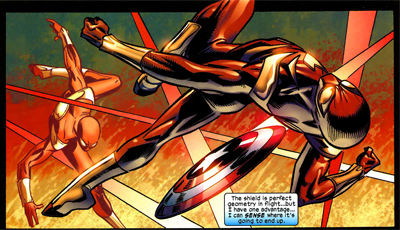
A tangled web...

A tangled web…

Continue reading

My 12 for ’13: Lincoln & Lawyering

This is my annual countdown of the 12 movies that really stuck with me this year. It only counts the movies released in Ireland in 2013, so quite a few of this year’s Oscar contenders aren’t eligible, though some of last year’s are.

This is number 11…

At its best, Lincoln manages to capture that beautiful conflict at the heart of democracy – the question of the difference that exists between democracy as a form of government and simple majoritarianism. Is it possible to preserve these fine and noble institutions and structures while constantly working around them?

lincoln11

Continue reading

Non-Review Review: The Campaign

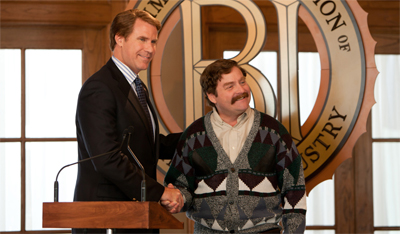
The Campaign is hardly the most complex piece of political satire ever written. In fact, the movie suffers a great deal because its observations about political corruption feel fairly superficial. The relationship between donors and politicians, and the sway that what the movie terms “big money” has over elected officials, are hardly cutting insights into the way that lobbying and electioneering actually works. To be fair, there is something in the way that the movie parodies the tendency of US elections to get incredibly dirty incredibly fast, but The Campaign ultimately winds up feeling a little superficial.

That’s not to say that there aren’t moments of wit to be found here. Both Will Ferrell and Zach Galifianakis are skilled comedians, even when the material isn’t necessarily up to scratch. And in order to make fun of the extreme rhetoric that such campaigns may involve, the movie occasionally pushes itself into the realm of the surreal. However, its observations and its targets seem so obvious that the movie can also be remarkably frustrating.

A candid(ate) look at the electoral process?

A candid(ate) look at the electoral process?

Continue reading

Non-Review Review: The Last Stand

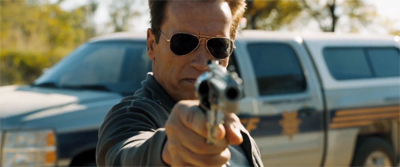
In theory, The Expendables demonstrated that age was no real impairment when it came to the task of kicking ass and taking names, even if you might need to put your reading glasses on first. So, you could argue that the issue of Arnold Schwarzenegger’s age doesn’t really need to come up during The Last Stand. We know that he is 65 years of age, and we also know that he’s probably a great deal fitter than most of us will be at that age. (Being honest, I wouldn’t be surprised to discover that a hexagenarian Arnie could trump most people in their prime.) As a result, the fixation of The Last Stand on the age of its leading man feels a little strange.

It feels especially strange because it eats into a lot of the film. The Last Stand is mostly functional, but its pacing suffers greatly. We’re going to see an Arnold Schwarzenegger vehicle, so it’s safe to assume that (a.) we’re okay with his advancing age, and (b.) we want to see him kick some whippersnapper ass. Unfortunately, The Last Stand seems to misjudge the audience’s interest in an Arnie film, and as a result our leading man spends most of the first three-quarters of the film doing very little.

The Last Stand is clearly intended to demonstrate the viability of its leading man in this modern age, but it seems to lack the confidence to just dive into the action that this sort of film is meant to provide. The result is a strange mish-mash of a film that winds up wasting a lot of good will long before it reaches its climax.

He's back!

He’s back!

Continue reading

Non-Review Review: The Candidate (1972)

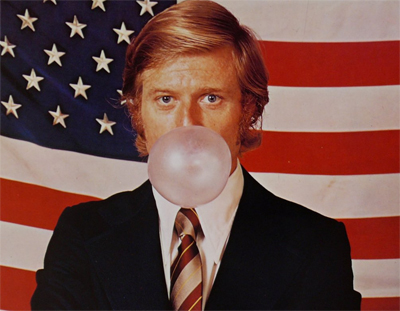
The Candidate is that rare movie that is anchored firmly in its own time, released in June 1972, but remains relevant through until today. Writer Jeremy Larner won an Oscar for his screenplay, and his portrayal of election politics seems worryingly plausible. The Candidate is remarkably frank about its politics, but also in its depiction of the system. There’s no pussyfooting around for fear of alienating the audience with hostile political ideas, instead the film embraces its political position and runs from there. While it feels like it was written in the shadow of the then-looming 1972 Presidential election, it does seem to be quite applicable to modern politics.It remains relevant, perhaps an illustration of how little has changed.

If anything, it seems like The Candidate is relatively tame compared to current political realities.

“I came here to chew gum and get elected… and… well, I’m not out of gum.”

Continue reading

The Politics of Nolan’s Batman Films…

To celebrate the release of The Dark Knight Rises, July is “Batman month” here at the m0vie blog. Check back daily for comics, movies and television reviews and discussion of the Caped Crusader.

I think it’s fair to say that Christopher Nolan’s Dark Knight trilogy is quite an accomplishment. I think there’s a valid argument to be made that the series can be successfully measured against other classic film trilogies like the original Star Wars trilogy or even the more recent Lord of the Rings trilogy. However, I think it’s also notable just how much political discourse and discussion the trilogy has generated, particularly for its political content. It’s quite impressive that Nolan’s three films about a masked pulp hero have provoked such debate, and I’d certainly argue that The Dark Knight and The Dark Knight Rises are easily two of the most politically complex and fascinating blockbusters in quite some time.

A caped social crusader?

Continue reading