• Following Us

  • Categories

  • Check out the Archives


  • Awards & Nominations

Non-Review Review: Brigsby Bear

Brigsby Bear is a sweet, if slightly uneven, ode to the act of reclaiming problematic art.

The concept of Brigsby Bear is simple. James Pope is a twenty-something-year-old manchild who has grown sheltered from the outside world, living with his parents in a converted shelter locked away from the world. James’ only interaction with the outside world is through the internet, where he maintains contact with fans of the only show still broadcast on the airwaves, the eponymous anthropomorphised bear.

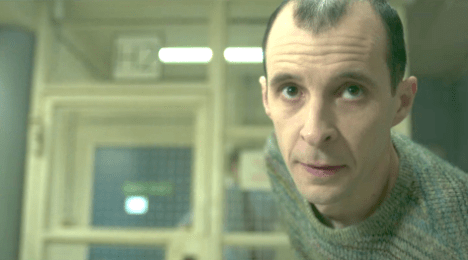
Bearing his soul.

However, one day James discovers that this is all an elaborate lie, that the world does not work the way that he thought it did. Brigsby Bear is positioned at the centre of this betrayal, with James discovering that the show was never what it appeared to be. As James struggles to come to terms with the reality of his situation, he finds himself struggling to make peace with the bear at the centre of these amateurish and endearing morality plays.

Brigsby Bear suffers from tonal issues, struggling to balance the darkness at its core with the whimsy on its surface. However, the movie plays as a compelling study of trauma and recovery, of the power of fannish obsession, and the art of taking back art that has been tainted or undermined by subsequent revelations. Indeed, Brigsby Bear is arguably more relevant now than it was when it was produced.

“Disney are really going to extremes to stop me leaking details on The Last Jedi.”

Continue reading

Non-Review Review: Justice League

The Parademons, the monstrous zombie bugs at the heart of Justice League, smell fear. It is a lucky thing that they don’ smell desperation, because otherwise they’d eat the movie alive.

Justice League is not a movie so much as a two-hour attempt at atonement. It is an extended apology from Warner Brothers to the most vocal internet denizens, an obvious attempt to backpedal away from the controversial and divisive (and provocative) attempts to jump-start their shared comic book universe with Man of Steel and Batman vs. Superman. Richard Donner’s Superman inspired audiences to believe that a man could fly; Justice League serves as evidence that a film franchise can grovel.

The Just Us League.

Justice League is contrite and submissive. Anything resembling a jagged edge has been carefully sanded down, anything resembling a unique identity stripped from the film. Justice League has listened to the internet’s overblown criticisms of Man of Steel and Batman vs. Superman, and decided that the best response is to offer something generic and appeasing. Justice League has the feeling of a studio mandated checklist captured on celluloid, a list comprised primarily of “don’t”s; don’t run over two hours, don’t be so dark, don’t be pretentious, don’t be political.

The result is a movie that feels defined by what it isn’t, an empty space much larger than that created by the absence of Superman. It is a movie without any ambition or any personality. It wants so desperately to be loved, but ultimate feels hollow.

Out of their League.

Continue reading

Non-Review Review: Suburbicon

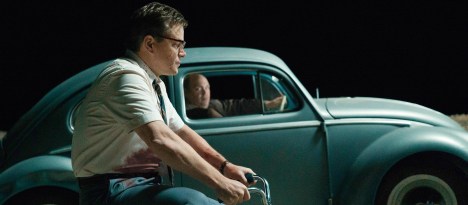
Suburbicon is a disjointed mess of a feature film. It is a gonzo black comedy that never quite coalesces, but sustains itself with enough energy that it never completely falls apart.

Suburbicon is a bizarre hybrid. Watching the movie, one gets a sense that the film has been stitched together from two core stories. Indeed, this was very much the case; the central plot of Suburbicon was original written by the Coen Brothers as a grotesque comedy of murder and mayhem, while the movie’s prominent subplot was grafted on later by director George Clooney and collaborator Grant Heslov to add a sense of social realism to this late fifties Americana. These two elements never quite cohere, which means Suburbicon never feels truly focused.

Stress testing.

There is a telling moment around half-way through the film, when an insurance investigator has stopped by the family residence at the heart of the story. Investigating a suspicious claim, the gentleman is clearly fishing. “In the end,” he reflects philosophically, “it all comes down to one word.” Without any elaboration, he allows his mind to wonder and the conversation to drift. He only returns to that  train of thought when guided by his interviewee. “What is it?” they ask. He is lost. “What?” They clarify, “The word?” The investigator takes a moment to get back on track.

That small conversational aside captures what is most appealing and most infuriating about Suburbicon, a movie that lacks a strong core and finds itself caught between two very different stories without any strong focus on either. Suburbicon is never boring, packed with strange turns and driven by a pitch black sense of humour. However, it never seems entire sure of what it is.

Cycles of violence.

Continue reading

Non-Review Review: Murder on the Orient Express (2017)

Murder on the Orient Express feels like a very conscious effort to disprove the notion that “they don’t make them like this any more.”

Lead actor and director Kenneth Branagh clearly relishes the opportunity to create a decidedly retro murder mystery. Murder on the Orient Express might contain a handful of action scenes and copious amounts of computer-generated imagery, but Branagh is very clearly channelling a more classical style of film making. Released in early November, Murder on the Orient Express has the look and the texture of an old-fashioned Christmas television treat; a fantastic ensemble reenacting a classic murder mystery on lavish sets with heightened melodrama.

Like a train in the night…
Or, you know, the day.

Branagh’s imitation is affectionate, but it is also laboured. Murder on the Orient Express feels like a nostalgic homage to the old ensemble-driven melodramas that were a dime-a-dozen, but there is something uncanny about it. Early in the film, the Belgian detective Hercule Poirot deduces that a fellow passenger is a dealer in forgeries, passing off unconvincing copies as historic artifacts. There is a sense that Branagh is attempting something similar, trying to construct something with the texture of a more classic piece of cinema, but without any of the spirit or the energy.

Murder on the Orient Express is charming and engaging, its enthusiasm for its premise and setting infectious in places. However, it also as lifeless as the corpse at the centre of the mystery.

Cold case.

Continue reading

50. The Thing – Halloween 2017 (#165)

Hosted by Andrew Quinn and Darren Mooney, The 250 is a (mostly) weekly trip through some of the best (and worst) movies ever made, as voted for by Internet Movie Database Users.

This time, a Halloween treat. John Carpenter’s The Thing.

Continue reading

Non-Review Review: The Florida Project

The Florida Project is a beautifully made and deeply condescending film.

Director Sean Baker beautifully captures the sense of listlessness that defines an unlikely community of Tampa residents clustered in the motels that adorn the Strip. Painted in bright colours and christened with familiar-but-non-copyright-infringing names like “Futureworld” or “Magic Castle”, these motels come to embody a purgatory for residents of the area who live in spaces originally designed to accommodate tourists. These characters live in the shadow of Disneyland, but never seem to arrive.

Somewhere over the rainbow.

The Florida Project is an impressive piece of work from a technical standpoint. Baker assembles an impressive cast, drawing out a quiet and moving performance from Willem Dafoe and establishing relative newcomer Brooklynn Prince as a face to watch. Baker’s compositions are impressive, lots of static shots that provide a sense of scale for the characters who seem tiny in comparison to the themed gift shops and giant motels that threaten to swallow them whole. In particular, Alexis Zabe’s cinematography beautifully captures this sun-drenched limbo.

However, there is a patronising cynicism at the heart of The Florida Project, and its portrayal of childhood poverty. The Florida Project is candid in its exploration of the horrors of poverty, of characters who have been failed by all the institutions around them desperately trying to stay afloat. However, it is also very calculated in how it chooses to present family life in the midst of these failures and compromises. The Florida Project tries to mesh a romantic and wistful sketch of childhood with a brutal depiction of live on the margins, and the rest feels disingenuous at best.

Wilderness years.

Continue reading

Non-Review Review: Battle of the Sexes

Battle of the Sexes is a well-produced and well-performed feel-good historical drama, one elevated by a strong sense of timeliness.

Battle of the Sexes is structurally a classic “historical buddy film”, a subgenre of the biopic that has become increasingly popular in recent years. The idea is to take a big historical event involving two important and opposed figures, and to build a narrative about that singular event following both characters on their collision course. Ron Howard is something of an expert with this particular biographical subgenre, having directed both Frost/Nixon and Rush, two very fine examples of the form.

Riggsed game.

Of course, there are plenty of films that still adopt the classic biopic format of documenting an extended portion of a single life. Recent films like The Founder or American Made come to mind, very traditional sweeping narratives that tended to pop up in awards nominations during the eighties and nineties. However, there is something to be said for the format of a tightly-focused two-hander, of a narrative built around two adversarial forces locked in some existential combat. It might look like sport, but it is always something more serious.

Battle of the Sexes is built around the historic tennis match played between Billie Jean King and Bobbie Riggs, but it is obviously about more than just a tennis match between a man and a woman. It evolves into a story about the symbolic weight of this match, of the culture that warps around it, of the dogma that it threatens to reinforce. Battle of the Sexes resonates surprisingly clearly, even more than thirty three years removed from its original context.

Causing quite a racket.

Continue reading

Non-Review Review: The Death of Stalin

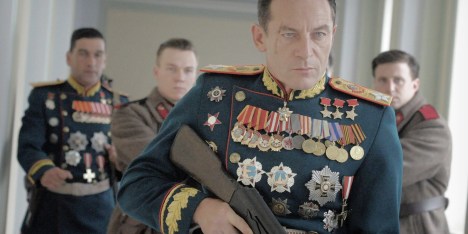
The Death of Stalin is an ambitious tonal mishmash.

The Death of Stalin is funny and smart. It is a very well observed comedy of errors set against the backdrop of the power struggle that unfolds against the backdrop of the passing of the eponymous Soviet dictator. Officials, relatives and hangers-on all jockey for position, scrambling over one another to secure their place on top of the heap. “How can you scheme and run at the same time?” Lazar Kaganovich challenges Nikita Khrushchev at one point during the film, a line that sets the tone for the ensuing madcap chaos.

Fools Russia in.

However, The Death of Stalin struggles to find the right pitch for its political shenanigans. Based on historical events, The Death of Stalin juxtaposes the sly and transparent manoeuvrings of its central characters against depictions of real-life historical violence and brutality. The Death of Stalin is very candid about the collateral damage incurred by these sorts of regimes, as well it should be. The Death of Stalin would be wrong to gloss over the human cost of its political jousting. At the same time, these brutal beats undercut the movie’s broader slapstick comedic plotting.

The Death of Stalin is charming and endearing in places, but it struggles to find a proper tone. The Death of Stalin is at once too dark to work as a broad farce and too light to play as a pitch black comedy. The result is a movie that feels far too unbalanced and unhinged, with brilliant moments and great performances that never manage to find a consistent groove.

Sorry state of affairs.

Continue reading

45. Paris, Texas (#241)

Hosted by Andrew Quinn and Darren Mooney, The 250 is a trip through some of the best (and worst) movies ever made, as voted for by Internet Movie Database Users. New episodes are released Saturdays at 6pm GMT, with the occasional weekend off.

This time, Wim Wenders’ Paris, Texas.

Four years after mysteriously disappearing, Travis wanders out of the desert and back into the lives of his family. Adapting to the outside world, Travis embarks upon a journey across America to bring together the shattered remains of his past life.

At time of recording, it was ranked the 241st best movie of all time on the Internet Movie Database.

Continue reading

Non-Review Review: Maze

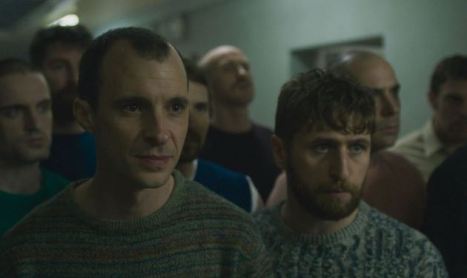
Maze is a gritty well-constructed psychological thriller, documenting the famous escape of thirty-eight inmates from the eponymous prison in 1983.

Written and directed by Stephen Burke, focuses its attention on two central characters who serve as opposite sides of the same coin. Larry Marley is a veteran member of the IRA, who survived hunger strike and is looked for a cause around which he might rally the movement. Gordon Close is the warden in charge of maintaining order in a prison packed with murderers and terrorists. Both men are trapped, whether by iron bars, concrete walls or political ideology.

Burke infuses Maze with a powerful cynicism, a clear frustration and contempt for a cycle of violence and hatred that perpetuates itself. The prison environment becomes a metaphor for the world created by the authorities and paramilitaries, a climate in which both sides serve as wardens and prisoners, ensuring that nobody is ever truly free. Maze is constructed as a very sterile film, largely desaturated, with Burke keeping the camera steady and often at a distance.

Maze is perhaps a little bit too conventional in places, a little too anchored in the routine expected from a prison break film and a little heavy-handed in its symbolism and thematic ruminations. While Burke avoids getting drawn into either side of this battle of wills, resisting the urge to glamourise or romanticise the escapees, there are points at which Maze feels a little too straightforward, trapped by the expectations of this sort of narrative. Still, the result is a thoughtful and well put-together film.

Continue reading