• Following Us

  • Categories

  • Check out the Archives


  • Awards & Nominations

Non-Review Review: The Children Act

Perhaps the most striking thing about The Children Act is how it manages to combine so many stock prestige drama beats into such a chaotic cacophony.

The Children Act is a mess from beginning to end, all the more jarring for how familiar and how recognisable the constituent elements might be. The Children Act often feels like a fairly standard IKEA table where all of the pieces have been assembled to create something monstrous. Often during the runtime, the audience might spot a familiar beat or plot point, but often one deployed with little consideration for how these elements normally work or how they might better service this particular story.

Come what May.

The Children Act is a film that very clearly aspires towards a certain style of prestige cinema. It is directed by Richard Eyre, responsible for awards fare like Iris or Notes on a Scandal and even the recent highly successful BBC adaptation of King Lear. It is written by Ian McEwan, adapting his own novel, the writer perhaps still best know to movie-going audiences as the novelist who provided the source material for Atonement. It stars Emma Thompson and Stanley Tucci, two actors who are always highly engaging, and who should bounce off one another.

Unfortunately, almost nothing within the film actually works, with strange decisions contorting the narrative into strange shapes. The Children Act is a curiousity that is more intriguing than it is engaging, more compelling for how completely it refuses to work than for anything that it is actually trying to say.

Just this.

Continue reading

Non-Review Review: Upgrade

On a very fundamental level, Upgrade understands the anxieties that drive body horror.

Body horror is largely rooted in the grotesque realisation that human bodies are little more than machines made of meat. After all, every student who has studied biology understands the mechanics of the human body; the processes that drive it, the structures that hold it together, the logic by which it operates. The nerve endings that relay signals from the furthest region of the body back to the brain, the synapses that fire within the brain. Described in such cold and rational terms, human consciousness becomes a mystery, a piece of the puzzle that doesn’t fit. Software we don’t understand running on wet hardware.

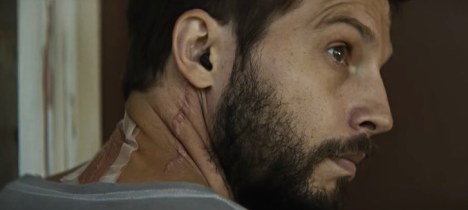
What the neck is going on?

More than that, human bodies are inefficient machines. They are soft and squidgy, held together by tendons and muscles stretched over bones built of calcium and hinges filled with synovial fluid. The human body impressive feats of engineering from an evolutionary perspective, through the mere fact that it exists, albeit more vulnerable than the architecture or the mechanics of the world designed by human beings. Bodies can easily be bent and broken, warped and distorted. They can be attacked in so many ways, and fall into disrepair with such ease. They are unreliable, and very difficult to fix.

Upgrade understands that body horror thrives at the intersection of these twin anxieties; the nightmarish uncertainty of how human consciousness fits within the mechanics of basic biology, and the realisation that the human body would never pass basic health and safety standards for any complex piece of machinery. Upgrade wonders what happens when that machine made of meat receives an update to its operating system.

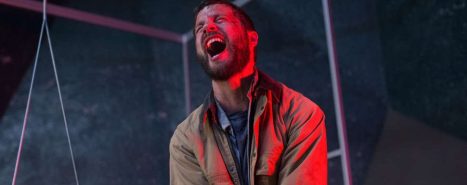
An impressive body of work.

Continue reading

Non-Review Review: The Meg

The Meg is proof that bigger is not always better.

There are moments when The Meg works beautifully, the film embracing its ridiculous concept by going all-in on a couple of absurdly heightened images. There are a number of shots in The Meg, particularly towards the climax, that are gleefully and unapologetically “too much.” It would undercut these moments to discuss them in any great detail in a review of the film, particularly since they are the moments when everything in the film seems to click into place. In these beats, there is a reckless abandon, as if the film understands the appeal of “Jason Statham in Jurassic Shark.”

Lifeboats find a way.

Unfortunately, these moments serve to highlight what is missing from so much of the rest of the film. The Meg is a movie committed to the idea of “more”, but is more invested in promise than in delivery. Everything in The Meg happens at breakneck pace, to the point where the first act of the film might make a compelling blockbuster on its own terms, given room to breath. However, like the sea-faring predator that inspired it, The Meg is eager to get to the next thing and the next thing after that. The result is a movie that feels rushed, but never urgent.

The Meg is so busy trying to heighten its stakes and its scale that it never quite manages to establish them.

Don’t bait him!

Continue reading

92. The Prestige (#49)

Hosted by Andrew Quinn and Darren Mooney, and this week with special guest Phil Bagnall, The 250 is a (mostly) weekly trip through some of the best (and worst) movies ever made, as voted for by Internet Movie Database Users. New episodes are released every Saturday at 6pm GMT, with the occasional bonus episode thrown in.

This time, Christopher Nolan’s The Prestige.

On the cusp of the twentieth century, an obsession brews between two magicians. Alfred Borden and Robert Angier compete to surpass one another on the London stage; lives will be lost, illusions will be shattered, and reality itself might fray along the edges.

At time of recording, it was ranked the 49th best movie of all-time on the Internet Movie Database.

Continue reading

Non-Review Review: American Animals

“To do this thing would take extraordinary effort,” observers Warren Lipka of his fiendish heist scheme in American Animals. “Not ordinary effort.”

Written and directed by Bart Layton, American Animals is a blend of documentary and dramatisation. It explores the true story of the effort by four young men to steal a collection of precious books from the Library of Transylvania, a scheme that went disastrously and spectacularly wrong. Adopting a style that recalls Bernie or a slightly more grounded I, Tonya, Layton slices interviews with the real-life criminals into a narrative reconstruction of the attempted crime. The results are intriguing, occasionally veering into an exploration of the malleability of memory and the limits of personal perspective.

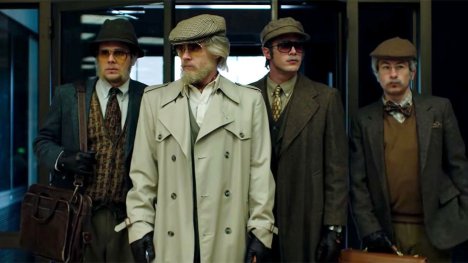
Up to their old tricks.

At the same time, American Animals is very much engaged with a masculine middle-class malaise. A recurring motif of the film has various figures from around the four criminals pause to reflect upon the character of these young men. “They were good kids,” various talking heads assert over the course of the documentary, talking fondly about their childhoods and their schoolwork and their aspirations. The four young men at the heart of American Animals did not plan (and botch) a heist because they were bad kids or because they needed the money. They did not act out of desperation or anger.

Instead, American Animals suggests that the characters enacted this ambitious and absurd scheme out of a sense of boredom, out of a desire to escape the mundanity of their everyday lives, to do something “extraordinary” to transcend their so-called “ordinary” lives.

Model citizens.

Continue reading

Non-Review Review: Ant Man and the Wasp

Marvel doesn’t get quite enough credit for its skill at scheduling.

Ant Man and the Wasp is an incredibly light film. Befitting its size-changing central characters, it might even be described as a very small film. In some ways, a distractingly small film. It doesn’t really have a central story so much as a collection of events and complications that occur as a variety of characters attempt to accomplish a number of varying small-scale objectives. It doesn’t really have a central villain so much as a collection of forces working in opposition to one another, locked in a handful of small-scale skirmishes over a variety of macguffins.

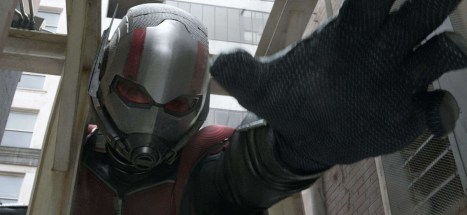
Ant Man’s reach exceeds his grasp…

None of this is a problem. Indeed, the relatively intimate stakes of Ant Man and the Wasp feel very welcome in this era of apocalyptic scale and epic urban devastation. At no point in Ant Man and the Wasp does a villain threaten an entire city, let alone the country or the planet or reality itself. That said, the disjointed and low-key nature of the film could easily be a problem under other circumstances; the central conflicts in Ant Man and the Wasp are never defined in any real detail, its characters never really grow, its outcome is never in any real doubt.

However, much like the original Ant Man worked very well as a contrasting counterpoint to the bombastic and bloated Avengers: Age of Ultron, Ant Man and the Wasp benefits as a refreshing change of pace from Avengers: Infinity War. The film seems almost tailor-made to serve as light relief following the epic stakes and universal devastation of the summer’s other Marvel Studios release. It’s debatable whether this serves to make Ant Man and the Wasp a better film on its own terms, but it does make it seem much stronger in contrast.

“We need some theme music!”
“Nah, just a nice sting.”

Continue reading

Non-Review Review: The Equaliser 2

At one point in The Equaliser 2, Robert McCall is listening to a radio forecast of a storm front sweeping through the north east of the United States.

“It’s coming in slow,” the meteorologist explains. “It’s taking it’s time.” In theory, so is The Equaliser 2. The storm is itself a metaphor for both the film and its protagonist, a force of nature descending upon the characters with a slow and steady certainty. The Equaliser 2 is a film that is very consciously taking its time, the script structured in such a way as to prioritise mood and ambiance over plot and pacing. The Equaliser 2 is meant to seem a stately and poetic meditation on violence and the men who commit it. At least in theory.

Yeah, we don’t know why it isn’t called The Sequeliser either.

It is clear what writer Richard Wenk and director Antoine Fuqua are trying to do over the course of the film’s two-hour-and-nine-minute runtime, building a mounting sense of dread towards a cathartic release. However, there is something deadly unsatisfying in this. The Equaliser 2 is not nearly clever enough nor intricate enough to sustain that more relaxed pace. What should be profound is instead belaboured, what should be considered is instead clumsy. Plot threads are broached and disappear. The one that reach their conclusion arrive long after the audience.

The Equaliser 2 forsakes the grotty do-it-yourself brutality of its predecessor, aspiring towards something moving and insightful. Unfortunately, all of that gets lost in a haze. The storm passes overhead, and it seems unlikely that anybody would even notice.

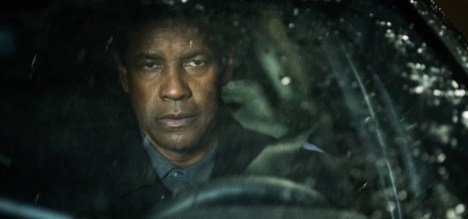
A storm is coming.

Continue reading

Non-Review Review: Mission – Impossible: Fallout

Mission: Impossible – Fallout has the best third act of any blockbuster in years.

To be fair, the first two acts are highly enjoyable on their own terms, with writer and director Christopher McQuarrie building and maintaining momentum across the film’s near-two-and-a-half hour runtime. As expected of the franchise, Fallout is peppered with memorable set pieces that push the plot along with an endearing commitment to in-camera action set-ups, impressive stunt choreography and ambitious imagination; skydiving through a thunderstorm, a brutal bathroom brawl, a daring mid-movie motorcade abduction, a three-dimensional topographical pursuit.

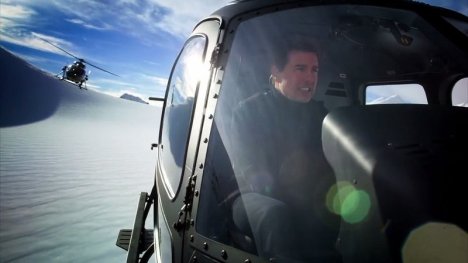
Snow escape.

While all of these elements work well, with the bathroom brawl in particular serving as a worth addition to the franchise’s set piece canon, the final act of Fallout is a masterclass in blockbuster film-making. It is a genuinely dizzying piece of spectacle, a soaring accomplishment that manages to ratchet up the suspense for the better part of forty minutes, making excellent use of an ensemble in close geographic proximity but in very different situations. McQuarrie skilfully understands the rhythm and the tempo of the scene, crosscutting beautifully between the various strands to sustain the tension.

Fallout is not the best film in the Mission: Impossible franchise; it isn’t quite the all-rounder that Mission: Impossible III was, and it lacks the gleefully demented sustained adrenaline rush of Mission: Impossible – Ghost Protocol. However, it is a testament to the remarkable and sustained quality of the franchise, and the best movie of the summer to this point.

Just dive right in…

Continue reading

Non-Review Review: Searching…

Searching… is an interesting fusion. It blends the innovative narrative style of Unfriended with the more convention cinematic language of thrillers like Kiss the Girls.

This cocktail is at once welcome and overdue. Unfriended was one of those rare genuinely innovative pieces of mainstream cinema; in form, if not necessarily in function. Unfriended built from a premise that was both incredibly simple and also formally daring, telling a fairly standard supernatural teenage revenge story entirely through a computer desktop. As with Searching…, all of Unfriended unfolded within a computer screen.

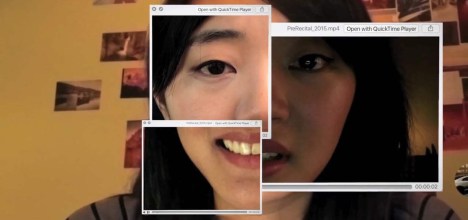
Windows ’95 into the soul…

In hindsight, it is surprising that it has taken other genres so long to embrace that formal experiment. Cinema has a long history of eagerly coopting the language and experiments of horror for more prestigious and high-brow fare. Consider, for example, how quickly other genres coopted the “found footage” revolution of the early twenty-first century for action movies, thrillers, comedies, and even monster movies and superhero films. (Then again, that embrace of the “found footage” aesthetic may have caught on for reasons beyond the success of The Blair Witch Project.)

Searching… takes the basic formal conceit of Unfriended and applies it to a more conventional genre film. The result is an abduction thriller told exclusively through screens, through video streams, search histories, web cameras and screenshots. It’s a provocative premise, effectively turning the bigger screen into a smaller one and changing the rules of how the audience processes the imagery in front of them. However, Searching… clearly aspires to bridge the gap between screens big and small.

She needs to screen her fans better.

Continue reading

Non-Review Review: Tag

Tag is a charming comedy that largely coasts off star charisma and a surprisingly heartwarming premise.

The plot is a compelling hook of itself. Inspired by a true story, Tag is the tale of a bunch of male friends who take one month out of every year in order to participate in a game of tag. This game has been going, on and off, for the better part of three decades. As the players get older, the pranks get more elaborate – the ruses, the feints, the misdirections, the ambushes. However, throughout the movie, the characters repeatedly stress that the game has also kept them together and in one another’s lives.

Touching.

This is a familiar set-up. It is the stuff of “overgrown manchildren” comedy, the tale of adult (and often even middle-aged) men who have the emotional maturity of children. Stepbrothers is perhaps the gold standard of the increasingly common comedy subgenre, which arguably includes films as diverse as Old School, Bad Neighbours and Knocked Up. Even indie comedies have gotten in on the act with movies like The Skeleton Twins, Cyrus or Adult Beginners.

While not strong enough or smart enough to rank with the best examples of the genre, Tag flirts with something resembling self-awareness. The movie is just cognisant enough of its underlying immaturity to keep the audience onside. Tag also benefits from a strange bittersweet quality, its joyous celebration of hypermasculine friendship gently flavoured with something resembling melancholy. It’s never entirely clear how much of that melancholy is intentional, but it permeates and enriches the film.

Renner, Renner.

Continue reading