• Following Us

  • Categories

  • Check out the Archives


  • Awards & Nominations

Non-Review Review: Overlord

Overlord is a film that works a lot better in concept than in does in execution.

The idea of constructing a pulpy monster narrative around Nazi atrocities during the Second World War has a certain appeal to it. Not only does it evoke the sort of trashy fiction that that often existed at the margins of popular culture, but it also suggests the speculative lenses through which audiences process trauma, the way in which mass media filters horrors almost beyond human comprehension into something tangible and visceral, creating an uncanny and uncomfortable prism through which anxieties over these horrors might be channeled.
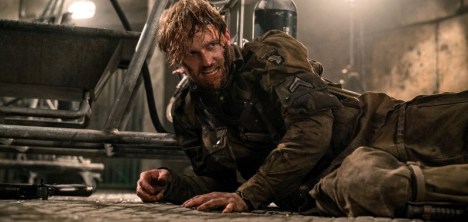
Russelling up some fun.

The horrors inflicted by the Nazis are almost impossible to fully comprehend; the systemic brutality inflicted upon those marginalised groups under their authority, the destruction that they wrought across Europe. These traumas linger in the popular memory. While the reality of those atrocities must never be forgotten or downplayed, there is something very powerful in the idea of translating that to the screen through the cinematic language of horror. Like Wolfenstein, Overlord seems to suggest an impressionistic portrait of the horrors of the period.

This approach is intriguing, and there are moments when Overlord works very well, when the film is creepy and unsettling in all the ways that it should be creepy and unsettling. However, the film suffers greatly when the script tries to impose a familiar framework on these horrors, when it runs through the checklist of storybeats expected for a major modern cinematic release. Put simply, Overlord works best when it aspires to be Captain America: The First Avenger, but as a horror film” and it works worst when it just tries to be Captain America: The First Avenger.
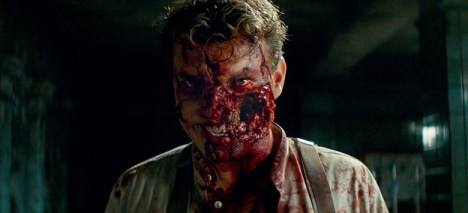
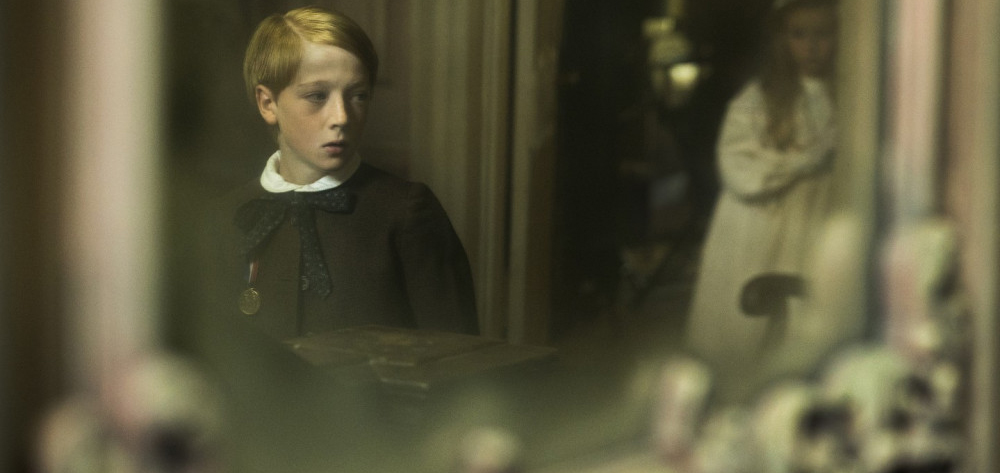
I want to take his face… off.

Continue reading

CinÉireann – Issue 9 (September 2018)

The latest issue of CinÉireann has just been released.

It’s full of the usual great stuff, mostly thanks to editor Niall Murphy. However, there’s also some other great stuff in there including Conor Murphy‘s regular column on cinematic education and Ronan Doyle‘s “Queer Ire” column. I contributed a piece on Black ’47, the Irish famine western that is one of my favourite films of the year so far, discussing it in the context of the mainstreaming of the postcolonial western.

As ever, there is some fantastic talent involved in the issue, and it is an honour to get a chance to write for CinÉireann. A massive “thanks” to the fantastic Niall Murphy over at Scannain for letting me be a part of it.

You can read CinÉireann as a digital magazine directly. You can even subscribe and get future issues delivered to you directly. Or click the picture below.

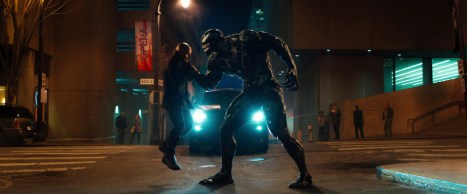
Non-Review Review: Venom

Transformative trauma is a cornerstone of the superhero genre.

Sometimes that trauma is emotional; the deaths of Thomas and Martha Wayne, the loss of Uncle Ben, the explosion of Krypton. Sometimes that trauma is physical; having piping hot metal coated over your bones as your memory is wiped, physically mutating into something unrecognisable as human, having your entire body turn to trauma. To misquote Stan Lee, “with great power comes great responsibility.” More often than not, it also comes with great suffering.

Back in black.

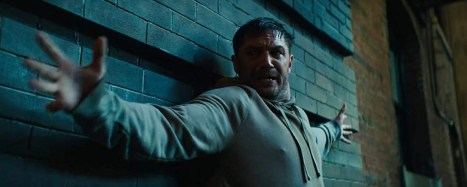
In its best moments, Venom seems to realise this. At the core of Venom is the traumatised character of Eddie Brock, who has watched his entire life fall apart and who suddenly finds himself sharing his body with a murderous alien entity with monstrous appetites. Brock is played by Tom Hardy, one of those rare actors with both immense physical presence and incredibly vulnerability. Unshaved and scruffy looking, with faded tattoos and wearing clothes that look like they haven’t been washed, Eddie looks like he’s been through hell even before his transformative experience.

There are moments when Venom almost plays as a weird psychological thriller about a character experiencing a real-time break from reality, a reporter who is losing his fragile grip on reality after suffering one too many personal and professional setbacks. As the situation gets worse, Eddie starts hearing voices in his head and losing control of his body. He finds himself in a situation where terrible things happen, but he is able to disassociate himself from the brutality and violence. Venom never quite commits to this idea, but it simmers through the story.

Wall’s well that ends well.

The first two acts of Venom are ropey and uneven, suffering from a fuzzy lack of detail and no strong focus on any of the film’s central ideas. Nevertheless, the film survives largely on the strength of Tom Hardy’s performance and the weirdness of the concept. However, things fall to pieces in the third act. Part of this is because Venom feels the need to transform into a regular superhero movie as it reaches its conclusion. Part of this is because Ruben Fleischer cannot direct action. Part of this is because of collision of clumsy exposition and muddled computer-generated imagery.

Venom loses what little control it has of itself as it reaches its climax.

MRI are we here?

Continue reading

Non-Review Review: Night School

Night School works better than it probably should, while never quite escaping its fundamental flaws.

Night School suffers from a lot of the structural issues that affect modern studio comedies. Most obviously, the film feels over-extended. It’s not just the run time, which clocks in at a muscular one-hundred-and-ten minutes, which is asking a lot for a broad comedy with a very simple premise. It is the individual jokes within the comedy, which are often stretched to breaking point and beyond. Perhaps the most egregious example is an early gag about finding hair in food at a restaurant, which goes on for what feels like five minutes built around the same standard social set-up.

To teach’s own.

There are very few major surprises in Night School. There are a few small and smart ideas buried in the mix, but they often feel crowded out by the broad jokes and the familiar clichés. There’s a recurring sense that Night School doesn’t always play to its strengths, at least below the headline. At the same time, the film understands that it lives or dies by the chemistry between its two leads, offering a conventional persona-driven conflict of manners that places Kevin Hart and Tiffany Haddish in opposition to one another before inevitably moving them into alignment.

Night School is diverting, if unsatisfying. It manages a passing grade, if little more.

Hart to Hart.

Continue reading

Non-Review Review: The Land of Steady Habits

“You’re mean,” observes a potential romantic partner of Anders Hill, around the halfway point of The Land of Steady Habits.

It would be reductive to suggest that this is the most bracing or cutting piece of character work in The Land of Steady Habits, but it is not entirely unfair. The Land of Steady Habits is very much a story of upper-class social anxiety, of wealthy characters without any real problems in their lives who instead fixate on the kinds of problems that less well-off people probably wish that they had. Anders Hill is a prime example. A solemn and depressive figure who has become alienated from his previously idyllic existence, Anders is a character who is entirely responsible for his current predicament.

Going steady.

In some ways, this is very typical of the work of writer and director Nicole Holofcener, who has adapted The Land of Steady Habits from a novel by Ted Thompson. The film’s status as an adaptation accounts for some of the details that distinguish the film from Holofcener’s other work, most notably the focus on a male (rather than a female) protagonist, but The Land of Steady Habits is very much of a piece with Holofcener’s other work. It is a wry and acerbic study of people who have everything except what they actually need, and who stumble around causing emotional carnage while looking for that something.

With that in mind, Holofcener’s films live and die based on the charm of the leading characters – on how much the audience is drawn into the hollow void at the centre of their existence. By that measure, The Land of Steady Habits is a mixed bag at best. Ben Mendelsohn is great as the pathetic and contemptible Anders Hill, an impotent affluent man-child who seems capable of mustering charm for only a few scarce minutes at a time. However, Anders himself is not anybody that it seems particularly interesting or exciting to spend ninety-eight minutes with.

Sofa, so good.

Continue reading

Non-Review Review: The Predator

The Predator adopts the as-ambitious-as-it-is-counter-productive of smirkingly mocking big budget franchise films while also actually being a big budget franchise film.

Shane Black’s sequel to the beloved eighties actioner is jarring, caught between two masters. On the one hand, Black writes the characters in his patented self-ware style, with banter and wry liners to beat the band. However, these characters are then dropped right into the middle of a fairly brain-dead paint-by-numbers action film that is clearly structured to feel like a contemporary franchise foundation stone. There is a constant push-and-pull between these two extremes, which is disorienting and distracting.

The Predator took the reviews rather well.

The Predator never seems sure whether it is a good old-fashioned fun-dumb blockbuster mocking the pretensions of modern franchise films or alternatively a smart self-aware action comedy picking at the tropes of fun dumb action films. It’s never entirely clear whether the issues with The Predator are playful self-parody or just terrible plotting; whether Shane Black is not taking any of this seriously or whether he is taking all of it much too seriously.

Whenever The Predator seems to be working, it veers too sharply one way or the other and the audience gets whiplash.

Pred-locks.

Continue reading

Non-Review Review: The Little Stranger

The Little Stranger could do with being a little stranger.

Gothic horror stories about haunted houses are often about more than just the building or the estate itself. They often serve as something at once larger and smaller; a prism through which the storyteller might examine both the society around the haunted house and the family unit trapped within. This is true of most haunted house stories, no matter where or when they are set. The Amityville Horror is about much broader familial anxieties than a mere spectre.

Stranger Things…

At the same time, it feels particularly true when applied to the more traditional and old-fashioned gothic haunted house stories, the kind of tales about old family estates in the middle of nowhere, that had once served to anchor political and economic power in a particular area, but had since watched modernity pass them by. These are the sorts of creepy houses frequently glimpsed in period pieces or older stories, whether in tales set in the England of Wuthering Heights or the New England of Edgar Allan Poe.

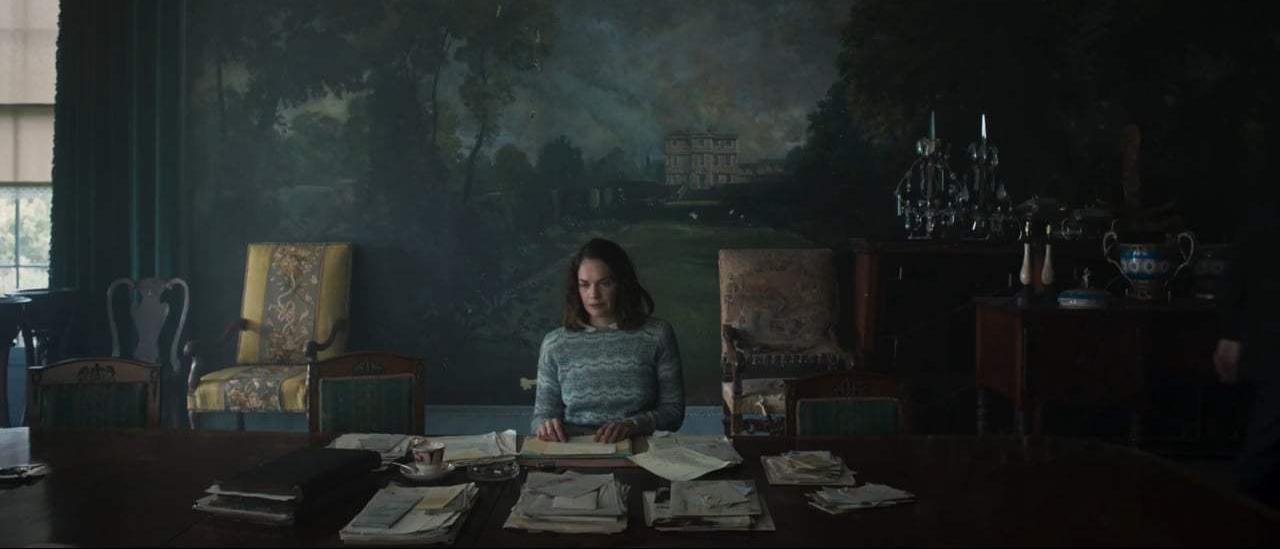
The Little Stranger belongs to this particularly strain of haunted house horror, unfolding on a once grand estate that is slowly surrendering itself to a rapidly-changing world. It is the story of a house in decay and decline, falling apart as it struggles to find its place in a world that might slowly shed the trappings of class hierarchies and where power might no longer be anchored exclusively in those families wealthy enough to own and maintain these grand estates.

A sorry estate of affairs…

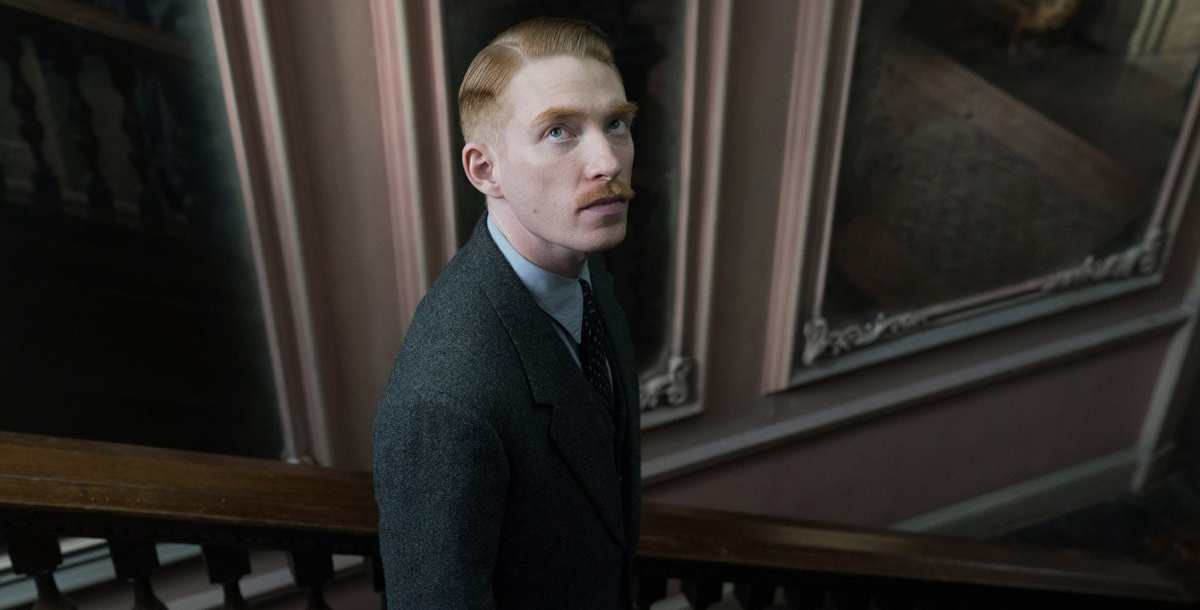
The Little Stranger works better as a mood than as a story, a slowly unravelling portrait of a household coming face-to-face with its own obsolescence, unsure both of whether it can do anything to arrest this collapse or even whether it wants to. The tale maintains a steady sense of unease across its runtime, largely down to a tremendous performance from Domhnall Gleeson as a character who remains ambiguous and unsettling even as he positions himself at the centre of the narrative.

The Little Stranger suffers from a fairly conventional and predictable plot, with little novel or insightful to say, relying on a series of revelations that are quite clear even fifteen minutes into the two-hour runtime. The Little Stranger is a little too familiar for its own good, a little too comfortable and sedate to really pack the necessary punch.

Farraday is far away.
Continue reading

Non-Review Review: Crazy Rich Asians

The romantic comedy is, by its nature, an aspirational genre.

At its core, the romantic comedy is built around the idea that love conquers all, that soul mates exist, that there is one person in a million for every other person and that they are destined to find one another. The romantic comedy is aspirational in its presentation of love: the idea that everybody lives happily ever after, that every obstacle can be navigated if two people love one another. Of course, reality doesn’t always work out like that. This is just one reason why we tell stories; not just to tell us how the world is, but to insist how it should be.

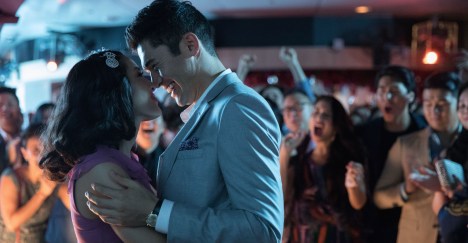
Crazy, stupid, rich love.

This is perhaps why the romantic comedy is so often wedded to other fantasies; consider the ostentatious wealth depicted in most romantic comedies, but especially in Nancy Meyers films like It’s Complicated or Home Again. Romantic comedies present an idealised depiction of family life, where all differences can be reconciled and where practical concerns need never even be articulated. Even romantic comedies that aren’t explicitly about wealthy families luxuriate in a fantasy of wealth; very few families could realistically afford even the starter pack romantic comedy wedding.

There is nothing inherently wrong with aspiration, to be clear. Action movies and superhero films tend to indulge in a similarly idealised fantasy of heroism and strength of will, imagining worlds where many of the complications of everyday life can be shuffled into the background or wrestled into submission. However, the aspirations baked into romantic comedies are more tangible and more immediate, more recognisable even in their outlandishness.

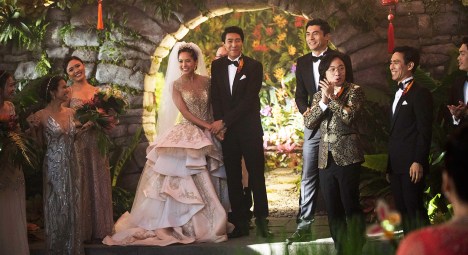
“I mean, I’m rich. But I’m not crazy rich.”

Very few people will find themselves liberating a soccer stadium from terrorism, but most audience members have romantic relationships and many have weddings and even families. Even those audience members who don’t have their own spouses and children would have grown up within something resembling a familial structure. As a result, even the most outlandish romantic comedy offers something that more closely approximates lived experience.

Crazy Rich Asians fundamentally understands this aspirational nature of romantic comedies, and takes a great deal of pleasure in its display (and even celebration) of absurd wealth. The film’s title is a bold statement of purpose. There is something exhilarating in that.

Love don’t rom (com).

Continue reading

Non-Review Review: The Nun

Nobody really talks about how strange The Conjuring is.

James Wan has effectively managed to fashion Hollywood’s second most successful shared universe from a variety of old-fashioned horror tropes stitched together with a more modern blockbuster aesthetic. The films in franchise – which include The Conjuring 2, Annabelle and Annabelle: Creation – are remarkable because they seem like such a strange basis for a twenty-first century blockbuster franchise. They are all period piece jump-scare driven retro jorror movies that are produced with a very slick and modern sensibility.

Bad habits.

The Nun is another worthy (and interesting) addition to that canon. As with the other films in the series, its basic structure wields more modern storytelling and filmmaking techniques to a more classic horror tone. As with the other films, the production team also understand the appeal of a certain level of variety within that familiar template. The Conjuring was a throwback to beloved seventies haunted house films, Annabelle set its horror against the backdrop of the sixties, The Conjuring 2 moved to England and Annabelle: Creation unfolded against the backdrop of rural America.

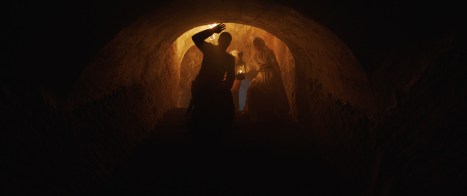
The Nun evokes gothic horror. Set in a creepy abbey in Romania during the fifties, following an investigator dispatched from the Vatican to investigate the suicide of a young nun, The Nun thrives in this environment with this iconography. The Nun falters a little bit in its storytelling, especially its exposition, and it stumbles a little bit when it comes to building a climax that works as both an action film and as a horror. However, the film is canny enough in its choice of setting and imagery that it never completely comes apart.

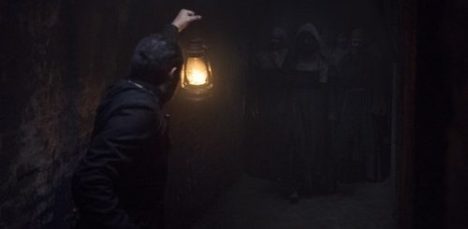
Who goes stair?

Continue reading

Non-Review Review: BlacKkKlansman

BlacKkKlansman is an American tragicomedy.

The past few years have seen a heightening of reality, a blurring of the boundaries between fact and fiction, an intrusion of the unreal into the real world. The President of the United States is effectively a reality television star, and is running the country as some sort of grotesque reality television show. “Truth is not truth”, to quote one administration figure, while another has peddled in the idea of “alternative facts” while alluding to a horrific terrorist attack that simply never happened while other supporters of the administration insist that other horrific events did not happen.

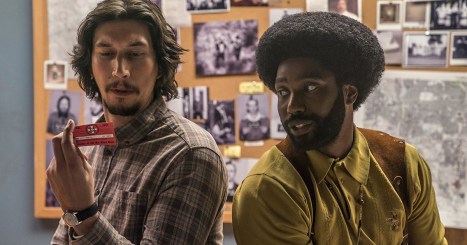
The two Ronnies.

With all of that going on in the background, soaking into the zeitgeist, BlacKkKlansman feels very much like a movie for the moment. It is – to quote the introductory text – “based on some fo’ real, fo’ real sh*t”, taking its inspiration from a memoir written by undercover police officer Ron Stallworth. However, it is also filtered through the hyperstylised cartoonish lens of a blackploitation buddy comedy, with Lee taking every opportunity to remind his audience that they are watching a piece of pop culture.

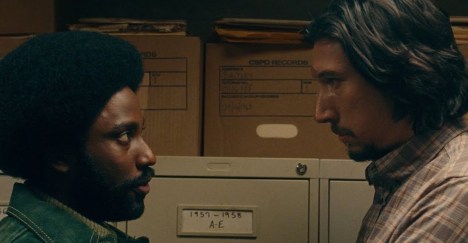
The premise of the film is so absurd that it’s almost impossible to play it as anything but comedy. The first black police officer in Colorado Springs launches an undercover sting on the KKK, using his own name to infiltrate the organisation through the telephone. Working with a fellow white police officer, this ambitious young go-getter manages to manoeuvre his way to the top of the organisation, fooling even the Grand Wizard himself. It’s a ridiculous story, one that seems inherently unreal. Even the name – “Stallworth” – sounds like something from a dimestore paperback.

Hitting all its marks.

Of course, in this era of unreality, it is entirely real. Indeed, the power of BlacKkKlansman comes crashing down on the audience in the final moments, when Lee brushes aside the heavy-handed references to contemporary politics that play through the narrative for something that is much more tangible and real, serving to throw the entire grim joke of the film into stark relief, suggesting that so much of the awkward squirming and ridiculous twists are all the foundation of the horror show through the audience are living.

BlacKkKlansman laughs in the face of horror and brutality. But only because the alternative is to cry.

The historical record.

Continue reading