• Following Us

  • Categories

  • Check out the Archives


  • Awards & Nominations

Star Trek: Voyager – Retrospect (Review)

Star Trek: Voyager is a very nineties show. Sometimes that is endearing. Sometimes it is not.

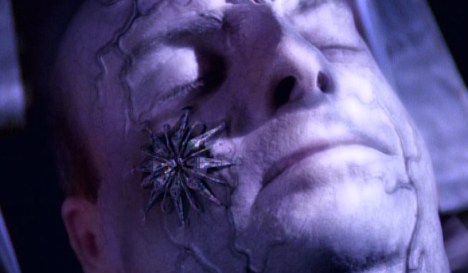
Retrospect is an episode that made a great deal more sense in the context of the nineties. It was still troublesome and reactionary, structuring its central allegory in a way that was deeply problematic. However, Retrospect made a certain amount of sense when considered in light of the McMartin Preschool scandal and the satanic panic driven by regression hypnosis in the early part of the decade. Retrospect is very clearly an attempt to turn that talking point into a twenty-fourth century allegory about witch hunts and persecution.
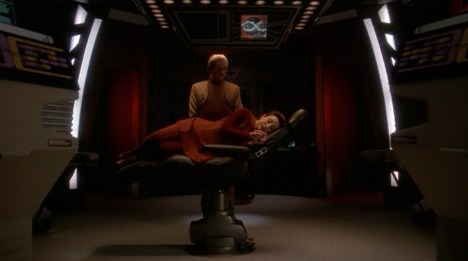
Assimilate this…

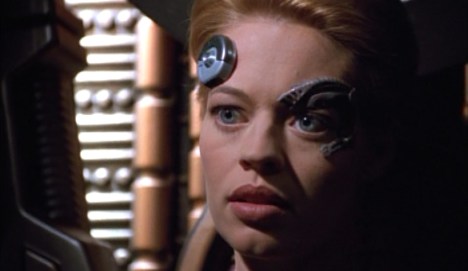
However, there are a number of poor choices made over the course of the episode. The most obvious is build the episode around the character of Seven of Nine. There are any number of reasons why this would be written as a Seven of Nine episode, given that she is the breakout character of the fourth season. However, episodes like The Gift and The Raven have made a conscious effort to portray Seven of Nine as an abuse surviving living with genuine trauma. To put her at the centre of an episode about false allegations of abuse feels ill-judged.

Similarly, the emphasis on the subject of these accusations and his ruined life feels more than a little tone-deaf, even in the context the nineties satanic panic. Retrospect is not an episode about Seven of Nine processing abuse or even coping with distorted memories. It is ultimately the story about how the falsified accusations of abuse (from a character who is a verified abuse victim) can serve to destroy the lives of innocent men. Indeed, the emphasis on the EMH as a proxy for Seven of Nine downplays her own agency in this plot.
Memory Beta.

These aspects are troubling even in the context of an episode about the dangers of using hypnotherapy as the basis of these charges. However, the scandal has slipped from public consciousness in the years since Retrospect was initially broadcast. When the audience hears about women false accusations against men, it evokes the long-standing myth that men are frequent victims of falsified reports about sexual assault that ruin lives. This was creepy and uncomfortable subtext was obvious at time of broadcast, but has only become more pronounced in the years since.

Retrospect would have been a very clumsy and ill-judged allegory in the context of the mid-to-late-nineties. Decades removed from that original context, it seems almost reprehensible.
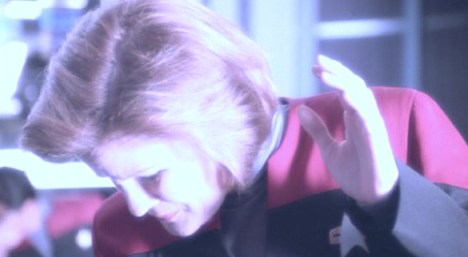
Blinding flash of the obvious.

Continue reading

Star Trek: Deep Space Nine – The Darkness and the Light (Review)

The Darkness and the Light is the first television credit for writer Bryan Fuller.

There is no way around that. It puts a lot of emphasis on this fifth season episode, drawing a lot attention to the story. Fuller didn’t even write the script, instead pitching a story that would be developed by Ronald D. Moore. However, later in the fifth season, Fuller would pitch the story for Empok Nor. After that, he would be recruited on to the writing staff on Star Trek: Voyager. Then Fuller would begin developing his own shows. Dead Like Me. Wonderfalls. Pushing Daisies. Hannibal. American Gods. Star Trek: Discovery.

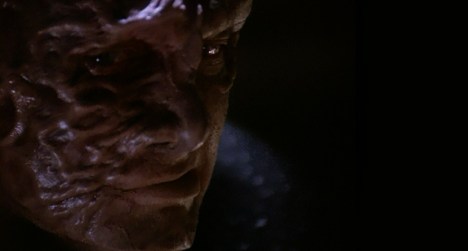
Face-off.

Face-off.

That naturally casts a shadow over his first television pitch, the premise sold to the writing staff of Star Trek: Deep Space Nine. Even watching Fuller’s idea filtered through the lens of Ronald D. Moore, there is a strong urge to read too much into this forty-five-minute piece of television. How much of it represents Bryan Fuller’s vision of Star Trek? How have its themes and ideas resonated across the rest of the writer’s work? What insight might it offer into the producer’s vision for the future of the franchise?

A lesser episode would crumple under that weight. It helps that The Darkness and the Light is an ambitious and exciting piece of television, a triumph of concept and execution that stands as one of the most distinctive and memorable episodes in the fifty-year history of the franchise.

A time to heal.

A time to heal.

Continue reading

Star Trek: Voyager – Remember (Review)

This February and March (and a little bit of April), we’re taking a look at the 1995 to 1996 season of Star Trek, including Star Trek: Deep Space Nine and Star Trek: Voyager. Check back daily for the latest review.

Much like The Chute before it, Remember is very much an attempt to do classic archetypal Star Trek.

Remember is an allegorical piece of social commentary that is as firmly rooted in the nineties as the prison politics that underpinned The Chute. As the name implies, Remember is a story fascinated with the idea of memory and legacy. In particular, it reflects the idea of cultural memory as construct that is shared from person to person and passed down from generation to generation. Touching on themes of Holocaust denial, Remember is a very potent piece of science-fiction allegory, one that treats cultural memory as something to be cultivated and maintained.

Whose (geno)cide are you on?

Whose (geno)cide are you on?

Remember is a good illustration of what the production team is trying to do as Star Trek: Voyager enters its third season. After a disastrous (and exhausting) sophomore year, it seems like the writing staff have opted against trying to give the show its own unique voice. Instead, the plan seems to be to craft the most archetypal approach to the franchise imaginable. From this point onwards, it becomes increasingly rare for the show to do episodes unique to its setting and premise, instead telling stories that would work with most iterations of the franchise.

This approach has its limitations, of course. By the time that the second season of Star Trek: Enterprise rolls around, even the most die-hard fans have had their fill of broadly-drawn mass-produced factory-setting Star Trek. While this approach could be argued to be a waste of an interesting premise and the betrayal of the show’s original promise, Remember makes a convincing argument that an archetypal Star Trek allegory can still work on its own terms. Remember is a powerful and effective piece of commentary in the classic Star Trek tradition.

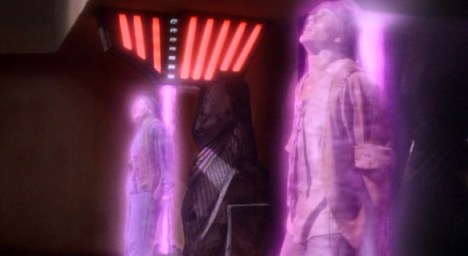
Burning guilt...

Burning guilt…

Continue reading

The X-Files – Sunshine Days (Review)

This December, we’re taking a trip back in time to review the ninth season of The X-Files.

Well, here’s hopin’ the TV stays off and he learns how to love the real world.

– Doggett stops just short of adding “… and that goes for you as well.”

The X-Files was always a more romantic show than it would readily admit.

The popular image of the show might be Mulder and Scully walking through darkness searching for a truth that may never be revealed or a hideous monster preying upon innocent victims. Chris Carter’s most successful work might be rooted in the dual betrayals of Watergate and Vietnam. The characters might stalk car parks late at night or explore the darkest corners of the urban landscape. Mulder and Scully might be abducted by forces beyond their control, and subjected to the cruel whims of uncaring fate. The show’s motto might be “trust no one.”

"Let's call it a day..."

“Let’s call it a day…”

Nevertheless, that cynicism is offset with a deep-seated romance. “Trust no one” is one of the defining mantras of The X-Files, but there are other more optimistic catchphrases; “I want to believe” and “the truth is out there.” Optimism outvotes cynicism by a two-to-one majority. It is not quite a decisive victory, but it is something in this cynical and chaotic world. While Mulder and Scully might never actually find the truth which they so desperately seek, they did find one another. That is more than either could have hoped and than some people can claim.

Sunshine Days is a staggeringly romantic and optimistic piece of television. Indeed, it suggests that the cynicism of The X-Files was really just a practiced veneer. As the title suggests, Sunshine Days allows the central cast to smile more frequently over forty-five minutes than most have in the course of their entire run on the show. As with the rest of the show, Sunshine Days is rooted in the culture of the seventies. However, there is something quite heartwarming in how Vince Gilligan eschews All the President’s Men for The Brady Bunch.

Out of this world...

Out of this world…

Continue reading

Non-Review Review: Star Wars – Episode VII: The Force Awakens

Star Wars: Episode VII – The Force Awakens is the Star Wars film you’re looking for. Mostly.

In many respects, Star Wars was the film the helped to launch the modern “blockbuster” model of cinema, and a large part of The Force Awakens is the reassurance that not too much has changed in the intervening years. Sure, there are a few script tweaks to reflect more modern tastes for the post-Dark Knight era, but the basic storytelling engine is still the same underneath. If The Force Awakens is a hybrid, it is a hybrid fashioned from the parts of the three original Star Wars films and just a dash of something more twenty-first century.

The Force is strong with this one...

The Force is strong with this one…

After the issues with the prequels, it is reassuring to know that the engine still runs. The franchise’s history as one of the forerunners of blockbuster cinema makes it perfectly suited to JJ Abrams’ nostalgic stylings. Abrams gets a lot of flack for his evocation of seventies and eighties blockbuster cinema, but he does have a fundamental understanding of how (and why) it works. Ever the keen student of Spielberg and vintage Hollywood blockbusters, director JJ Abrams is able to effortlessly blend that classic aesthetic with a contemporary sensibilities.

There are moments when The Force Awakens threatens to suffocate under the weight of what came before, but it largely succeeds on its own terms as a doorway to something new and exciting.

Handover from one generation to the next...

Handover from one generation to the next…

Continue reading

The X-Files – John Doe (Review)

This December, we’re taking a trip back in time to review the ninth season of The X-Files.

A man without a past on a show without a future.

John Doe opens with John Doggett on the floor of a dusty warehouse, an addict stealing his shoes. Doggett chases the thief out of the warehouse, stunned to realise that he is actually in Mexico. His pursuit of the addict culminates in his arrest by local law enforcement, a couple of cops demanding to see his identification papers. Doggett pats himself down looking for something, but the horror of his situation seems to dawn on him. Asked for his name, all Doggett can offer is an awkward “I don’t know.” His past has been stolen from him.

"Woah, boy. Computer-generated film grain. I'm either in Mexico or a CSI flashback."

“Woah, boy. Computer-generated film grain. I’m either in Mexico or a CSI flashback.”

Four days after the initial broadcast of John Doe, it was announced that there would be no tenth season of The X-Files. Fox and Chris Carter were retiring the show after a phenomenal nine-season run. Of course, production had wrapped on John Doe long before the decision had been made; the crew were working on Scary Monsters when news filtered down about the looming end of the show. However, there was something quite appropriate about the timing of all this. John Doggett lost his past in the same week that The X-Files lost its future.

There is almost a weird poetry in that.

Breaking Decent.

Breaking Decent.

Continue reading

The X-Files – Redrum (Review)

This October/November, we’re taking a trip back in time to review the eighth season of The X-Files and the first (and only) season of The Lone Gunmen.

Redrum is perhaps notable as the highest concept episode of the eighth season of The X-Files, a character drama that unfolds backwards.

As a rule, the eight season is more conservative than the seasons around it. In terms of narrative, it may be the most conservative season of The X-Files since the show’s first year. Redrum is perhaps the season’s biggest formal experiment. While very few high-profile prime-time television shows would attempt to tell a story backwards, Redrum feels a lot less bold than something like HumbugJose Chung’s “From Outer Space”Musings of a Cigarette-Smoking Man, The Post-Modern Prometheus, Bad Blood, Triangle, X-Cops or even Improbable.

A tangled web...

A tangled web…

On paper, this should be a highlight of the season. Redrum features a guest performance from Joe Morton, receiving a coveted “special guest star” credit for his work. (Notably, Kim Greist did not earn a similar credit on Invocation.) The high-concept premise of the episode seems like it would make a great pitch for Sweeps, like X-Cops did only a year earlier. In fact, Redrum was produced as the first stand-alone episode of the season, priming it for the slot occupied by Drive and Hungry in earlier seasons.

There is a sense that the production team are wary of Redrum. The episode was pushed back from its production slot relatively deep into the season. It was with second-last episode of the eighth season to air before the Christmas break. The show attracted a relatively small amount of publicity, particularly as compared to the “where’s Mulder?” hype of that greeted the début of the season. There is a sense that Redrum would have garnered more attention only a year or two earlier.

"The teacup that I shattered did come together."

“The teacup that I shattered did come together.”

It is easy to see why the production team were so wary of Redrum. The eighth season is a point of transition for The X-Files. The show is still reeling from the loss of David Duchovny; there is a sense that the show never moves past that. The agenda for the eighth season is to convince viewers that The X-Files is still a viable television show, even without the lead actor who helped to make it famous. While the show is smart enough not to downplay the change, the production team are keen to demonstrate the show can still do what it always did.

As such, the eighth season finds the show adopting a “back to basics” approach, harking back to many of the tropes that made The X-Files such a breakout hit in the first place. There is a lot more horror and mood in the eighth season, a lot more of the traditional scares. That means that Redrum ends up feeling very much like the odd episode out.

It's all gone a bit Martha Wayne...

It’s all gone a bit Martha Wayne…

Continue reading

Harsh Realm – Kein Ausgang (Review)

This November, we’re taking a trip back in time to review the seventh season of The X-Files and the first (and only) season of Harsh Realm.

So, what does an average episode of Harsh Realm look like?

After all, the show was cancelled after only three episodes had been broadcast. Those three episodes were all written by the creator, and formed something of a loose introduction to the show. Inga Fossa ended with our protagonist finally accepting his place in the virtual world and his mission to defeat General Omar Santiago before the dictator can destroy the real world. There is a sense that the show had yet to even demonstrate what a regular episode of Harsh Realm might look like. It was over before it had even begun.

Jumping into action...

Jumping into action…

Kein Ausgang is the first episode of Harsh Realm to be written by somebody other than Chris Carter. As such, it is an important milestone in the development of the series. It is also the first of two episodes written by Steven Maeda, who would prove to be a pretty reliable set of hands in the life of the young show. Based on his contributions to Harsh Realm, it is easy to see why Carter drafted Maeda over to The X-Files in the wake of Harsh Realm‘s cancellation, even if his contributions to that show were a little more uneven.

Kein Ausgang offers an interesting glimpse of what Harsh Realm might have looked like going forward, if Fox had waited more than three episodes to cancel the show.

Shining a light on it...

Shining a light on it…

Continue reading

The X-Files (Topps) – Afterflight (Review)

This May and June, we’re taking a trip back in time to review the fifth season of The X-Files and the second season of Millennium.

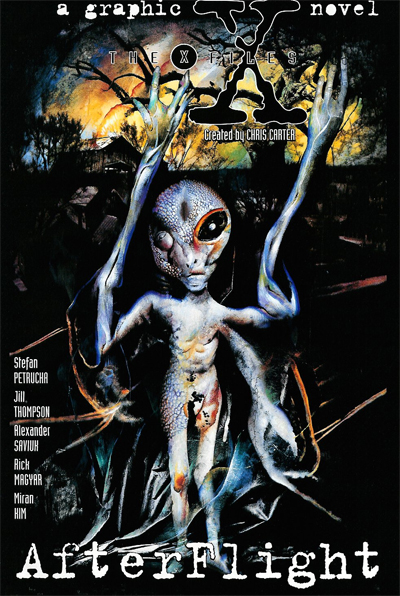
And so we reach the end of Stefan Petrucha’s work on The X-Files.

It is quite a delayed end. Petrucha had originally written Afterflight three months before Home of the Brave, his last script for the monthly tie-in comic book. It was published fifteen months after the publication of Home of the Brave. That meant a year and a half had passed between Petrucha finished and Topps actually publishing it. The delay was rooted in disagreements with Ten Thirteen over the artwork. Still, Afterflight offers just a hint of closure to the sixteen-issue (and more) run that launched Topps’ licensed X-Files comic book line.

The truth is up there...

The truth is up there…

Afterflight is a mournful little comic, a story that takes a lot of the core themes of Petrucha’s X-Files work and distills them down to a single story. Interviewed about his work, Petrucha contended that his writing for The X-Files primarily meditated on themes of “memory, the self and what is reality.” All of these ideas are brought to the fore in Afterflight, a comic that offers a similar thematic resolution to Home of the Brave, suggesting the faintest hint of hope can be found beyond the world of men.

Afterflight is a beautiful piece of work, and a suitable conclusion to a fantastic run.

Aliens among us...

Aliens among us…

Continue reading

The X-Files – Demons (Review)

This February and March, we’re taking a trip back in time to review the fourth season of The X-Files and the first season of Millennium.

The fourth season of The X-Files is an oddity.

That is particularly true when it comes to the show’s mythology. Not only has any sense of narrative progression stalled after the “to be continued…” hook of Talitha Cumi, the fourth season seems to branch the mythology out in multiple directions that never really get anywhere. Tunguska and Terma introduce a Russian conspiracy that quickly becomes a footnote. Tempus Fugit and Max focuses on private military contractors who are never mentioned again. Memento Mori gives Scully cancer halfway through the season, and the rest of the year tries to catch up.

A cigarette-smoking spectre...

A cigarette-smoking spectre…

Demons is an episode that sits rather awkwardly as the penultimate episode of the season. An episode about Mulder undergoing aggressive therapy to recover lost memories seems a little out of place with everything else going on around him. After Memento Mori, you would imagine he would be worried about Scully. After Zero Sum, you imagine he would be wary about putting himself in a vulnerable position. Demons feels very much like it would make a good first season episode, a product of the time when Samantha Mulder was our lead’s primary driving motivation.

Instead, Demons sits awkwardly before the big season finalé with its own clear agenda. Scully’s closing monologue is clearly designed to lead into Gethsemane as almost a four-part season-bridging epic. However, the execution feels a little too haphazard, a little too casual, a little too disorganised. Demons feels less like the lead-in to an earth-shattering story and more like a script designed to plug a gap late in the season.

"Hey, look on the bright side, this time next year, you'll be in a psychiatric institution."

“Hey, look on the bright side, this time next year, you’ll be in a psychiatric institution.”

Continue reading